
Updated
November 27, 2026 1:05 AM

A desk with books and coffee next to a computer. PHOTO: UNSPLASH
Ailytics raises US$7.4 million in Series A
Singapore-based vision AI startup Ailytics has raised US$7.4 million in a Series A round led by Tin Men Capital. Its flagship product, Ailyssa, works with existing CCTV cameras to analyse footage in real time. Using computer vision and vision-language models, it flags industrial safety hazards such as workers without protective gear or standing too close to moving machinery. This helps industrial teams identify and address potential risks before they lead to accidents.
Stryv raises US$11.5 million in Series B
Singapore-based personal care and home wellness company Stryv has raised US$11.5 million in a Series B round led by ACV Capital, with participation from Openspace Capital and OCTAVE Capital. Its product range includes hair dryers, stylers, shavers, men's grooming and oral care products. Through its Sterra brand, the company also offers home wellness products such as air and water purifiers.
Omnichat raises US$10 million in Series A
Hong Kong-based customer engagement startup Omnichat has raised US$10 million in a Series A round led by Openspace Capital, with participation from Darwin Ventures and Acorn Pacific Ventures. Its platform brings customer conversations from WhatsApp, LINE, Messenger, Instagram and WeChat into one place, helping brands manage sales, marketing and customer service. It also uses AI to recommend products, respond to enquiries and turn conversations into sales. Omnichat says it serves more than 5,000 brands and has helped generate over US$100 million in revenue for clients.
ProScout seeks US$200,000 to complete seed financing
Israel-based agritech startup ProScout is raising a seed round through a SAFE, with US$1.2 million secured and a further US$200,000 sought. Its backers include Orbit Ventures and angel investors, alongside a non-dilutive grant. The startup's device clips onto existing agricultural sprayers and records where pesticides are applied in real time. Its AI-powered platform compares actual spraying with planned treatment and generates maps showing which areas were covered and where spraying was missed. This helps commercial growers improve spraying accuracy and reduce chemical waste.
Keep Reading
Bitmo Lab is testing an ultra-thin, bendable tracker built to fit inside items traditional trackers can’t
Updated
March 17, 2026 1:02 AM
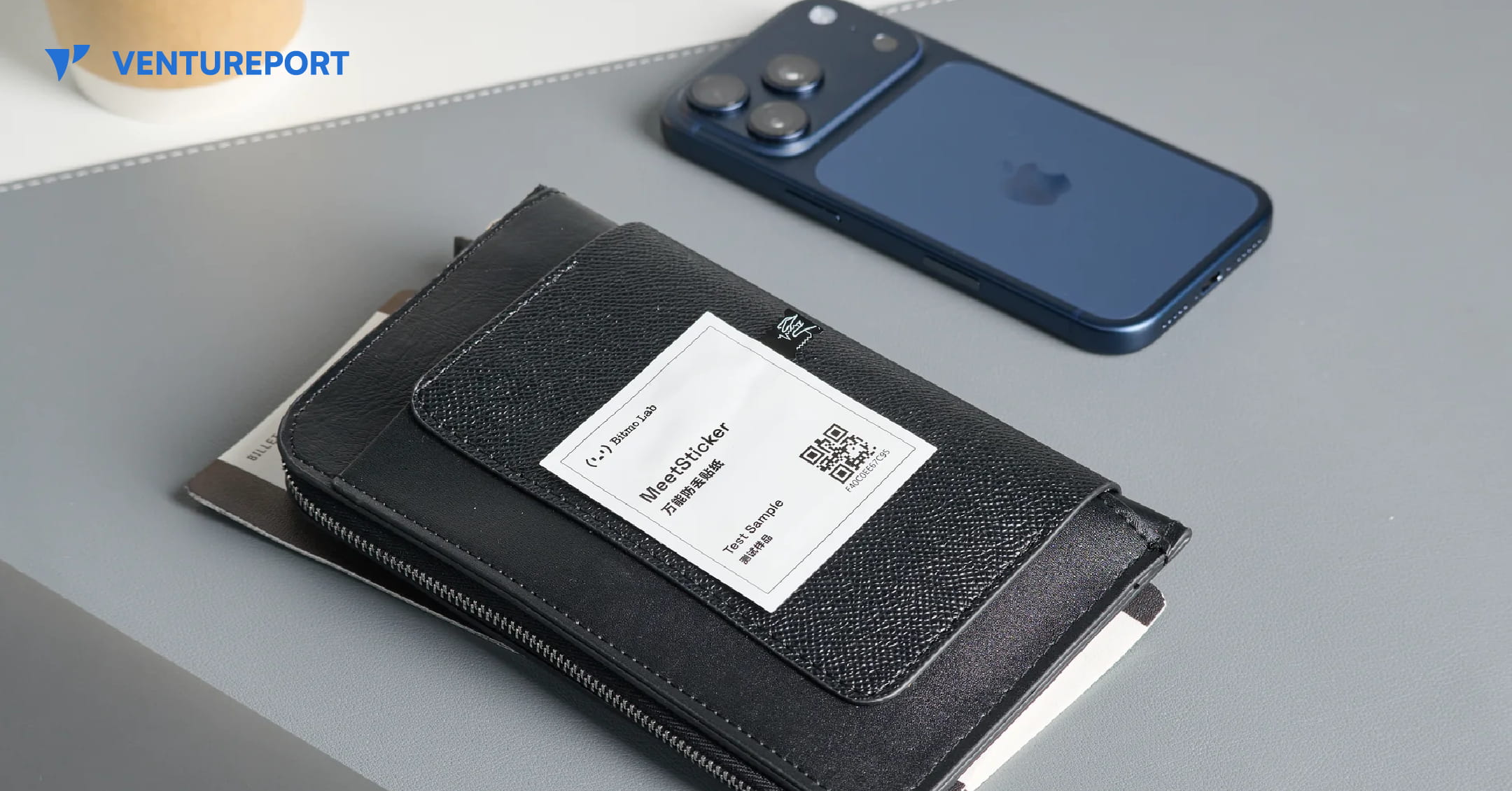
Bitmo Lab's MeetSticker tracker. PHOTO: BITMO LAB
Location trackers have become everyday accessories for keys, bags and luggage. But as personal items grow slimmer and more design-focused — from minimalist wallets to passport sleeves and specialised gear — tracking them has become less straightforward. Most trackers are built as small, rigid discs that assume the presence of space, loops or compartments. That assumption has created a growing mismatch between modern product design and the technology meant to secure it.
Hong Kong–based startup Bitmo Lab is attempting to address that gap with a device called MeetSticker. Instead of the solid plastic casing typical of most trackers, MeetSticker is engineered to be flexible and ultra-thin, measuring just 0.8 millimetres thick. The bendable design allows it to sit within narrow compartments or along curved surfaces without altering the shape of the object. Rather than attaching to an item externally, it is intended to integrate discreetly inside it.
That structural shift is the core of the product’s proposition. By removing the rigid shell that defines conventional tracking hardware, MeetSticker can be placed in items that previously had no practical way to accommodate a tracker. Bitmo Lab states that the device connects through a proprietary network and a companion application compatible with both iOS and Android, positioning it as a cross-platform solution rather than one tied to a single ecosystem.
The implications extend beyond form factor. Objects without obvious attachment points — such as compact travel accessories or specialised tools — could potentially be monitored without visible add-ons. In doing so, the device broadens the scope of tracking technology into categories where aesthetics, aerodynamics or compact design matter as much as functionality.
Before moving toward retail distribution, however, the company is focusing on validation. Bitmo Lab has launched a five-week global alpha testing programme beginning February 9. Sixty participants will receive a prototype unit and early access to the app. According to the company, the programme is designed to assess durability, usability and real-world performance before a wider commercial release. Participants who provide feedback will receive a retail unit upon launch.
Such testing is particularly relevant for flexible electronics. Unlike rigid devices, bendable hardware must withstand repeated flexing, daily handling and environmental exposure. Early user data can help refine manufacturing processes and software optimisation before scaling production.
As with other connected tracking devices, privacy considerations remain part of the equation. Bitmo Lab has stated that data collected during the alpha programme will be used strictly for testing purposes and deleted once the programme concludes.
Whether flexible trackers will redefine the category will depend on how they perform outside controlled testing environments. Still, the introduction of a near-invisible, bendable tracking device reflects a broader shift in consumer technology. As everyday products become thinner and more design-conscious, the tools built to protect them may need to adapt just as seamlessly.