
Updated
November 27, 2026 1:05 AM

A desk with books and coffee next to a computer. PHOTO: UNSPLASH
Ailytics raises US$7.4 million in Series A
Singapore-based vision AI startup Ailytics has raised US$7.4 million in a Series A round led by Tin Men Capital. Its flagship product, Ailyssa, works with existing CCTV cameras to analyse footage in real time. Using computer vision and vision-language models, it flags industrial safety hazards such as workers without protective gear or standing too close to moving machinery. This helps industrial teams identify and address potential risks before they lead to accidents.
Stryv raises US$11.5 million in Series B
Singapore-based personal care and home wellness company Stryv has raised US$11.5 million in a Series B round led by ACV Capital, with participation from Openspace Capital and OCTAVE Capital. Its product range includes hair dryers, stylers, shavers, men's grooming and oral care products. Through its Sterra brand, the company also offers home wellness products such as air and water purifiers.
Omnichat raises US$10 million in Series A
Hong Kong-based customer engagement startup Omnichat has raised US$10 million in a Series A round led by Openspace Capital, with participation from Darwin Ventures and Acorn Pacific Ventures. Its platform brings customer conversations from WhatsApp, LINE, Messenger, Instagram and WeChat into one place, helping brands manage sales, marketing and customer service. It also uses AI to recommend products, respond to enquiries and turn conversations into sales. Omnichat says it serves more than 5,000 brands and has helped generate over US$100 million in revenue for clients.
ProScout seeks US$200,000 to complete seed financing
Israel-based agritech startup ProScout is raising a seed round through a SAFE, with US$1.2 million secured and a further US$200,000 sought. Its backers include Orbit Ventures and angel investors, alongside a non-dilutive grant. The startup's device clips onto existing agricultural sprayers and records where pesticides are applied in real time. Its AI-powered platform compares actual spraying with planned treatment and generates maps showing which areas were covered and where spraying was missed. This helps commercial growers improve spraying accuracy and reduce chemical waste.
Keep Reading
A new safety layer aims to help robots sense people in real time without slowing production
Updated
March 17, 2026 1:02 AM
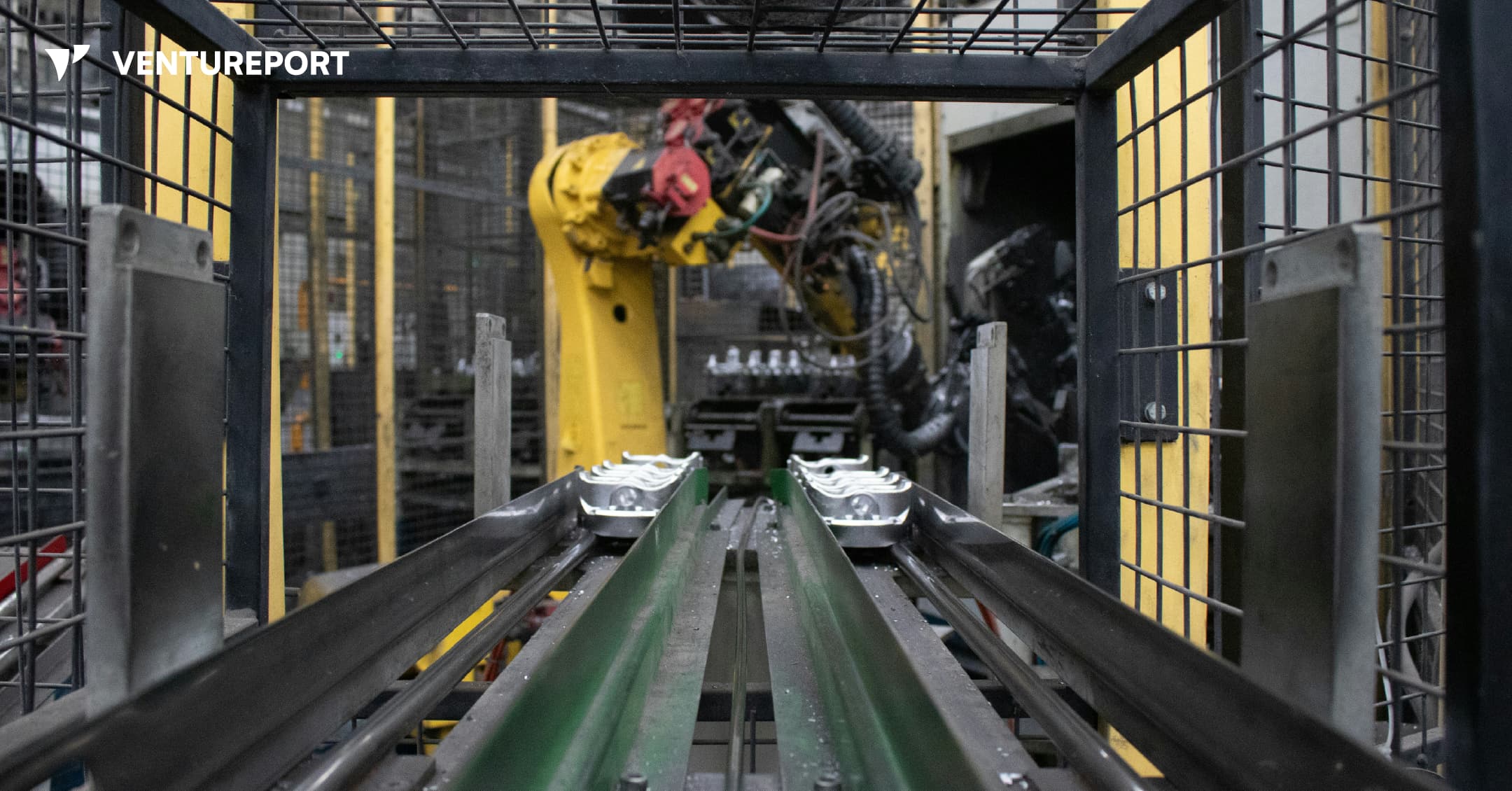
An industrial robot in a factory. PHOTO: UNSPLASH
Algorized has raised US$13 million in a Series A round to advance its AI-powered safety and sensing technology for factories and warehouses. The California- and Switzerland-based robotics startup says the funding will help expand a system designed to transform how robots interact with people. The round was led by Run Ventures, with participation from the Amazon Industrial Innovation Fund and Acrobator Ventures, alongside continued backing from existing investors.
At its core, Algorized is building what it calls an intelligence layer for “physical AI” — industrial robots and autonomous machines that function in real-world settings such as factories and warehouses. While generative AI has transformed software and digital workflows, bringing AI into physical environments presents a different challenge. In these settings, machines must not only complete tasks efficiently but also move safely around human workers.
This is where a clear gap exists. Today, most industrial robots rely on camera-based monitoring systems or predefined safety zones. For instance, when a worker steps into a marked area near a robotic arm, the system is programmed to slow down or stop the machine completely. This approach reduces the risk of accidents. However, it also means production lines can pause frequently, even when there is no immediate danger. In high-speed manufacturing environments, those repeated slowdowns can add up to significant productivity losses.
Algorized’s technology is designed to reduce that trade-off between safety and efficiency. Instead of relying solely on cameras, the company utilizes wireless signals — including Ultra-Wideband (UWB), mmWave, and Wi-Fi — to detect movement and human presence. By analysing small changes in these radio signals, the system can detect motion and breathing patterns in a space. This helps machines determine where people are and how they are moving, even in conditions where cameras may struggle, such as poor lighting, dust or visual obstruction.
Importantly, this data is processed locally at the facility itself — not sent to a remote cloud server for analysis. In practical terms, this means decisions are made on-site, within milliseconds. Reducing this delay, or latency, allows robots to adjust their movements immediately instead of defaulting to a full stop. The aim is to create machines that can respond smoothly and continuously, rather than reacting in a binary stop-or-go manner.
With the new funding, Algorized plans to scale commercial deployments of its platform, known as the Predictive Safety Engine. The company will also invest in refining its intent-recognition models, which are designed to anticipate how humans are likely to move within a workspace. In parallel, it intends to expand its engineering and support teams across Europe and the United States. These efforts build on earlier public demonstrations and ongoing collaborations with manufacturing partners, particularly in the automotive and industrial sectors.
For investors, the appeal goes beyond safety compliance. As factories become more automated, even small improvements in uptime and workflow continuity can translate into meaningful financial gains. Because Algorized’s system works with existing wireless infrastructure, manufacturers may be able to upgrade machine awareness without overhauling their entire hardware setup.
More broadly, the company is addressing a structural limitation in industrial automation. Robotics has advanced rapidly in precision and power, yet human-robot collaboration is still governed by rigid safety systems that prioritise stopping over adapting. By combining wireless sensing with edge-based AI models, Algorized is attempting to give machines a more continuous awareness of their surroundings from the start.