
From generative AI to green energy, 15 finalist teams will take the stage after a record 390 teams entered this year's competition.
Updated
October 2, 2026 9:13 AM
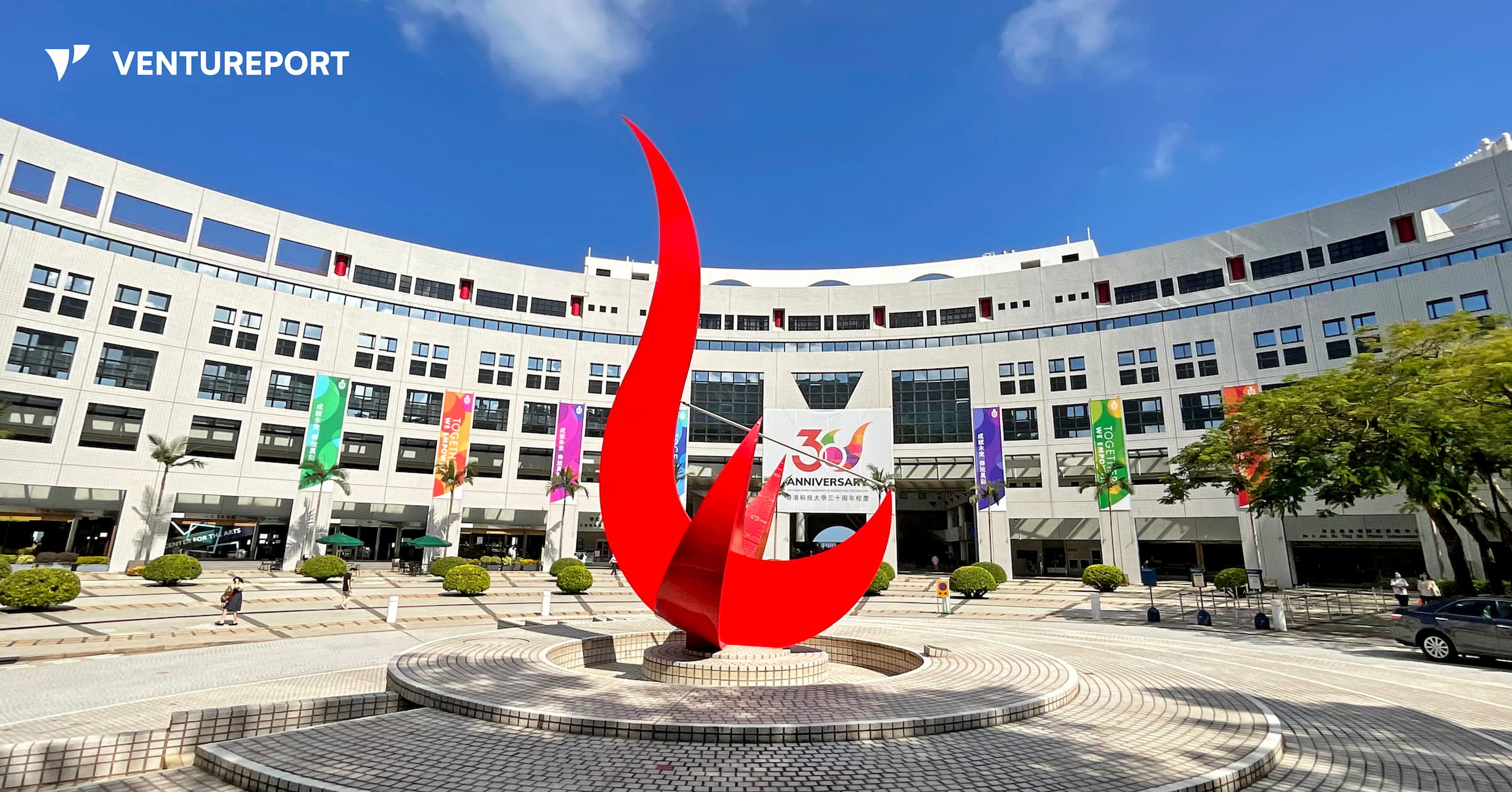
Entrance Piazza, Hong Kong University of Science and Technology. PHOTO: HKUST
The HKUST-Sino Million Dollar Entrepreneurship Competition 2026 will hold its finals on October 12, following a record 390 teams from 24 countries and regions taking part in this year's competition.
Jointly organised by the Hong Kong University of Science and Technology (HKUST) and Sino Group, the competition aims to give young entrepreneurs a platform to develop and present their ideas. Sino Group Deputy Chief Executive Officer Wong Wing-lung said the Group has partnered with HKUST for many years to support young talent and the development of innovation and technology in Hong Kong.
He said the competition gives young entrepreneurs a platform to showcase their creativity, exchange ideas and put their concepts into practice.
The international participation is reflected in the universities and regions represented this year. Participants include students from the University of Oxford in the UK, the University of Pennsylvania in the US and the National University of Singapore. Teams have also joined from Australia and South Africa.
After multiple rounds of assessment, 15 teams have advanced to the finals. Their projects cover health technology, generative AI, smart buildings, and green energy management. At the finals, the teams will present their solutions to a judging panel comprising venture capital investors, industry leaders and academic experts. They will compete for more than HK$1 million in prizes and awards.
The 2026 competition has also expanded the areas it recognises. Three new awards have been introduced this year: the Transformative AI Award, the NextGen Biotech Award and the Societal Influential Award. The competition will also continue to offer the Sustainability Impact Award. Together, the awards focus on areas ranging from emerging technologies to social and sustainability challenges.
The organisers are also adding new activities to help teams develop their ideas further. This year's programme includes pitching skills training, AI workshops, investor matching sessions and mentorship opportunities. The AI workshops will cover areas including generative AI and AI agents, while representatives from venture capital firms such as Gobi Partners and InnoAngel Fund have been invited to share insights on fundraising, product positioning and market expansion.
These activities are intended to help young entrepreneurs strengthen their business plans and presentation skills. They also give teams opportunities to explore technology commercialisation and potential market applications.
The competition will also launch the InnoBay 1M PLUS Program during the Grand Final. The programme will focus initially on Smart City Development and aims to connect HKUST start-ups and competition alumni with industry partners. It will also support potential proof-of-concept opportunities and help promising innovations move towards commercial adoption.
The Grand Final will also include an audience voting segment. Members of the public will be able to vote for the team they believe has the greatest potential and impact, with those who correctly vote for an eventual winning team entering a lucky draw.
For Wong, the competition is part of a broader effort to develop Hong Kong's innovation and technology talent. He noted that Hong Kong's first Five-Year Plan and latest Policy Address both highlight innovation, technology and talent development.
Prof. Tim Cheng Kwang-Ting, HKUST's Vice-President for Research and Development, said the competition has also served as a platform for aspiring entrepreneurs to connect with investors, understand market needs, test their ideas and gain practical entrepreneurial experience. He added that the competition has strengthened its training, mentorship and networking activities this year.
The Group believes that closer cooperation between industry, academia and research institutions can help turn innovative ideas into practical applications. Through the competition and its wider support programmes, young entrepreneurs are given opportunities to develop their ideas, connect with potential partners and explore how they can be taken from early concepts towards real-world applications.
Keep Reading
A closer look at how machine intelligence is helping doctors see cancer in an entirely new light.
Updated
January 8, 2026 6:33 PM

Serratia marcescens colonies on BTB agar medium. PHOTO: UNSPLASH
Artificial intelligence is beginning to change how scientists understand cancer at the cellular level. In a new collaboration, Bio-Techne Corporation, a global life sciences tools provider, and Nucleai, an AI company specializing in spatial biology for precision medicine, have unveiled data from the SECOMBIT clinical trial that could reshape how doctors predict cancer treatment outcomes. The results, presented at the Society for Immunotherapy of Cancer (SITC) 2025 Annual Meeting, highlight how AI-powered analysis of tumor environments can reveal which patients are more likely to benefit from specific therapies.
Led in collaboration with Professor Paolo Ascierto of the University of Napoli Federico II and Istituto Nazionale Tumori IRCCS Fondazione Pascale, the study explores how spatial biology — the science of mapping where and how cells interact within tissue — can uncover subtle immune behaviors linked to survival in melanoma patients.
Using Bio-Techne’s COMET platform and a 28-plex multiplex immunofluorescence panel, researchers analyzed 42 pre-treatment biopsies from patients with metastatic melanoma, an advanced stage of skin cancer. Nucleai’s multimodal AI platform integrated these imaging results with pathology and clinical data to trace patterns of immune cell interactions inside tumors.
The findings revealed that therapy sequencing significantly influences immune activity and patient outcomes. Patients who received targeted therapy followed by immunotherapy showed stronger immune activation, marked by higher levels of PD-L1+ CD8 T-cells and ICOS+ CD4 T-cells. Those who began with immunotherapy benefited most when PD-1+ CD8 T-cells engaged closely with PD-L1+ CD4 T-cells along the tumor’s invasive edge. Meanwhile, in patients alternating between targeted and immune treatments, beneficial antigen-presenting cell (APC) and T-cell interactions appeared near tumor margins, whereas macrophage activity in the outer tumor environment pointed to poorer prognosis.
“This study exemplifies how our innovative spatial imaging and analysis workflow can be applied broadly to clinical research to ultimately transform clinical decision-making in immuno-oncology”, said Matt McManus, President of the Diagnostics and Spatial Biology Segment at Bio-Techne.
The collaboration between the two companies underscores how AI and high-plex imaging together can help decode complex biological systems. As Avi Veidman, CEO of Nucleai, explained, “Our multimodal spatial operating system enables integration of high-plex imaging, data and clinical information to identify predictive biomarkers in clinical settings. This collaboration shows how precision medicine products can become more accurate, explainable and differentiated when powered by high-plex spatial proteomics – not limited by low-plex or H&E data alone”.
Dr. Ascierto described the SECOMBIT trial as “a milestone in demonstrating the possible predictive power of spatial biomarkers in patients enrolled in a clinical study”.
The study’s broader message is clear: understanding where immune cells are and how they interact inside a tumor could become just as important as knowing what they are. As AI continues to map these microscopic landscapes, oncology may move closer to genuinely personalized treatment — one patient, and one immune network, at a time.