
From generative AI to green energy, 15 finalist teams will take the stage after a record 390 teams entered this year's competition.
Updated
October 2, 2026 9:13 AM
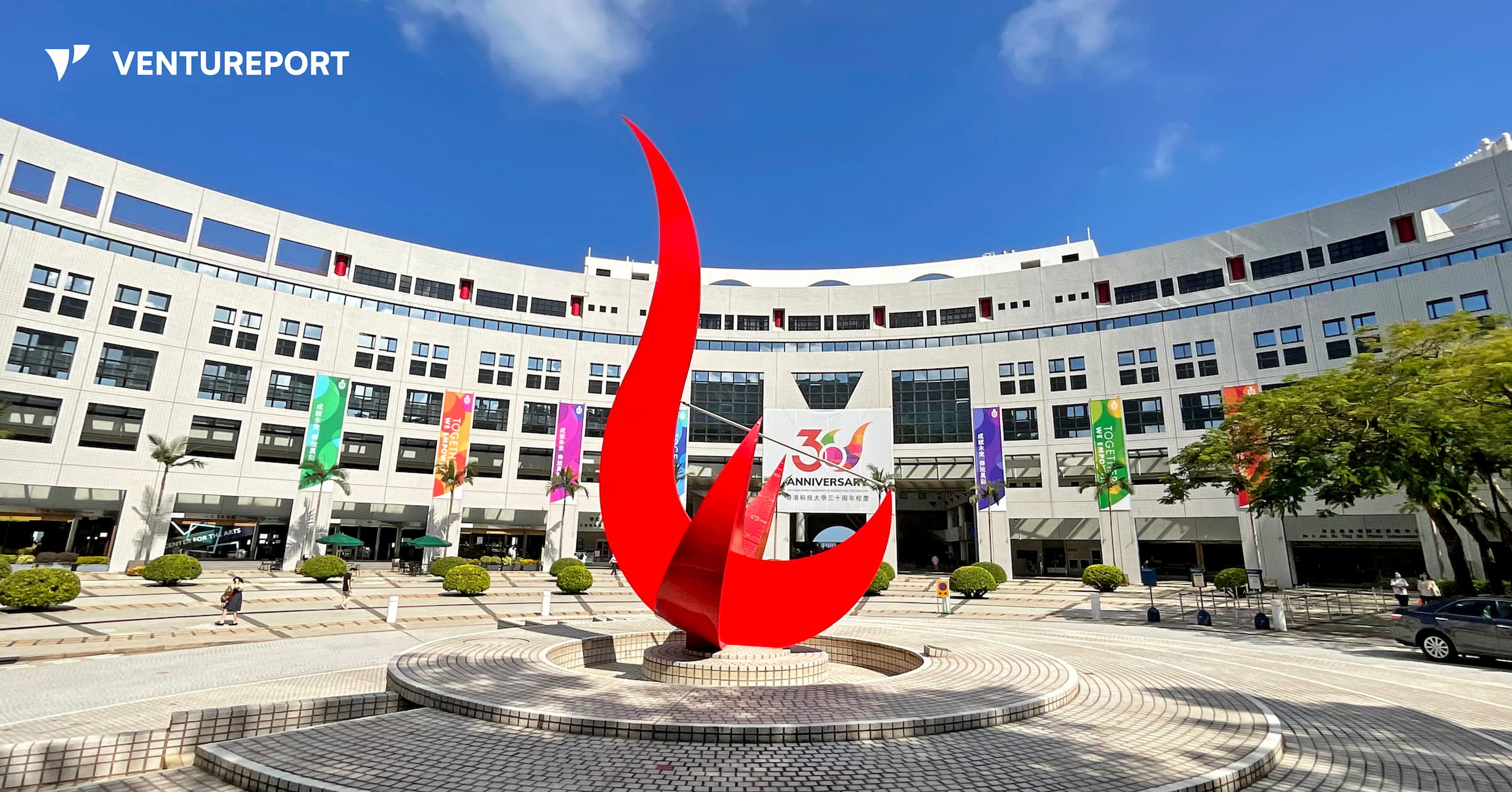
Entrance Piazza, Hong Kong University of Science and Technology. PHOTO: HKUST
The HKUST-Sino Million Dollar Entrepreneurship Competition 2026 will hold its finals on October 12, following a record 390 teams from 24 countries and regions taking part in this year's competition.
Jointly organised by the Hong Kong University of Science and Technology (HKUST) and Sino Group, the competition aims to give young entrepreneurs a platform to develop and present their ideas. Sino Group Deputy Chief Executive Officer Wong Wing-lung said the Group has partnered with HKUST for many years to support young talent and the development of innovation and technology in Hong Kong.
He said the competition gives young entrepreneurs a platform to showcase their creativity, exchange ideas and put their concepts into practice.
The international participation is reflected in the universities and regions represented this year. Participants include students from the University of Oxford in the UK, the University of Pennsylvania in the US and the National University of Singapore. Teams have also joined from Australia and South Africa.
After multiple rounds of assessment, 15 teams have advanced to the finals. Their projects cover health technology, generative AI, smart buildings, and green energy management. At the finals, the teams will present their solutions to a judging panel comprising venture capital investors, industry leaders and academic experts. They will compete for more than HK$1 million in prizes and awards.
The 2026 competition has also expanded the areas it recognises. Three new awards have been introduced this year: the Transformative AI Award, the NextGen Biotech Award and the Societal Influential Award. The competition will also continue to offer the Sustainability Impact Award. Together, the awards focus on areas ranging from emerging technologies to social and sustainability challenges.
The organisers are also adding new activities to help teams develop their ideas further. This year's programme includes pitching skills training, AI workshops, investor matching sessions and mentorship opportunities. The AI workshops will cover areas including generative AI and AI agents, while representatives from venture capital firms such as Gobi Partners and InnoAngel Fund have been invited to share insights on fundraising, product positioning and market expansion.
These activities are intended to help young entrepreneurs strengthen their business plans and presentation skills. They also give teams opportunities to explore technology commercialisation and potential market applications.
The competition will also launch the InnoBay 1M PLUS Program during the Grand Final. The programme will focus initially on Smart City Development and aims to connect HKUST start-ups and competition alumni with industry partners. It will also support potential proof-of-concept opportunities and help promising innovations move towards commercial adoption.
The Grand Final will also include an audience voting segment. Members of the public will be able to vote for the team they believe has the greatest potential and impact, with those who correctly vote for an eventual winning team entering a lucky draw.
For Wong, the competition is part of a broader effort to develop Hong Kong's innovation and technology talent. He noted that Hong Kong's first Five-Year Plan and latest Policy Address both highlight innovation, technology and talent development.
Prof. Tim Cheng Kwang-Ting, HKUST's Vice-President for Research and Development, said the competition has also served as a platform for aspiring entrepreneurs to connect with investors, understand market needs, test their ideas and gain practical entrepreneurial experience. He added that the competition has strengthened its training, mentorship and networking activities this year.
The Group believes that closer cooperation between industry, academia and research institutions can help turn innovative ideas into practical applications. Through the competition and its wider support programmes, young entrepreneurs are given opportunities to develop their ideas, connect with potential partners and explore how they can be taken from early concepts towards real-world applications.
Keep Reading
From information gaps to global access — how AI is reshaping the pursuit of knowledge.
Updated
January 8, 2026 6:33 PM
.jpg)
Paper cut-outs of robots sitting on a pile of books. PHOTO: FREEPIK
Encyclopaedias have always been mirrors of their time — from heavy leather-bound volumes in the 19th century to Wikipedia’s community-edited pages online. But as the world’s information multiplies faster than humans can catalogue it, even open platforms struggle to keep pace. Enter Botipedia, a new project from INSEAD, The Business School for the World, that reimagines how knowledge can be created, verified and shared using artificial intelligence.
At its core, Botipedia is powered by proprietary AI that automates the process of writing encyclopaedia entries. Instead of relying on volunteers or editors, it uses a system called Dynamic Multi-method Generation (DMG) — a method that combines hundreds of algorithms and curated datasets to produce high-quality, verifiable content. This AI doesn’t just summarise what already exists; it synthesises information from archives, satellite feeds and data libraries to generate original text grounded in facts.
What makes this innovation significant is the gap it fills in global access to knowledge. While Wikipedia hosts roughly 64 million English-language entries, languages like Swahili have fewer than 40,000 articles — leaving most of the world’s population outside the circle of easily available online information. Botipedia aims to close that gap by generating over 400 billion entries across 100 languages, ensuring that no subject, event or region is overlooked.
"We are creating Botipedia to provide everyone with equal access to information, with no language left behind", says Phil Parker, INSEAD Chaired Professor of Management Science, creator of Botipedia and holder of one of the pioneering patents in the field of generative AI. "We focus on content grounded in data and sources with full provenance, allowing the user to see as many perspectives as possible, as opposed to one potentially biased source".
Unlike many generative AI tools that depend on large language models (LLMs), Botipedia adapts its methods based on the type of content. For instance, weather data is generated using geo-spatial techniques to cover every possible coordinate on Earth. This targeted, multi-method approach helps boost both the accuracy and reliability of what it produces — key challenges in today’s AI-driven content landscape.
Additionally, the innovation is also energy-efficient. Its DMG system operates at a fraction of the processing power required by GPU-heavy models like ChatGPT, making it a sustainable alternative for large-scale content generation.
By combining AI precision, linguistic inclusivity and academic credibility, Botipedia positions itself as more than a digital library — it’s a step toward universal, unbiased access to verified knowledge.
"Botipedia is one of many initiatives of the Human and Machine Intelligence Institute (HUMII) that we are establishing at INSEAD", says Lily Fang, Dean of Research and Innovation at INSEAD. "It is a practical application that builds on INSEAD-linked IP to help people make better decisions with knowledge powered by technology. We want technologies that enhance the quality and meaning of our work and life, to retain human agency and value in the age of intelligence".
By harnessing AI to bridge gaps of language, geography and credibility, Botipedia points to a future where access to knowledge is no longer a privilege, but a shared global resource.