
Bambi Dang's startup aims to turn attendees' needs into useful connections
Updated
November 26, 2026 2:58 PM

Bambi Dang, CEO of FunFox AI, during a panel discussion. PHOTO: BAMBI DANG
An attendee list may show someone's name, company and job title, but it may not tell you what they are looking for or whether they would be relevant to you.
That leaves attendees figuring out who is relevant, searching through attendee profiles and sending meeting requests themselves.
FunFox AI is Bambi Dang's attempt to take some of that work off attendees' hands. The startup is an AI matchmaking agent for professional events and communities, designed to help people find relevant connections based on their professional goals.
The process begins when an event organiser creates a FunFox link for a particular event and shares it with attendees. Attendees can then speak with FunFox's voice AI agent or type to share who they are, what they are working on, what they hope to achieve and the kind of people they want to meet. Dang prefers the voice-based approach because a natural conversation allows users to share more context than they might through a traditional form or static profile.
FunFox uses this information to identify relevant people within the event or community. Rather than simply matching people based on their profiles, it looks at what each person is seeking and what they can offer in return, creating matches based on mutual relevance.
Dang's experience in the startup ecosystem helped shape the idea. She worked in sales and marketing at an early-stage startup in Helsinki and later built an education platform for students preparing to study abroad. Through building companies and communities, she says she repeatedly saw how much value could come from putting the right people together.
Event organisers and community managers are FunFox AI's paying customers. They pay an annual subscription based on the number of events they organise and the total number of attendees, while attendees can use the platform without an additional fee.
However, getting organisers on board is not always straightforward. Many already rely on established event-management platforms that handle registration, ticketing, agendas and speakers. Dang says some of these providers have multi-year agreements with organisers, making it harder for FunFox to introduce another tool into their existing workflows. The challenge at the moment is to show organisers why they need a dedicated matchmaking solution alongside the systems they already use.
The company is now moving beyond its initial pilot stage. Dang said the pilot events have been successful and FunFox is entering its first agreements with paying customers, including startup ecosystems. The team is also working with these customers to organise events together.
For now, her focus remains on developing the product and working closely with customers. She is open to exploring investor interest further when the time is right.
Keep Reading
Humanoids are moving from research labs into real industries — and capital is finally catching up.
Updated
January 8, 2026 6:31 PM
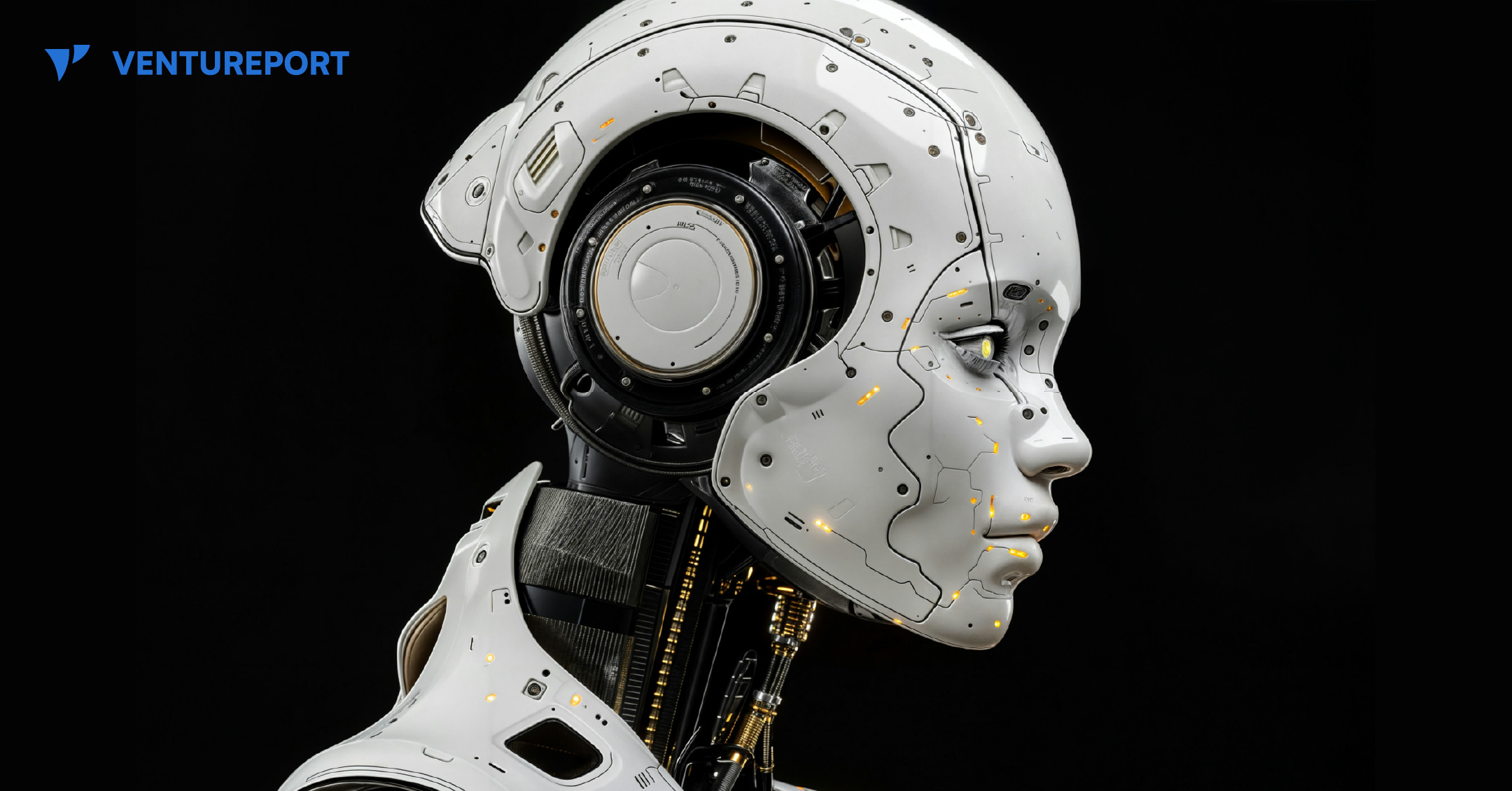
A face of a humanoid robot, side view on black background. PHOTO: UNSPLASH
Humanoid robots are shifting from sci-fi speculation to engineering reality, and the pace of progress is prompting investors to reassess how the next decade of physical automation will unfold. ALM Ventures has launched a new US$100 million early-stage fund aimed squarely at this moment—one where advances in robot control, embodied AI and spatial intelligence are beginning to converge into something commercially meaningful.
ALM Ventures Fund I, is designed for the earliest stages of company formation, targeting seed and pre-seed teams building the foundations of humanoid deployment. It’s a concentrated fund that seeks to take early ownership in a sector that many now consider the next major technological frontier.
For Founder and General Partner Modar Alaoui, the timing is not accidental. “After years of research, humanoids are finally entering a phase where performance, reliability and cost are converging toward commercial viability”, he said. “What the category needs now is focused capital and deep technical diligence to turn prototypes into scalable, enduring companies”.
That framing captures a shift happening across robotics: the field is moving out of the lab and into early commercial readiness. Improvements in perception systems, model-based reasoning and motion control are accelerating the transition. Advances in simulation are also lowering the complexity and cost of integrating humanoid platforms into real environments. As these systems become more capable, the gap between research prototypes and market-ready products is narrowing.
ALM Ventures is positioning itself at this inflection point. Fund I’s thesis centers on the core technologies required to scale humanoids safely and economically. This includes next-generation robot platforms, spatial reasoning engines, embodied intelligence models, world-modeling systems and the infrastructure needed for early deployment. Rather than chasing every robotics trend, the fund is concentrating on the essential layers that will determine whether humanoids can work reliably outside controlled settings.
The firm isn’t starting from zero. During the fund’s formation, ALM Ventures made ten early investments that directly align with its investment focus. The portfolio includes companies building at different layers of the humanoid stack, such as Sanctuary AI, Weave Robotics, Emancro, High Torque Robotics, MicroFactory, Mbodi, Adamo, Haptica Robotics, UMA and O-ID. The list reflects a broad but intentional spread, from hardware to intelligence to manufacturing approaches, all oriented toward enabling scalable physical AI.
Beyond capital, ALM Ventures has been shaping the ecosystem through its global Humanoids Summit series in Silicon Valley, London and Tokyo. The series gives the firm early visibility into emerging technologies, pre-incorporation teams and the senior leaders steering the global robotics landscape. That vantage point has helped the firm identify where commercialization is truly taking root and where bottlenecks still exist.
The rise of humanoids is often compared to the early days of self-driving cars: a long arc of research suddenly meeting an acceleration point. What separates this moment is that advances in embodied AI and spatial intelligence are giving robots a more intuitive understanding of the physical world, making them easier to deploy, teach and scale. ALM Ventures’ Fund I is an attempt to capture that transition while shaping the companies that could define the next technological era.
With US$100 million dedicated to the earliest builders in the space, ALM Ventures is signaling its belief that humanoids are not just another robotics cycle—they may be the next major platform shift in AI.