
Join us at CVCF 2026 to explore how startups can scale and win in the age of AI.
Updated
October 29, 2026 11:39 PM

CVCF 2026 takes place on 4–5 November at Cyberport, Hong Kong. IMAGE: CYBERPORT
AI can help you build a startup, but it won’t automatically make you stand out. When everyone has access to similar tools, you need to give customers a reason to choose you and investors a reason to back you. So, how do you turn innovation into a competitive edge?
That question sits at the heart of Cyberport Venture & Capital Forum (CVCF) 2026, taking place on 4–5 November under the theme “Scaling in a Changing World: Winning the Next Competitive Cycle” and the message “Scale Up & Win.”
The two-day forum will feature more than 80 speakers discussing venture investment, AI-driven growth, emerging technologies and expansion into new markets. Day 1 will explore global investment trends and the next wave of innovation. Day 2 will feature CVCF 2026’s spotlight event, the Agentic Economy Summit, examining how agentic AI and digital assets could reshape business and finance. The wider programme will also include investor matching, founder pitches, 100+ Innovator Showcase, startup workshops and clinics.
With founders and investors navigating a fast-changing technology landscape, CVCF 2026 will explore what it takes to stay competitive, scale into new markets and turn emerging opportunities into business growth. Here’s a look at the key programmes lined up for this year’s forum.
Keynotes and Panels: Finding the Next Big Opportunity
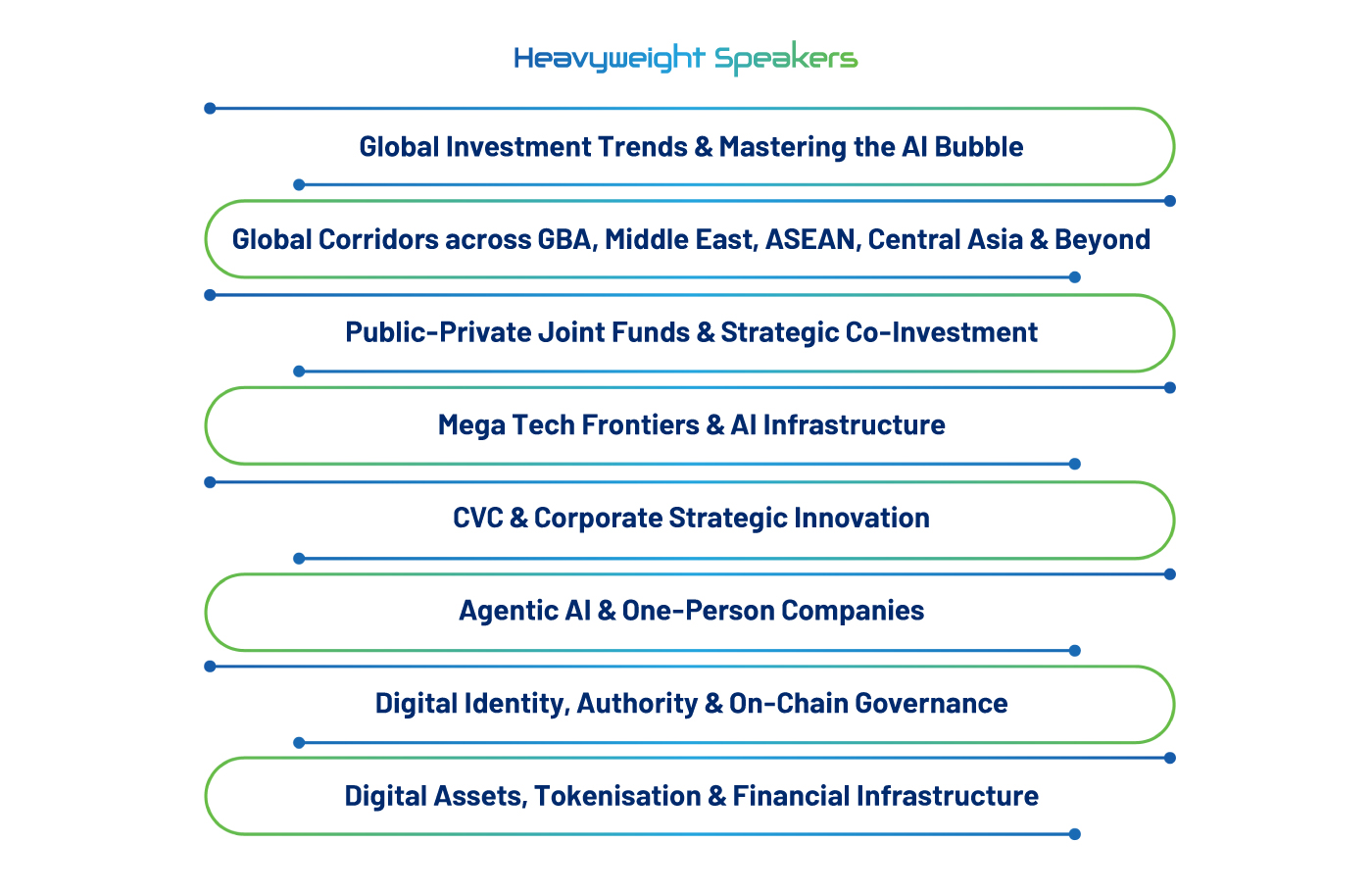
Taara founder and CEO Mahesh Krishnaswamy will deliver the keynote The Innovation Playbook: Capitalizing on Moonshots and Faster Cycles in the Age of AI. The wider Day 1 programme will cover global investment trends, expansion into new markets, agentic AI and one-person companies.
For startups navigating the AI market, the panel Mastering the AI Bubble: Capital Rerouting and How Global Champions Stand Out will bring together panellists from Quona Capital, Alumni Ventures, FOV Ventures and Capital6 to discuss how investors assess startups and distinguish commercial potential from market hype. Other sessions will explore emerging technologies beyond AI software, including embodied AI, advanced computing and commercial aerospace.
Investor Matching and Networking: Connecting with Capital
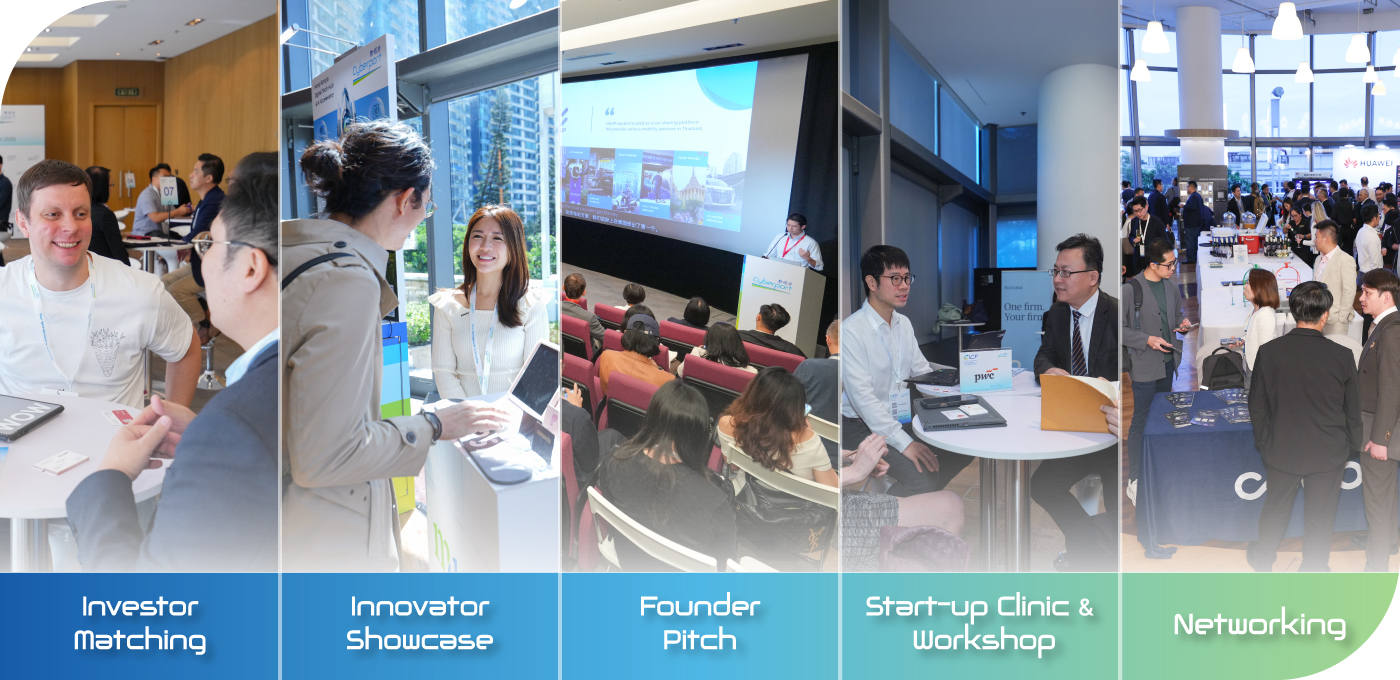
Away from the conference sessions, MatchEasy will help founders and investors arrange one-to-one meetings, either onsite or online. Confirmed participants will receive access to the platform to explore potential matches and schedule meetings.
Investors can also discover local and international startups through the Founder Pitch programme, where entrepreneurs present their projects and ventures. Meanwhile, the Innovator Showcase offers a separate opportunity to explore emerging technology solutions through a virtual platform and selected on-site exhibits.
For founders seeking more tailored guidance, the Startup Clinics will offer one-to-one discussions with industry experts and experienced entrepreneurs on business challenges, fundraising and growth. Advance registration is required.
Hands-On Workshops: Strengthening Your Investment Pitch
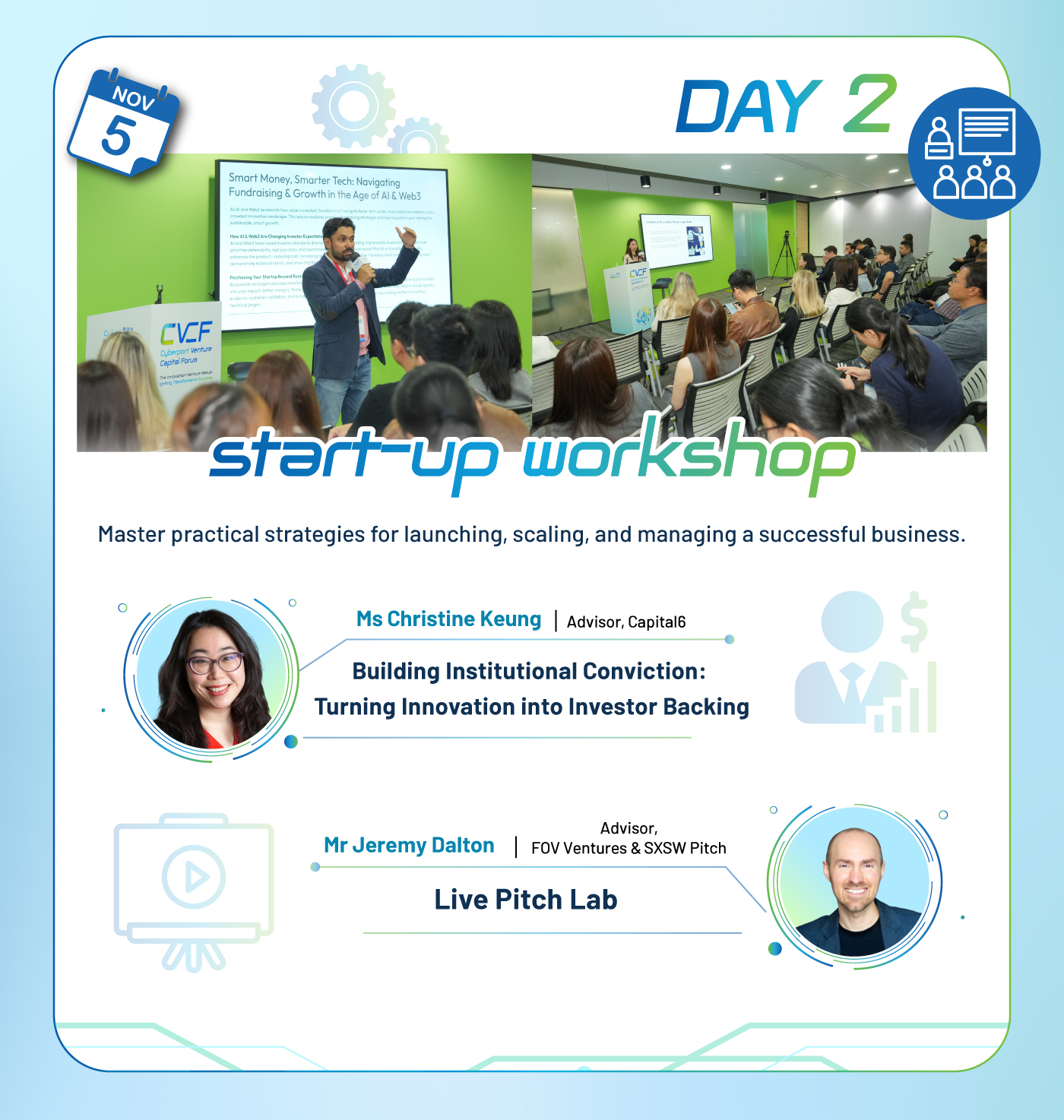
Turning an innovative idea into a business that investors can back takes more than a strong pitch. CVCF 2026 will host practical workshops to help founders strengthen their fundraising strategies and make a stronger case to investors.
Led by Capital6 advisor Christine Keung, one workshop will explore how founders can align technical innovation with business goals, communicate their product’s value and prepare for fundraising. Another, led by Jeremy Dalton, advisor at FOV Ventures and SXSW Pitch, will help founders understand how investors assess startups, with opportunities to pitch live and receive direct feedback.

CVCF 2026’s spotlight event, the Agentic Economy Summit, will take place on 5 November under the theme “Intelligent Frontiers, Tokenised Horizons: Where Agentic AI Reshapes Business and Digital Assets Redefine How Value Moves.”
The summit will bring together technology and finance leaders to explore how agentic AI and digital assets could change the way businesses operate. Wolf Ruzicka, chief commercial officer at Unlimit, a global payments company, will discuss building and scaling agentic AI applications. Dr Feng Xiao, chairman and CEO of HashKey Group, will examine how digital identity, tokenised assets and money connect on-chain.
The discussions will also look at agent-led commerce, including how AI agents could help customers choose products and make purchases, and the payment systems needed to support these transactions. Other topics include Hong Kong dollar stablecoins and their potential role in payments and settlement, as well as the rise of one-person companies. The summit will also explore how founders can use AI agents to run their businesses with smaller teams, find customers and generate recurring revenue.
From AI-driven growth and cross-border investment to agentic AI and digital assets, CVCF 2026 brings together the people and ideas shaping the next phase of business. Whether you're preparing to raise capital, exploring new markets or assessing emerging technologies, the forum offers an opportunity to gain fresh perspectives and connect with investors, founders and industry leaders.
Exclusive for Ventureport readers: Use the promotional code cvcf26vp to access a Full Access Pass for HK$300, subject to confirmation of the offer by the organiser.
Date: 4–5 November 2026
Function Rooms, Level 3, Core E, Cyberport 3, Hong Kong
Keep Reading
"Discover how emerging sustainability trends in digital marketing are reshaping the way small businesses connect with eco-conscious consumers."
Updated
January 8, 2026 6:35 PM

Protestor holding a sign "NO BUSINESS ON A DEAD PLANET" during a march. PHOTO: UNSPLASH
Sustainability has become more than just a buzzword—it’s a movement that’s reshaping business practices across industries. For small businesses, aligning with sustainable values isn’t just about doing the right thing; it’s about staying competitive in a world where consumers increasingly prioritize eco-conscious brands.
In the digital age, sustainable marketing is evolving rapidly, offering businesses new ways to reduce their environmental impact while engaging with customers who care deeply about the planet. Let’s take a closer look at the top trends driving sustainable marketing today and their implications for small businesses.
Most people don’t realize that online advertising has an environmental cost. Every time an ad is displayed, clicked on, or streamed as a video, it consumes energy. This energy powers the servers, data centers, and networks that host and deliver these ads. The problem is that much of this energy still comes from non-renewable sources like coal and natural gas, which contribute to carbon emissions.
For small businesses, this could mean optimizing ad campaigns to reduce unnecessary data usage or using platforms that offset their carbon emissions. Additionally, adopting lighter website designs and faster-loading ads can not only reduce energy consumption but also improve user experience—leading to better engagement and conversion rates.
Small businesses can stand out by making their digital campaigns both efficient and eco-friendly. Highlighting these efforts in marketing messages can appeal to sustainability-minded customers while showcasing innovation.
Sustainable packaging is no longer optional—it’s an expectation. But for small businesses, it’s not just about switching to biodegradable materials. It’s about effectively communicating those efforts to customers through digital channels.
Brands are using their websites, social media, and email marketing to share the stories behind their packaging choices. Whether it’s sourcing recycled materials or partnering with eco-friendly suppliers, transparency is key. Educational content, such as videos or infographics, can help customers understand the impact of their purchases and feel good about supporting a brand.
By using digital platforms to tell the story of their sustainability efforts, small businesses can create deeper emotional connections with customers. Sharing behind-the-scenes processes or celebrating packaging milestones can boost loyalty and differentiate a brand from competitors.
Influencer marketing has become a powerful tool for brands, and the rise of eco-conscious influencers is creating new opportunities for businesses that prioritize sustainability. These influencers focus on topics like waste reduction, ethical consumption, and eco-friendly lifestyles, making them an ideal partner for sustainable brands.
Collaborating with such influencers allows small businesses to reach niche audiences that are already committed to sustainable living. These partnerships feel more authentic compared to traditional ads, as followers trust influencers to recommend products that align with their values.
Even small businesses with limited budgets can benefit from micro-influencers —individuals with smaller but highly engaged audiences. Partnering with eco-conscious influencers can amplify a business’s sustainability message and create a ripple effect of awareness.
Consumers today are more skeptical of vague claims like "green" or "eco-friendly." They want specifics. Brands that embrace transparency by sharing measurable data about their sustainability efforts are earning trust and loyalty.
For example, brands that disclose the carbon footprint of their products or provide detailed information about their supply chains stand out in an age of greenwashing (misleading sustainability claims). This trend is particularly relevant for small businesses, as customers often expect smaller, local brands to be more ethical and transparent.
Being upfront about sustainability efforts—even if they’re still a work in progress—can build credibility. Sharing challenges, milestones, and small wins through social media or email newsletters makes the brand relatable and trustworthy.
The circular economy—a model in which products are reused, repaired, or recycled instead of discarded—is gaining momentum. Small businesses are finding creative ways to incorporate this principle into their operations and marketing.
For example, some businesses encourage customers to return used products in exchange for discounts or loyalty points. Others upcycle returned goods into new products and share this process with customers through digital platforms.
By participating in the circular economy, small businesses can differentiate themselves while building a loyal customer base. Promoting these initiatives online—whether through videos, blogs, or customer testimonials—can amplify their impact and attract eco-conscious buyers.
Sustainable marketing is more than a trend—it’s becoming a necessity for businesses of all sizes. For small businesses, it represents both an opportunity to stand out in a competitive market and a chance to make a meaningful impact on the planet.
Emerging trends like green digital advertising, circular economy initiatives, and transparency are reshaping how brands connect with their audiences. By embracing these practices, small businesses can attract eco-conscious consumers, build loyalty, and foster trust—all while reducing their environmental footprint.
The future of marketing belongs to those who see sustainability not as an add-on, but as the foundation of their growth. For small businesses ready to take on this challenge, the rewards go beyond profits—they include making a lasting, positive impact on the planet and the people who inhabit it.