
AI growth is increasingly becoming a manufacturing, packaging and deployment challenge — not just a computing one.
Updated
August 10, 2026 5:56 PM

Taipei 101 and Taipei Nan Shan Plaza, viewed from Elephant Mountain. PHOTO: UNSPLASH
As AI companies continue scaling larger models and data centers, the pressure is no longer falling only on chip design. Manufacturing capacity, advanced packaging and infrastructure deployment are becoming equally important parts of the AI race. AMD’s latest investment announcement reflects how quickly that shift is accelerating.
The US chipmaker announced plans to invest more than US$10 billion across Taiwan’s semiconductor and manufacturing ecosystem to support next-generation AI infrastructure. The investment focuses on expanding partnerships and increasing advanced packaging capacity needed for future AI systems.
The announcement highlights a growing reality across the AI industry. Building powerful AI chips is no longer enough on its own. Companies now also need the manufacturing networks, packaging technologies and supply chain coordination required to deploy AI infrastructure at global scale.
AMD’s investments center heavily around advanced chip packaging, an area becoming increasingly critical as AI systems demand higher performance and greater power efficiency. Traditional chip architectures are struggling to keep pace with the size and complexity of modern AI workloads. Advanced packaging helps connect processors, memory and computing systems more efficiently while managing power and cooling limitations inside large-scale AI environments.
The company said it is working with Taiwan-based partners including ASE, SPIL and PTI to develop next-generation packaging technologies for its upcoming 6th Gen AMD EPYC processors, codenamed “Venice.” AMD also said it had qualified what it described as the industry’s first 2.5D panel-based EFB interconnect technology alongside PTI.
At the center of the broader strategy is AMD Helios, the company’s rack-scale AI infrastructure platform scheduled for deployment beginning in the second half of 2026. The platform combines AMD Instinct MI450X GPUs, 6th Gen EPYC CPUs, networking systems and AMD’s ROCm software stack into integrated AI infrastructure systems designed for hyperscale deployment.
Rather than selling individual processors alone, companies are increasingly building complete AI infrastructure platforms that combine hardware, software, cooling systems and power management into unified deployments. That transition is reshaping how AI infrastructure is designed, manufactured and delivered.
Taiwan is also becoming more deeply embedded in that process. AMD’s investment spans not only semiconductor packaging companies but also manufacturing and system integration partners including Sanmina, Wiwynn, Wistron and Inventec. The partnerships reflect Taiwan’s growing role as one of the operational centers of the global AI infrastructure economy.
Dr. Lisa Su, Chair and CEO of AMD, said: “As AI adoption accelerates, our global customers are rapidly scaling AI infrastructure to meet growing compute demand. By combining AMD leadership in high-performance computing with the Taiwan ecosystem and our strategic global partners, we are enabling integrated, rack-scale AI infrastructure that helps customers accelerate deployment of next-generation AI systems”.
Power efficiency is becoming another major challenge shaping AI infrastructure decisions. As AI workloads consume more electricity and generate more heat, infrastructure providers are increasingly being forced to rethink cooling systems, interconnect technologies and deployment economics.
AMD’s announcement signals how the AI competition is evolving beyond model development and raw computing power. The next stage may depend just as heavily on who can manufacture, package and deploy AI infrastructure fast enough to support global demand.
Keep Reading
A closer look at how startups are turning local AI into global opportunity
Updated
March 24, 2026 6:25 PM
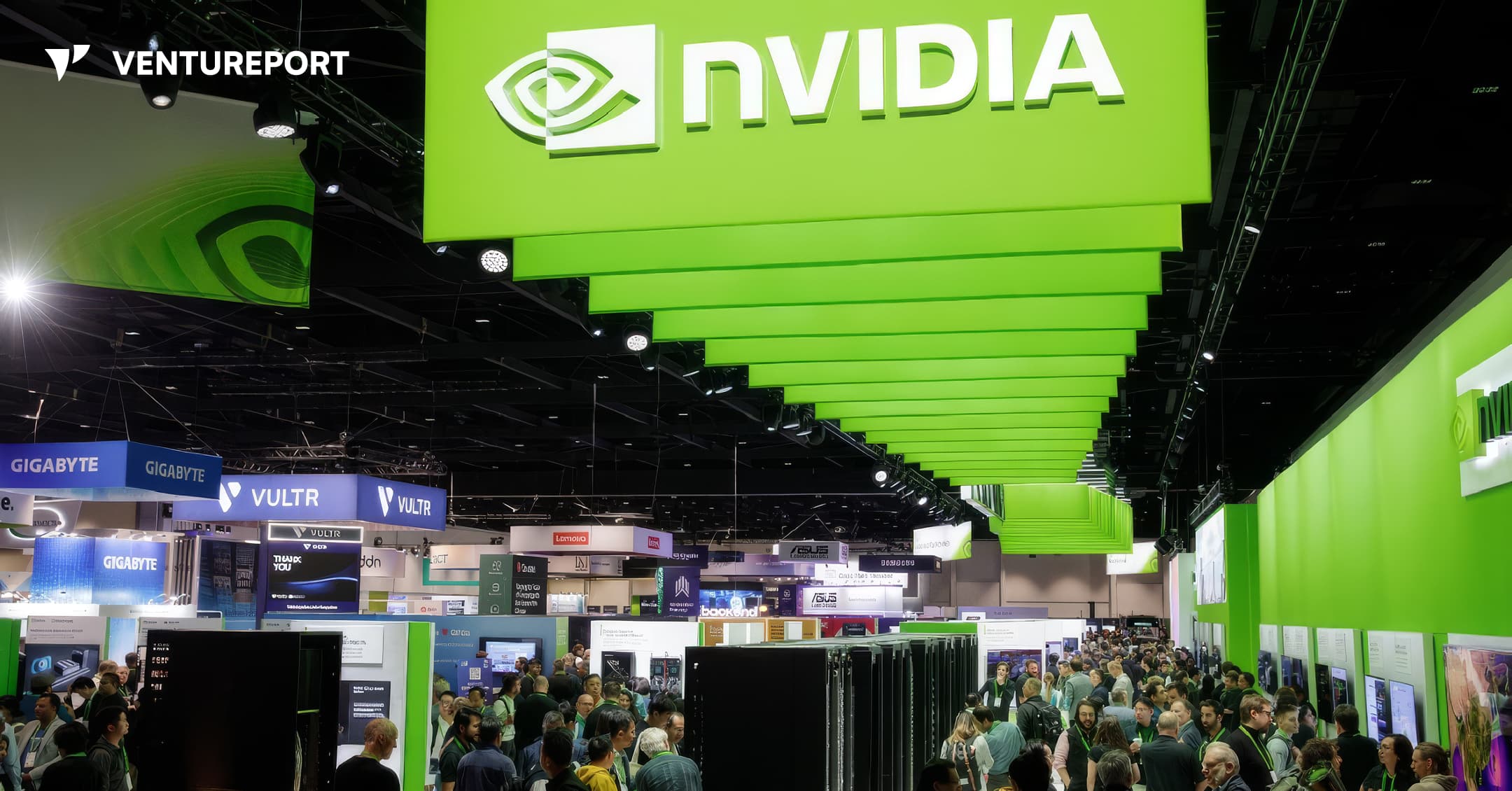
NVIDIA GTC 2026. PHOTO: NVIDIA
At NVIDIA GTC 2026 in Palo Alto, a group of 16 Taiwanese startups used the global AI stage to do more than showcase products—they tested how far their technologies could travel beyond domestic markets. The delegation, led by Startup Island TAIWAN Silicon Valley Hub with support from Taiwan’s National Development Council, reflected a broader shift in the country’s role within the AI ecosystem.
The startups represented a mix of emerging areas including digital twins, robotics, AI agents and healthcare, aligning closely with enterprise AI adoption trends. Some gained formal visibility within NVIDIA’s ecosystem, with companies such as MetAI and Spingence featured in the Inception Program, while six others presented their work in the conference’s poster gallery. These formats allowed them to engage directly with developers, enterprise users and potential partners rather than simply exhibiting technology.
A defining feature of Taiwan’s presence this year was how closely startups operated alongside established hardware companies such as ASUS, AAEON and Compal. This setup reflected a vertically integrated model where infrastructure and applications are developed together, offering a clearer path from product development to deployment. It also underscored Taiwan’s gradual shift from being primarily a hardware supplier to participating more actively across the full AI stack.
Activity around the conference extended well beyond the exhibition floor. A Taiwan Demo Day held during the week drew more than 1,000 registrations and nearly 600 in-person attendees, bringing startups into contact with close to 200 international investors. The event focused on structured introductions and deal flow, positioning startups in front of venture firms and corporate innovation teams looking for AI applications.
Alongside these formal sessions, Taiwan Startup Night provided a more informal but equally strategic setting. With over 100 curated participants, including founders, investors and corporate representatives, the gathering created space for early-stage conversations that could evolve into partnerships or market entry opportunities. These interactions, while less visible than on-stage presentations, are often where initial collaboration takes shape.
Taken together, the events around GTC point to a more coordinated approach to international expansion. Through platforms like Startup Island TAIWAN, the emphasis is not just on visibility but on building continuity—connecting startups with investors, partners and customers across multiple touchpoints in a single week. As AI development increasingly spans chips, systems and applications, Taiwan’s presence at GTC suggests a more integrated role, where the focus is as much on enabling global deployment as it is on developing the technology itself.