
HKU professor apologizes after PhD student’s AI-assisted paper cites fabricated sources.
Updated
January 8, 2026 6:33 PM
.jpg)
The University of Hong Kong in Pok Fu Lam, Hong Kong Island. PHOTO: ADOBE STOCK
It’s no surprise that artificial intelligence, while remarkably capable, can also go astray—spinning convincing but entirely fabricated narratives. From politics to academia, AI’s “hallucinations” have repeatedly shown how powerful technology can go off-script when left unchecked.
Take Grok-2, for instance. In July 2024, the chatbot misled users about ballot deadlines in several U.S. states, just days after President Joe Biden dropped his re-election bid against former President Donald Trump. A year earlier, a U.S. lawyer found himself in court for relying on ChatGPT to draft a legal brief—only to discover that the AI tool had invented entire cases, citations and judicial opinions. And now, the academic world has its own cautionary tale.
Recently, a journal paper from the Department of Social Work and Social Administration at the University of Hong Kong was found to contain fabricated citations—sources apparently created by AI. The paper, titled “Forty Years of Fertility Transition in Hong Kong,” analyzed the decline in Hong Kong’s fertility rate over the past four decades. Authored by doctoral student Yiming Bai, along with Yip Siu-fai, Vice Dean of the Faculty of Social Sciences and other university officials, the study identified falling marriage rates as a key driver behind the city’s shrinking birth rate. The authors recommended structural reforms to make Hong Kong’s social and work environment more family-friendly.
But the credibility of the paper came into question when inconsistencies surfaced among its references. Out of 61 cited works, some included DOI (Digital Object Identifier) links that led to dead ends, displaying “DOI Not Found.” Others claimed to originate from academic journals, yet searches yielded no such publications.
Speaking to HK01, Yip acknowledged that his student had used AI tools to organize the citations but failed to verify the accuracy of the generated references. “As the corresponding author, I bear responsibility”, Yip said, apologizing for the damage caused to the University of Hong Kong and the journal’s reputation. He clarified that the paper itself had undergone two rounds of verification and that its content was not fabricated—only the citations had been mishandled.
Yip has since contacted the journal’s editor, who accepted his explanation and agreed to re-upload a corrected version in the coming days. A formal notice addressing the issue will also be released. Yip said he would personally review each citation “piece by piece” to ensure no errors remain.
As for the student involved, Yip described her as a diligent and high-performing researcher who made an honest mistake in her first attempt at using AI for academic assistance. Rather than penalize her, Yip chose a more constructive approach, urging her to take a course on how to use AI tools responsibly in academic research.
Ultimately, in an age where generative AI can produce everything from essays to legal arguments, there are two lessons to take away from this episode. First, AI is a powerful assistant, but only that. The final judgment must always rest with us. No matter how seamless the output seems, cross-checking and verifying information remain essential. Second, as AI becomes integral to academic and professional life, institutions must equip students and employees with the skills to use it responsibly. Training and mentorship are no longer optional; they’re the foundation for using AI to enhance, not undermine, human work.
Because in this age of intelligent machines, staying relevant isn’t about replacing human judgment with AI, it’s about learning how to work alongside it.
Keep Reading
The Hong Kong startup combines 3D-printed reef tiles, biodiversity monitoring and long-term data to help companies manage their impact on marine ecosystems.
Updated
August 18, 2026 11:32 PM
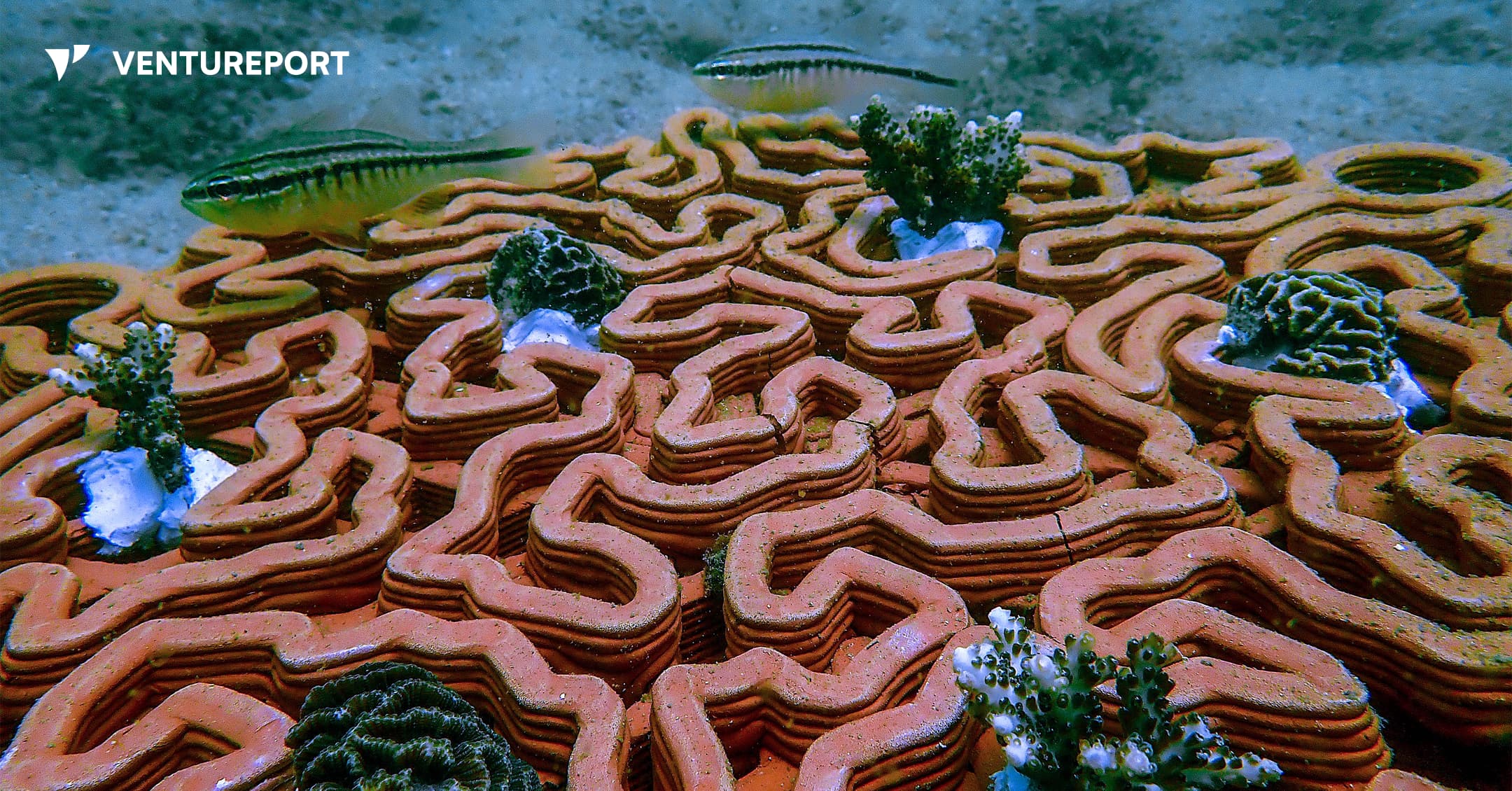
Young corals growing on Archireef's 3D-printed terracotta reef tiles beneath the sea. IMAGE: ARCHIREFF
Anyone who has snorkeled over a coral reef has probably admired its vibrant colours and the marine life swimming between its branches. What is less visible is how easily these ecosystems can be damaged. Rising ocean temperatures and pollution continue to put reefs under pressure, while coastal development creates another threat. Construction can stir up sediment that settles on corals, blocking the sunlight they need and making it harder for damaged reefs to recover.
Protecting marine ecosystems is becoming a shared responsibility. Alongside scientists, governments and conservation groups, businesses whose operations affect the ocean are increasingly expected to understand, manage and reduce their environmental impact. They must also show regulators, banks and investors that they are meeting their environmental commitments.
Archireef helps businesses meet those demands. Founded by Vriko Yu, the Hong Kong-rooted B2B startup specializes in marine ecosystem restoration and ocean nature risk management. Drawing on years of research at the University of Hong Kong, Yu built the company to help organisations understand, measure and reduce their impact on marine ecosystems.
Yu describes Archireef as an “end-to-end ocean nature risk management company”.
“What we offer them is a credible way to meet those obligations and stand behind the results,” she says.
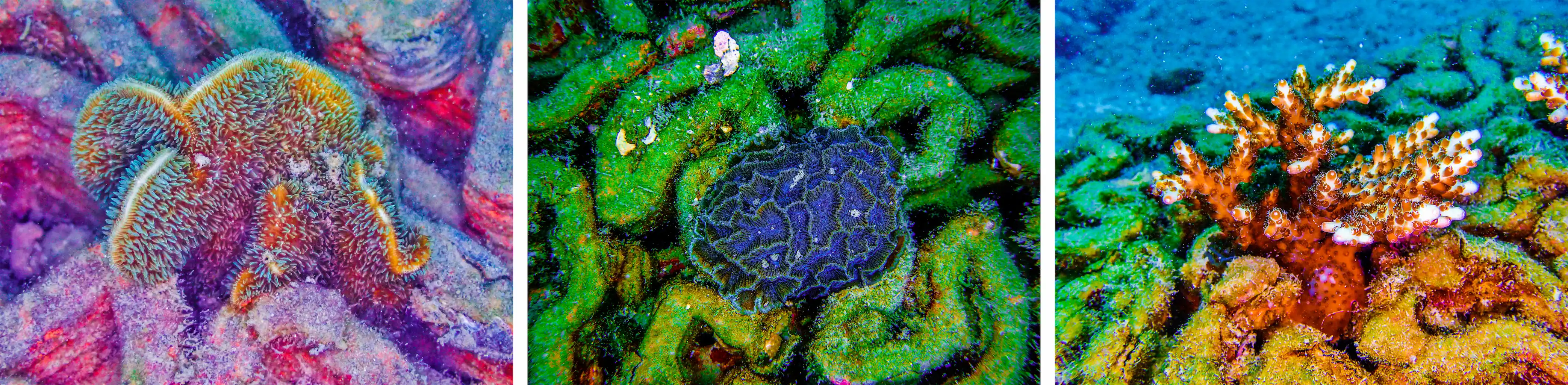
One of the company’s main tools for restoring damaged marine ecosystems is its flagship 3D-printed terracotta reef tile. The tiles provide a stable foundation where young corals can attach, grow and survive over time.
Archireef chose terracotta instead of concrete and other conventional materials because it is pH-neutral and does not release harmful chemicals into the water. Its surface also gives corals a suitable place to attach naturally.
Before placing a single tile in the ocean, the team studies the proposed restoration site to determine whether recovery is possible. It assesses the water quality, biodiversity and general health of the ecosystem. As Yu explains, restoration should begin only where nature has a realistic chance to recover.
“Restoration isn’t about replacing nature or engineering a reef into existence. It is about removing the barriers and giving a degraded system the conditions it needs to begin recovering on its own”, she says.
Once the team selects a site, divers carefully place the tiles on the seabed. Their curves, ridges and crevices imitate the structure of a natural coral reef, creating sheltered spaces for marine species. The design also helps limit sediment build-up, which can block sunlight and smother young corals.
.webp)
Archireef adjusts the shape of its reef tiles for each project.
“There’s no universal reef, so there’s no universal tile”, Yu says.
Instead of producing one standard model, the company adapts each design to the coral species, water conditions and surrounding marine environment. A coral restoration project in Hong Kong may therefore require a different tile from one in Saudi Arabia, even when the same manufacturing process is used.
“The biggest adaptation from site to site is usually the match between design, species and environment, not the manufacturing itself ”, Yu explains.
Although the reef tile is Archireef’s most recognizable innovation, Yu sees it as one part of a much broader service.
“The reef tile gets the attention because it’s tangible,” she says. “But the real product is the proof — defensible, audit-ready evidence of nature recovery that an organization can put in a disclosure and stand behind under scrutiny”.
Producing that evidence requires years of biodiversity monitoring. Long after the reef tiles have been installed, Archireef continues to track coral survival and the health of the surrounding marine ecosystem. Its monitoring methods include ecological surveys, AI-assisted species recognition, photogrammetry and environmental DNA testing.
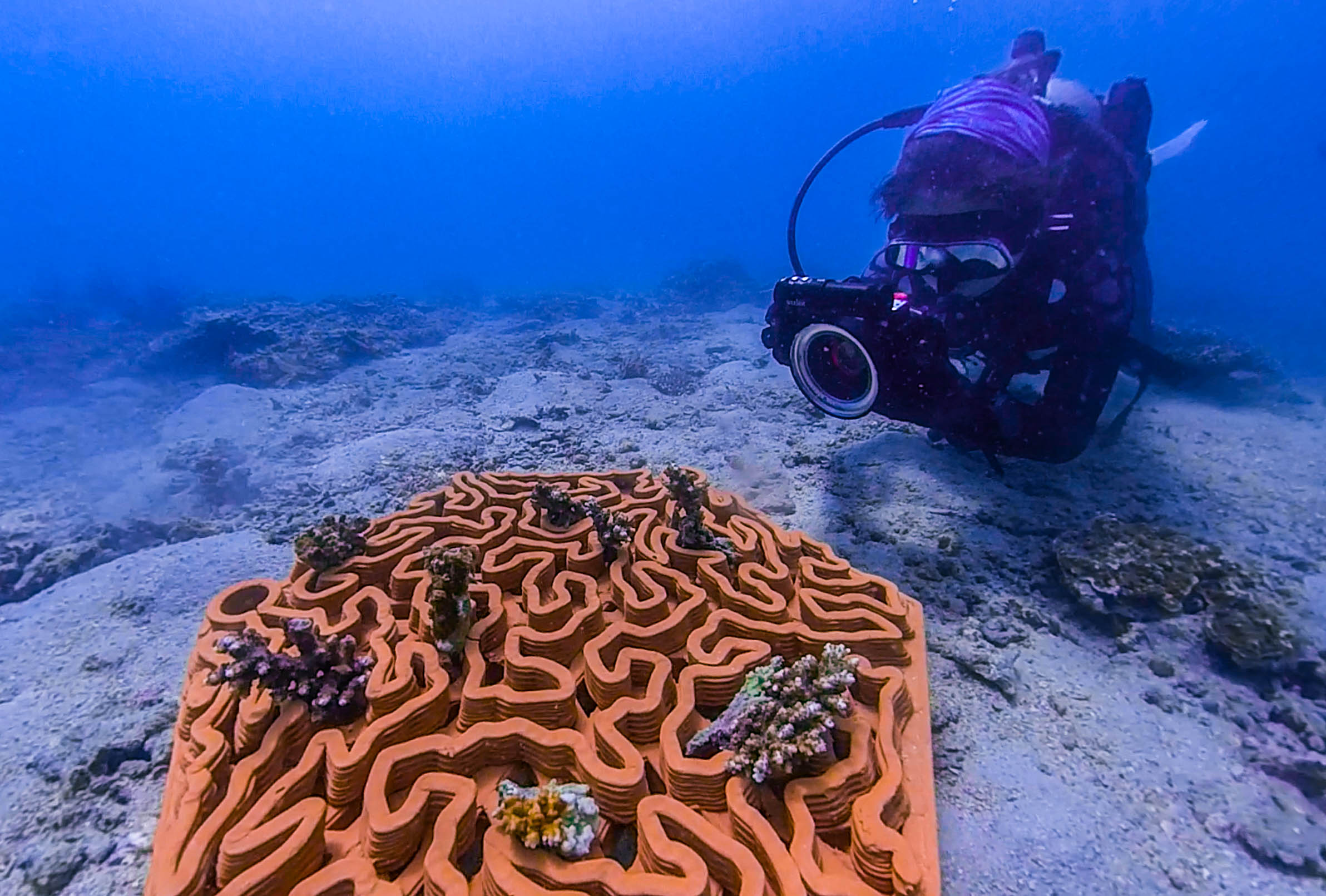
Photogrammetry uses photographs to produce detailed 3D models of the reef. These models allow the team to measure changes in coral growth and reef structure over time.
Environmental DNA, commonly known as eDNA, offers another way to monitor marine biodiversity. Traditional ecological surveys often depend on divers recording the species they can see. eDNA testing instead examines traces of genetic material left in the water by marine organisms, including skin cells, mucus and waste.
By analyzing these traces, Archireef can detect species that may be hidden, difficult to identify or absent during a dive. This gives the company a more complete picture of the ecosystem and how it is changing.
For Archireef, the success of a coral reef restoration project is determined by what happens several years after installation.
“The indicators that matter aren’t the ones that look good on deployment day”, Yu says. “They’re the ones that show, two, three and five years on, whether a genuine ecosystem is establishing and sustaining itself”.
At the company’s first restoration site in Hoi Ha Wan, Hong Kong, around 90% of the transplanted corals remained alive four years after deployment. The long-term survival rate suggests that the ecosystem is recovering rather than simply appearing healthy during the early stages of the project.
Results like these have helped Archireef move beyond academic research and secure collaborations across the public and private sectors. In Hong Kong, the company has worked with government departments and public organisations responsible for coastal infrastructure and marine conservation.