
Vizrt shows how live video can be produced anywhere, without complex studio setups
Updated
August 10, 2026 5:56 PM

A camera filming a still life on a table. PHOTO: UNSPLASH
Vizrt, a media technology company, has introduced a new AI-powered tool to simplify the creation of virtual scenes in live production. Its latest release, the AI Keyer, is built around a simple idea: remove the need for green screens and make virtual production possible in almost any environment.
Traditionally, creating virtual backgrounds or augmented reality (AR) scenes requires controlled studio setups, green screens, precise lighting and skilled operators. That makes high-end visual production expensive and difficult to scale, especially for smaller teams or live, on-the-ground reporting.
The AI Keyer is designed to address that gap. It uses AI trained on real-world footage to identify people in a frame and separate them from the background in real time. This allows production teams to replace backgrounds, insert AR graphics or place presenters into virtual environments—whether they are indoors, outdoors or on location.
"Creating XR environments typically demands large infrastructure investments and requires specialized skills for daily operations. The Vizrt AI Keyer removes all these constraints, so high-quality virtual scenes and AR graphics become a reality for live productions of every size", says Edouard Griveaud, Senior Product Manager at Vizrt.
In practical terms, this means a presenter can appear in a different location without moving, a remote speaker can be placed inside a virtual event space or branded graphics can be added to live interviews without a complex setup. The system works without chroma keying, reducing both preparation time and production overhead.
This shift also reflects how the company is approaching AI more broadly. Instead of treating it as a background feature, Vizrt is positioning AI as a core part of the content creation and delivery process.
"AI is transforming the world, and the creative industries are no exception. At Vizrt, we have been on this journey for years, embedding intelligence into our solutions, empowering storytellers and delivering real, measurable impact for our customers", says Rohit Nagarajan, CEO of Vizrt. "That is not a vision for tomorrow. That is happening today. The Vizrt AI Keyer is the latest proof point of our relentless commitment to innovation. Putting breakthrough technology in the hands of every creative, at every level, everywhere in the world".
Beyond the product itself, the direction is clear. By removing the need for green screens and complex setups, tools like the AI Keyer make it easier to produce high-quality visual content in more flexible settings. The result is a production model that is less tied to physical studios and more adaptable to real-world environments, where content can be created and adjusted in real time.
Keep Reading
Rethinking 3D modelling for a world that generates too much, too quickly.
Updated
January 8, 2026 6:32 PM
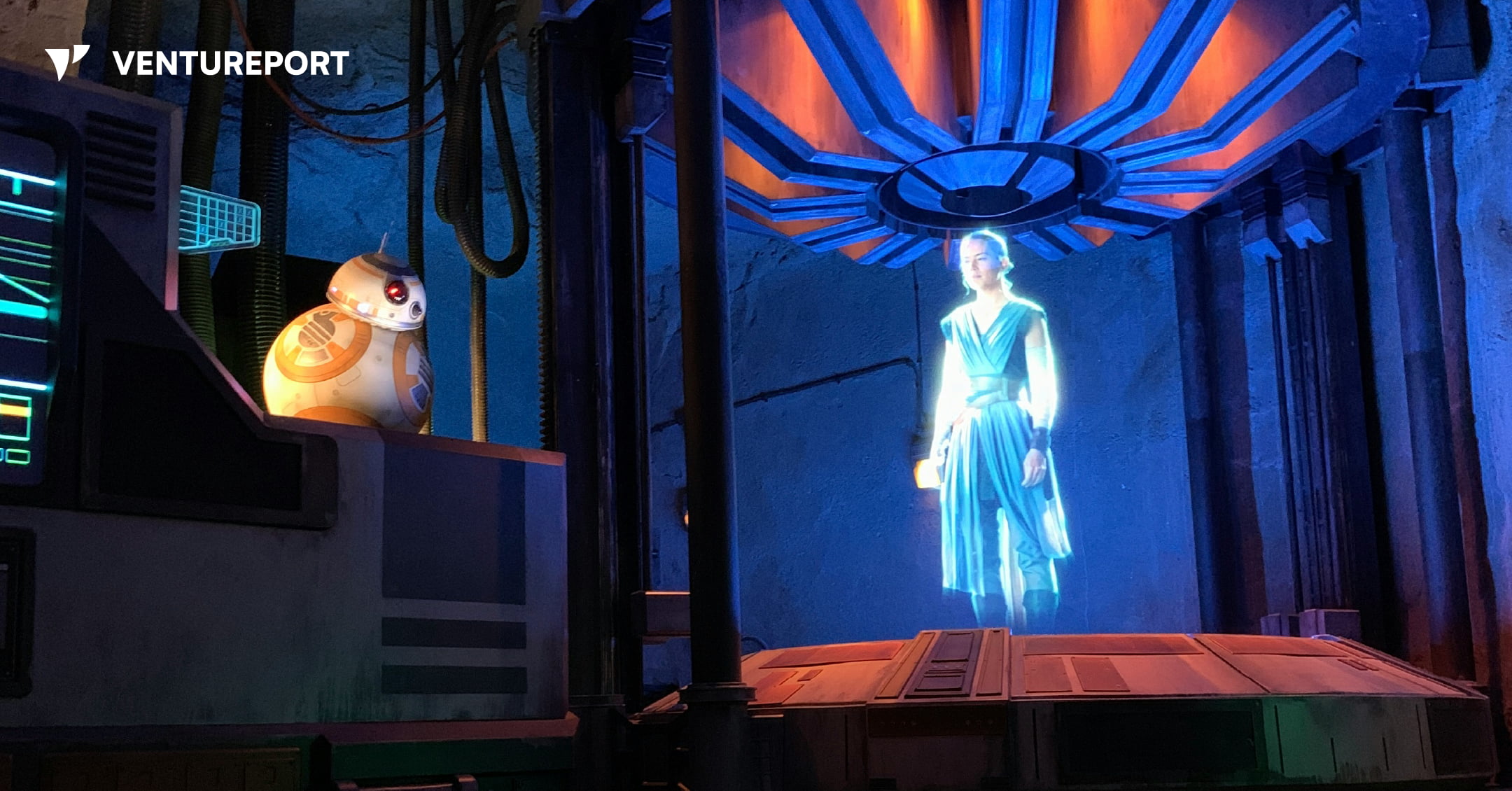
A hologram in the franchise Star Wars, in Walt Disney World Resort, Orlando. PHOTO: UNSPLASH
MicroCloud Hologram Inc. (NASDAQ: HOLO), a technology service provider recognized for its holography and imaging systems, is now expanding into a more advanced realm: a quantum-driven 3D intelligent model. The goal is to generate detailed 3D models and images with far less manual effort — a need that has only grown as industries flood the world with more visual data every year.
The concept is straightforward, even if the technology behind it isn’t. Traditional 3D modeling workflows are slow, fragmented and depend on large teams to clean datasets, train models, adjust parameters and fine-tune every output. HOLO is trying to close that gap by combining quantum computing with AI-powered 3D modeling, enabling the system to process massive datasets quickly and automatically produce high-precision 3D assets with much less human involvement.
To achieve this, the company developed a distributed architecture comprising of several specialized subsystems. One subsystem collects and cleans raw visual data from different sources. Another uses quantum deep learning to understand patterns in that data. A third converts the trained model into ready-to-use 3D assets based on user inputs. Additional modules manage visualization, secure data storage and system-wide protection — all supported by quantum-level encryption. Each subsystem runs in its own container and communicates through encrypted interfaces, allowing flexible upgrades and scaling without disrupting the entire system.
Why this matters: Industries ranging from gaming and film to manufacturing, simulation and digital twins are rapidly increasing their reliance on 3D content. The real bottleneck isn’t creativity — it’s time. Producing accurate, high-quality 3D assets still requires a huge amount of manual processing. HOLO’s approach attempts to lighten that workload by utilizing quantum tools to speed up data processing, model training, generation and scaling, while keeping user data secure.
According to the company, the system’s biggest advantages include its ability to handle massive datasets more efficiently, generate precise 3D models with fewer manual steps, and scale easily thanks to its modular, quantum-optimized design. Whether quantum computing will become a mainstream part of 3D production remains an open question. Still, the model shows how companies are beginning to rethink traditional 3D workflows as demand for high-quality digital content continues to surge.