
Six technology companies showcased solutions for financial research, wealth management, consumer insight and security to investors and institutions.
Updated
November 14, 2026 11:54 PM

Arnold Lau and King Leung (back row, fourth and fifth from left), Associate Directors-General of Investment Promotion at InvestHK, join the Ventureport team and representatives from the six technology companies. PHOTO: VENTUREPORT
Ventureport hosted the soft launch of InvestHK’s Fast-Track Connect at its AI+ Tech+ Finance+ gathering on 30 October, bringing more than 100 guests to Pier 1929 in Wan Chai.
Sponsored by InvestHK, the event brought investors, institutional representatives and technology companies together to explore investment and business partnerships. Six companies took the stage to showcase software solutions for financial professionals, consumer research, local AI computing and digital asset security.

The Acting Head of Startups, at InvestHK, Chin-yung (CY), and the Senior Vice President (Fintech), Pauline Fan, introduced Fast-Track Connect. They explained how the agency’s international network connects it with technology companies seeking investment, customers and business opportunities in Hong Kong.

Their remarks also highlight the need for a more structured approach to build these connections. Investors need easier ways to identify companies that match their interests, while institutions seeking new technology need access to businesses whose products could support their operations or benefit their customers.
To address this need, Fast-Track Connect provides an online platform where technology companies can publish profiles outlining their products and funding needs. Investors and corporate participants can identify relevant businesses and contact them to explore potential investments or collaborations. Service providers and community partners are also part of the platform. Alongside investors and corporate participants, these groups are designated as Champions on the platform.
Curated by InvestHK and supported by the Financial Services and the Treasury Bureau, Fast-Track Connect builds on the Global Fast Track Programme. It aims to help local enterprises expand into Chinese Mainland, Southeast Asia and other markets.

AlphaPai, an AI-powered investment research platform developed by financial technology company RabyteTech, presented tools for financial research, including gathering data, monitoring financial instruments and comparing information from corporate earnings calls.

At the event, the team explained how users can give research instructions in everyday language, while the software retrieves and processes information to prepare reports and presentation materials. Examples included tracking market developments and comparing company statements over time. The team also emphasised the importance of traceable sources, allowing analysts to verify the information behind their research.
A2B2.AI, a fintech startup, presented AI- powered tools designed to support investors and wealth advisers. Its specialist AI agents—software designed to carry out particular tasks—help prepare client meeting briefings, monitor financial products approaching maturity and identify market developments relevant to individual clients, according to the team.

For investors, the tool can help make sense of lengthy documents provided by advisers and bring information from different accounts together to assess risk exposure. For wealth professionals, the tools support preparation and follow-up around client meetings.
The team described its approach as combining AI with human expertise to support financial decision- making. It also clarified that the platform does not execute investment transactions on behalf of clients, leaving those decisions and actions in their hands.
Preferences AI, an AI startup specialising in synthetic consumer research, presented simulated consumer profiles that businesses can use to explore how different audiences might respond to products, pricing and marketing messages. These profiles generate modelled responses rather than feedback from people directly interviewed or surveyed.

The company described that its profiles are grounded in population data and account for differences between local audiences Businesses can use them to explore pricing or packaging options, as well as ask follow-up questions to understand the reasons behind a particular response. The team also discussed testing its models and working with academics to help validate the approach. It said the technology could help businesses explore consumer preferences more quickly.
ByteFuture, an AI infrastructure startup, focused on running AI on users’ own hardware. It introduced Olares, its operating system, and Olares One, a device designed to run AI models and applications locally.

Its applications included personal assistance, financial research and content creation. The team argued that users handling private documents or proprietary trading strategies may prefer to retain that material on equipment they control.
A demonstration of AI-generated video illustrated creative work the team said could run locally. It also described applications and agents available through its software marketplace.
PureGlobal, a fintech company, addressed digital asset custody: the systems used to safeguard access to digital assets. Its team described technology for protecting access credentials and supporting offline transactions without a conventional internet connection.

The presentation focused on infrastructure for institutions holding and transferring digital assets, including security under different operating conditions.
SlowMist, a blockchain security firm, examined the risks of giving AI agents permission to read information and perform tasks. Its examples included malicious instructions concealed in material an agent might encounter and attacks exploiting access granted to software.

The team discussed security auditing, monitoring and investigations alongside risks arising from third-party tools and an agent’s stored information. One scenario involved exposing a wallet’s recovery phrase, which can give someone control over its assets.
Keep Reading
At under US$1,000, Hypernova isn’t just eyewear—it’s Meta’s push to make AR feel ordinary.
Updated
January 8, 2026 6:34 PM
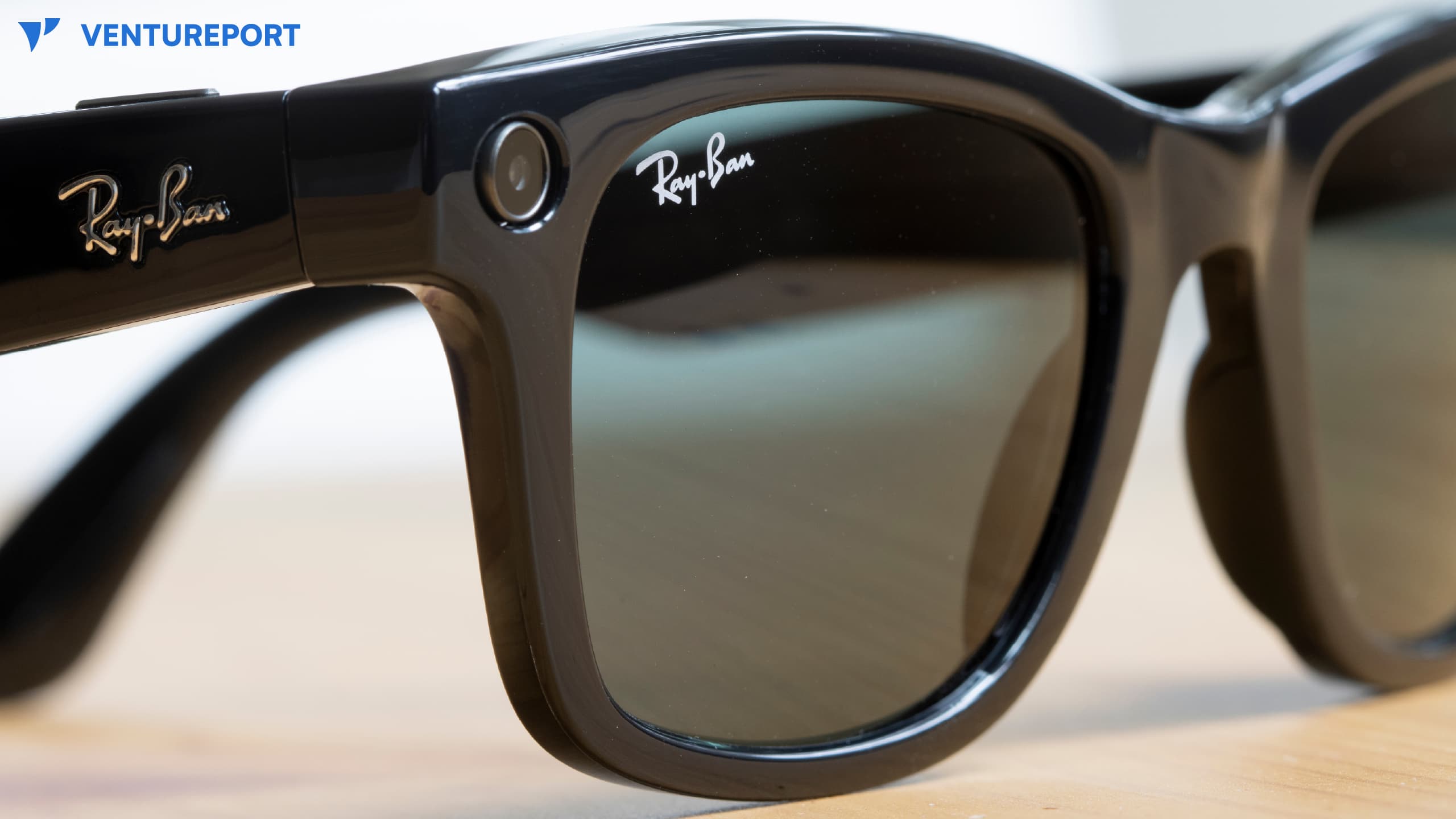
Closeup of the Ray-Ban logo and the built-in ultra-wide 12 MP camera on a pair of new Ray-Ban Meta Wayfarer smart glasses. PHOTO: ADOBE STOCK
Meta is preparing to launch its next big wearable: the Hypernova smart glasses. Unlike earlier experiments like the Ray-Ban Stories, these new glasses promise more advanced features at a price point under US$1,000. With a launch set for September 17 at Meta’s annual Connect conference, the Hypernova is already drawing attention for blending design, technology and accessibility.
In this article, let’s take a closer look at Hypernova’s design, features, pricing and the challenges Meta faces as it tries to bring smart glasses into everyday life.
Meta’s earlier Ray-Ban glasses offered cameras and audio but no display. Hypernova changes that: The glasses will ship with a built-in micro-display, giving wearers quick access to maps, messages, notifications and even Meta’s AI assistant. It’s a step toward everyday AR that feels useful and natural, not experimental.
Perhaps most importantly, the price makes them attainable. While early estimates placed the cost above US$1,000, Meta has committed to a launch price of around US$800. That’s still premium, but it moves AR smart glasses into reach for more consumers.
Hypernova weighs about 70 grams, roughly 20 grams heavier than the Ray-Ban Meta models. The added weight likely comes from added components like the new display and extra sensors.
To keep the glasses stylish, Meta continues its partnership with EssilorLuxottica, the company behind Ray-Ban and Prada eyewear. Thicker frames—especially Prada’s designs—help hide the hardware like chips, microphones and batteries without making the glasses look oversized.
The glasses stick close to the classic Ray-Ban silhouette but feature slightly bulkier arms. On the left side, a touch-sensitive bar lets users control functions with taps and swipes. For example, a two-finger tap can trigger a photo or start video recording.
Hypernova introduces something the earlier Ray-Ban glasses never had: a display built right into the lens. In the bottom-right corner of the right lens, a small micro-screen uses waveguide optics to project a digital overlay with about a 20° field of view. This means you can glance at turn-by-turn directions, check a notification or quickly consult Meta’s AI assistant without pulling out your phone. It’s discreet, practical and a major step up from the older models, which were limited to capturing photos and videos, handling calls and playing music via speakers.
Alongside the glasses comes the Ceres wristband, a companion device powered by electromyography (EMG). The band picks up the tiny electrical signals in your wrist and fingers, translating them into commands. A pinch might let you select something, a wrist flick could scroll a page, and a swipe could move between screens. The idea is to avoid clunky buttons or having to talk to your glasses in public. Meta has also been experimenting with handwriting recognition through the band, though it’s not clear if that feature will be ready in time for launch.
Meta doesn’t just want Hypernova to be useful—it wants it to be fun. Code found in leaked firmware revealed a small game called Hypertrail. It looks to borrow ideas from the 1981 arcade shooter Galaga, letting wearers play a simple, retro-inspired game right through their glasses. It’s not the main attraction, but it shows Meta is trying to make Hypernova feel more like a playful everyday gadget rather than just a piece of serious tech.
Hypernova runs on a customized version of Android and pairs with smartphones through the Meta View app. Out of the box, it should support the basics: calls, music and message notifications. Leaks suggest several apps will come preinstalled, including Camera, Gallery, Maps, WhatsApp, Messenger and Meta AI. A Qualcomm processor powers the whole setup, helping it run smoothly while keeping energy demands reasonable.
Meta is also trying to bring in outside developers. In August 2025, CNBC reported that the company invited third-party developers—especially in generative AI—to build experimental apps for Hypernova and the Ceres wristband. The Meta Connect 2025 agenda even highlights sessions on a new smart glasses SDK and toolkit. The push shows Meta’s interest in making Hypernova more than just a device; it wants a broader platform with apps that go beyond its own first-party software.
During development, Hypernova was rumored to cost as much as US$1,400. By pricing it around US$800, Meta signals that it wants adoption more than profit. The company is keeping production limited (around 150,000 units), showing it sees this as a market test rather than a mass rollout. Still, the sub-US$1,000 price tag makes advanced AR far more accessible than before.
Despite its promise, Hypernova may still face hurdles. The Ceres wristband can struggle if worn loosely, and some testers have reported issues based on which arm it’s worn on or even when wearing long sleeves. In short, getting EMG input right for everyone will be critical.
Privacy is another major concern. In past experiments, researchers hacked Ray-Ban Meta glasses to run facial recognition, instantly identifying strangers and pulling personal info. Meta has added guidelines, like a recording indicator light, but critics argue these measures are too easy to ignore. Moreover, data captured by smart glasses can feed into AI training, raising questions about consent and surveillance.
The Meta Hypernova smart glasses mark a turning point in wearable tech. They’re lighter and more stylish than bulky AR headsets, while offering real-world features like navigation, messaging and hands-free control. At under US$1,000, they aim to make AR glasses more than a luxury gadget—they’re a step toward everyday use.
Whether Hypernova succeeds will depend on how well it balances style, usability and privacy. But one thing is clear: Meta is betting that always-on, glanceable AR can move from science fiction to daily life.