
The US$50.8 million deal strengthens TECO’s push into modular infrastructure and faster data center deployment across Southeast Asia.
Updated
August 10, 2026 5:56 PM

Kuala Lumpur, Malaysia. PHOTO: UNSPLASH
TECO Electric & Machinery is expanding further into Southeast Asia’s AI data center infrastructure market through a new acquisition in Malaysia.
The Taiwan-based company has signed an agreement to acquire approximately 78 percent of Malaysian engineering firm Dynaciate Engineering in a deal valued at around MYR 200 million (US$50.8 million). According to TECO, the acquisition is aimed at strengthening its modular data center manufacturing capabilities and supporting its expansion across Southeast Asia’s data center infrastructure sector.
Under the agreement, Dynaciate will become TECO’s global manufacturing hub for modular data center and power equipment products. The company will also serve as an engineering hub supporting TECO’s regional expansion efforts, particularly in AI data center infrastructure projects.
TECO Chairman Morris Li said the integration between both companies has improved execution efficiency and increased the company’s in-house modular prefabrication capabilities. According to the company, the collaboration has reduced data center delivery timelines to as little as six months.
Dynaciate is headquartered in Johor Bahru, Malaysia. Its facilities span approximately 36,000 square meters and include eight production buildings focused on stainless steel and carbon steel fabrication. The company said the site is also eligible for export tax incentives that support future global supply chain deployment.
According to TECO, Dynaciate has experience in engineering, steel fabrication and large-scale industrial projects for multinational corporations. The company added that Dynaciate has expanded into the data center engineering market since 2025 through projects involving international cloud service provider clients.
TECO estimates that after the acquisition, around 65 percent of future data center-related revenue will come from modular data centers and prefabricated products, while the remaining 35 percent will come from AI data center engineering projects. The company also forecasts that data center-related revenue within its Power & Energy Business Group will rise from below 10 percent to 30 percent this year.
Dynaciate CEO Ng Kim Thiea said the company is entering a new phase of growth through the partnership with TECO. He added that Dynaciate has extensive experience supporting engineering and industrial projects across the region.
The acquisition marks a further expansion of TECO’s presence in the AI data center infrastructure sector as companies continue increasing investments in modular infrastructure and regional engineering capacity.
Keep Reading
A humanoid robot being escorted away by police in Macau has gone viral online, prompting jokes about what some called the world’s first “robot arrest.”
Updated
April 1, 2026 8:55 AM
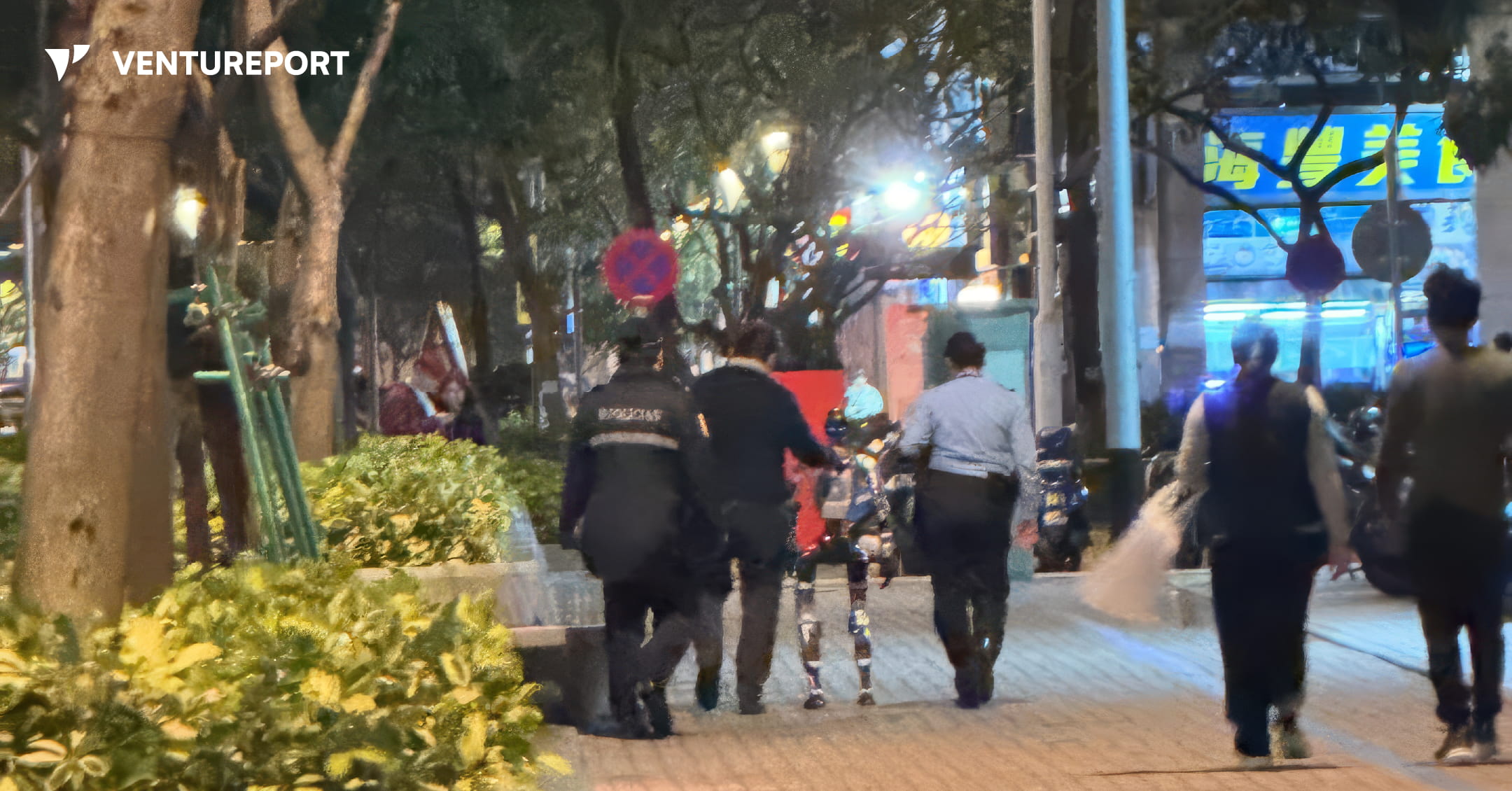
Macau police officer accompanying the humanoid robot. PHOTO: THREADS@BOXOF_CHOCOLATE
Police in Macau recently detained a humanoid robot after it frightened an elderly woman on a public street. The unusual encounter quickly spread online, prompting jokes about what some called the world’s first “robot arrest”.
On the evening of March 5, the robot was taken away by officers after the encounter triggered alarm among bystanders. Videos circulating on social media show an elderly woman confronting the robot on a sidewalk, visibly distressed and shouting that her “heart is pounding” while demanding to know why such “nonsense” was happening on the street. In the clip, the robot raises both hands toward the woman after she lashes out in fear — a gesture many viewers interpreted as a sign of apology.
Shortly afterwards, two officers from the Macau Public Security Police Force were seen escorting the robot and a man believed to be its operator away from the area. An officer is seen placing his right hand on the robot’s shoulder — the same posture police often use when presenting arrested suspects in official photographs.
That scene quickly spread online, fuelling jokes about what some called the world’s first “robot arrest”.
Photos shared online show a humanoid robot with long limbs and exposed mechanical joints, built from a black metallic frame without an outer shell. In dim lighting, several commenters said it resembled a “moving skeleton” — a striking sight for pedestrians encountering it unexpectedly on the street.
Witnesses said the woman appeared severely shaken and an ambulance was eventually called to take her to the hospital.
The incident also sparked discussion online about robots operating in public spaces. Some commenters argued that experimental technologies should be tested in controlled environments, while others said machines moving through public areas should have clearer designs or safety measures to avoid alarming pedestrians.
It remains unclear who deployed the robot or what purpose it was serving in the area at the time of the incident. Authorities have not released further details about the device or whether any action was taken following the encounter.