
HyveGeo’s approach to restoring degraded land stands out at the FoodTech Challenge
Updated
February 7, 2026 2:18 PM

Clusters of sandstone buttes in Monument Valley, Colorado Plateau. PHOTO: UNSPLASH
HyveGeo, a climate-focused startup, has been named one of the global winners of the FoodTech Challenge, an international competition designed to surface practical technologies that strengthen food systems in arid and climate-stressed regions.
The FoodTech Challenge (FTC) is based in the UAE and brings together governments, foundations and agri-food institutions to identify early-stage solutions that address food production, land degradation and resource efficiency. Each year, hundreds of startups apply from around the world. In 2026, more than 1,200 teams from 113 countries submitted entries. Only four were selected.
HyveGeo stood out for its approach to one of agriculture’s hardest problems: how to make desert soil usable again. Founded in 2023 by a group of scientists and researchers, the Abu Dhabi-based company focuses on regenerating degraded land using a process built around biochar, a carbon-rich material made from agricultural waste, enhanced with microalgae. The aim is to accelerate soil recovery in environments where water is limited and land has been heavily stressed.
What caught the judges’ attention was not just the technology itself, but the way it links several challenges at once. The system turns waste into a usable soil input, reduces the time it takes for land to become productive and locks carbon into the ground instead of releasing it into the atmosphere. In short, it addresses land degradation, food production and climate pressure through a single framework.
As a winner of the FoodTech Challenge, HyveGeo will share a US$2 million prize with the other selected startups. Beyond funding, the company will also receive support from the UAE’s innovation ecosystem, including research backing, pilot projects, market access and incubation services to help move from testing into wider deployment.
The team’s plans focus on scaling within the UAE first. HyveGeo aims to work across Abu Dhabi’s network of farms and gradually expand into other arid and climate-stressed regions. Its longer-term target is to restore thousands of hectares of degraded land and contribute to carbon removal through soil-based methods.
Placed in a broader context, HyveGeo’s win reflects a shift in how food and climate technologies are being evaluated. Instead of chasing dramatic breakthroughs, competitions like the FTC are increasingly backing systems that connect waste, land, water and carbon into something usable on the ground. Not futuristic agriculture, but practical repair work for environments that can no longer rely on old farming assumptions. If that direction continues, the next wave of food innovation may be less about spectacle and more about quiet, scalable fixes for places where growing food has become hardest.
Keep Reading
Merve Isler, Founder and CEO of Marvelous, sits down with Ventureport to discuss how AI can help revenue teams find the right rooms, guests and opportunities.
Updated
August 18, 2026 11:33 PM
.jpg)
Marvelous, an AI product company. PHOTO: MARVELOUS
Most B2B sales teams spend their days inside software. They track leads in a customer relationship management (CRM) tool, send emails, build outbound lists and measure every digital touchpoint. Still, many important business relationships move forward in person. A dinner after a conference, a small founder roundtable or a private customer event can do what dozens of cold emails cannot: build trust quickly.
That is the gap Marvelous wants to fill. The bootstrapped San Francisco-based AI startup is building what founder and CEO Merve Isler calls “Salesforce, but for real life”. Her idea is simple: if companies already use software to manage digital sales, they should also have software to manage the real-world moments that help close deals.
Marvelous brings data, automation and targeting into in-person go-to-market (GTM) work. It helps B2B sales, revenue, marketing and growth teams plan in-person events such as curated dinners, launch events, mixers, happy hours and conference side events. These formats are already familiar to companies selling to enterprise buyers. The problem is that they are often managed through spreadsheets, venue calls, scattered guest lists and manual follow-ups.
That creates two problems. First, the process is slow. Teams can spend weeks figuring out who to invite, where to host and how to manage responses. Second, the return is hard to measure. Companies spend heavily on conferences, dinners and private events, yet they often do not have a clear way to know whether an event will influence pipeline before they commit the budget.
Marvelous wants to pull those pieces into one AI-powered event management platform.
“Our main target customer is revenue and sales teams,” Isler said. “Because about 40% of deals close in person, but there's no infrastructure built for that—so that's what we do.”
For Isler, the idea comes from experience. Before starting Marvelous, she worked at Google from Istanbul, managing developer product launches and go-to-market programs across Turkey, Central Asia and the Caucasus. During that time, she helped build more than 100 communities around the world and coordinated thousands of events a year across eleven time zones. The work was fast, local and very manual.
That experience shaped the foundation for Marvelous. Isler saw that building products had become easier, while distribution remained difficult. A startup can now ship software faster than ever. Reaching the right people, in the right setting, is still a different challenge.
At Google, Isler had to understand how people gathered, communicated and built trust in different markets. A product launch might require developer meetups in dozens of cities, but the right approach could change from country to country. In Kazakhstan, she said, Telegram worked better than WhatsApp. In Afghanistan, Facebook mattered more. Each market had its own habits, and growth depended on understanding those details. Those details and adapt quickly.
Marvelous grew out of that playbook. Isler saw that offline distribution had patterns, even when it looked chaotic from the outside. The right guest list, the right room, the right timing and the right follow-up could change the outcome of a sales conversation. Most of that knowledge, however, lived in people’s heads. Marvelous is her attempt to turn it into software.
Inside the platform, a company can start by choosing the kind of satellite event it wants to host: a launch event, a mixer, a happy hour, a brunch, a lunch or a dinner. From there, users can connect their CRM. When Salesforce is connected, Marvelous analyzes contacts and creates relationship scores based on signals such as buying intent, past event activity and how warm a relationship appears to be. If a team also uses an event platform such as Luma or Eventbrite, Marvelous can bring that event data into the picture as well.

The product is built around Maven, Marvelous’ AI assistant. Maven can help plan an event through Slack, iMessage or the Marvelous platform itself. For instance, a user might ask Maven to plan an executive dinner for 18 people within a set budget. From there, Maven can find warm contacts, estimate who is likely to attend, build a guest list, recommend venues, send invitations and run follow-up sequences across email, LinkedIn and SMS. The goal is to let sales teams focus on conversations and closing deals instead of worrying about logistics. Put simply, Marvelous helps a company find the right guests, secure the right venue and understand which event format is likely to work. Instead of guessing whether a US$10,000 dinner will pay off, the company gets a clearer view of the potential return.
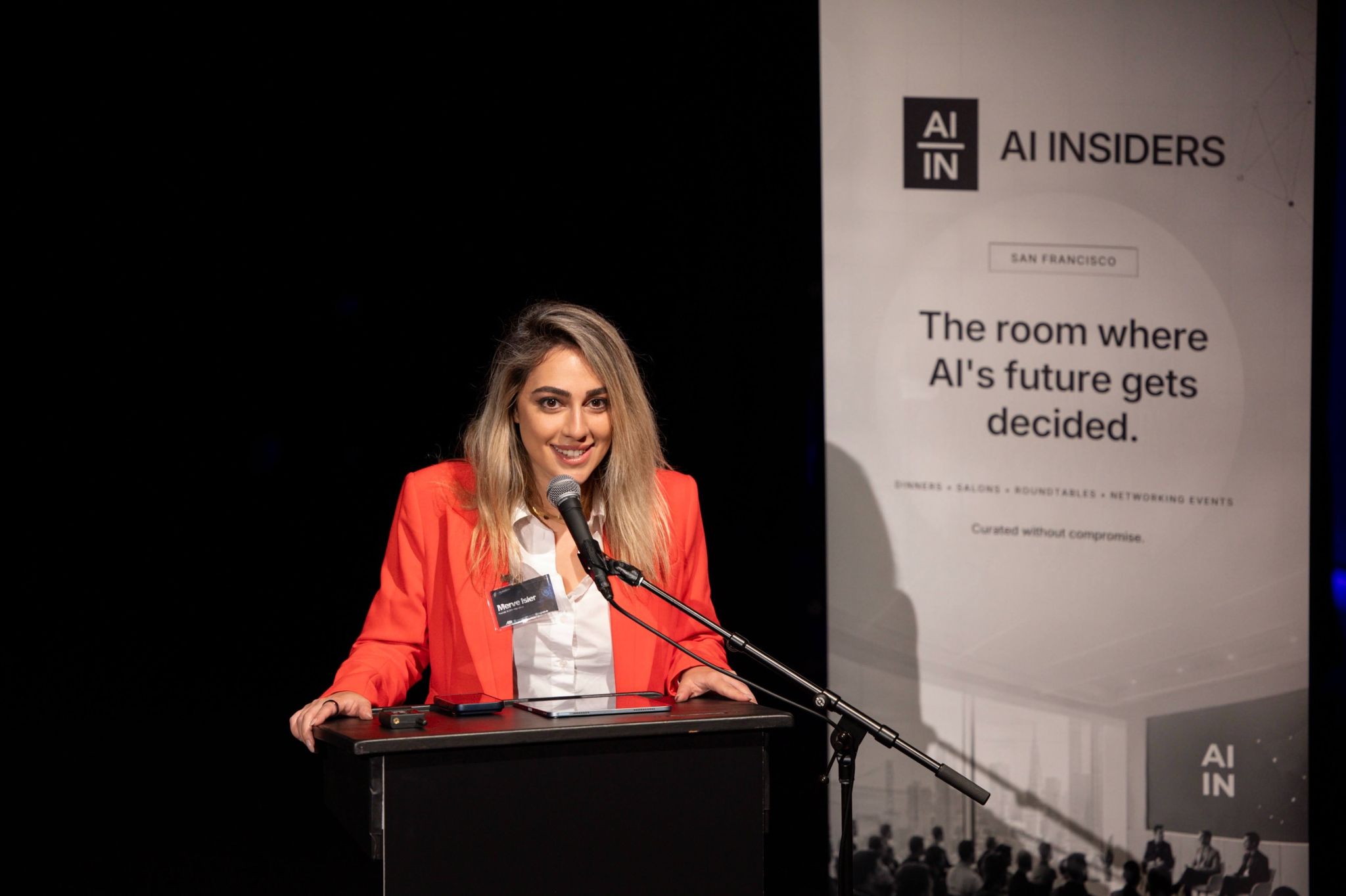
AI Insiders, Marvelous’ invite-only network of verified AI and enterprise leaders, is also part of the company’s go-to-market strategy. Rather than asking every customer to build an event from scratch, Marvelous can group several companies that want to reach the same audience into one curated event. Such a setting creates revenue, product feedback and fresh data about what works in different markets. The network spans verticals such as cybersecurity, fintech, robotics, healthcare AI and enterprise SaaS. It now includes members from more than 475 companies, with C-level executives making up nearly half of the community. So far, AI Insiders has facilitated more than 2,000 introductions and contributed to over US$560 million in deals. Isler describes it as one of Marvelous’ strongest go-to-market channels.
The first AI Insiders event took place at AWS GenAI Loft in San Francisco in March 2025. It brought together 150 curated guests, including AI founders, tier-one investors, enterprise executives and researchers for an evening focused on high-impact conversations and collaboration.
The timing may work in Marvelous’ favor: Digital outreach is getting louder, and AI will make it easier for companies to send more emails, messages and automated pitches. That may make high-trust in-person conversations more valuable, especially in enterprise sales where relationships take time. At the same time, event budgets need proof. Revenue leaders want to know whether a dinner, roadshow or customer event is worth the cost.
Marvelous is betting that offline sales will become a measurable category for software. If the company can prove that its relationship scores, event intelligence and AI agent help teams create a stronger pipeline, it could become an important tool for B2B go-to-market teams. The core message of Marvelous is easy to understand: the deals may happen in the room, but data can still power the room.