
WIRobotics is betting that years of real-world movement data could shape the next generation of humanoid robots
Updated
August 10, 2026 5:56 PM

3D render of a person in various colours. PHOTO: UNSPLASH
Investor interest in humanoid robotics is continuing to grow as startups race to build systems capable of working alongside humans in real-world environments. That momentum was reflected after WIRobotics announced a KRW 95 billion (USD 68 million) Series B funding round to accelerate development of its humanoid robotics platform, ALLEX.
The Seoul-based startup said the funding comes roughly two years after its KRW 13 billion Series A round in 2024. JB Investment led the financing alongside investors including InterVest, Hana Ventures, Smilegate Investment, SBVA, NH Investment & Securities, Company K Partners, GU Investment and FuturePlay.
WIRobotics has spent the past several years building wearable robotics systems designed to assist human movement. The startup is now using that foundation to expand deeper into humanoid robotics and Physical AI, a category focused on AI systems that can interact with the physical world through movement, perception and manipulation.
Its humanoid platform, ALLEX, is being developed to support human-level object manipulation and interaction capabilities. The startup was recently selected for NVIDIA’s Physical AI Fellowship, a global robotics and AI development initiative aimed at supporting next-generation robotics research.
Rather than building humanoid systems entirely from scratch, WIRobotics is drawing on movement data collected through its wearable walking-assist robot, WIM. Over the past three years, the startup says it has built large real-world datasets around gait patterns, mobility and human movement control.
That wearable robotics business has also started showing commercial traction. WIM has sold more than 3,000 cumulative units and expanded into overseas markets including Europe, China, Türkiye and Japan. Revenue grew from KRW 560 million in 2023 to KRW 1.3 billion in 2024, then to KRW 2.79 billion in 2025. According to the startup, first-quarter 2026 revenue has already surpassed its full-year 2024 total.
The startup believes that real-world movement data collected through wearable robotics could become a competitive advantage as humanoid systems move closer to commercial deployment. WIRobotics is also expanding its global footprint alongside its robotics development efforts. The startup said it is establishing a North American entity in California while growing partnerships with overseas distributors and healthcare networks.
Its humanoid ambitions are moving into a more operational phase as well. Beginning later this year, WIRobotics plans to supply a research-focused version of its Mobile ALLEX platform to global research institutions and international partners for testing and collaborative development. The startup is also in discussions with a global automotive manufacturer around manufacturing-focused platform validation projects.
Yeonbaek Lee said: "This investment represents global recognition that the real-world movement data and control technologies accumulated through wearable robotics can evolve into next-generation humanoid robotics. We aim to accelerate the arrival of humanoid robots capable of interacting naturally with people".
Yongjae Kim added: "All investors from our previous Series A round participated again in this Series B financing, demonstrating strong confidence in WIRobotics' technological capabilities and growth potential amid intensifying global humanoid competition. Our mission is to realize humanoids capable of fundamentally human-like interaction and force control, driving a paradigm shift in high-performance manipulation technologies".
As competition intensifies across humanoid robotics, startups are increasingly trying to differentiate themselves through real-world deployment data rather than simulation alone. WIRobotics is positioning its wearable robotics business as the foundation for that transition, betting that years of human movement data could help shape the next generation of humanoid systems.
Keep Reading
ICBC Asia's new competition gives Hong Kong students a chance to test their fintech ideas beyond the classroom.
Updated
October 2, 2026 9:16 AM
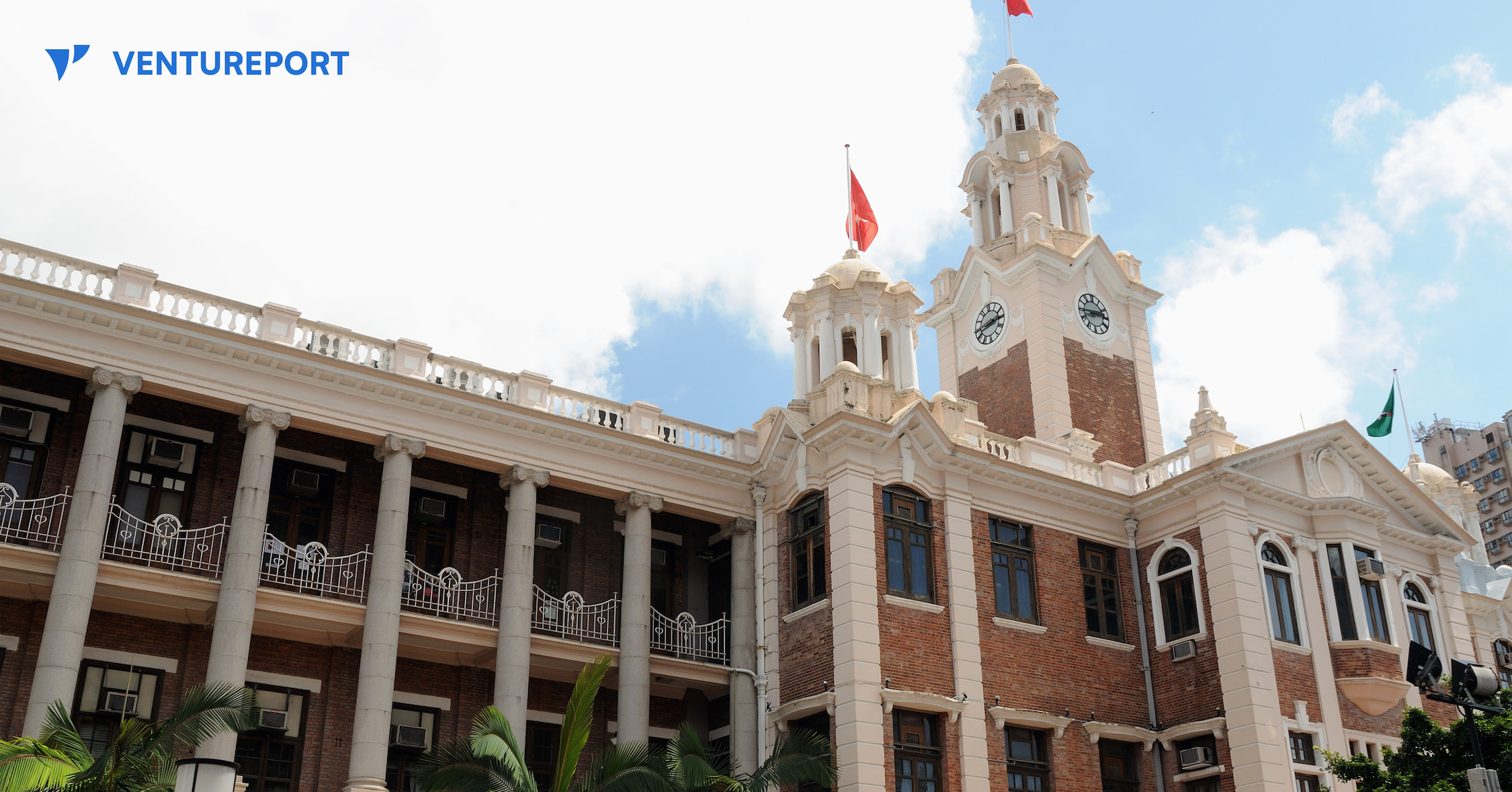
Main Building of the University of Hong Kong. PHOTO: ADOBE STOCK
Hong Kong university students are being invited to take part in the first Hong Kong University Students Fintech Innovation Competition, organised by Industrial and Commercial Bank of China (Asia). The competition gives students a chance to develop ideas around financial technology, with cash prizes, internship opportunities and a route to the national finals of the ICBC Cup on offer.
The competition is part of the 17th ICBC Cup and marks the first time ICBC has established a competition zone in Hong Kong. It is supported by the Financial Services and the Treasury Bureau and the Hong Kong Monetary Authority, with 12 Hong Kong universities also backing the initiative.
The participating universities are the University of Hong Kong, the Chinese University of Hong Kong, Hong Kong University of Science and Technology, Hong Kong Polytechnic University, City University of Hong Kong, Hong Kong Baptist University, Hong Kong Metropolitan University, Lingnan University, Hong Kong Shue Yan University, the Education University of Hong Kong, Hang Seng University of Hong Kong and St. Francis University.
For ICBC Asia, the competition is also intended to support the development of fintech in Hong Kong and expand the city's fintech talent pool. Dr. Liu Yagan, Chairman and Executive Director of Industrial and Commercial Bank of China (Asia), said the competition is designed to encourage students to develop practical applications for financial technology and explore new banking business models.
"This competition encourages university students across Hong Kong to propose practical solutions for fintech applications and banking business model innovation from the perspective of financial products and services, providing a platform for Hong Kong youth to connect with cutting-edge industries and unleash their innovative potential."
The initiative will also connect Hong Kong students with the wider ICBC Group. Liu said this would help deepen exchanges between young talent in Hong Kong and the Mainland.
The competition is open to full-time university students in Hong Kong and carries the theme "Digital Banking, Creating the Future." Students can develop ideas across 10 areas, ranging from fintech and digital finance to green finance, inclusive finance, pension finance and wealth management. The categories also include financial security services, specialised financial services, youth services and open innovation services.
The competition also offers cash prizes: the First Prize winner will receive HK$50,000; two Second Prize winners will receive HK$30,000 each; three Third Prize winners will receive HK$20,000 each; and four Honorable Mention recipients will receive HK$10,000 each.
Beyond the prize money, qualifying winners will have the opportunity to undertake internships at ICBC (Asia). The team that wins the Hong Kong First Prize will also have the opportunity to travel to Beijing in December for the ICBC Cup national finals, where it will compete against teams from across the country.
With registration now open, the competition gives Hong Kong university students an opportunity to take ideas in financial technology from the classroom into areas such as banking products, services and business models.