
Led by co-founders Andrew Raslan and Keyvan Jodeiri, Pipeline Organics is developing microbial fuel cells to help food and beverage manufacturers treat wastewater and recover energy as electricity.
Updated
November 16, 2026 12:32 PM

Concept visualisation of Pipeline Organics’ planned TankArc wastewater treatment and energy recovery system at a brewery. IMAGE: PIPELINE ORGANICS
A glass of beer or a bottle of soft drink leaves plenty behind before it reaches the shelf. Producing it requires water and electricity, then creates wastewater that manufacturers must pay to treat. For breweries and other food and beverage manufacturers working with tight margins, those bills can leave less money for new equipment, products and people.
Pipeline Organics, led by Andrew Raslan (commercial) and Dr Keyvan Jodeiri (technology), sees a resource in that waste. The Nottingham-based cleantech startup, Pipeline Organics, is developing microbial fuel cells that treat food and beverage wastewater while generating electricity. The aim is to help factories lower their operating costs by recovering value from a stream they already produce every day.
Founded in August 2021, Pipeline Organics grew out of the University of Nottingham’s Young Entrepreneurs Scheme, YES20. The founding team won its Engineering, Energy and Environment stream before establishing the company. Andrew, now CEO, brought a background in molecular microbiology and antimicrobial research, later moving into project management and commercialization.
Co-founder and chief scientific officer Keyvan Jodeiri brought a different piece of the puzzle. His research explored biofuel cells that could use sugars in blood to generate electricity for medical implants. The team began asking whether related principles could work outside the body, using organic material in industrial wastewater as fuel. Turning that idea into a business meant finding an application where the environmental benefits came with a clear financial incentive.
Food and beverage manufacturing offered that opportunity. Breweries and other food and beverage manufacturers produce wastewater rich in biodegradable organic material such as leftover carbs and fats or dead proteins, making it suitable food for microorganisms. Treating it at the factory also gives the company a more predictable waste stream than the mixture arriving at a general sewage treatment plant.
“What is filthy for you as a manufacturer is food for the bacteria,” Andrew explains.
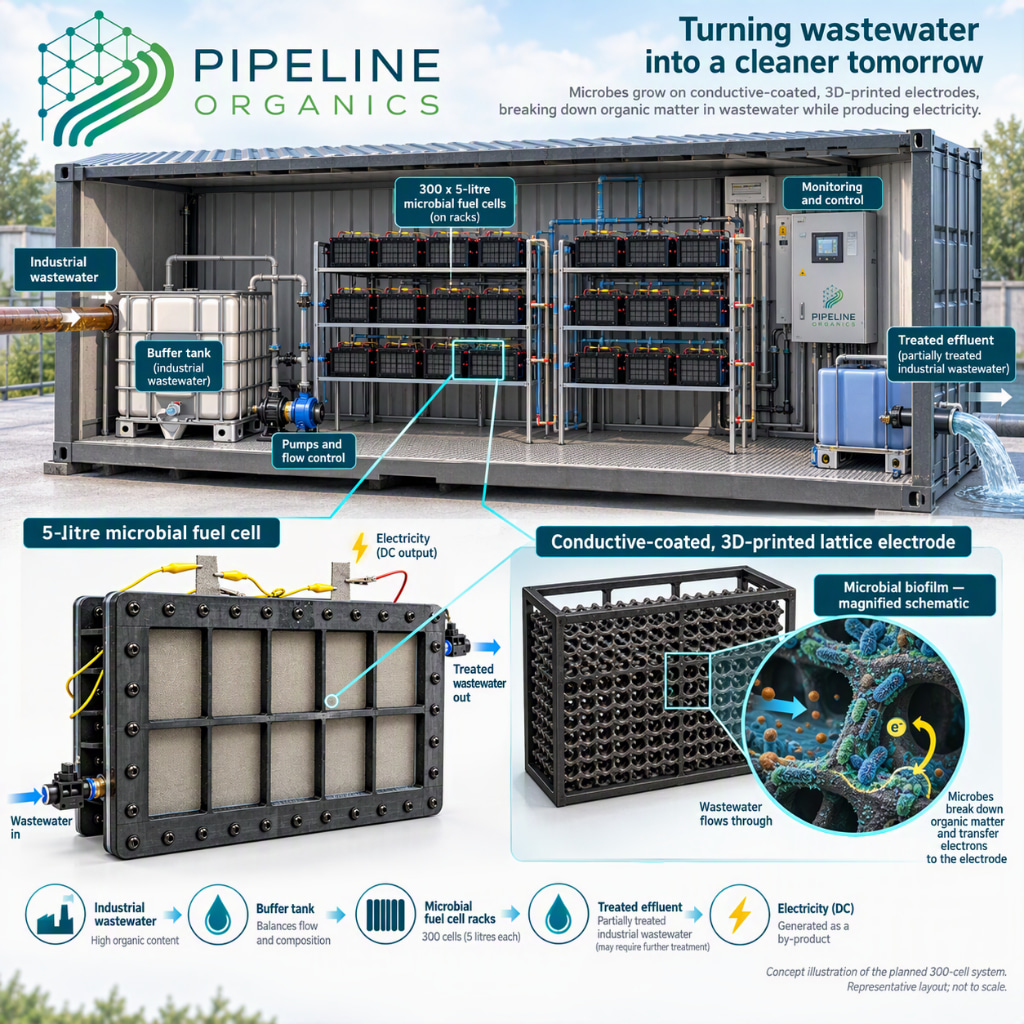
The company’s system, TankArc, contains reactors with specially designed, 3D-printed lattices. Microorganisms growing on the anode break down organic material in wastewater, releasing electrons that electrodes capture as electrical current. This reduces the organic pollution load while recovering some of its energy. Reactors can be grouped into racks or, eventually, containers equipped with plumbing, batteries and controls to serve different factory sizes.
Andrew describes the system as being designed to become self-powering, provided its electricity output scales as expected, with surplus energy available for use on site. At the moment, replacing a brewery’s entire electricity supply is beyond the immediate promise, Andrew admits. The more practical proposition is reducing the amount of power a manufacturer needs to buy through site efficiency upgrades, while cutting its wastewater treatment burden.
The treated wastewater would then go into the sewer for further treatment. Since it contains fewer pollutants, manufacturers could pay less in treatment charges or, in some cases, avoid them altogether. Pipeline Organics is also exploring ways to take the process further by working with partners to make water reuse possible. This could allow manufacturers to reuse the treated water for tasks that do not require high-purity water, such as post-production washing, which accounts for a large share of fresh-water use in the industry.
Much of TankArc’s engineering sits in the lattice itself. It needs sufficient surface area for the biological process while allowing wastewater to flow through without clogging. Different waste streams require different designs. Pipeline Organics combines engineering calculations with proprietary AI-assisted algorithms to adapt the geometry for applications such as beer, wine or fruit juice production.
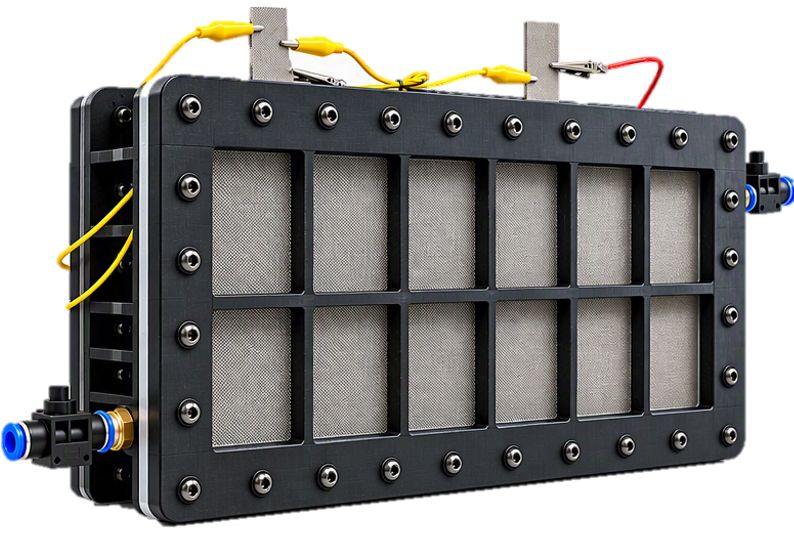
Andrew sees this design process as a competitive advantage. Once the geometry has been developed, components can be manufactured from the resulting 3D models. The difficult part is knowing how to design a cell that performs in a particular environment.
The company is competing with established wastewater treatment and energy recovery methods. Anaerobic digestion, for example, produces biogas that can subsequently generate heat and electricity. Pipeline Organics is pursuing direct electricity recovery through compact, modular equipment. Its suitability will depend on the site, the wastewater and the savings it can deliver.
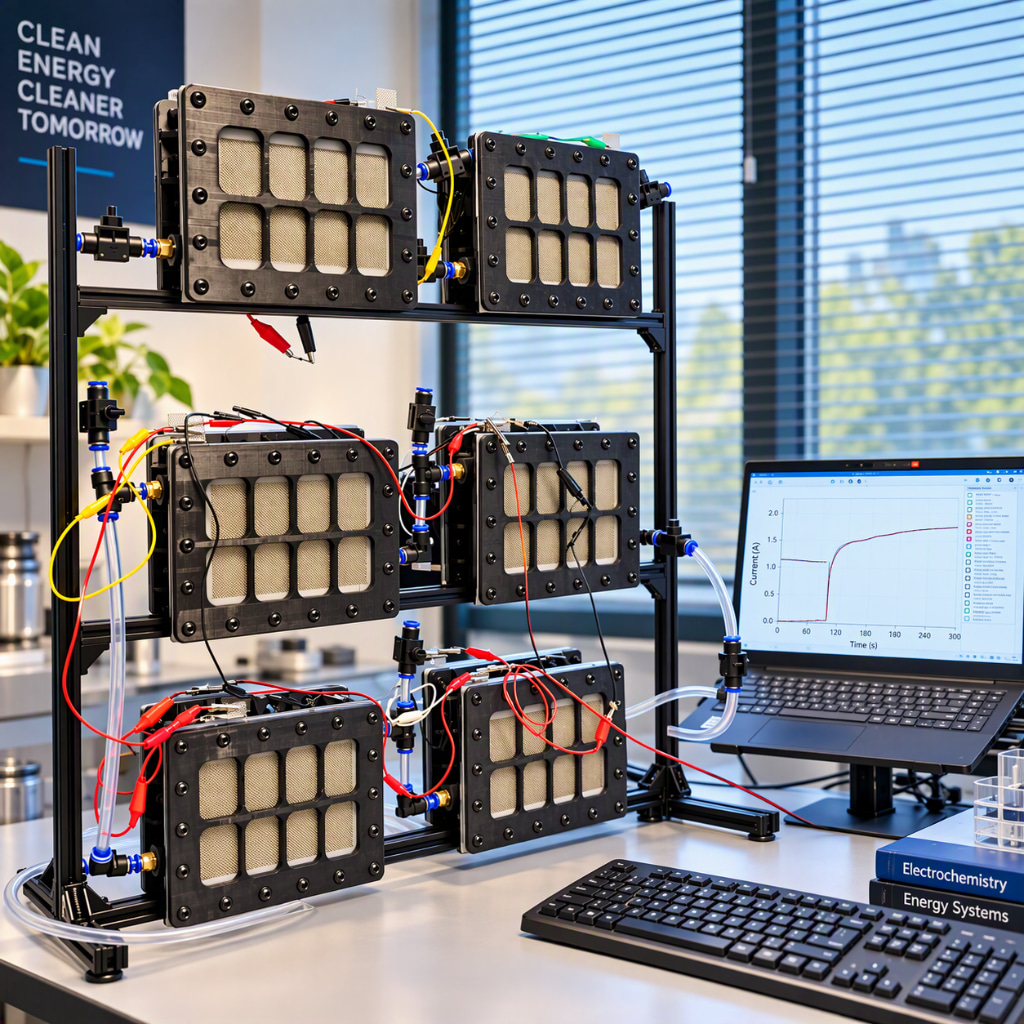
Early brewery trials have helped the team test those assumptions. At Little Ox Brewery, Pipeline Organics used a compact four-reactor system with real wastewater to assess compatibility and electrical output. The trial also provided practical lessons about monitoring, handling and operating equipment around a working production site. The company is working with Castle Rock Brewery in Nottingham as another development partner and have achieved onsite results that are close to commercial readiness.
These demonstrations represent an early step towards industrial deployment. During our interview, Andrew said Pipeline Organics had begun selling paid feasibility pilots that measure performance using customers’ wastewater under actual operating conditions. Larger reactor racks would be at the next stage, followed by containerised systems for facilities producing much greater volumes of effluent. They expect to deploy full-scale containers in 2027.
Scaling brings another set of challenges. The team is developing repeatable methods for producing conductive electrodes, maintaining wastewater flow and assembling larger systems. Reducing manufacturing costs while maintaining treatment performance is a central part of this work.
There will also be useful discoveries along the way: Chief Scientific Officer Keyvan says longer-term ambitions include developing the technology for wastewater sensing and exploring how recovered electricity could support electrochemical production of higher-value chemicals. These could open additional applications for the platform, while the immediate priority remains manufacturing and scaling the wastewater treatment system.
The proposed leasing model reflects the focus on customer economics. Manufacturers would rent equipment rather than purchase it upfront, retaining part of the savings after paying Pipeline Organics. Making that arrangement attractive requires dependable treatment, manageable maintenance and savings that hold up over time.
Andrew’s and Keyvan’s longer-term vision includes a wider portfolio of environmental technologies. For now, the next test is closer to the brewery floor: can the company turn promising small reactors into equipment food and beverage manufacturers can rely on?
“One man’s waste is another man’s raw material if you’re smart about it,” Andrew says. Pipeline Organics is building its business around that possibility, starting with the water left behind by a drink.
Keep Reading
The Canberra biotech startup is helping processors detect spoilage risks before milk reaches the shelf.
Updated
August 13, 2026 1:01 AM
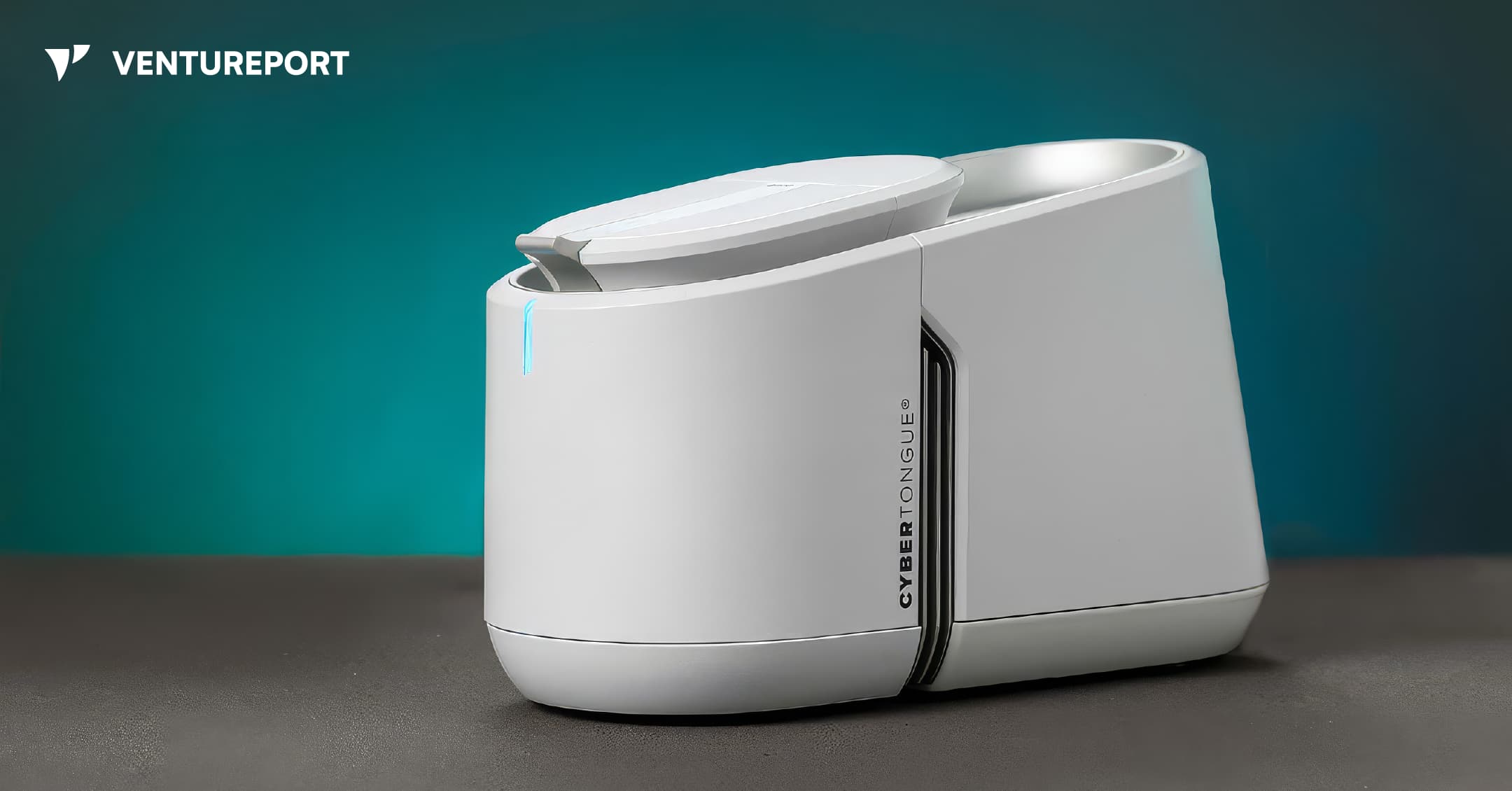
CYBERTONGUE® Food Testing System, developed by PPB Technology. IMAGE: PPB Technology
Anyone who has opened a carton of milk before its expiry date only to find that it smells off or tastes bitter has experienced the problem firsthand. For dairy processors, the same issue can play out across thousands of litres. Milk may pass routine quality checks, make it through production and still spoil before reaching the end of its expected shelf life.
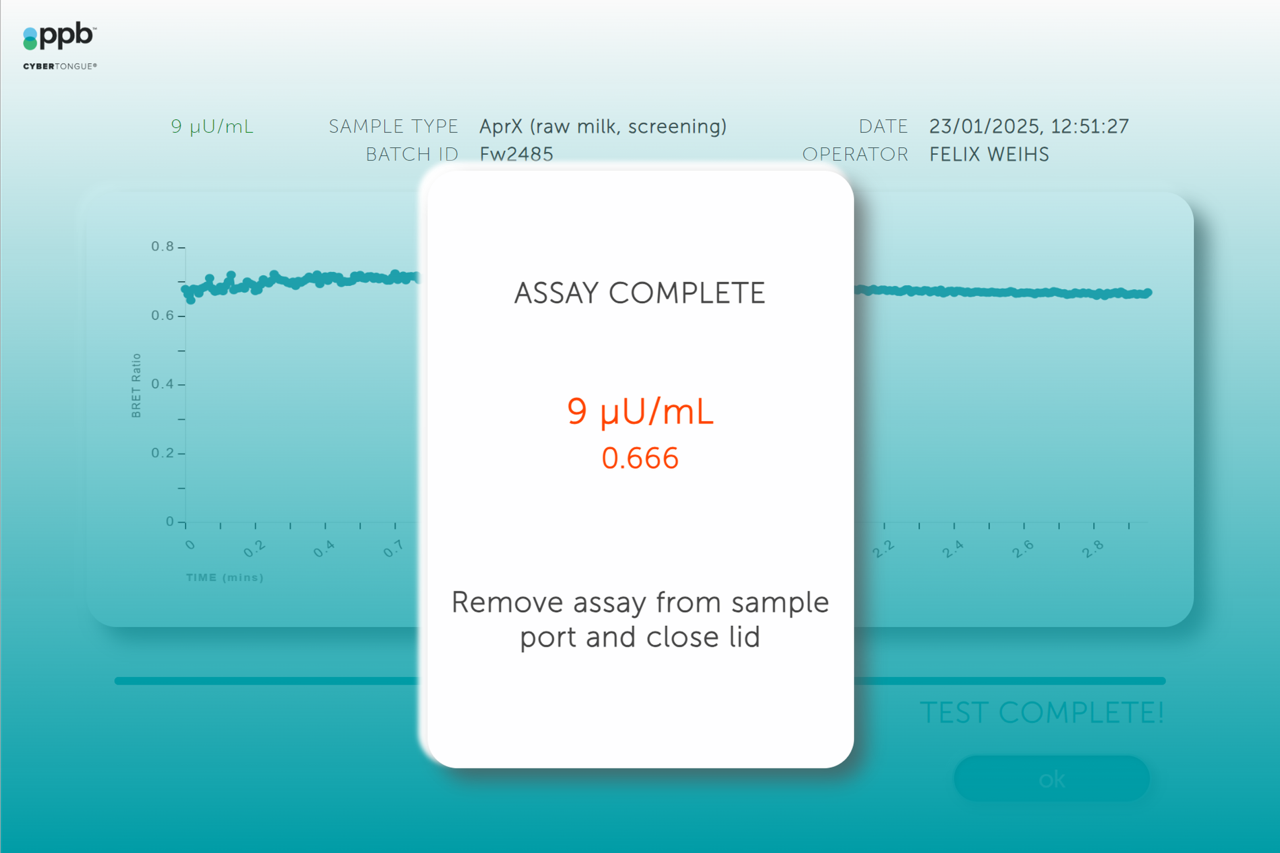
CYBERTONGUE®, a biosensing platform, is designed to give dairy processors an earlier warning.
Developed by Canberra-based biotech startup PPB Technology, the compact food testing system allows processors to analyse milk on-site and receive results within minutes. Its first commercial application detects protease, an enzyme linked to spoilage, shorter shelf life and production losses across dairy products.
Dairy companies already test milk for fat, protein, bacteria, antibiotics and other indicators. Samples from individual farms may be sent to central laboratories, while tanker loads are tested again when they reach processing plants. These checks provide useful information, but they do not always show whether milk will remain stable in a UHT carton, meet a supermarket’s shelf-life requirements or produce the expected amount of cheese.
Even after heat treatment, protease can continue affecting milk. For processors making UHT milk, fresh milk or mature cheese, that creates a costly blind spot.
“Right now, dairy processors are working blind on this,” PPB Technology founder Stephen Trowell told Ventureport. “It’s becoming more of a problem as customers expect longer shelf lives and higher quality.”
CYBERTONGUE® uses engineered biosensing proteins that emit blue and green light. The balance between the two colours changes when the protein reacts with a target substance. The reader measures that shift and calculates how much of the target is present.
Trowell describes himself as a protein engineer at heart. He spent around three decades at CSIRO, Australia's national science and technology agency, and close to four decades in research before becoming a startup founder. The technology behind CYBERTONGUE® grew out of years of biological research, including earlier experiments involving wine aromas and explosives detection.
PPB initially developed its technology to measure plasmin, an enzyme derived from cows. After feedback from the dairy industry, the company shifted its focus to bacterial proteases, which were identified as a more pressing spoilage problem. The platform can make some existing tests faster, but PPB chose to focus first on a measurement previously unavailable to processors.
“Where we’ve chosen to lead is with a measurement nobody else can do at all,” he said. “The blue ocean, if you like.”
That focused entry point shapes PPB’s wider strategy. CYBERTONGUE® could eventually test for lactose, allergens, microbial toxins and other targets. Yet launching everything at once would stretch a six-person company too far. Protease gives it a clear route into dairy, where the financial value is easier to demonstrate.
A processor that detects high protease activity may redirect a batch of milk away from long-life products and use it for yoghurt, curd or another product where the enzyme causes less damage. PPB also says its tests can help trace problems in the milk supply and detect biofilms on processing equipment, allowing factories to take corrective cleaning measures.
Fresh milk presents another sizeable opportunity, with the global market estimated at around US$81 billion in 2026 and projected to grow at 6.83% annually through 2035. At that scale, even small gains in shelf-life consistency could prevent substantial losses. Supermarkets often require milk to have a minimum amount of shelf life remaining on delivery. Products that fall short may be rejected, discounted or discarded at the processor’s expense. While Australian processors typically aim for a shelf life of 19 to 21 days, they do not always achieve it. CYBERTONGUE® could help them reach that target more consistently.
Cheese producers face a related issue. Protease can create bitter flavours in hard cheeses and reduce production yield. Cheesemakers add another enzyme, chymosin, during production, often without knowing how much protease activity is already present in the milk. Better information could help them adjust the process and get more value from the same raw material.
PPB sells the reader as laboratory equipment, but its long-term business model centres on repeat testing. Customers buy the machine, then purchase a PPB reagent cartridge each time they run an assay. Future tests are intended to work on the same reader, making the system more useful as the catalogue expands.
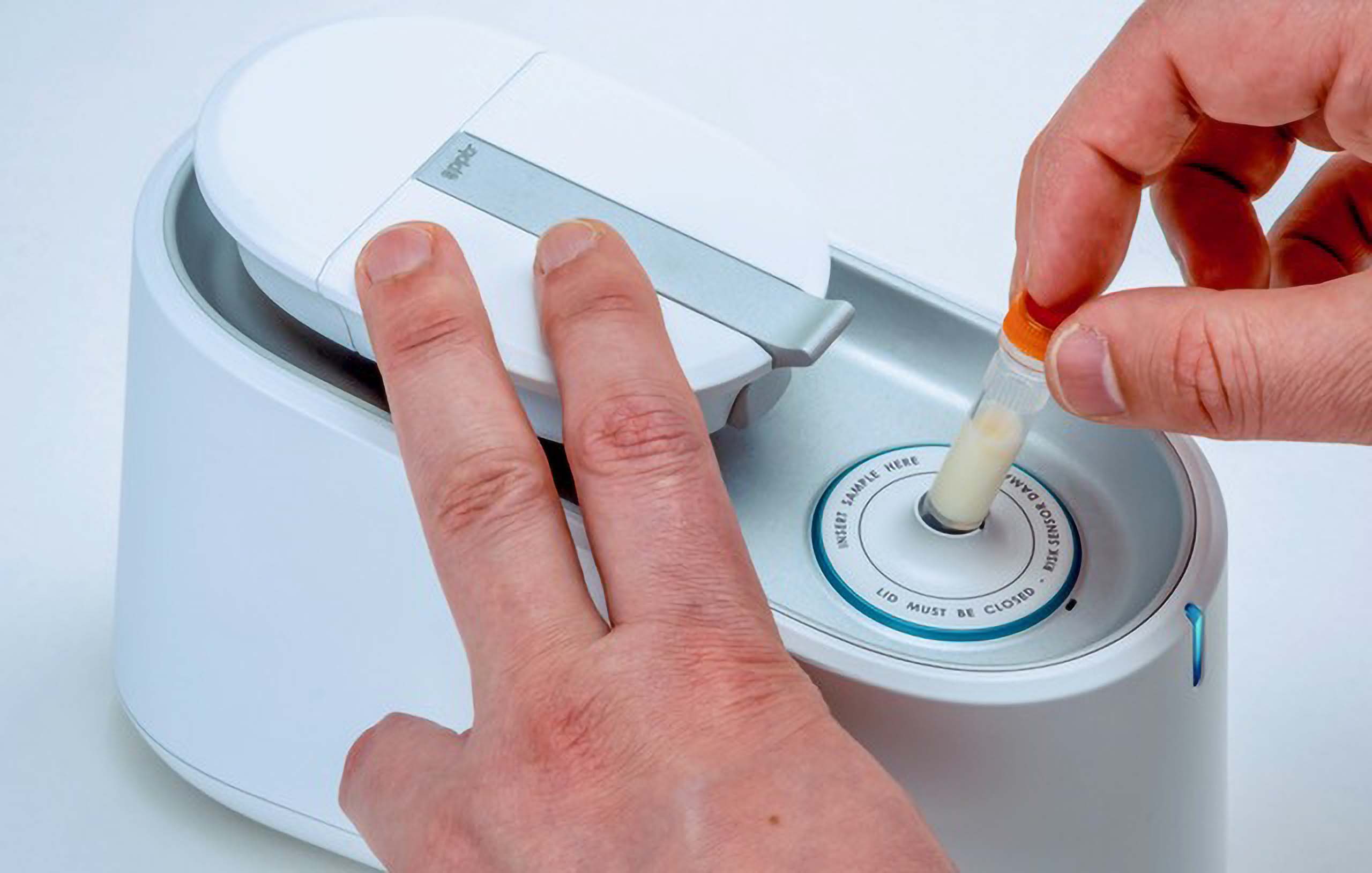
CYBERTONGUE®’s compact design reflects PPB’s focus on practical onsite testing. The device is small enough to fit into two cupped hands and comes with a tablet running PPB’s software.
At the time of the interview, 13 to 15 systems had been installed with paying customers. PPB had made sales in 11 countries across five continents, with Europe as its largest market.
Trowell describes PPB as “born global”. While Australia and New Zealand have sophisticated dairy industries, Trowell thinks CYBERTONGUE® may offer even more value in regions where milk quality is less consistent, transport routes are longer or refrigeration is harder to maintain.
Trowell also believes PPB has a strong competitive moat, with the combination of manufacturing both the hardware and consumable reagents. Patents form one layer, but he does not consider legal protection sufficient on its own. A competitor would need expertise in protein engineering, reagent production, optical hardware, software and dairy processing.
Calibration adds another barrier. For each new box of reagents, PPB securely uploads the required calibration data to the customer’s machine. A third party could not simply manufacture a cartridge with the same dimensions and expect it to work correctly.
“We own the whole stack,” Trowell said, referring to everything from the sensing molecule to the hardware, software and cloud platform.
That said, he accepts that no technology is impossible to copy. His view is that PPB’s mix of scientific knowledge, integrated system and experience in dairy gives it enough of a head start to build a meaningful position before competitors catch up.
The technology could eventually reach beyond food. Trowell sees possible uses in environmental testing, veterinary care and medical diagnostics, including the analysis of blood, serum or saliva. PPB has already discussed potential applications with organisations outside the food industry.
For now, however, moving directly into clinical diagnostics would create more risk than opportunity. Medical products can require years of trials, extensive regulatory work and large development budgets. PPB would also need to build new sales channels and choose between many possible clinical uses without knowing which one would attract the strongest demand.
For these reasons, food testing offers PPB a clearer path. The regulatory barriers are generally lower, customers have immediate operational problems, and PPB has already built relationships in dairy. Once the platform has proved itself commercially, the company could enter other sectors through partnerships or licensing.
Trowell has held that view for years. The immediate goal is to build a successful food testing company rather than chase the prestige often attached to medical biotechnology.
The opportunity may also expand as food production becomes more complex. Dairy factories increasingly process oat, soy and other alternatives on equipment that also handles cow’s milk. This creates cross-contamination and allergen risks, offering another potential use for CYBERTONGUE®.
PPB still has plenty to prove. It must secure repeat reagent orders, convert early trials into wider deployments and expand its test catalogue without compromising accuracy. Scaling an integrated biotech hardware business across international markets will not be simple.
Still, its approach offers a useful lesson for other deep-tech startups. Instead of beginning with every possible application, PPB picked a specific problem that costs customers money today. It built a product around that pain point, then used the same technology as the foundation for a broader platform.
As Trowell put it, customers “need it fast, and they need it right.” CYBERTONGUE® is betting that food testing can deliver both.