
Led by co-founders Andrew Raslan and Keyvan Jodeiri, Pipeline Organics is developing microbial fuel cells to help food and beverage manufacturers treat wastewater and recover energy as electricity.
Updated
November 16, 2026 12:32 PM

Concept visualisation of Pipeline Organics’ planned TankArc wastewater treatment and energy recovery system at a brewery. IMAGE: PIPELINE ORGANICS
A glass of beer or a bottle of soft drink leaves plenty behind before it reaches the shelf. Producing it requires water and electricity, then creates wastewater that manufacturers must pay to treat. For breweries and other food and beverage manufacturers working with tight margins, those bills can leave less money for new equipment, products and people.
Pipeline Organics, led by Andrew Raslan (commercial) and Dr Keyvan Jodeiri (technology), sees a resource in that waste. The Nottingham-based cleantech startup, Pipeline Organics, is developing microbial fuel cells that treat food and beverage wastewater while generating electricity. The aim is to help factories lower their operating costs by recovering value from a stream they already produce every day.
Founded in August 2021, Pipeline Organics grew out of the University of Nottingham’s Young Entrepreneurs Scheme, YES20. The founding team won its Engineering, Energy and Environment stream before establishing the company. Andrew, now CEO, brought a background in molecular microbiology and antimicrobial research, later moving into project management and commercialization.
Co-founder and chief scientific officer Keyvan Jodeiri brought a different piece of the puzzle. His research explored biofuel cells that could use sugars in blood to generate electricity for medical implants. The team began asking whether related principles could work outside the body, using organic material in industrial wastewater as fuel. Turning that idea into a business meant finding an application where the environmental benefits came with a clear financial incentive.
Food and beverage manufacturing offered that opportunity. Breweries and other food and beverage manufacturers produce wastewater rich in biodegradable organic material such as leftover carbs and fats or dead proteins, making it suitable food for microorganisms. Treating it at the factory also gives the company a more predictable waste stream than the mixture arriving at a general sewage treatment plant.
“What is filthy for you as a manufacturer is food for the bacteria,” Andrew explains.
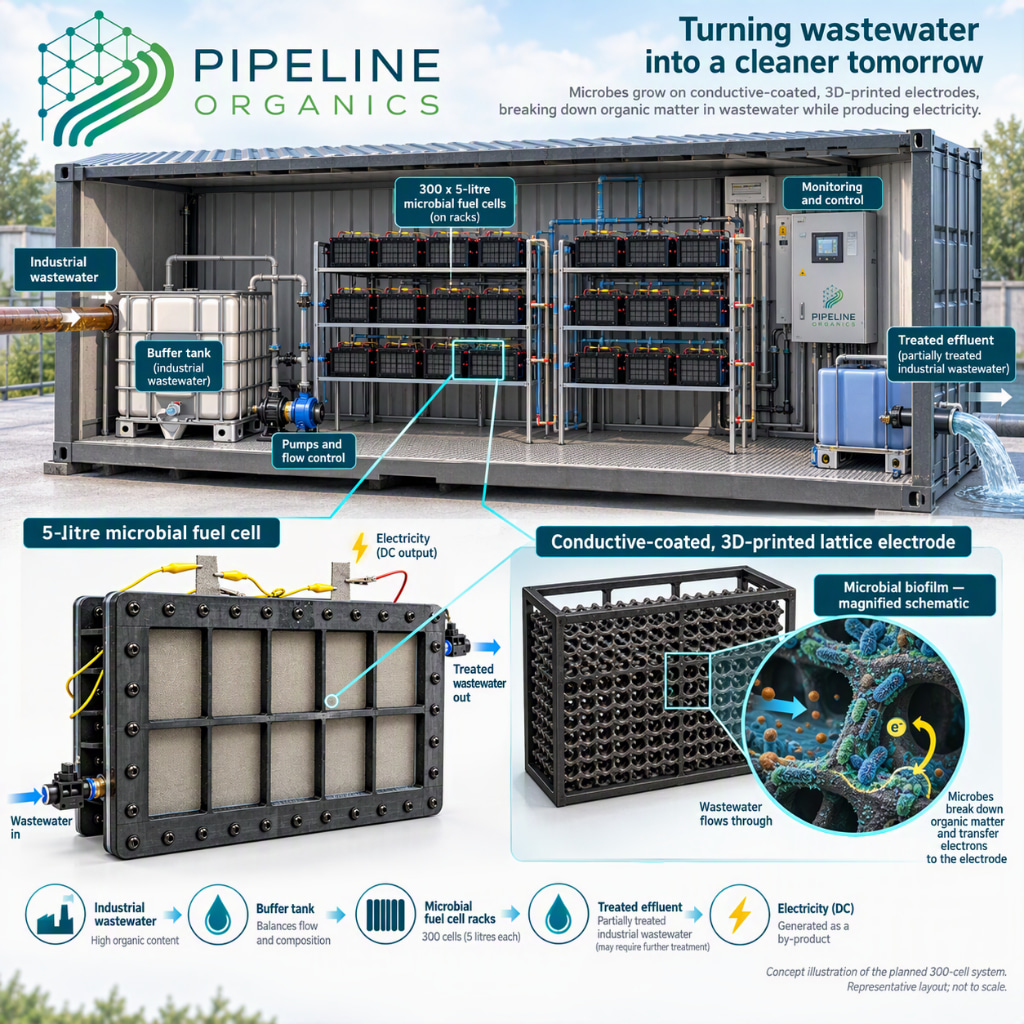
The company’s system, TankArc, contains reactors with specially designed, 3D-printed lattices. Microorganisms growing on the anode break down organic material in wastewater, releasing electrons that electrodes capture as electrical current. This reduces the organic pollution load while recovering some of its energy. Reactors can be grouped into racks or, eventually, containers equipped with plumbing, batteries and controls to serve different factory sizes.
Andrew describes the system as being designed to become self-powering, provided its electricity output scales as expected, with surplus energy available for use on site. At the moment, replacing a brewery’s entire electricity supply is beyond the immediate promise, Andrew admits. The more practical proposition is reducing the amount of power a manufacturer needs to buy through site efficiency upgrades, while cutting its wastewater treatment burden.
The treated wastewater would then go into the sewer for further treatment. Since it contains fewer pollutants, manufacturers could pay less in treatment charges or, in some cases, avoid them altogether. Pipeline Organics is also exploring ways to take the process further by working with partners to make water reuse possible. This could allow manufacturers to reuse the treated water for tasks that do not require high-purity water, such as post-production washing, which accounts for a large share of fresh-water use in the industry.
Much of TankArc’s engineering sits in the lattice itself. It needs sufficient surface area for the biological process while allowing wastewater to flow through without clogging. Different waste streams require different designs. Pipeline Organics combines engineering calculations with proprietary AI-assisted algorithms to adapt the geometry for applications such as beer, wine or fruit juice production.
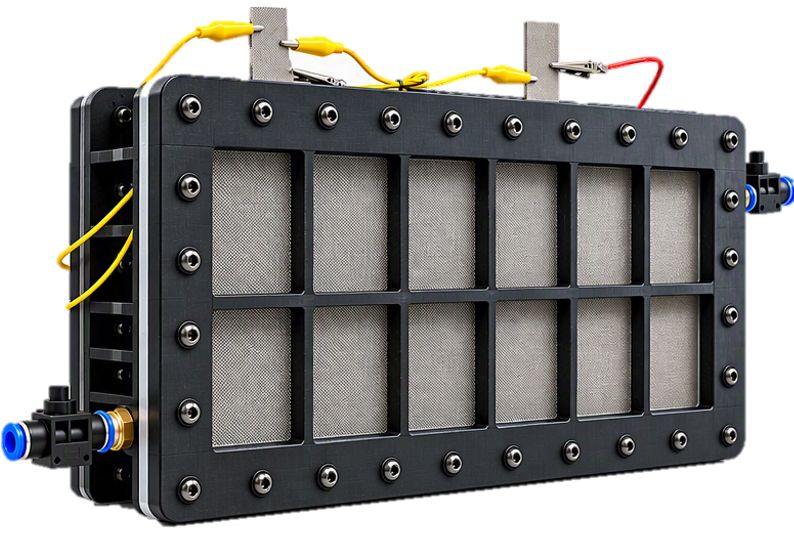
Andrew sees this design process as a competitive advantage. Once the geometry has been developed, components can be manufactured from the resulting 3D models. The difficult part is knowing how to design a cell that performs in a particular environment.
The company is competing with established wastewater treatment and energy recovery methods. Anaerobic digestion, for example, produces biogas that can subsequently generate heat and electricity. Pipeline Organics is pursuing direct electricity recovery through compact, modular equipment. Its suitability will depend on the site, the wastewater and the savings it can deliver.
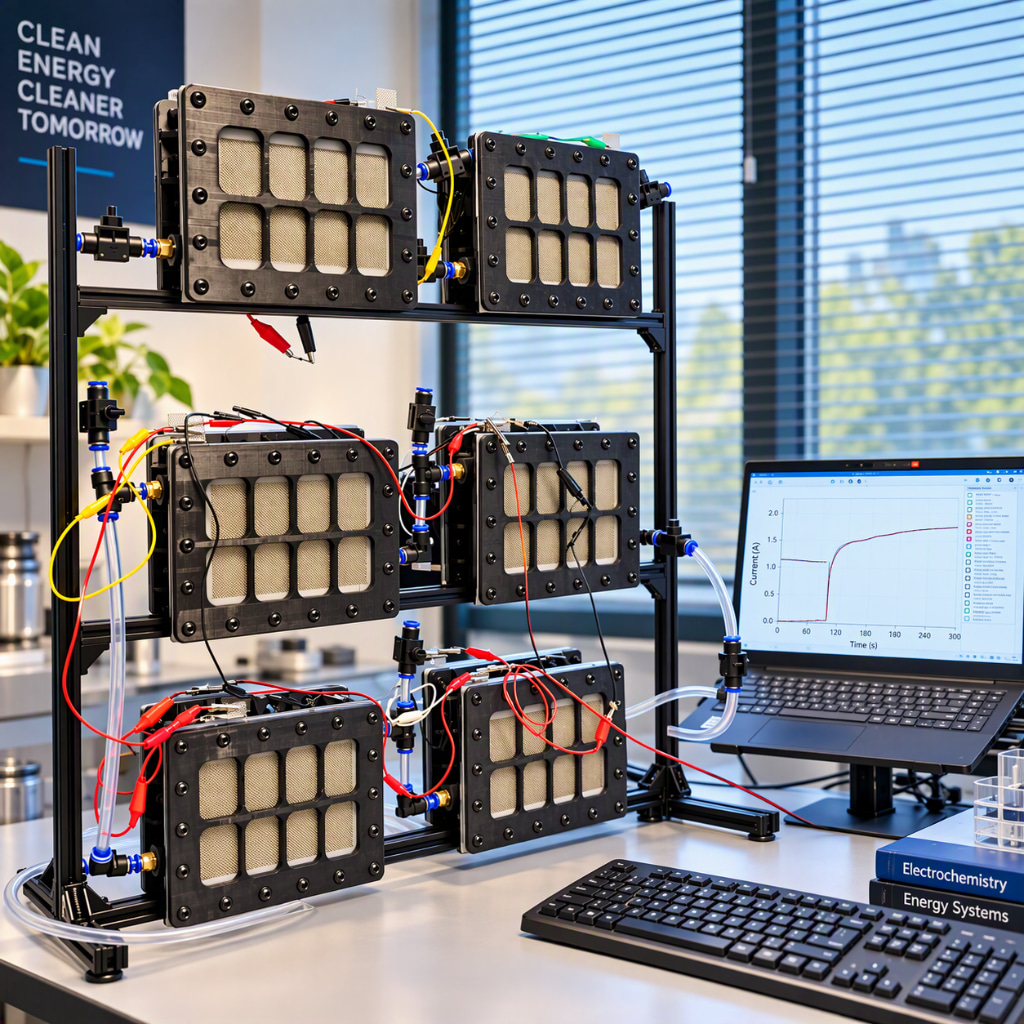
Early brewery trials have helped the team test those assumptions. At Little Ox Brewery, Pipeline Organics used a compact four-reactor system with real wastewater to assess compatibility and electrical output. The trial also provided practical lessons about monitoring, handling and operating equipment around a working production site. The company is working with Castle Rock Brewery in Nottingham as another development partner and have achieved onsite results that are close to commercial readiness.
These demonstrations represent an early step towards industrial deployment. During our interview, Andrew said Pipeline Organics had begun selling paid feasibility pilots that measure performance using customers’ wastewater under actual operating conditions. Larger reactor racks would be at the next stage, followed by containerised systems for facilities producing much greater volumes of effluent. They expect to deploy full-scale containers in 2027.
Scaling brings another set of challenges. The team is developing repeatable methods for producing conductive electrodes, maintaining wastewater flow and assembling larger systems. Reducing manufacturing costs while maintaining treatment performance is a central part of this work.
There will also be useful discoveries along the way: Chief Scientific Officer Keyvan says longer-term ambitions include developing the technology for wastewater sensing and exploring how recovered electricity could support electrochemical production of higher-value chemicals. These could open additional applications for the platform, while the immediate priority remains manufacturing and scaling the wastewater treatment system.
The proposed leasing model reflects the focus on customer economics. Manufacturers would rent equipment rather than purchase it upfront, retaining part of the savings after paying Pipeline Organics. Making that arrangement attractive requires dependable treatment, manageable maintenance and savings that hold up over time.
Andrew’s and Keyvan’s longer-term vision includes a wider portfolio of environmental technologies. For now, the next test is closer to the brewery floor: can the company turn promising small reactors into equipment food and beverage manufacturers can rely on?
“One man’s waste is another man’s raw material if you’re smart about it,” Andrew says. Pipeline Organics is building its business around that possibility, starting with the water left behind by a drink.
Keep Reading
Six technology companies showcased solutions for financial research, wealth management, consumer insight and security to investors and institutions.
Updated
November 14, 2026 11:54 PM

Arnold Lau and King Leung (back row, fourth and fifth from left), Associate Directors-General of Investment Promotion at InvestHK, join the Ventureport team and representatives from the six technology companies. PHOTO: VENTUREPORT
Ventureport hosted the soft launch of InvestHK’s Fast-Track Connect at its AI+ Tech+ Finance+ gathering on 30 October, bringing more than 100 guests to Pier 1929 in Wan Chai.
Sponsored by InvestHK, the event brought investors, institutional representatives and technology companies together to explore investment and business partnerships. Six companies took the stage to showcase software solutions for financial professionals, consumer research, local AI computing and digital asset security.

The Acting Head of Startups, at InvestHK, Chin-yung (CY), and the Senior Vice President (Fintech), Pauline Fan, introduced Fast-Track Connect. They explained how the agency’s international network connects it with technology companies seeking investment, customers and business opportunities in Hong Kong.

Their remarks also highlight the need for a more structured approach to build these connections. Investors need easier ways to identify companies that match their interests, while institutions seeking new technology need access to businesses whose products could support their operations or benefit their customers.
To address this need, Fast-Track Connect provides an online platform where technology companies can publish profiles outlining their products and funding needs. Investors and corporate participants can identify relevant businesses and contact them to explore potential investments or collaborations. Service providers and community partners are also part of the platform. Alongside investors and corporate participants, these groups are designated as Champions on the platform.
Curated by InvestHK and supported by the Financial Services and the Treasury Bureau, Fast-Track Connect builds on the Global Fast Track Programme. It aims to help local enterprises expand into Chinese Mainland, Southeast Asia and other markets.

AlphaPai, an AI-powered investment research platform developed by financial technology company RabyteTech, presented tools for financial research, including gathering data, monitoring financial instruments and comparing information from corporate earnings calls.

At the event, the team explained how users can give research instructions in everyday language, while the software retrieves and processes information to prepare reports and presentation materials. Examples included tracking market developments and comparing company statements over time. The team also emphasised the importance of traceable sources, allowing analysts to verify the information behind their research.
A2B2.AI, a fintech startup, presented AI- powered tools designed to support investors and wealth advisers. Its specialist AI agents—software designed to carry out particular tasks—help prepare client meeting briefings, monitor financial products approaching maturity and identify market developments relevant to individual clients, according to the team.

For investors, the tool can help make sense of lengthy documents provided by advisers and bring information from different accounts together to assess risk exposure. For wealth professionals, the tools support preparation and follow-up around client meetings.
The team described its approach as combining AI with human expertise to support financial decision- making. It also clarified that the platform does not execute investment transactions on behalf of clients, leaving those decisions and actions in their hands.
Preferences AI, an AI startup specialising in synthetic consumer research, presented simulated consumer profiles that businesses can use to explore how different audiences might respond to products, pricing and marketing messages. These profiles generate modelled responses rather than feedback from people directly interviewed or surveyed.

The company described that its profiles are grounded in population data and account for differences between local audiences Businesses can use them to explore pricing or packaging options, as well as ask follow-up questions to understand the reasons behind a particular response. The team also discussed testing its models and working with academics to help validate the approach. It said the technology could help businesses explore consumer preferences more quickly.
ByteFuture, an AI infrastructure startup, focused on running AI on users’ own hardware. It introduced Olares, its operating system, and Olares One, a device designed to run AI models and applications locally.

Its applications included personal assistance, financial research and content creation. The team argued that users handling private documents or proprietary trading strategies may prefer to retain that material on equipment they control.
A demonstration of AI-generated video illustrated creative work the team said could run locally. It also described applications and agents available through its software marketplace.
PureGlobal, a fintech company, addressed digital asset custody: the systems used to safeguard access to digital assets. Its team described technology for protecting access credentials and supporting offline transactions without a conventional internet connection.

The presentation focused on infrastructure for institutions holding and transferring digital assets, including security under different operating conditions.
SlowMist, a blockchain security firm, examined the risks of giving AI agents permission to read information and perform tasks. Its examples included malicious instructions concealed in material an agent might encounter and attacks exploiting access granted to software.

The team discussed security auditing, monitoring and investigations alongside risks arising from third-party tools and an agent’s stored information. One scenario involved exposing a wallet’s recovery phrase, which can give someone control over its assets.