
The new workplace literacy is here, and it’s digital.
Updated
January 8, 2026 6:36 PM
.jpg)
A group of office worker attending a presentation in a meeting room. PHOTO: UNSPLASH
The modern workplace is powered by technology, and success increasingly depends on how well employees can use it. Digital fluency—the ability to confidently and effectively use digital tools to achieve goals—is no longer a bonus skill; it’s a necessity. It goes beyond basic technical know-how, encompassing the ability to adapt to new technologies, integrate them into workflows, and use them to solve problems and drive innovation.
Yet, despite its importance, many organizations struggle to build digital fluency across their teams. Barriers such as limited access to technology, outdated training programs, resistance to change, and gaps in leadership support often stand in the way. These challenges can leave businesses lagging behind competitors who are better prepared to leverage the potential of the digital age.
Understanding and addressing these barriers is critical for creating a workforce that thrives in today’s fast-changing world. Below, we explore the key obstacles to digital fluency and provide actionable strategies to overcome them.
One of the challenges to digital fluency is the gap between the technology available and employees’ ability to use it effectively. Technology evolves rapidly, but many organizations lag behind in providing relevant, up-to-date training. Employees may receive a one-time introduction to new tools but lack ongoing opportunities to build confidence or master advanced features.
This issue is compounded by the fact that training often takes a one-size-fits-all approach, failing to address the diverse skill levels within a workforce. For example, while some employees may only need a basic overview of a tool, others may require in-depth knowledge to integrate it into their roles effectively. Without tailored and continuous training, even the most advanced tools can go under utilized, leading to frustration and resistance.
Even with proper training, employees may hesitate to adopt new technologies. Resistance to change is a deeply rooted challenge that goes beyond technical skills—it’s tied to fear of failure, skepticism about the value of new tools, or discomfort with disrupting existing workflows.
For example, employees who have been using the same systems for years may feel overwhelmed by the idea of learning something new. They may worry that new technologies will complicate their work rather than simplify it. In some cases, they may even feel their jobs are threatened by automation or digital tools.
This resistance isn’t limited to employees—it can also exist at the leadership level. If leaders themselves are hesitant to adopt new approaches, it creates a top-down culture that stifles innovation.
The lack of organizational alignment is another significant barrier. Digital tools often roll out unevenly across departments, leading to fragmented adoption. For instance, one team might embrace a new project management tool, while another continues to rely on spreadsheets. This inconsistency creates silos, disrupts collaboration, and makes it harder for organizations to achieve the full benefits of digital transformation.
Generational differences can further exacerbate this issue. Younger employees, who are often more comfortable with technology, may adopt new tools quickly, while older employees may struggle to keep up. This divide can lead to frustration on both sides and uneven levels of digital proficiency across the organization.
Leadership plays a critical role in driving digital transformation, but in many organizations, this support is inconsistent or absent. Some leaders fail to prioritize digital fluency as a strategic initiative, while others may not fully understand the tools themselves, making it difficult to set an example for their teams.
Without clear direction from leadership, employees may not see digital fluency as a priority. This lack of alignment can lead to half-hearted adoption, where technology is seen as an optional add-on rather than a fundamental part of the organization’s success.
These barriers don’t exist in isolation—they are deeply interconnected. For example, outdated training practices can fuel resistance to change, while fragmented adoption across teams is often a symptom of weak leadership support. Together, they create a cycle that limits an organization’s ability to adapt, innovate, and thrive in a fast-changing world.
Addressing these challenges is critical for building a workforce that is confident, capable, and ready to embrace the future. By breaking down these barriers, organizations can unlock the full potential of their teams and position themselves for long-term success.
Training should not be an afterthought or a one-time event—it must be a continuous and personalized process. Employees come with diverse skill levels, and a one-size-fits-all training program often fails to address these differences. Organizations should adopt a multi-pronged approach to training, offering workshops for hands-on learners, e-learning modules for self-paced learning, and one-on-one coaching for employees who need more targeted support.
For example, companies like AT&T have invested heavily in workforce retraining initiatives, providing employees with a structured path to build digital skills overtime. These programs not only improve employee confidence but also help organizations fully leverage their digital tools.
Moreover, training programs should evolve to keep up with technological advancements. Employees need regular refreshers to stay current, as even the most advanced tools can become obsolete or under utilized without proper guidance. By making training a core part of the organizational culture, companies can empower employees to adapt to new tools with ease and confidence.
Resistance to change is a major barrier to digital fluency, often fueled by employees’ fear of failure or inefficiency when using new tools. To address this, organizations should foster a culture where employees feel safe experimenting with technologies in low-stakes environments, such as “sandbox environments” that allow for practice without affecting real workflows. When employees are encouraged to test new tools and processes in a low-stakes environment, they become more comfortable with technology over time.
Recognizing and rewarding employees who embrace new tools or suggest innovative ways to use them reinforces this mindset. Early adopters can serve as champions for digital fluency, encouraging others to engage with and explore new technologies.
By normalizing experimentation, organizations can shift employees from resisting change to confidently adopting digital tools as opportunities for growth.
To avoid fragmented adoption, organizations must ensure that digital tools are implemented consistently across teams. This requires clear communication, cross-departmental collaboration, and alignment on how tools will be used to achieve shared goals.
Mentorship programs can help bridge generational divides, pairing younger employees with older colleagues to share knowledge and skills.
Leaders play a pivotal role in overcoming barriers to digital fluency. They don’t just drive the adoption of digital tools—they shape how employees perceive and engage with them. When leaders actively embrace technology, they demonstrate its value and set a standard for others to follow.
Leadership involvement must go beyond symbolic gestures. Employees are far more likely to adopt new tools or processes when they see their leaders using them effectively in day-to-day work. For example, a manager who uses a team collaboration platform to streamline communications or leverages data visualization tools in meetings signals the practical benefits of these technologies. This hands-on engagement builds trust and encourages others to follow suit.
Equally important is leaders’ ability to connect digital tools to broader organizational goals. Employees need to understand how these tools contribute to solving real problems, improving workflows, or driving innovation. When leaders clearly communicate the "why" behind digital initiatives, it helps employees see digital fluency as a shared mission rather than an abstract directive.
Digital fluency isn’t just about mastering tools—it’s about creating a workplace where adaptability, curiosity, and collaboration thrive. It’s about empowering employees to see technology not as a hurdle but as an opportunity to innovate, grow, and solve problems in new ways.
At its heart, digital fluency is a shared effort, requiring leaders who inspire, teams that align, and cultures that embrace experimentation and learning. When organizations commit to breaking down barriers—whether through better training, stronger leadership, or fostering collaboration—they unlock the full potential of their people and their tools.
The future belongs to organizations that don’t just adopt technology but embed it into their culture, enabling their teams to thrive in an ever-changing digital landscape. The question now is not whether we can keep up with change, but how far we can go when we embrace it fully.
Keep Reading
Merve Isler, Founder and CEO of Marvelous, sits down with Ventureport to discuss how AI can help revenue teams find the right rooms, guests and opportunities.
Updated
August 18, 2026 11:33 PM
.jpg)
Marvelous, an AI product company. PHOTO: MARVELOUS
Most B2B sales teams spend their days inside software. They track leads in a customer relationship management (CRM) tool, send emails, build outbound lists and measure every digital touchpoint. Still, many important business relationships move forward in person. A dinner after a conference, a small founder roundtable or a private customer event can do what dozens of cold emails cannot: build trust quickly.
That is the gap Marvelous wants to fill. The bootstrapped San Francisco-based AI startup is building what founder and CEO Merve Isler calls “Salesforce, but for real life”. Her idea is simple: if companies already use software to manage digital sales, they should also have software to manage the real-world moments that help close deals.
Marvelous brings data, automation and targeting into in-person go-to-market (GTM) work. It helps B2B sales, revenue, marketing and growth teams plan in-person events such as curated dinners, launch events, mixers, happy hours and conference side events. These formats are already familiar to companies selling to enterprise buyers. The problem is that they are often managed through spreadsheets, venue calls, scattered guest lists and manual follow-ups.
That creates two problems. First, the process is slow. Teams can spend weeks figuring out who to invite, where to host and how to manage responses. Second, the return is hard to measure. Companies spend heavily on conferences, dinners and private events, yet they often do not have a clear way to know whether an event will influence pipeline before they commit the budget.
Marvelous wants to pull those pieces into one AI-powered event management platform.
“Our main target customer is revenue and sales teams,” Isler said. “Because about 40% of deals close in person, but there's no infrastructure built for that—so that's what we do.”
For Isler, the idea comes from experience. Before starting Marvelous, she worked at Google from Istanbul, managing developer product launches and go-to-market programs across Turkey, Central Asia and the Caucasus. During that time, she helped build more than 100 communities around the world and coordinated thousands of events a year across eleven time zones. The work was fast, local and very manual.
That experience shaped the foundation for Marvelous. Isler saw that building products had become easier, while distribution remained difficult. A startup can now ship software faster than ever. Reaching the right people, in the right setting, is still a different challenge.
At Google, Isler had to understand how people gathered, communicated and built trust in different markets. A product launch might require developer meetups in dozens of cities, but the right approach could change from country to country. In Kazakhstan, she said, Telegram worked better than WhatsApp. In Afghanistan, Facebook mattered more. Each market had its own habits, and growth depended on understanding those details. Those details and adapt quickly.
Marvelous grew out of that playbook. Isler saw that offline distribution had patterns, even when it looked chaotic from the outside. The right guest list, the right room, the right timing and the right follow-up could change the outcome of a sales conversation. Most of that knowledge, however, lived in people’s heads. Marvelous is her attempt to turn it into software.
Inside the platform, a company can start by choosing the kind of satellite event it wants to host: a launch event, a mixer, a happy hour, a brunch, a lunch or a dinner. From there, users can connect their CRM. When Salesforce is connected, Marvelous analyzes contacts and creates relationship scores based on signals such as buying intent, past event activity and how warm a relationship appears to be. If a team also uses an event platform such as Luma or Eventbrite, Marvelous can bring that event data into the picture as well.

The product is built around Maven, Marvelous’ AI assistant. Maven can help plan an event through Slack, iMessage or the Marvelous platform itself. For instance, a user might ask Maven to plan an executive dinner for 18 people within a set budget. From there, Maven can find warm contacts, estimate who is likely to attend, build a guest list, recommend venues, send invitations and run follow-up sequences across email, LinkedIn and SMS. The goal is to let sales teams focus on conversations and closing deals instead of worrying about logistics. Put simply, Marvelous helps a company find the right guests, secure the right venue and understand which event format is likely to work. Instead of guessing whether a US$10,000 dinner will pay off, the company gets a clearer view of the potential return.
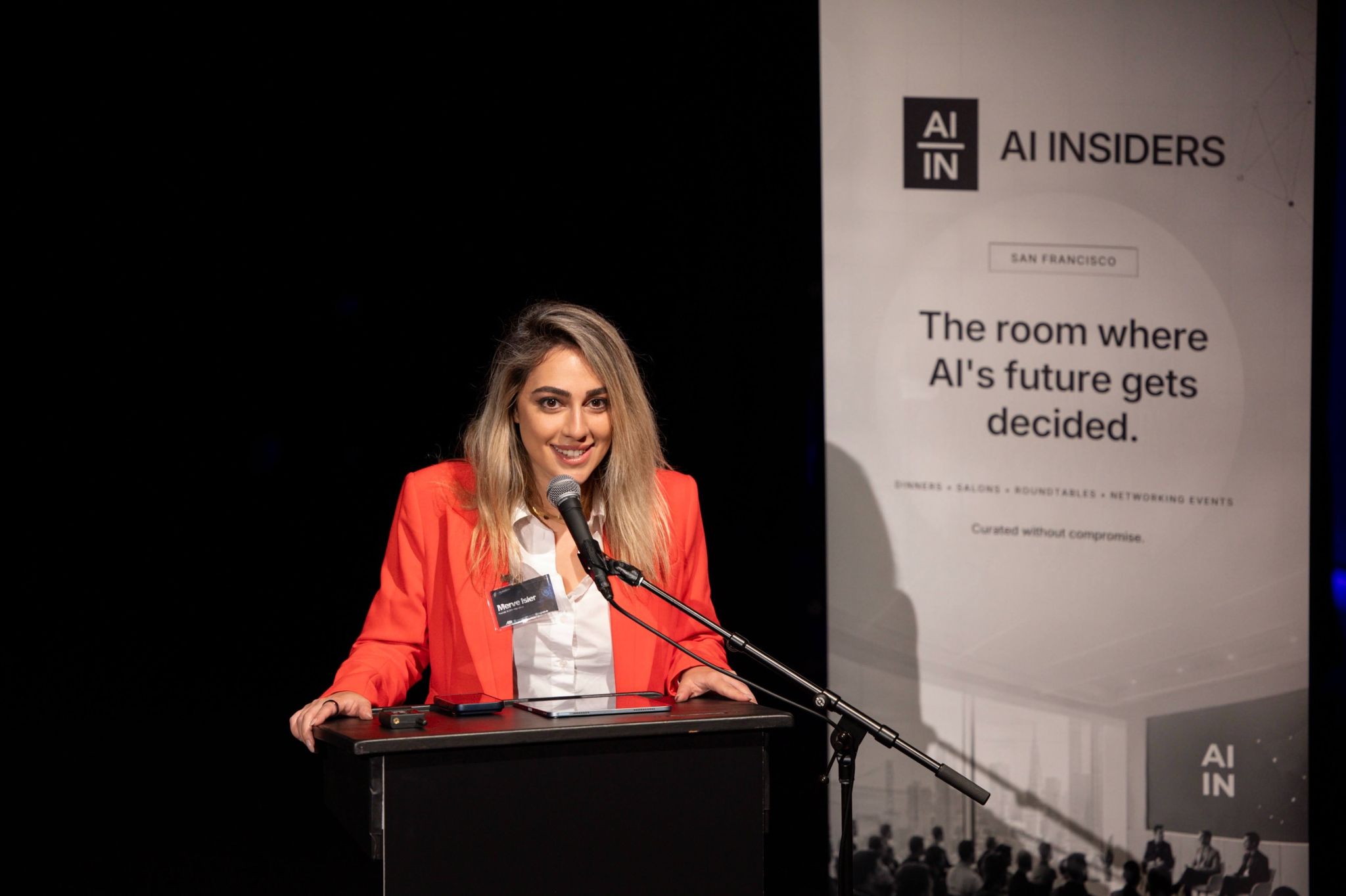
AI Insiders, Marvelous’ invite-only network of verified AI and enterprise leaders, is also part of the company’s go-to-market strategy. Rather than asking every customer to build an event from scratch, Marvelous can group several companies that want to reach the same audience into one curated event. Such a setting creates revenue, product feedback and fresh data about what works in different markets. The network spans verticals such as cybersecurity, fintech, robotics, healthcare AI and enterprise SaaS. It now includes members from more than 475 companies, with C-level executives making up nearly half of the community. So far, AI Insiders has facilitated more than 2,000 introductions and contributed to over US$560 million in deals. Isler describes it as one of Marvelous’ strongest go-to-market channels.
The first AI Insiders event took place at AWS GenAI Loft in San Francisco in March 2025. It brought together 150 curated guests, including AI founders, tier-one investors, enterprise executives and researchers for an evening focused on high-impact conversations and collaboration.
The timing may work in Marvelous’ favor: Digital outreach is getting louder, and AI will make it easier for companies to send more emails, messages and automated pitches. That may make high-trust in-person conversations more valuable, especially in enterprise sales where relationships take time. At the same time, event budgets need proof. Revenue leaders want to know whether a dinner, roadshow or customer event is worth the cost.
Marvelous is betting that offline sales will become a measurable category for software. If the company can prove that its relationship scores, event intelligence and AI agent help teams create a stronger pipeline, it could become an important tool for B2B go-to-market teams. The core message of Marvelous is easy to understand: the deals may happen in the room, but data can still power the room.