
Updated
November 27, 2026 1:05 AM

A desk with books and coffee next to a computer. PHOTO: UNSPLASH
Ailytics raises US$7.4 million in Series A
Singapore-based vision AI startup Ailytics has raised US$7.4 million in a Series A round led by Tin Men Capital. Its flagship product, Ailyssa, works with existing CCTV cameras to analyse footage in real time. Using computer vision and vision-language models, it flags industrial safety hazards such as workers without protective gear or standing too close to moving machinery. This helps industrial teams identify and address potential risks before they lead to accidents.
Stryv raises US$11.5 million in Series B
Singapore-based personal care and home wellness company Stryv has raised US$11.5 million in a Series B round led by ACV Capital, with participation from Openspace Capital and OCTAVE Capital. Its product range includes hair dryers, stylers, shavers, men's grooming and oral care products. Through its Sterra brand, the company also offers home wellness products such as air and water purifiers.
Omnichat raises US$10 million in Series A
Hong Kong-based customer engagement startup Omnichat has raised US$10 million in a Series A round led by Openspace Capital, with participation from Darwin Ventures and Acorn Pacific Ventures. Its platform brings customer conversations from WhatsApp, LINE, Messenger, Instagram and WeChat into one place, helping brands manage sales, marketing and customer service. It also uses AI to recommend products, respond to enquiries and turn conversations into sales. Omnichat says it serves more than 5,000 brands and has helped generate over US$100 million in revenue for clients.
ProScout seeks US$200,000 to complete seed financing
Israel-based agritech startup ProScout is raising a seed round through a SAFE, with US$1.2 million secured and a further US$200,000 sought. Its backers include Orbit Ventures and angel investors, alongside a non-dilutive grant. The startup's device clips onto existing agricultural sprayers and records where pesticides are applied in real time. Its AI-powered platform compares actual spraying with planned treatment and generates maps showing which areas were covered and where spraying was missed. This helps commercial growers improve spraying accuracy and reduce chemical waste.
Keep Reading
Redefining sensor performance with advanced physical AI and signal processing.
Updated
January 8, 2026 6:32 PM
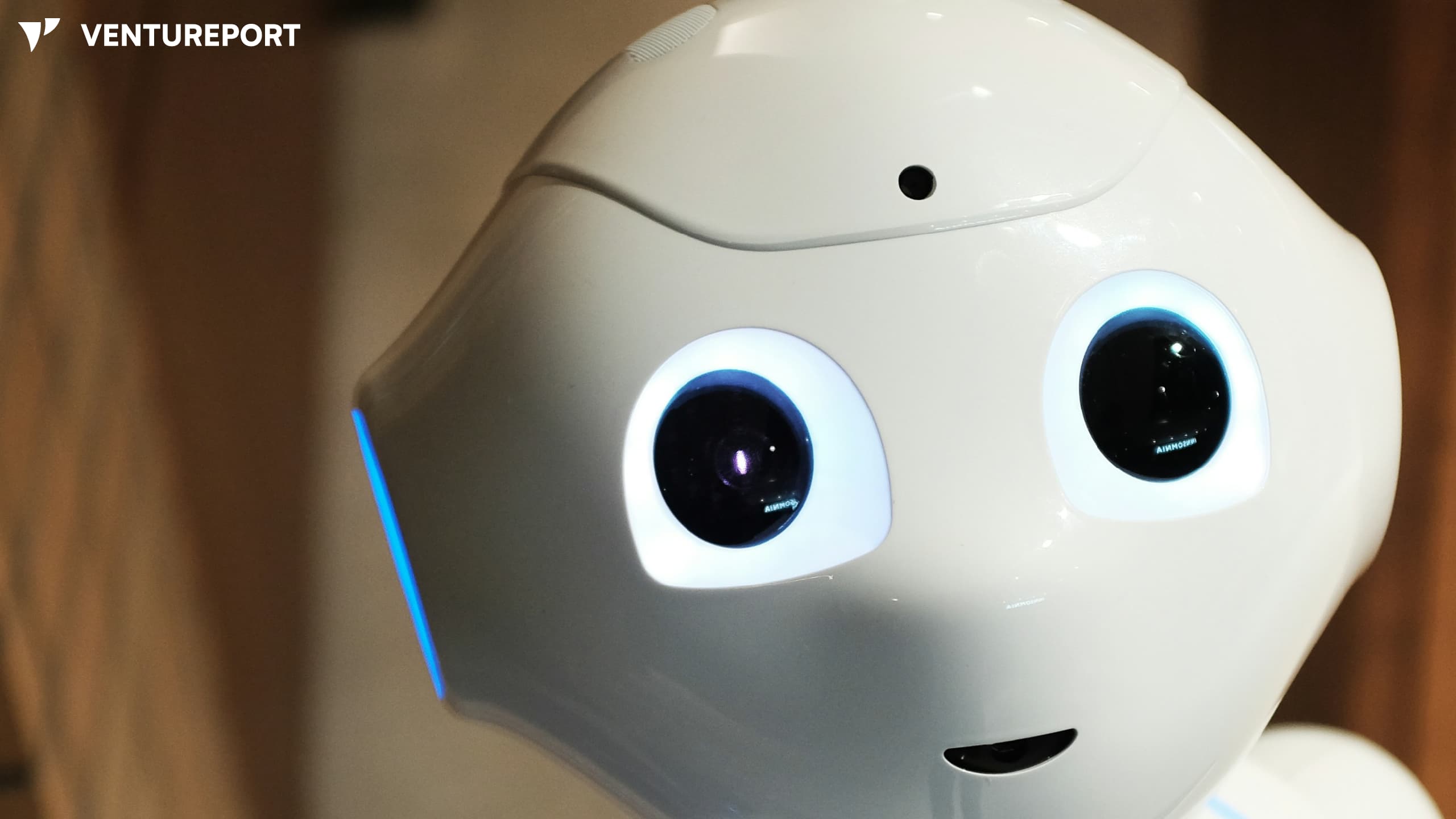
Robot with human features, equipped with a visual sensor. PHOTO: UNSPLASH
Atomathic, the company once known as Neural Propulsion Systems, is stepping into the spotlight with a bold claim: its new AI platforms can help machines “see the invisible”. With the commercial launch of AIDAR™ and AISIR™, the company says it is opening a new chapter for physical AI, AI sensing and advanced sensor technology across automotive, aviation, defense, robotics and semiconductor manufacturing.
The idea behind these platforms is simple yet ambitious. Machines gather enormous amounts of signal data, yet they still struggle to understand the faint, fast or hidden details that matter most when making decisions. Atomathic says its software closes that gap. By applying AI signal processing directly to raw physical signals, the company aims to help sensors pick up subtle patterns that traditional systems miss, enabling faster reactions and more confident autonomous system performance.
"To realize the promise of physical AI, machines must achieve greater autonomy, precision and real-time decision-making—and Atomathic is defining that future," said Dr. Behrooz Rezvani, Founder and CEO of Atomathic. "We make the invisible visible. Our technology fuses the rigor of mathematics with the power of AI to transform how sensors and machines interact with the world—unlocking capabilities once thought to be theoretical. What can be imagined mathematically can now be realized physically."
This technical shift is powered by Atomathic’s deeper mathematical framework. The core of its approach is a method called hyperdefinition technology, which uses the Atomic Norm and fast computational techniques to map sparse physical signals. In simple terms, it pulls clarity out of chaos. This enables ultra-high-resolution signal visualization in real time—something the company claims has never been achieved at this scale in real-time sensing.
AIDAR and AISIR are already being trialled and integrated across multiple sectors and they’re designed to work with a broad range of hardware. That hardware-agnostic design is poised to matter even more as industries shift toward richer, more detailed sensing. Analysts expect the automotive sensor market to surge in the coming years, with radar imaging, next-gen ADAS systems and high-precision machine perception playing increasingly central roles.
Atomathic’s technology comes from a tight-knit team with deep roots in mathematics, machine intelligence and AI research, drawing talent from institutions such as Caltech, UCLA, Stanford and the Technical University of Munich. After seven years of development, the company is ready to show its progress publicly, starting with demonstrations at CES 2026 in Las Vegas.
Suppose the future of autonomy depends on machines perceiving the world with far greater fidelity. In that case, Atomathic is betting that the next leap forward won’t come from more hardware, but from rethinking the math behind the signal—and redefining what physical AI can do.