
Overview Energy plans to collect sunlight in orbit and send it to Earth, giving Meta early access to a new source of round-the-clock power
Updated
August 10, 2026 5:56 PM

A corona mass ejection erupts from our sun. PHOTO: UNSPLASH
Overview Energy, a startup focused on space-based power systems, has announced a new agreement with Meta to develop a new source of electricity for data centers. The partnership centres on space solar energy, with an orbital demonstration planned for 2028 and commercial power delivery targeted for 2030.
The deal gives Meta early access to as much as 1 gigawatt of future capacity from Overview’s system. That matters because large technology companies are searching for reliable power sources as demand rises from AI computing and data center expansion.
Overview’s idea is straightforward, though the engineering is ambitious. The company plans to place satellites in orbit that collect sunlight continuously in space. That energy would then be sent to existing solar sites on Earth, where it would be converted into electricity.
Unlike ground-based solar farms, which only generate power when the sun is shining locally, a space-based system is designed to extend power generation beyond daylight hours. In theory, this could help solar facilities produce electricity around the clock without using extra land.
"Space solar technology represents a transformative step forward by leveraging existing terrestrial infrastructure to deliver new, uninterrupted energy from orbit. We're excited to partner with Overview Energy to pioneer innovative energy solutions to advance our AI ambitions and infrastructure", said Nat Sahlstrom, VP of Energy and Sustainability, Meta. "This collaboration demonstrates our commitment to innovation – leveraging cutting-edge technology to strengthen America's energy leadership".
For Meta, the agreement is less about a near-term energy fix and more about securing future options. Major data center operators are increasingly competing for electricity as AI systems require more computing power and more cooling capacity. Traditional energy projects can take years to build, making alternative supply models more attractive.
Overview says its system is designed to work with solar projects that already exist. Instead of building entirely new power plants, the company aims to increase output from current sites by adding energy received from orbit.
"Space is becoming part of America's energy infrastructure", said Marc Berte, CEO of Overview Energy. "Our approach to space solar energy enables hyperscalers and technology providers to secure clean power with reliable siting, and speed to power.” "Together with Meta, we're looking beyond traditional constraints on where and when power can be delivered to meet the growing demand for electricity".
The larger significance of the partnership is what it signals about the energy market. As AI infrastructure expands, companies are beginning to look beyond conventional grids, gas plants and land-based renewables. Technologies once considered experimental are now being explored as part of long-term infrastructure planning.
There is still a long road ahead. Space solar power has been discussed for decades, but commercial deployment remains unproven. Launch costs, regulation and system reliability will all matter.
Even so, the Meta-Overview agreement shows how rising demand for constant power is reshaping where the technology sector looks for its next energy source.
Keep Reading
Bitmo Lab is testing an ultra-thin, bendable tracker built to fit inside items traditional trackers can’t
Updated
March 17, 2026 1:02 AM
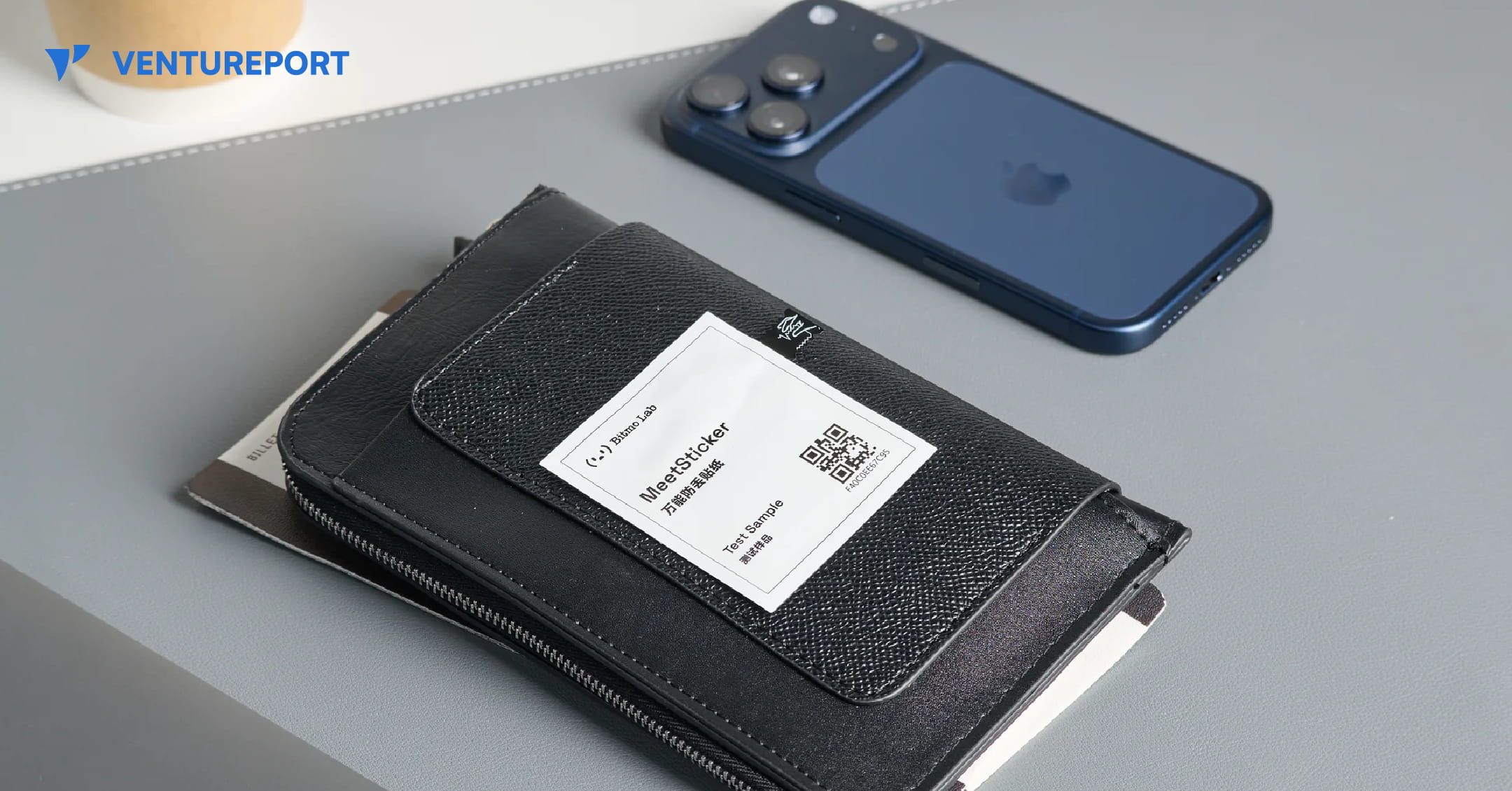
Bitmo Lab's MeetSticker tracker. PHOTO: BITMO LAB
Location trackers have become everyday accessories for keys, bags and luggage. But as personal items grow slimmer and more design-focused — from minimalist wallets to passport sleeves and specialised gear — tracking them has become less straightforward. Most trackers are built as small, rigid discs that assume the presence of space, loops or compartments. That assumption has created a growing mismatch between modern product design and the technology meant to secure it.
Hong Kong–based startup Bitmo Lab is attempting to address that gap with a device called MeetSticker. Instead of the solid plastic casing typical of most trackers, MeetSticker is engineered to be flexible and ultra-thin, measuring just 0.8 millimetres thick. The bendable design allows it to sit within narrow compartments or along curved surfaces without altering the shape of the object. Rather than attaching to an item externally, it is intended to integrate discreetly inside it.
That structural shift is the core of the product’s proposition. By removing the rigid shell that defines conventional tracking hardware, MeetSticker can be placed in items that previously had no practical way to accommodate a tracker. Bitmo Lab states that the device connects through a proprietary network and a companion application compatible with both iOS and Android, positioning it as a cross-platform solution rather than one tied to a single ecosystem.
The implications extend beyond form factor. Objects without obvious attachment points — such as compact travel accessories or specialised tools — could potentially be monitored without visible add-ons. In doing so, the device broadens the scope of tracking technology into categories where aesthetics, aerodynamics or compact design matter as much as functionality.
Before moving toward retail distribution, however, the company is focusing on validation. Bitmo Lab has launched a five-week global alpha testing programme beginning February 9. Sixty participants will receive a prototype unit and early access to the app. According to the company, the programme is designed to assess durability, usability and real-world performance before a wider commercial release. Participants who provide feedback will receive a retail unit upon launch.
Such testing is particularly relevant for flexible electronics. Unlike rigid devices, bendable hardware must withstand repeated flexing, daily handling and environmental exposure. Early user data can help refine manufacturing processes and software optimisation before scaling production.
As with other connected tracking devices, privacy considerations remain part of the equation. Bitmo Lab has stated that data collected during the alpha programme will be used strictly for testing purposes and deleted once the programme concludes.
Whether flexible trackers will redefine the category will depend on how they perform outside controlled testing environments. Still, the introduction of a near-invisible, bendable tracking device reflects a broader shift in consumer technology. As everyday products become thinner and more design-conscious, the tools built to protect them may need to adapt just as seamlessly.