
A smartphone that moves, tracks and responds in real time—but is it real utility or just a marketing gimmick?
Updated
May 1, 2026 2:25 PM

HONOR Robot Phone, with its camera arm extended. PHOTO: HONOR
Smartphones today feel more familiar than new. Each year brings better performance and better cameras, but fewer real surprises. So when a company unveils something called a “Robot Phone”, it’s bound to get attention.
HONOR did exactly that at the Mobile World Congress (MWC) in Barcelona this year. While most smartphone brands are focused on software upgrades, HONOR is trying something different with hardware. Its Robot Phone is built to move and adjust on its own. The camera sits on a motorized system that can tilt, track motion and shift angles automatically. It almost looks like a small robotic head, following whatever is happening in front of it. It can pick up sound, recognize motion and stay visually aware of its surroundings. This result feels less like using a regular phone and more like interacting with something responsive.
So what makes HONOR’s Robot Phone different from the smartphones we already use? Here’s a closer look at its camera system, AI features and design, and whether it is truly something new or simply smart marketing.
At its core, the Robot Phone still works like a regular smartphone. What makes it different is the camera system. It has a 200MP camera that sits on a motorized arm with a three-axis gimbal, which extends when in use and folds back into the phone when not needed. The compact motor gives the camera physical movement, while motion control allows it to sense, track and follow a person or object in real time. That means it can keep a subject in frame without constant manual adjustment.
The camera also adds a more playful side to the experience. It can respond with simple gestures, such as nodding or shaking its head, and it can even move in sync with music.
This setup could be particularly useful for content creators. As CNET tech journalist and YouTuber Andrew Lanxon pointed out, it removes the need to carry a separate gimbal. Since the robotic camera module can easily fold into the body of the phone, it is easier to carry around and more convenient for filming or taking photos on the go.
The Robot Phone also has the practical advantage of a smartphone display. It gives users a bigger screen than a standalone camera for framing, monitoring and reviewing footage. Since it runs on Android, the process of recording, editing and sharing content is also more direct.
The most impressive part of the HONOR Robot Phone design is how it fits a moving camera system into the body of a smartphone without needing external attachments.
To make this possible, HONOR uses a custom micro motor that is 70% smaller than mainstream competitors. The company also says it is the industry’s smallest four-degrees-of-freedom (4DoF) gimbal system. To support the stable movement of the camera module, the internal structure uses high-strength materials such as steel and titanium alloy. These materials help the mechanism stay durable as it shifts and repositions over time.
Battery life is another obvious question. HONOR has not revealed the battery capacity of the Robot Phone itself, but it did showcase its Silicon-Carbon Blade Battery technology at MWC 2026. The company says this battery is designed to increase energy density while keeping devices slim, and that it could support capacities of 7,000 mAh and beyond in future foldable devices.
That is not specific to the Robot Phone, but it does hint at the kind of battery improvements that may be needed for smartphones with moving parts and more advanced camera systems.
The AI features in Honor’s Robot Phone are focused on how the device sees and responds to its surroundings in real time. At the most basic level, the phone can track what is happening in a scene and adjust itself without constant user input.
On the functional side, the system keeps subjects framed and in focus automatically. Its AI Object Tracking ensures subjects stay centred, while AI SpinShot enables controlled 90° and 180° rotations for smoother transitions, even when the phone is used one-handed. It can also detect motion and recognize sound, which lets it respond to activity as it happens instead of reacting frame by frame.
The AI becomes more noticeable in the way the device behaves. When activated, the camera module unfolds and the screen displays a pair of animated eyes that track the user’s face and gaze. Honor calls this “embodied AI”, meaning the assistant expresses itself through movement rather than only voice or text. The camera module can adjust its angle during video calls, which makes it feel a little more physically present.
According to Thomas Bai, AI product expert at Honor, the goal is to move beyond passive assistance. By combining sensing, movement and real-time processing, the device is designed to interact with its environment in a more continuous way. In practice, that could mean interpreting its surroundings and responding as situations change, such as when someone is moving through an unfamiliar space.
The Robot Phone has sparked curiosity, but there is still a lot we do not know. For one thing, it is still a prototype, with a release expected later this year. Early signs also suggest it may be expensive, partly because of rising memory chip costs. Some of its more playful features also feel uncertain. In demos, the phone can move along to music, but with only a handful of pre-set tracks, it is hard to tell whether that feature will be genuinely useful or remain more of a showcase moment.
Then there are the practical questions. A motorized camera system could make the phone heavier and more top-heavy, which may affect comfort during daily use. Running a motor alongside continuous AI tracking will also likely put pressure on battery life. These are not dealbreakers, but they are trade-offs that will matter outside of a demo.
Privacy is another concern that is hard to overlook. Some of the AI features rely on cloud processing, which means certain data is sent to external servers instead of being processed fully on the device. That is common in many AI systems today, but it feels more significant here because the phone is built to actively track movement and reposition its camera in real time. For some people, that level of autonomy may feel intrusive rather than helpful. It also raises bigger questions about what sensors are built into the device and how much data they collect during everyday use.
So, is the HONOR Robot Phone a real step forward, or just a clever idea packaged well?
The answer depends on who it is for.
For content creators, the appeal is obvious. Early indications suggest it could make video capture easier by reducing the need for extra gear. Honor’s collaboration with cinema camera company ARRI also suggests a serious push toward more cinematic smartphone footage.
For everyone else, the value is less clear. Outside of content creation, it is still hard to see how these features would translate into everyday use in a meaningful way.
For now, the Robot Phone sits somewhere between promise and experiment. Whether it turns into a genuinely useful new kind of smartphone or fades away as a novelty will only become clear once it moves beyond controlled demos and into real life.
Keep Reading
A breakdown of the mission aiming to turn space into the next layer of digital infrastructure.
Updated
January 8, 2026 6:32 PM
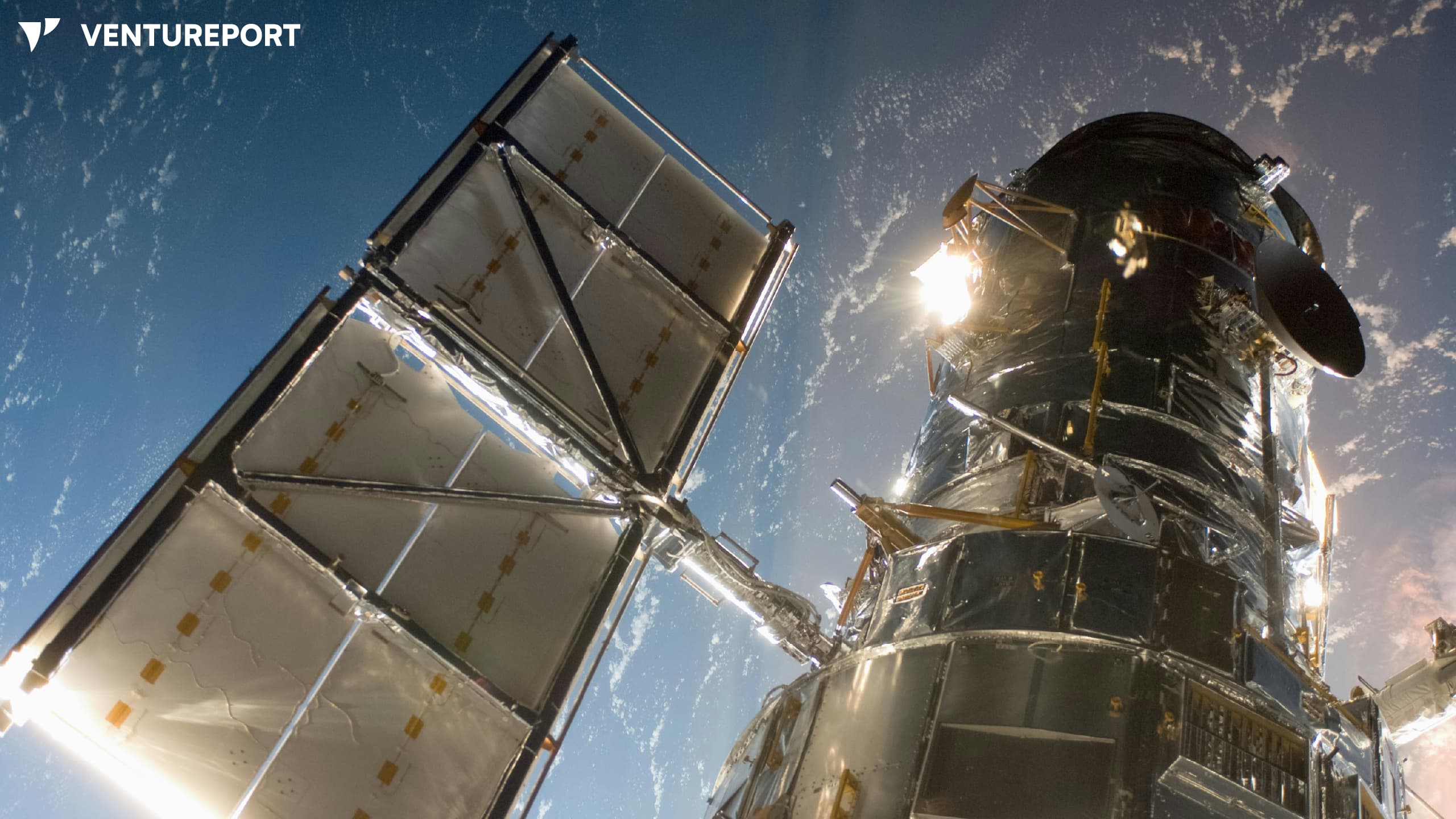
The Hubble Space Telescope, one of the fist space infrastructures. PHOTO: UNSPLASH
PowerBank Corporation and Smartlink AI, the company behind Orbit AI, are preparing to send a very different kind of satellite into space. Their upcoming mission, scheduled for December 2025, aims to test what they call the world’s first “Orbital Cloud” — a system that moves parts of today’s digital infrastructure off the ground and into orbit. While satellites already handle GPS, TV signals and weather data, this project tries to do something bigger: turn space itself into a platform for computing, artificial intelligence (AI) and secure blockchain-based digital transactions. In essence, it marks the beginning of space-based cloud computing.
To understand why this matters, it is helpful to examine the limitations of our current systems. As AI tools grow more advanced, they require massive data centers that consume enormous amounts of electricity, especially for cooling. These facilities depend on national power grids, face regulatory constraints and are concentrated in just a few regions. Meanwhile, global connectivity still struggles with inequalities, censorship, congestion and geopolitical bottlenecks. The Orbital Cloud is meant to plug these gaps by building a computing and communication layer above Earth — a solar-powered, space-cooled network in Low Earth Orbit (LEO) that no single nation or company fully controls.
Orbit AI’s approach brings together two new systems. The first, called DeStarlink, is a decentralized satellite network designed for global internet-style connectivity and resilient communication. The second, DeStarAI, is a set of AI-focused in-orbit data centers placed directly on satellites, using space’s naturally cold environment instead of the energy-hungry cooling towers used on Earth. When these two ideas merge, the result is a floating digital layer where information can be transmitted, processed and verified without touching terrestrial infrastructure — a key shift in how AI workloads and cloud computing may be handled in the future.
PowerBank enters the picture by supplying the electricity and temperature-control technology needed to keep these satellites running. In space, sunlight is constant and uninterrupted — no clouds, no storms, no nighttime periods where panels lie idle. PowerBank plans to provide high-efficiency solar arrays and adaptive thermal systems that help the satellites manage heat in orbit. This collaboration marks a shift for PowerBank, which is expanding from traditional solar and battery projects into the realm of digital infrastructure, AI energy systems and next-generation satellite technology.
Describing the ambition behind this move, Dr. Richard Lu, CEO of PowerBank, said: “The next frontier of human innovation isn't just in space exploration, it's in building the infrastructure of tomorrow above the Earth”. He pointed to a future market that could surpass US$700 billion, driven by orbital satellites, AI computing in space, blockchain verification and solar-powered data systems. Integrating solar energy with orbital computing, he said, could help create “a globally sovereign, AI-enabled digital layer in space, which is a system that can help power finance, communications and critical infrastructure”.
Orbit AI’s Co-Founder and CEO, Gus Liu, describes their satellites as deliberately autonomous and intelligent. “Orbit AI is creating the first truly intelligent layer in orbit — satellites that compute, verify and optimize themselves autonomously”, he said, “The Orbital Cloud turns space into a platform for AI, blockchain and global connectivity. By leveraging solar-powered compute payloads and decentralized verification nodes, we are opening an entirely new, potentially US$700+ billion-dollar market opportunity — one that combines energy, data and sovereignty to reshape industries from finance to government and Web3. PowerBank's expertise in advanced solar energy systems will be significant in supporting this initiative."
This vision is not isolated. Earlier this year, Jeff Bezos echoed a similar idea at Italian Tech Week, saying: “We will be able to beat the cost of terrestrial data centres in space in the next couple of decades. These giant training clusters will be better built in space, because we have solar power there, 24/7 — no clouds, no rain, no weather. The next step is going to be data centres and then other kinds of manufacturing.” His comments reflect a growing industry belief that space-based data centers will eventually outperform those on Earth.
The idea gains traction because the advantages are practical. Space offers free, constant solar power. It provides natural cooling, which is one of the costliest parts of running data centers on Earth. And above all, satellites in low-Earth orbit operate beyond national firewalls and political boundaries, making them more resilient to outages, censorship and conflict. For industries that rely heavily on secure connectivity and real-time data — finance, defense, AI, blockchain networks and global cloud providers — this could become an important alternative layer of infrastructure.
The upcoming Genesis-1 satellite is designed as a demonstration mission. It will test an Ethereum wallet, run a blockchain verification node and perform simple AI tasks in orbit. If the technology works as expected, Orbit AI plans to add several more satellites in 2026, expand into larger networks by 2027 and 2028 and begin full commercial operations by the decade’s end.
To build this system, Orbit AI plans to source technologies from some of the world’s most influential players: NVIDIA for AI processors, the Ethereum Foundation for blockchain tools, Galaxy Space and SparkX Satellite for satellite components, Galactic Energy for launch systems and AscendX Aerospace for advanced materials.
If successful, the Orbital Cloud could become the first step toward a world where part of humanity’s data, computing power and digital services run not in massive buildings on Earth, but in clusters of autonomous satellites illuminated by constant sunlight. For now, the journey begins with a single launch — a test satellite aiming to show that space can do far more than connect us. It may soon help power the systems that run our economies, technologies and global communication networks.