
A smartphone that moves, tracks and responds in real time—but is it real utility or just a marketing gimmick?
Updated
May 1, 2026 2:25 PM

HONOR Robot Phone, with its camera arm extended. PHOTO: HONOR
Smartphones today feel more familiar than new. Each year brings better performance and better cameras, but fewer real surprises. So when a company unveils something called a “Robot Phone”, it’s bound to get attention.
HONOR did exactly that at the Mobile World Congress (MWC) in Barcelona this year. While most smartphone brands are focused on software upgrades, HONOR is trying something different with hardware. Its Robot Phone is built to move and adjust on its own. The camera sits on a motorized system that can tilt, track motion and shift angles automatically. It almost looks like a small robotic head, following whatever is happening in front of it. It can pick up sound, recognize motion and stay visually aware of its surroundings. This result feels less like using a regular phone and more like interacting with something responsive.
So what makes HONOR’s Robot Phone different from the smartphones we already use? Here’s a closer look at its camera system, AI features and design, and whether it is truly something new or simply smart marketing.
At its core, the Robot Phone still works like a regular smartphone. What makes it different is the camera system. It has a 200MP camera that sits on a motorized arm with a three-axis gimbal, which extends when in use and folds back into the phone when not needed. The compact motor gives the camera physical movement, while motion control allows it to sense, track and follow a person or object in real time. That means it can keep a subject in frame without constant manual adjustment.
The camera also adds a more playful side to the experience. It can respond with simple gestures, such as nodding or shaking its head, and it can even move in sync with music.
This setup could be particularly useful for content creators. As CNET tech journalist and YouTuber Andrew Lanxon pointed out, it removes the need to carry a separate gimbal. Since the robotic camera module can easily fold into the body of the phone, it is easier to carry around and more convenient for filming or taking photos on the go.
The Robot Phone also has the practical advantage of a smartphone display. It gives users a bigger screen than a standalone camera for framing, monitoring and reviewing footage. Since it runs on Android, the process of recording, editing and sharing content is also more direct.
The most impressive part of the HONOR Robot Phone design is how it fits a moving camera system into the body of a smartphone without needing external attachments.
To make this possible, HONOR uses a custom micro motor that is 70% smaller than mainstream competitors. The company also says it is the industry’s smallest four-degrees-of-freedom (4DoF) gimbal system. To support the stable movement of the camera module, the internal structure uses high-strength materials such as steel and titanium alloy. These materials help the mechanism stay durable as it shifts and repositions over time.
Battery life is another obvious question. HONOR has not revealed the battery capacity of the Robot Phone itself, but it did showcase its Silicon-Carbon Blade Battery technology at MWC 2026. The company says this battery is designed to increase energy density while keeping devices slim, and that it could support capacities of 7,000 mAh and beyond in future foldable devices.
That is not specific to the Robot Phone, but it does hint at the kind of battery improvements that may be needed for smartphones with moving parts and more advanced camera systems.
The AI features in Honor’s Robot Phone are focused on how the device sees and responds to its surroundings in real time. At the most basic level, the phone can track what is happening in a scene and adjust itself without constant user input.
On the functional side, the system keeps subjects framed and in focus automatically. Its AI Object Tracking ensures subjects stay centred, while AI SpinShot enables controlled 90° and 180° rotations for smoother transitions, even when the phone is used one-handed. It can also detect motion and recognize sound, which lets it respond to activity as it happens instead of reacting frame by frame.
The AI becomes more noticeable in the way the device behaves. When activated, the camera module unfolds and the screen displays a pair of animated eyes that track the user’s face and gaze. Honor calls this “embodied AI”, meaning the assistant expresses itself through movement rather than only voice or text. The camera module can adjust its angle during video calls, which makes it feel a little more physically present.
According to Thomas Bai, AI product expert at Honor, the goal is to move beyond passive assistance. By combining sensing, movement and real-time processing, the device is designed to interact with its environment in a more continuous way. In practice, that could mean interpreting its surroundings and responding as situations change, such as when someone is moving through an unfamiliar space.
The Robot Phone has sparked curiosity, but there is still a lot we do not know. For one thing, it is still a prototype, with a release expected later this year. Early signs also suggest it may be expensive, partly because of rising memory chip costs. Some of its more playful features also feel uncertain. In demos, the phone can move along to music, but with only a handful of pre-set tracks, it is hard to tell whether that feature will be genuinely useful or remain more of a showcase moment.
Then there are the practical questions. A motorized camera system could make the phone heavier and more top-heavy, which may affect comfort during daily use. Running a motor alongside continuous AI tracking will also likely put pressure on battery life. These are not dealbreakers, but they are trade-offs that will matter outside of a demo.
Privacy is another concern that is hard to overlook. Some of the AI features rely on cloud processing, which means certain data is sent to external servers instead of being processed fully on the device. That is common in many AI systems today, but it feels more significant here because the phone is built to actively track movement and reposition its camera in real time. For some people, that level of autonomy may feel intrusive rather than helpful. It also raises bigger questions about what sensors are built into the device and how much data they collect during everyday use.
So, is the HONOR Robot Phone a real step forward, or just a clever idea packaged well?
The answer depends on who it is for.
For content creators, the appeal is obvious. Early indications suggest it could make video capture easier by reducing the need for extra gear. Honor’s collaboration with cinema camera company ARRI also suggests a serious push toward more cinematic smartphone footage.
For everyone else, the value is less clear. Outside of content creation, it is still hard to see how these features would translate into everyday use in a meaningful way.
For now, the Robot Phone sits somewhere between promise and experiment. Whether it turns into a genuinely useful new kind of smartphone or fades away as a novelty will only become clear once it moves beyond controlled demos and into real life.
Keep Reading
When farm challenges grow, smart tools need to grow with them.
Updated
January 8, 2026 6:32 PM
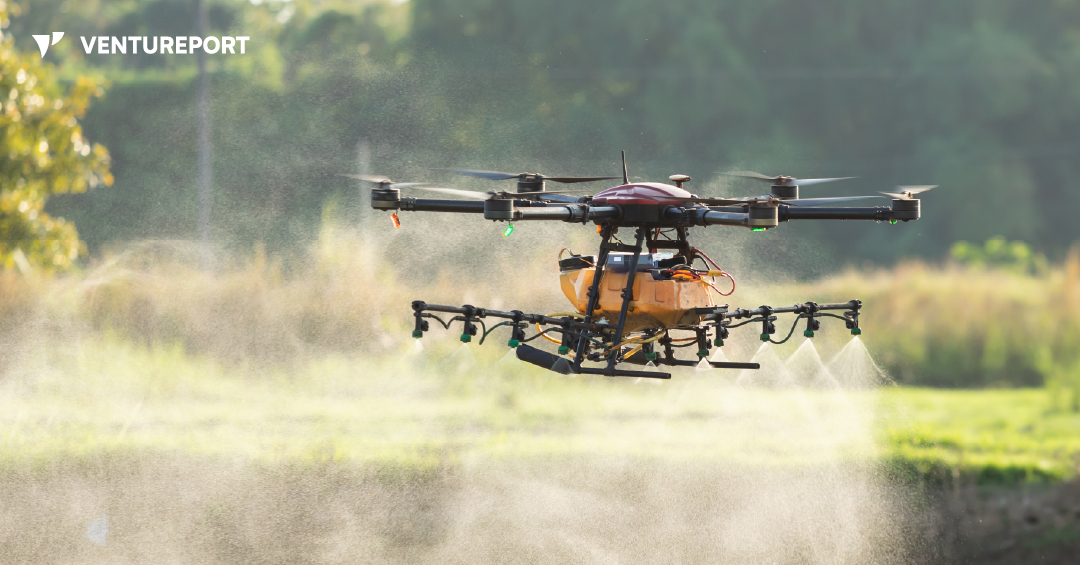
A drone spraying water over an agricultural field. PHOTO: FREEPIK
Farms today are under pressure. Fields are getting bigger, workers are harder to find and many jobs still rely on long hours of manual labor. XAG’s new P150 Max agricultural drone is designed for exactly this reality. Instead of replacing farmers, it takes over the heavy, repetitive fieldwork that slows them down, making farm operations more efficient and more precise.
The P150 Max is built around one simple idea: a single machine that can handle multiple farming tasks. Most farm drones focus only on spraying or mapping, but this one is fully modular. With a quick switch of attachments, it can spray crops, spread seeds or fertilizer, map fields or transport supplies. This flexibility helps farmers keep up with changing tasks throughout the day without needing different machines, improving both productivity and cost-efficiency.
A key challenge in agriculture is that fields are rarely smooth or predictable. Tractors can get stuck, smaller drones can’t carry much and some areas—like orchards or hilly plots—are simply hard to reach. The P150 Max fills that gap with an 80-kilogram payload and fast flight speed, letting it cover more ground per trip. Fewer takeoffs mean less downtime and more work completed before weather or daylight cuts operations short.
When it’s time to spray, the drone uses a smart spraying system that allows farmers to adjust droplet size based on the crop’s needs. This matters because precise spraying reduces waste and improves targeting. With an output of up to 46 liters per minute, the drone can serve both large open fields and dense orchards where consistent coverage is traditionally difficult.
The spreading system applies the same logic. Instead of dropping seeds or fertilizer unevenly, the vertical mechanism spreads material smoothly and resists wind drift. This ensures uniform application across irregular or hard-to-reach land—an ongoing challenge for modern farms aiming for higher yield and better resource use.
Another everyday issue for farmers is understanding and surveying the land before working on it. The P150 Max helps here with a built-in mapping tool that covers up to 20 hectares per flight and instantly converts the images into detailed maps. With AI detecting obstacles like trees or irrigation lines, the drone can plan safe and efficient autonomous routes, reducing manual planning time.
Beyond spraying and spreading, the drone can transport tools, produce and farm supplies using a sling attachment. This is particularly helpful after heavy rain, when vehicles cannot easily move across muddy or flooded fields.
Under all these functions is XAG’s upgraded flight control system, which provides centimeter-level accuracy even when network signals are weak. Integrated sensors—including 4D radar and a wide-angle camera—help the drone recognize hazards such as poles and wires. Farmers can manage all operations through the XAG One app or a handheld controller, both of which automatically generate the best route based on field shape and terrain.
Since long field days require long operating hours, the fast-charging battery system can recharge in about seven minutes using a dedicated kit. This supports continuous drone use throughout the day with minimal interruptions.
After years of testing, the XAG P150 Max is essentially an effort to make practical, scalable farm automation more accessible. By combining spraying, spreading, mapping and transport into one heavy-duty platform, it offers a way to ease labor shortages while keeping operations efficient and sustainable. Instead of focusing on one task, the drone aims to take over the time-consuming physical work so farmers can focus on decisions, planning and crop management.