
ICBC Asia's new competition gives Hong Kong students a chance to test their fintech ideas beyond the classroom.
Updated
October 2, 2026 9:16 AM
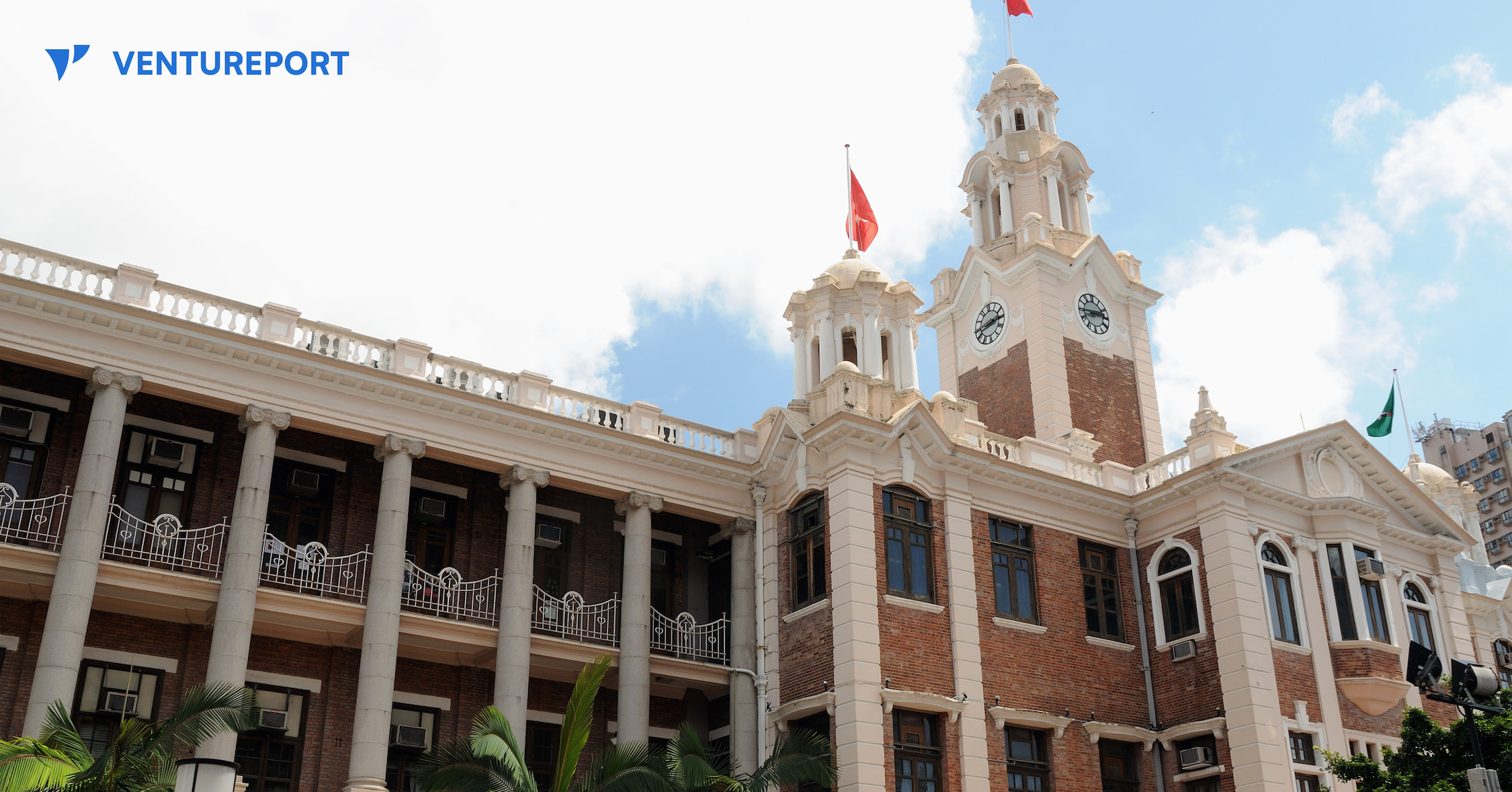
Main Building of the University of Hong Kong. PHOTO: ADOBE STOCK
Hong Kong university students are being invited to take part in the first Hong Kong University Students Fintech Innovation Competition, organised by Industrial and Commercial Bank of China (Asia). The competition gives students a chance to develop ideas around financial technology, with cash prizes, internship opportunities and a route to the national finals of the ICBC Cup on offer.
The competition is part of the 17th ICBC Cup and marks the first time ICBC has established a competition zone in Hong Kong. It is supported by the Financial Services and the Treasury Bureau and the Hong Kong Monetary Authority, with 12 Hong Kong universities also backing the initiative.
The participating universities are the University of Hong Kong, the Chinese University of Hong Kong, Hong Kong University of Science and Technology, Hong Kong Polytechnic University, City University of Hong Kong, Hong Kong Baptist University, Hong Kong Metropolitan University, Lingnan University, Hong Kong Shue Yan University, the Education University of Hong Kong, Hang Seng University of Hong Kong and St. Francis University.
For ICBC Asia, the competition is also intended to support the development of fintech in Hong Kong and expand the city's fintech talent pool. Dr. Liu Yagan, Chairman and Executive Director of Industrial and Commercial Bank of China (Asia), said the competition is designed to encourage students to develop practical applications for financial technology and explore new banking business models.
"This competition encourages university students across Hong Kong to propose practical solutions for fintech applications and banking business model innovation from the perspective of financial products and services, providing a platform for Hong Kong youth to connect with cutting-edge industries and unleash their innovative potential."
The initiative will also connect Hong Kong students with the wider ICBC Group. Liu said this would help deepen exchanges between young talent in Hong Kong and the Mainland.
The competition is open to full-time university students in Hong Kong and carries the theme "Digital Banking, Creating the Future." Students can develop ideas across 10 areas, ranging from fintech and digital finance to green finance, inclusive finance, pension finance and wealth management. The categories also include financial security services, specialised financial services, youth services and open innovation services.
The competition also offers cash prizes: the First Prize winner will receive HK$50,000; two Second Prize winners will receive HK$30,000 each; three Third Prize winners will receive HK$20,000 each; and four Honorable Mention recipients will receive HK$10,000 each.
Beyond the prize money, qualifying winners will have the opportunity to undertake internships at ICBC (Asia). The team that wins the Hong Kong First Prize will also have the opportunity to travel to Beijing in December for the ICBC Cup national finals, where it will compete against teams from across the country.
With registration now open, the competition gives Hong Kong university students an opportunity to take ideas in financial technology from the classroom into areas such as banking products, services and business models.
Keep Reading
Connecting Chinese innovation with global markets through capital, collaboration and real-world deployment opportunities
Updated
March 30, 2026 2:29 PM

A Train Of Hong Kong's Mass Transit Railway (MTR) Metro System at Sunny Bay. PHOTO: ADOBE STOCK
As global tech ecosystems become more interconnected, the ability to move innovation across borders is becoming just as important as building it. A new partnership between MTR Lab, the investment arm of MTR Corporation and ZGC Science City Ltd, a government-backed technology ecosystem based in Beijing’s Haidian district, reflects this shift.
At its core, the collaboration is designed to connect high-potential Chinese startups with global capital, real-world deployment opportunities and international markets. It focuses on sectors like AI, robotics, smart mobility and sustainable urban development—areas where China already has strong technical depth but where scaling beyond domestic markets can be more complex.
This is where the partnership begins to matter. ZGC Science City sits at the center of one of China’s most concentrated innovation clusters, with thousands of AI companies and a growing base of specialised and high-growth firms. MTR Lab, on the other hand, brings access to international markets, industry networks and practical deployment environments tied to infrastructure, transport and urban systems. Together, they are attempting to bridge a familiar gap: turning local innovation into globally relevant products.
In practice, the model is straightforward. ZGC Science City will introduce MTR Lab to startups working in priority sectors, creating a pipeline for potential investment and collaboration. From there, MTR Lab can support these companies through funding, pilot projects and access to overseas markets. The idea is not just to invest, but to help startups test and apply their technologies in real-world settings, particularly in complex urban environments.
The timing is notable. China’s AI and deep tech ecosystem has expanded rapidly, with thousands of companies contributing to advancements in automation, smart infrastructure and sustainability. At the same time, global demand for these technologies is rising, especially as cities look for more efficient and scalable solutions. Yet, moving from innovation to adoption often requires cross-border coordination—something individual startups may struggle to navigate alone.
This partnership also builds on a broader pattern. Corporate venture arms like MTR Lab are increasingly positioning themselves not just as investors, but as connectors between markets. By combining capital with access to infrastructure and deployment scenarios, they offer startups a way to move faster from development to real-world use. For ZGC Science City, the collaboration adds an international layer to its ecosystem, helping local companies extend beyond domestic growth.
What emerges is a model that goes beyond a typical investment announcement. It reflects a growing recognition that innovation today is rarely confined to one geography. Technologies may be developed in one ecosystem, refined in another and scaled globally through partnerships like this.
As cross-border collaboration becomes more central to how startups grow, partnerships like the one between MTR Lab and ZGC Science City point to a more connected innovation landscape—one where access, not just invention, defines success.