
ICBC Asia's new competition gives Hong Kong students a chance to test their fintech ideas beyond the classroom.
Updated
October 2, 2026 9:16 AM
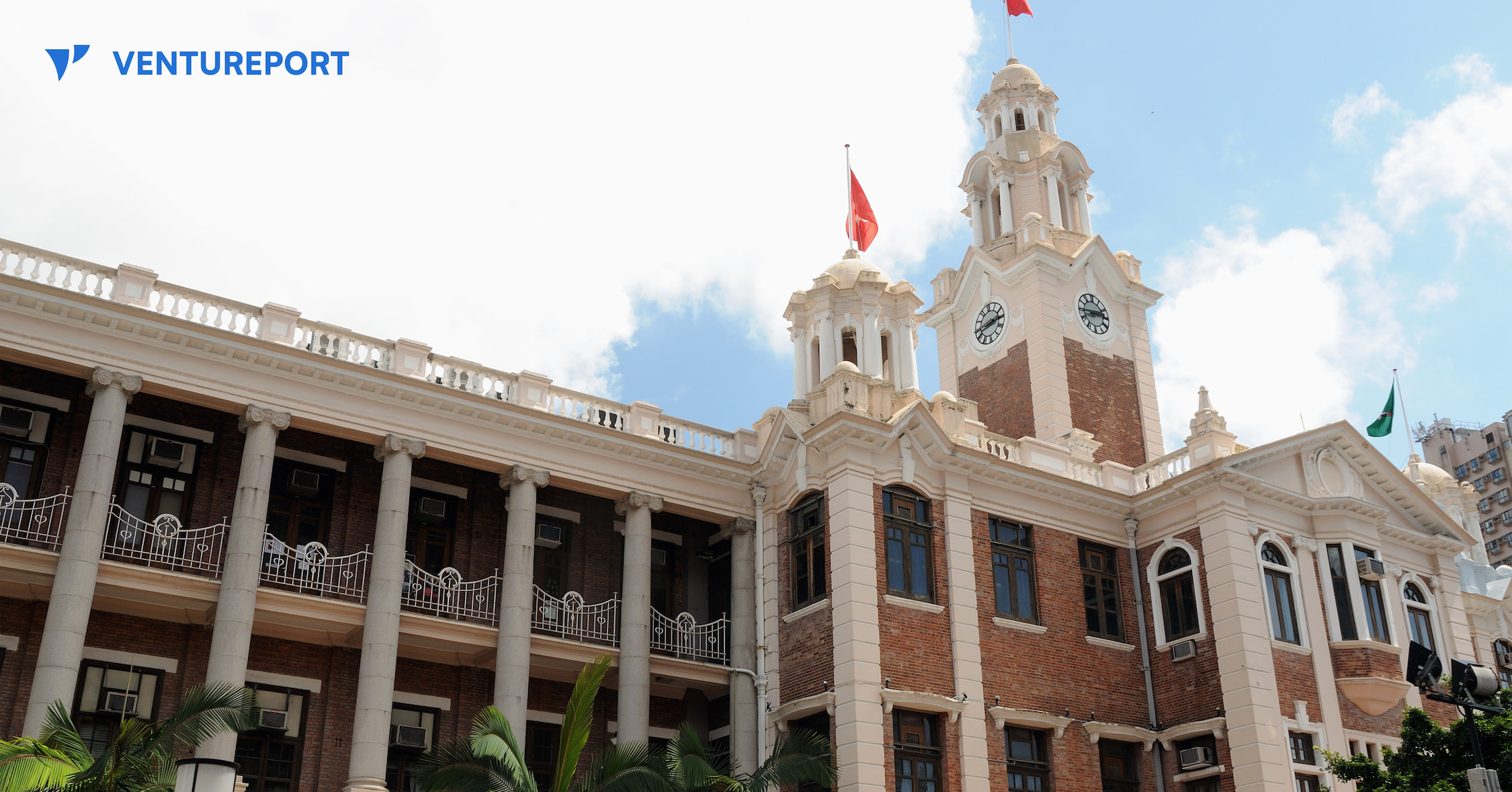
Main Building of the University of Hong Kong. PHOTO: ADOBE STOCK
Hong Kong university students are being invited to take part in the first Hong Kong University Students Fintech Innovation Competition, organised by Industrial and Commercial Bank of China (Asia). The competition gives students a chance to develop ideas around financial technology, with cash prizes, internship opportunities and a route to the national finals of the ICBC Cup on offer.
The competition is part of the 17th ICBC Cup and marks the first time ICBC has established a competition zone in Hong Kong. It is supported by the Financial Services and the Treasury Bureau and the Hong Kong Monetary Authority, with 12 Hong Kong universities also backing the initiative.
The participating universities are the University of Hong Kong, the Chinese University of Hong Kong, Hong Kong University of Science and Technology, Hong Kong Polytechnic University, City University of Hong Kong, Hong Kong Baptist University, Hong Kong Metropolitan University, Lingnan University, Hong Kong Shue Yan University, the Education University of Hong Kong, Hang Seng University of Hong Kong and St. Francis University.
For ICBC Asia, the competition is also intended to support the development of fintech in Hong Kong and expand the city's fintech talent pool. Dr. Liu Yagan, Chairman and Executive Director of Industrial and Commercial Bank of China (Asia), said the competition is designed to encourage students to develop practical applications for financial technology and explore new banking business models.
"This competition encourages university students across Hong Kong to propose practical solutions for fintech applications and banking business model innovation from the perspective of financial products and services, providing a platform for Hong Kong youth to connect with cutting-edge industries and unleash their innovative potential."
The initiative will also connect Hong Kong students with the wider ICBC Group. Liu said this would help deepen exchanges between young talent in Hong Kong and the Mainland.
The competition is open to full-time university students in Hong Kong and carries the theme "Digital Banking, Creating the Future." Students can develop ideas across 10 areas, ranging from fintech and digital finance to green finance, inclusive finance, pension finance and wealth management. The categories also include financial security services, specialised financial services, youth services and open innovation services.
The competition also offers cash prizes: the First Prize winner will receive HK$50,000; two Second Prize winners will receive HK$30,000 each; three Third Prize winners will receive HK$20,000 each; and four Honorable Mention recipients will receive HK$10,000 each.
Beyond the prize money, qualifying winners will have the opportunity to undertake internships at ICBC (Asia). The team that wins the Hong Kong First Prize will also have the opportunity to travel to Beijing in December for the ICBC Cup national finals, where it will compete against teams from across the country.
With registration now open, the competition gives Hong Kong university students an opportunity to take ideas in financial technology from the classroom into areas such as banking products, services and business models.
Keep Reading
A new AI model replaces months of simulation with near-instant predictions, changing how spacecraft operations are prepared
Updated
August 10, 2026 5:56 PM

Northrop Grumman Stargaze serves as the mother ship for the Pegasus, an air-launched orbital rocket. PHOTO: UNSPLASH
Flexcompute, a startup that builds software to simulate real-world physics, is working with Northrop Grumman to change how space missions are prepared. Together, they have developed an AI-based system that can predict how spacecraft respond during critical manoeuvres such as docking—when one spacecraft moves in and connects with another in orbit. These steps have traditionally taken months of preparation.
At the centre of this work is a long-standing problem in space operations. When a spacecraft fires its thrusters, the exhaust plume interacts with nearby surfaces. These interactions can affect movement, temperature and stability. Because these effects are difficult to test in real conditions, engineers have relied on large volumes of computer simulations to estimate outcomes before a mission. That process is slow and resource-intensive.
The new system replaces much of that workflow with a trained AI model. Instead of running millions of simulations, the model learns patterns from physics-based data and can make predictions in seconds. It also provides a measure of uncertainty, which helps engineers understand how reliable those predictions are when making decisions.
"At Northrop Grumman, we're pioneering physics AI to accelerate design and solve complex simulation and modelling problems like plume impingement—critical for station keeping, rendezvous and space robotics. Simply put: we're pushing the boundaries of advanced space operations", said Fahad Khan, Director of AI Foundations at Northrop Grumman. "Partnering with Flexcompute and NVIDIA, we're accelerating innovation and mission timelines to deliver superior space capabilities for customers at the speed they need".
The system is built using technology from NVIDIA, which provides the computing framework behind the model. Flexcompute has adapted it to handle the specific challenges of spaceflight, including how gases expand and interact in a vacuum. The result is a tool that can simulate complex scenarios much faster while maintaining the level of accuracy needed for mission planning.
By shortening preparation time, the model changes how engineers approach spacecraft design and operations. Faster predictions mean teams can test more scenarios and adjust plans more quickly. It also helps improve fuel use and extend the lifespan of spacecraft.
"Northrop Grumman's confidence reflects what sets Flexcompute apart", said Vera Yang, President and Co-Founder of Flexcompute. "We are able to take the most accurate and scalable physics foundations and evolve them into highly trained, customized Physics AI solutions that engineers can rely on. This work shows how we are transforming the role of simulation, not just speeding it up, but expanding what engineers can confidently solve and how quickly they can act".
The collaboration points to a broader shift in how engineering problems are being handled. Instead of relying only on detailed simulations that take time to run, companies are beginning to use AI systems that can approximate those results quickly while still reflecting the underlying physics.
"The industry's most ambitious space missions now demand a level of speed and precision that traditional engineering cycles can no longer sustain", said Tim Costa, vice president and general manager of computational engineering at NVIDIA. "By integrating NVIDIA PhysicsNeMo, Northrop Grumman and Flexcompute are transforming complex simulations like plume impingement from days of compute into seconds of insight, drastically accelerating the path from mission concept to orbit".
What emerges from this work is a shift in how missions are prepared. When prediction cycles move from months to seconds, testing and decision-making can happen faster. For space operations, where timing and precision are closely linked, that change could reshape how systems are built and run.