
ICBC Asia's new competition gives Hong Kong students a chance to test their fintech ideas beyond the classroom.
Updated
October 2, 2026 9:16 AM
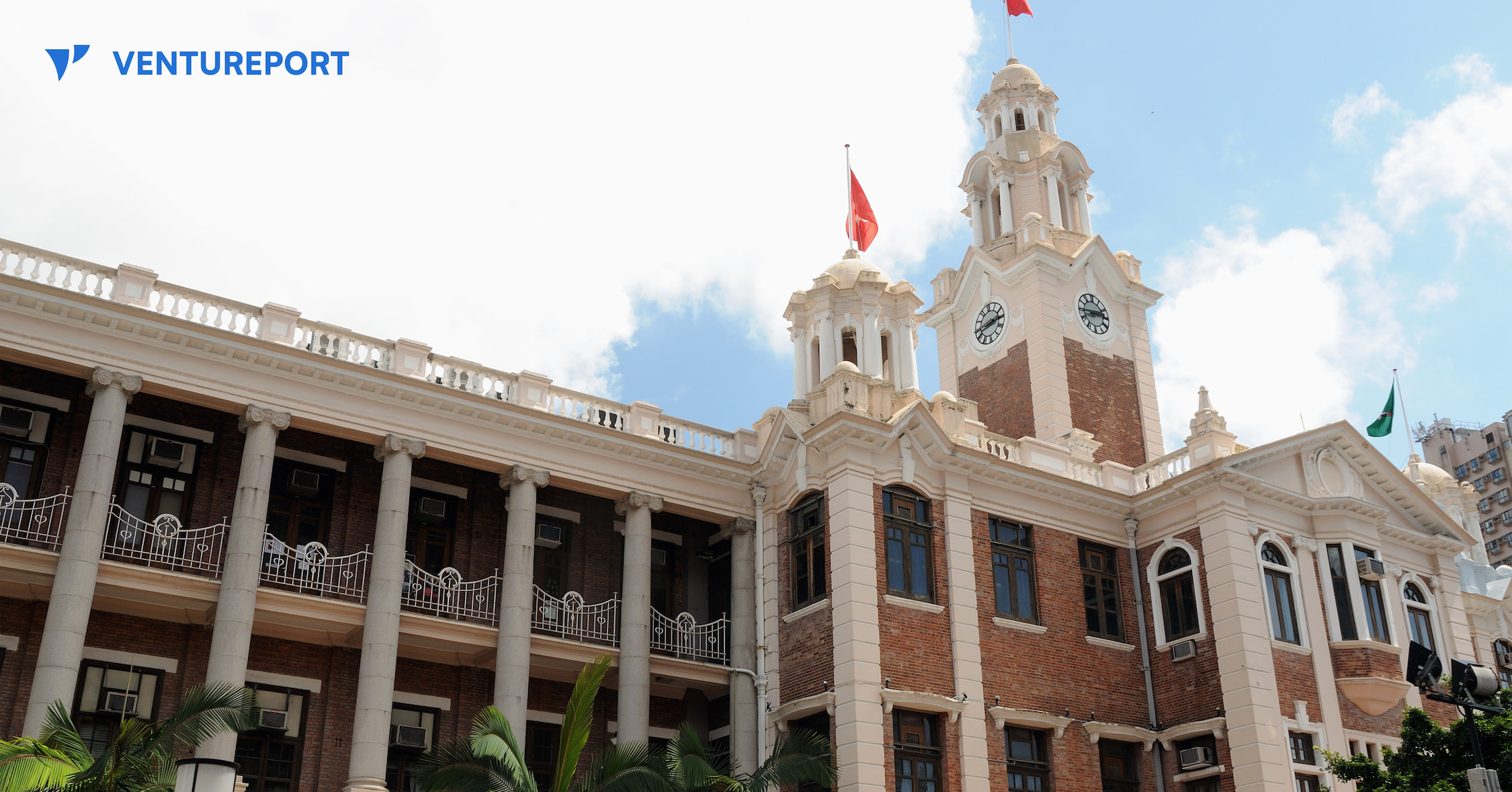
Main Building of the University of Hong Kong. PHOTO: ADOBE STOCK
Hong Kong university students are being invited to take part in the first Hong Kong University Students Fintech Innovation Competition, organised by Industrial and Commercial Bank of China (Asia). The competition gives students a chance to develop ideas around financial technology, with cash prizes, internship opportunities and a route to the national finals of the ICBC Cup on offer.
The competition is part of the 17th ICBC Cup and marks the first time ICBC has established a competition zone in Hong Kong. It is supported by the Financial Services and the Treasury Bureau and the Hong Kong Monetary Authority, with 12 Hong Kong universities also backing the initiative.
The participating universities are the University of Hong Kong, the Chinese University of Hong Kong, Hong Kong University of Science and Technology, Hong Kong Polytechnic University, City University of Hong Kong, Hong Kong Baptist University, Hong Kong Metropolitan University, Lingnan University, Hong Kong Shue Yan University, the Education University of Hong Kong, Hang Seng University of Hong Kong and St. Francis University.
For ICBC Asia, the competition is also intended to support the development of fintech in Hong Kong and expand the city's fintech talent pool. Dr. Liu Yagan, Chairman and Executive Director of Industrial and Commercial Bank of China (Asia), said the competition is designed to encourage students to develop practical applications for financial technology and explore new banking business models.
"This competition encourages university students across Hong Kong to propose practical solutions for fintech applications and banking business model innovation from the perspective of financial products and services, providing a platform for Hong Kong youth to connect with cutting-edge industries and unleash their innovative potential."
The initiative will also connect Hong Kong students with the wider ICBC Group. Liu said this would help deepen exchanges between young talent in Hong Kong and the Mainland.
The competition is open to full-time university students in Hong Kong and carries the theme "Digital Banking, Creating the Future." Students can develop ideas across 10 areas, ranging from fintech and digital finance to green finance, inclusive finance, pension finance and wealth management. The categories also include financial security services, specialised financial services, youth services and open innovation services.
The competition also offers cash prizes: the First Prize winner will receive HK$50,000; two Second Prize winners will receive HK$30,000 each; three Third Prize winners will receive HK$20,000 each; and four Honorable Mention recipients will receive HK$10,000 each.
Beyond the prize money, qualifying winners will have the opportunity to undertake internships at ICBC (Asia). The team that wins the Hong Kong First Prize will also have the opportunity to travel to Beijing in December for the ICBC Cup national finals, where it will compete against teams from across the country.
With registration now open, the competition gives Hong Kong university students an opportunity to take ideas in financial technology from the classroom into areas such as banking products, services and business models.
Keep Reading
The US$50.8 million deal strengthens TECO’s push into modular infrastructure and faster data center deployment across Southeast Asia.
Updated
August 10, 2026 5:56 PM

Kuala Lumpur, Malaysia. PHOTO: UNSPLASH
TECO Electric & Machinery is expanding further into Southeast Asia’s AI data center infrastructure market through a new acquisition in Malaysia.
The Taiwan-based company has signed an agreement to acquire approximately 78 percent of Malaysian engineering firm Dynaciate Engineering in a deal valued at around MYR 200 million (US$50.8 million). According to TECO, the acquisition is aimed at strengthening its modular data center manufacturing capabilities and supporting its expansion across Southeast Asia’s data center infrastructure sector.
Under the agreement, Dynaciate will become TECO’s global manufacturing hub for modular data center and power equipment products. The company will also serve as an engineering hub supporting TECO’s regional expansion efforts, particularly in AI data center infrastructure projects.
TECO Chairman Morris Li said the integration between both companies has improved execution efficiency and increased the company’s in-house modular prefabrication capabilities. According to the company, the collaboration has reduced data center delivery timelines to as little as six months.
Dynaciate is headquartered in Johor Bahru, Malaysia. Its facilities span approximately 36,000 square meters and include eight production buildings focused on stainless steel and carbon steel fabrication. The company said the site is also eligible for export tax incentives that support future global supply chain deployment.
According to TECO, Dynaciate has experience in engineering, steel fabrication and large-scale industrial projects for multinational corporations. The company added that Dynaciate has expanded into the data center engineering market since 2025 through projects involving international cloud service provider clients.
TECO estimates that after the acquisition, around 65 percent of future data center-related revenue will come from modular data centers and prefabricated products, while the remaining 35 percent will come from AI data center engineering projects. The company also forecasts that data center-related revenue within its Power & Energy Business Group will rise from below 10 percent to 30 percent this year.
Dynaciate CEO Ng Kim Thiea said the company is entering a new phase of growth through the partnership with TECO. He added that Dynaciate has extensive experience supporting engineering and industrial projects across the region.
The acquisition marks a further expansion of TECO’s presence in the AI data center infrastructure sector as companies continue increasing investments in modular infrastructure and regional engineering capacity.