
From generative AI to green energy, 15 finalist teams will take the stage after a record 390 teams entered this year's competition.
Updated
October 2, 2026 9:13 AM
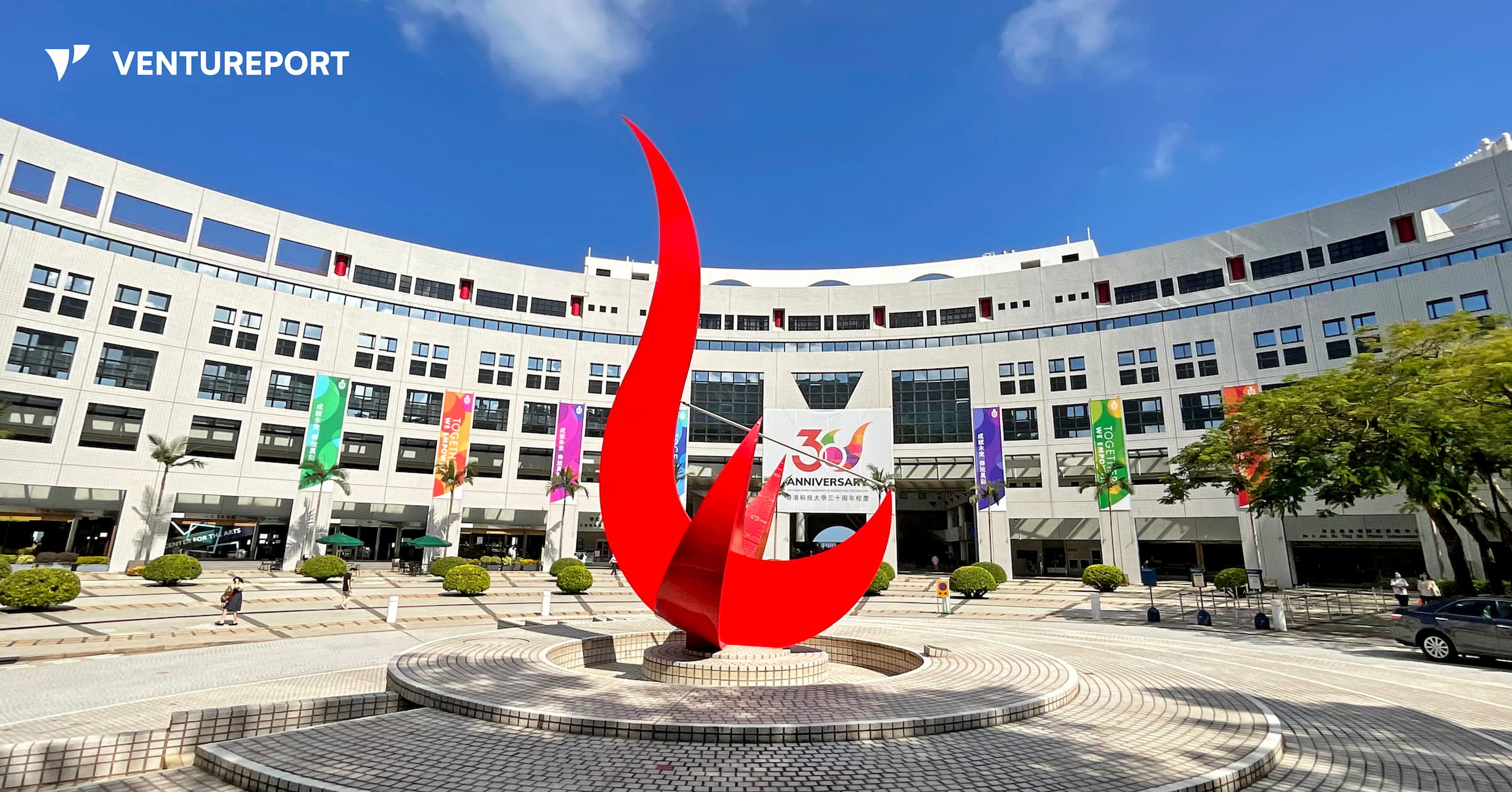
Entrance Piazza, Hong Kong University of Science and Technology. PHOTO: HKUST
The HKUST-Sino Million Dollar Entrepreneurship Competition 2026 will hold its finals on October 12, following a record 390 teams from 24 countries and regions taking part in this year's competition.
Jointly organised by the Hong Kong University of Science and Technology (HKUST) and Sino Group, the competition aims to give young entrepreneurs a platform to develop and present their ideas. Sino Group Deputy Chief Executive Officer Wong Wing-lung said the Group has partnered with HKUST for many years to support young talent and the development of innovation and technology in Hong Kong.
He said the competition gives young entrepreneurs a platform to showcase their creativity, exchange ideas and put their concepts into practice.
The international participation is reflected in the universities and regions represented this year. Participants include students from the University of Oxford in the UK, the University of Pennsylvania in the US and the National University of Singapore. Teams have also joined from Australia and South Africa.
After multiple rounds of assessment, 15 teams have advanced to the finals. Their projects cover health technology, generative AI, smart buildings, and green energy management. At the finals, the teams will present their solutions to a judging panel comprising venture capital investors, industry leaders and academic experts. They will compete for more than HK$1 million in prizes and awards.
The 2026 competition has also expanded the areas it recognises. Three new awards have been introduced this year: the Transformative AI Award, the NextGen Biotech Award and the Societal Influential Award. The competition will also continue to offer the Sustainability Impact Award. Together, the awards focus on areas ranging from emerging technologies to social and sustainability challenges.
The organisers are also adding new activities to help teams develop their ideas further. This year's programme includes pitching skills training, AI workshops, investor matching sessions and mentorship opportunities. The AI workshops will cover areas including generative AI and AI agents, while representatives from venture capital firms such as Gobi Partners and InnoAngel Fund have been invited to share insights on fundraising, product positioning and market expansion.
These activities are intended to help young entrepreneurs strengthen their business plans and presentation skills. They also give teams opportunities to explore technology commercialisation and potential market applications.
The competition will also launch the InnoBay 1M PLUS Program during the Grand Final. The programme will focus initially on Smart City Development and aims to connect HKUST start-ups and competition alumni with industry partners. It will also support potential proof-of-concept opportunities and help promising innovations move towards commercial adoption.
The Grand Final will also include an audience voting segment. Members of the public will be able to vote for the team they believe has the greatest potential and impact, with those who correctly vote for an eventual winning team entering a lucky draw.
For Wong, the competition is part of a broader effort to develop Hong Kong's innovation and technology talent. He noted that Hong Kong's first Five-Year Plan and latest Policy Address both highlight innovation, technology and talent development.
Prof. Tim Cheng Kwang-Ting, HKUST's Vice-President for Research and Development, said the competition has also served as a platform for aspiring entrepreneurs to connect with investors, understand market needs, test their ideas and gain practical entrepreneurial experience. He added that the competition has strengthened its training, mentorship and networking activities this year.
The Group believes that closer cooperation between industry, academia and research institutions can help turn innovative ideas into practical applications. Through the competition and its wider support programmes, young entrepreneurs are given opportunities to develop their ideas, connect with potential partners and explore how they can be taken from early concepts towards real-world applications.
Keep Reading
Clinically grounded, game-based and always available — MIRDC’s AI system is redefining how children learn to communicate.
Updated
January 8, 2026 6:32 PM

A child practicing with a speech therapist. PHOTO: FREEPIK
Speech and language delays are common, yet access to therapy remains limited. In Taiwan, only about 2,200 licensed speech-language pathologists serve hundreds of thousands of children who need support—especially those with autism spectrum disorders or significant communication challenges. As a result, many children miss crucial periods of language development simply because help isn’t available soon enough.
MIRDC’s new AI-powered interactive speech therapy system aims to close that gap. Instead of focusing solely on articulation, it targets a wider range of language skills that many children struggle with: oral expression, comprehension, sentence building and conversational ability. This makes it a more complete tool for childhood speech and language development.
The system combines game-based learning, AI-driven guidance and automated language assessment into one platform that can be used both in clinics and at home. This integrated design helps children practice more consistently, providing therapists and parents with clearer insight into their progress.
The interactive game modules are built around clinically validated therapy methods. Imitation exercises, picture cards, storybooks and conversational prompts are turned into structured game levels, each aligned with a specific developmental goal. This step-by-step approach helps children move from simple naming tasks to more complex comprehension and response skills, all within a sequenced curriculum.
A key differentiator is the system’s real-time AI speech interpretation. As the child talks, the AI analyzes the response and generates tailored therapeutic cues—such as imitation, modeling, expansion or extension—based on the conversation. These are the same strategies used by speech-language pathologists, but now children can access them continuously, supporting more effective at-home practice and reducing long gaps between sessions.
After each session, the system automatically conducts a data-driven language assessment using 20 objective indicators across semantics, syntax and pragmatics. This provides clinicians and families with measurable, easy-to-understand reports that show how the child is progressing and which skills need more attention—something many traditional tools do not offer.
By offering a personalized, scalable and clinically grounded solution, MIRDC’s AI therapy system helps address the ongoing shortage of speech-language services. It doesn’t replace therapists; instead, it extends their reach, allows for more consistent practice and helps families support their child’s communication at home.
As an added recognition of its impact, the system recently earned two R&D 100 Awards, including the Silver Award for Corporate Social Responsibility. But at its core, the project remains focused on a simple mission: making high-quality speech therapy accessible to every child who needs a voice.