
From generative AI to green energy, 15 finalist teams will take the stage after a record 390 teams entered this year's competition.
Updated
October 2, 2026 9:13 AM
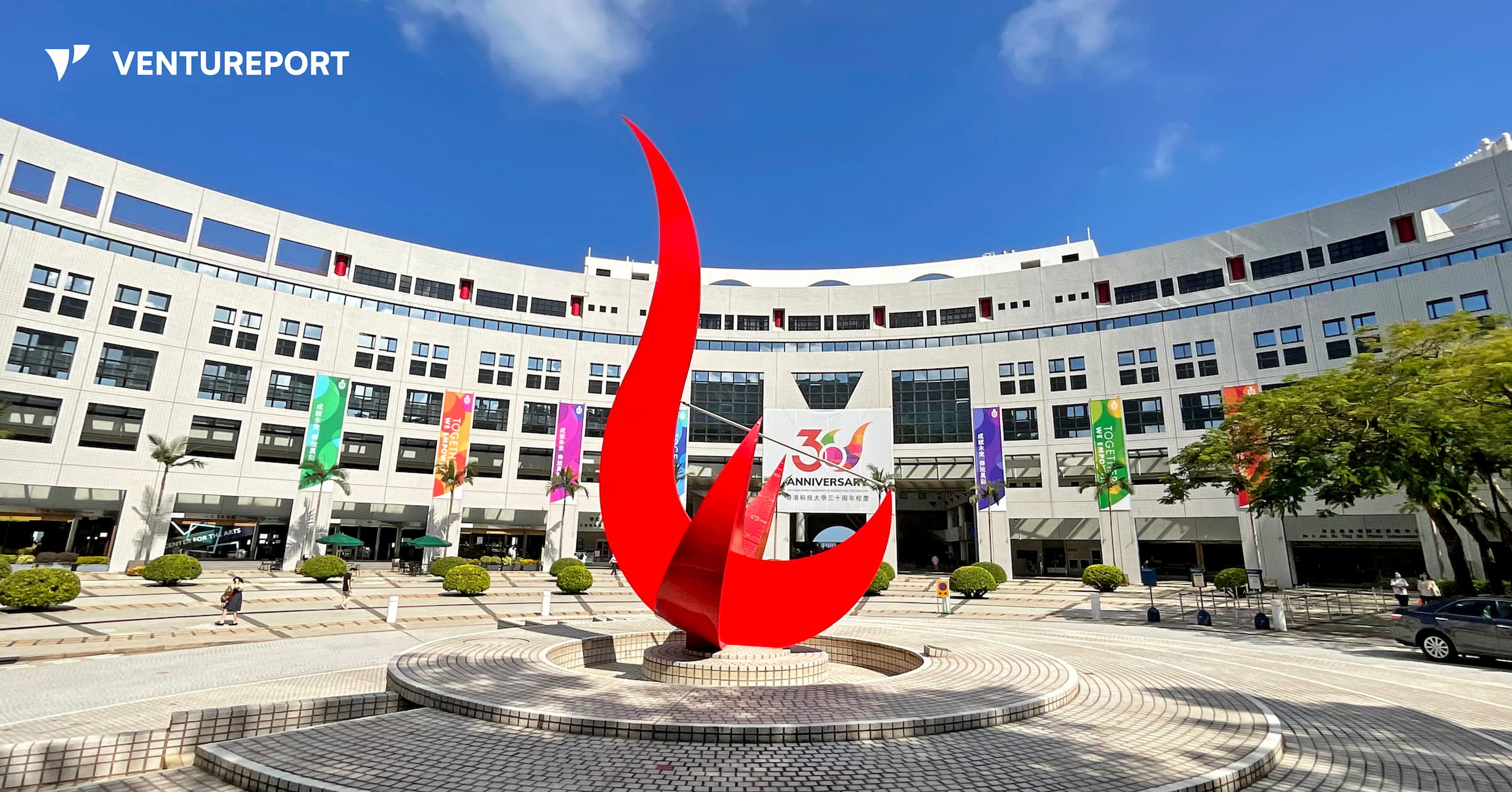
Entrance Piazza, Hong Kong University of Science and Technology. PHOTO: HKUST
The HKUST-Sino Million Dollar Entrepreneurship Competition 2026 will hold its finals on October 12, following a record 390 teams from 24 countries and regions taking part in this year's competition.
Jointly organised by the Hong Kong University of Science and Technology (HKUST) and Sino Group, the competition aims to give young entrepreneurs a platform to develop and present their ideas. Sino Group Deputy Chief Executive Officer Wong Wing-lung said the Group has partnered with HKUST for many years to support young talent and the development of innovation and technology in Hong Kong.
He said the competition gives young entrepreneurs a platform to showcase their creativity, exchange ideas and put their concepts into practice.
The international participation is reflected in the universities and regions represented this year. Participants include students from the University of Oxford in the UK, the University of Pennsylvania in the US and the National University of Singapore. Teams have also joined from Australia and South Africa.
After multiple rounds of assessment, 15 teams have advanced to the finals. Their projects cover health technology, generative AI, smart buildings, and green energy management. At the finals, the teams will present their solutions to a judging panel comprising venture capital investors, industry leaders and academic experts. They will compete for more than HK$1 million in prizes and awards.
The 2026 competition has also expanded the areas it recognises. Three new awards have been introduced this year: the Transformative AI Award, the NextGen Biotech Award and the Societal Influential Award. The competition will also continue to offer the Sustainability Impact Award. Together, the awards focus on areas ranging from emerging technologies to social and sustainability challenges.
The organisers are also adding new activities to help teams develop their ideas further. This year's programme includes pitching skills training, AI workshops, investor matching sessions and mentorship opportunities. The AI workshops will cover areas including generative AI and AI agents, while representatives from venture capital firms such as Gobi Partners and InnoAngel Fund have been invited to share insights on fundraising, product positioning and market expansion.
These activities are intended to help young entrepreneurs strengthen their business plans and presentation skills. They also give teams opportunities to explore technology commercialisation and potential market applications.
The competition will also launch the InnoBay 1M PLUS Program during the Grand Final. The programme will focus initially on Smart City Development and aims to connect HKUST start-ups and competition alumni with industry partners. It will also support potential proof-of-concept opportunities and help promising innovations move towards commercial adoption.
The Grand Final will also include an audience voting segment. Members of the public will be able to vote for the team they believe has the greatest potential and impact, with those who correctly vote for an eventual winning team entering a lucky draw.
For Wong, the competition is part of a broader effort to develop Hong Kong's innovation and technology talent. He noted that Hong Kong's first Five-Year Plan and latest Policy Address both highlight innovation, technology and talent development.
Prof. Tim Cheng Kwang-Ting, HKUST's Vice-President for Research and Development, said the competition has also served as a platform for aspiring entrepreneurs to connect with investors, understand market needs, test their ideas and gain practical entrepreneurial experience. He added that the competition has strengthened its training, mentorship and networking activities this year.
The Group believes that closer cooperation between industry, academia and research institutions can help turn innovative ideas into practical applications. Through the competition and its wider support programmes, young entrepreneurs are given opportunities to develop their ideas, connect with potential partners and explore how they can be taken from early concepts towards real-world applications.
Keep Reading
Can SPhotonix’s optical memory technology protect data better than today’s storage?
Updated
January 8, 2026 6:32 PM

SPhotonix's 5D Memory Crystals™. PHOTO: SPHOTONIX
SPhotonix, a young deep-tech startup, is working on something unexpected for the data storage world: tiny, glass-like crystals that can hold enormous amounts of information for extremely long periods of time. The company works where light and data meet, using photonics—the science of shaping and guiding light—to build optical components and explore a new form of memory called “5D optical storage”.
It’s based on research that began more than twenty years ago, when Professor Peter Kazansky showed that a small crystal could preserve data—from the human genome to the entire Wikipedia—essentially forever.
Their new US$4.5 million pre-seed round, led by Creator Fund and XTX Ventures, is meant to turn that science into real products. And the timing aligns with a growing problem: the world is generating far more digital data than current storage systems can handle. Most of it isn’t needed every day, but it can’t be thrown away either. This long-term, rarely accessed cold data is piling up faster than existing storage infrastructure can manage and maintaining giant warehouses of servers just to keep it all alive is becoming expensive and environmentally unsustainable.
This is the problem SPhotonix is stepping in to solve. They want to store huge amounts of information in a stable format that doesn’t degrade, doesn’t need electricity to preserve data and doesn’t require constant swapping of hardware. Instead of racks of spinning drives, the idea is a durable optical crystal storage system that could last for generations.
The company’s underlying technology—called FemtoEtch™—uses ultrafast lasers to engrave microscopic patterns inside fused silica. These precisely etched structures can function as high-performance optical components for fields like aerospace, microscopy and semiconductor manufacturing. But the same ultra-controlled process can also encode information in five dimensions within the crystal, transforming the material into a compact, long-lasting archive capable of holding massive amounts of information in a very small footprint.
The new funding allows SPhotonix to expand its engineering team, grow its R&D facility in Switzerland and prepare the technology for real-world deployment. Investors say the opportunity is significant: global data generation has more than doubled in recent years and traditional storage systems—drives, disks, tapes—weren’t designed for the scale or longevity modern data demands.
While the company has been gaining attention in research circles (and even made an appearance in the latest Mission Impossible film), its next step is all about practical adoption. If the technology reaches commercial viability, it could offer an alternative to the energy-hungry, short-lived storage hardware that underpins much of today’s digital infrastructure.
As digital information continues to multiply, preserving it safely and sustainably is becoming one of the biggest challenges in modern computing. SPhotonix’s work points toward a future where long-lasting, low-maintenance optical data storage becomes a practical alternative to today’s fragile systems. It offers a more resilient way to preserve knowledge for the decades ahead.