
From generative AI to green energy, 15 finalist teams will take the stage after a record 390 teams entered this year's competition.
Updated
October 2, 2026 9:13 AM
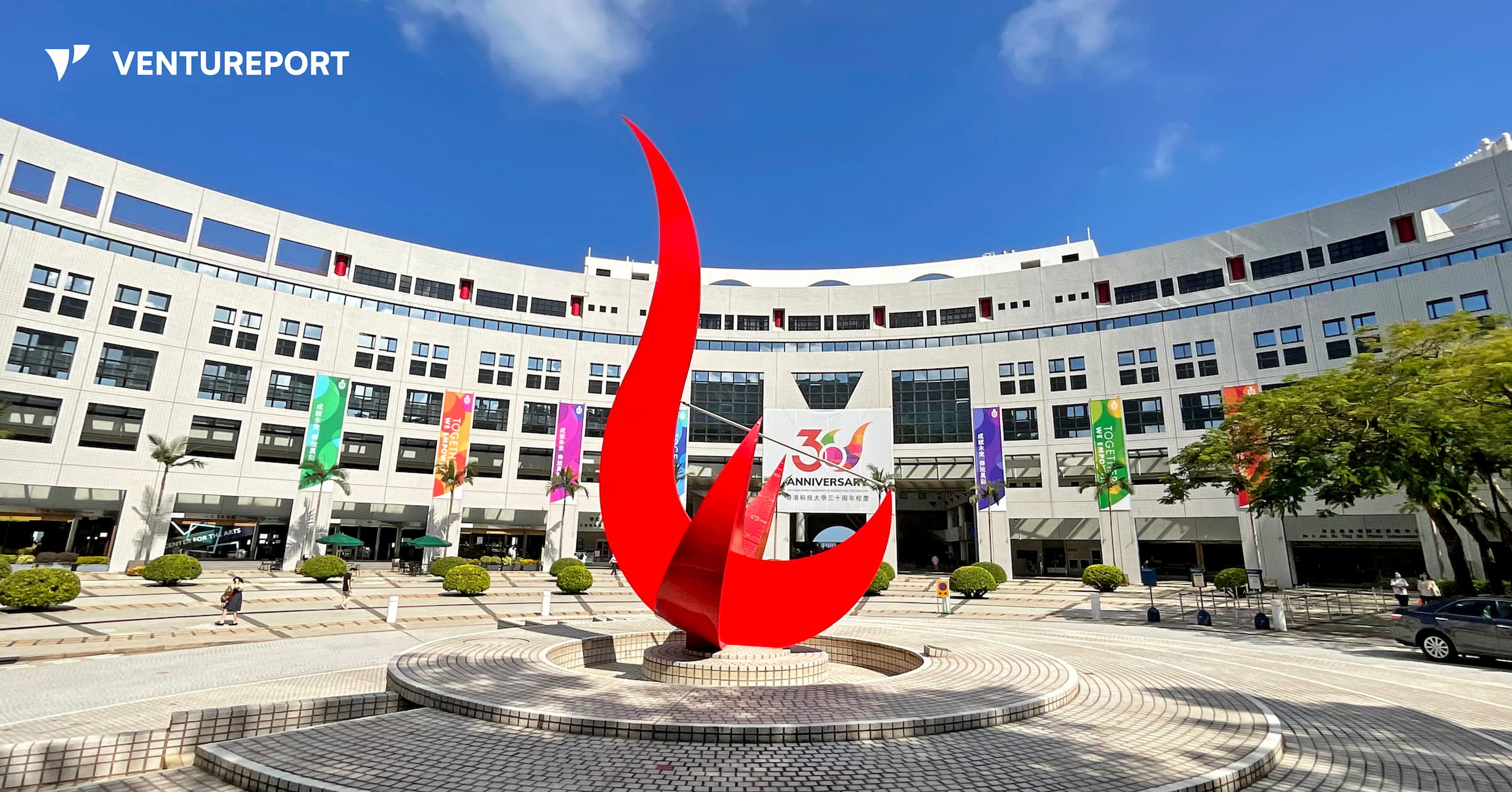
Entrance Piazza, Hong Kong University of Science and Technology. PHOTO: HKUST
The HKUST-Sino Million Dollar Entrepreneurship Competition 2026 will hold its finals on October 12, following a record 390 teams from 24 countries and regions taking part in this year's competition.
Jointly organised by the Hong Kong University of Science and Technology (HKUST) and Sino Group, the competition aims to give young entrepreneurs a platform to develop and present their ideas. Sino Group Deputy Chief Executive Officer Wong Wing-lung said the Group has partnered with HKUST for many years to support young talent and the development of innovation and technology in Hong Kong.
He said the competition gives young entrepreneurs a platform to showcase their creativity, exchange ideas and put their concepts into practice.
The international participation is reflected in the universities and regions represented this year. Participants include students from the University of Oxford in the UK, the University of Pennsylvania in the US and the National University of Singapore. Teams have also joined from Australia and South Africa.
After multiple rounds of assessment, 15 teams have advanced to the finals. Their projects cover health technology, generative AI, smart buildings, and green energy management. At the finals, the teams will present their solutions to a judging panel comprising venture capital investors, industry leaders and academic experts. They will compete for more than HK$1 million in prizes and awards.
The 2026 competition has also expanded the areas it recognises. Three new awards have been introduced this year: the Transformative AI Award, the NextGen Biotech Award and the Societal Influential Award. The competition will also continue to offer the Sustainability Impact Award. Together, the awards focus on areas ranging from emerging technologies to social and sustainability challenges.
The organisers are also adding new activities to help teams develop their ideas further. This year's programme includes pitching skills training, AI workshops, investor matching sessions and mentorship opportunities. The AI workshops will cover areas including generative AI and AI agents, while representatives from venture capital firms such as Gobi Partners and InnoAngel Fund have been invited to share insights on fundraising, product positioning and market expansion.
These activities are intended to help young entrepreneurs strengthen their business plans and presentation skills. They also give teams opportunities to explore technology commercialisation and potential market applications.
The competition will also launch the InnoBay 1M PLUS Program during the Grand Final. The programme will focus initially on Smart City Development and aims to connect HKUST start-ups and competition alumni with industry partners. It will also support potential proof-of-concept opportunities and help promising innovations move towards commercial adoption.
The Grand Final will also include an audience voting segment. Members of the public will be able to vote for the team they believe has the greatest potential and impact, with those who correctly vote for an eventual winning team entering a lucky draw.
For Wong, the competition is part of a broader effort to develop Hong Kong's innovation and technology talent. He noted that Hong Kong's first Five-Year Plan and latest Policy Address both highlight innovation, technology and talent development.
Prof. Tim Cheng Kwang-Ting, HKUST's Vice-President for Research and Development, said the competition has also served as a platform for aspiring entrepreneurs to connect with investors, understand market needs, test their ideas and gain practical entrepreneurial experience. He added that the competition has strengthened its training, mentorship and networking activities this year.
The Group believes that closer cooperation between industry, academia and research institutions can help turn innovative ideas into practical applications. Through the competition and its wider support programmes, young entrepreneurs are given opportunities to develop their ideas, connect with potential partners and explore how they can be taken from early concepts towards real-world applications.
Keep Reading
From TV to YouTube, the Oscars’ global shift reveals how entertainment, access and platforms are reshaping cultural institutions.
Updated
January 8, 2026 6:29 PM

Youtube app on a mobile device. PHOTO: UNSPLASH
The Oscars are moving to YouTube. Beginning in 2029, the Academy of Motion Picture Arts and Sciences has signed a multi-year agreement that makes YouTube the exclusive global home of the Oscars through 2033. From the ceremony itself to red carpet coverage, behind-the-scenes access and the Governors Ball, the entire experience will live on a platform most people already open every day.
On the surface, it looks like a distribution shift. In reality, it signals a broader strategic reset. For decades, television delivered scale for cultural institutions. Today, reach and discovery live on platforms, not channels. By choosing YouTube, the Academy is quietly acknowledging that cultural relevance today is built where audiences already are. In that context, YouTube is no longer just a place to watch clips but an emerging piece of cultural infrastructure.
What also stands out is how the Oscars are being reframed. This partnership is not limited to one night a year. Alongside the ceremony, YouTube will host year-round Academy programming through the Oscars YouTube channel. That includes nominations announcements, the Governors Awards, the Student Academy Awards, the Scientific and Technical Awards, filmmaker interviews, podcasts and education programs. Instead of a single broadcast moment, the Oscars are turning into an always-on ecosystem.
Accessibility is another central pillar of the deal. The Oscars will be free to watch globally, supported by closed captioning and audio tracks in multiple languages. This is less about nice-to-have features and more about staying relevant in a global, digital-first world. Younger audiences and viewers outside traditional Western markets expect access by default. The Academy is clearly building with that expectation in mind.
There is also a deeper exchange happening between heritage and technology. YouTube gains cultural weight by hosting one of the world’s most established creative institutions. The Academy, in turn, gains technological legitimacy and a clearer path into the future.
That balance extends to how the transition is being handled. The Academy’s domestic broadcast partnership with Disney ABC will continue through the 100th Oscars in 2028 and the international arrangement with Disney’s Buena Vista International remains in place until then. This is not an abrupt break from legacy media but a carefully phased shift. Change is being managed without burning bridges.
“We are thrilled to enter into a multifaceted global partnership with YouTube to be the future home of the Oscars and our year-round Academy programming,” said Academy CEO Bill Kramer and Academy President Lynette Howell Taylor. “The Academy is an international organization and this partnership will allow us to expand access to the work of the Academy to the largest worldwide audience possible — which will be beneficial for our Academy members and the film community. This collaboration will leverage YouTube’s vast reach and infuse the Oscars and other Academy programming with innovative opportunities for engagement while honoring our legacy. We will be able to celebrate cinema, inspire new generations of filmmakers and provide access to our film history on an unprecedented global scale.”
From YouTube’s side, the partnership places the platform firmly in the center of global cultural moments. “The Oscars are one of our essential cultural institutions, honoring excellence in storytelling and artistry,” said Neal Mohan, CEO, YouTube. “Partnering with the Academy to bring this celebration of art and entertainment to viewers all over the world will inspire a new generation of creativity and film lovers while staying true to the Oscars’ storied legacy.”
Google Arts & Culture extends the partnership beyond the ceremony. Select Academy Museum exhibitions and materials from the Academy’s 52-million-item collection will be made digitally accessible worldwide, bringing film history and education onto the same platform.
Taken together, the deal is less about where the Oscars will stream and more about how cultural institutions are adapting to the changing landscape. The Academy is positioning itself to be present year-round, globally accessible and aligned with the platforms that shape everyday viewing.