
From generative AI to green energy, 15 finalist teams will take the stage after a record 390 teams entered this year's competition.
Updated
October 2, 2026 9:13 AM
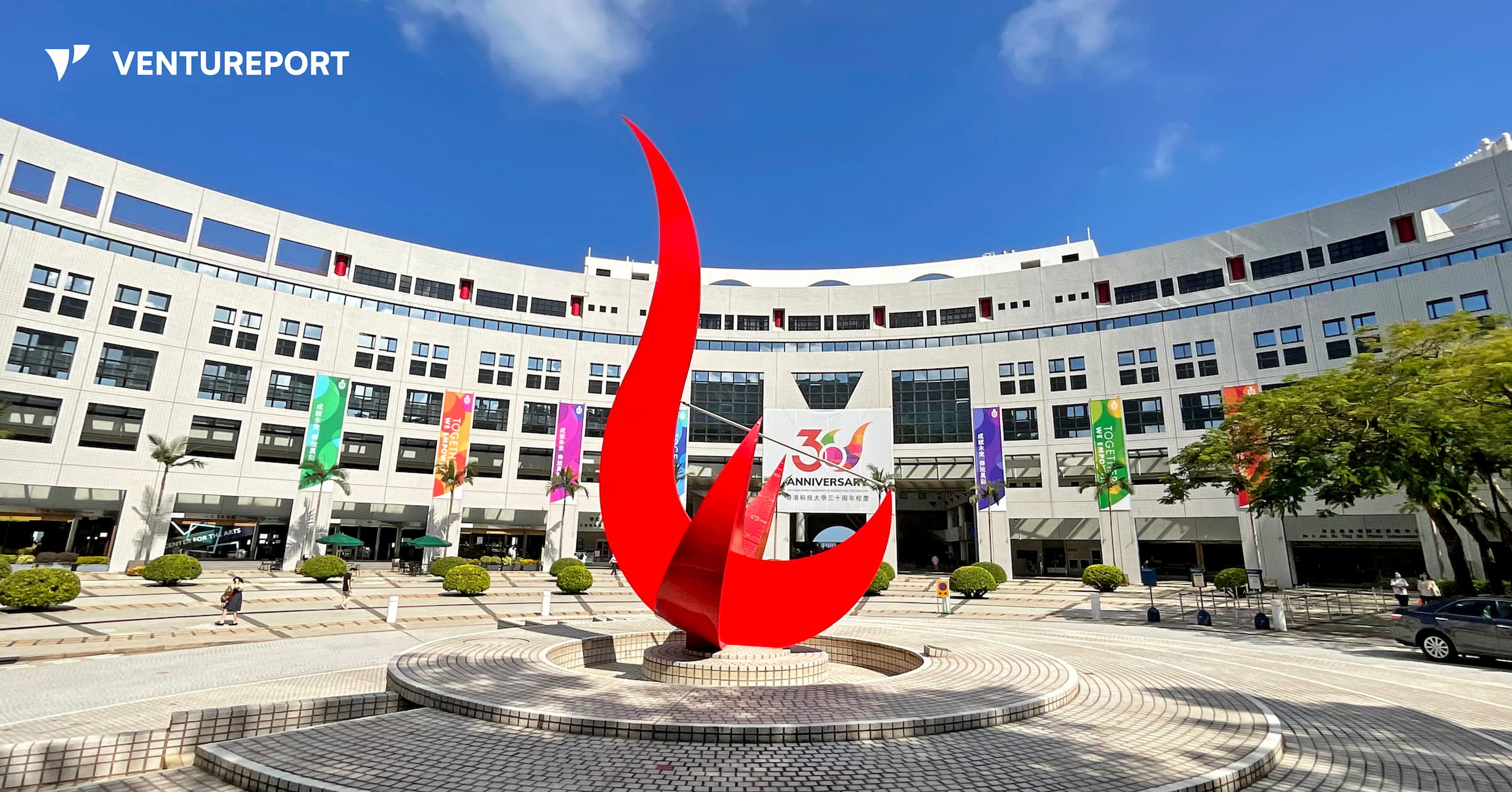
Entrance Piazza, Hong Kong University of Science and Technology. PHOTO: HKUST
The HKUST-Sino Million Dollar Entrepreneurship Competition 2026 will hold its finals on October 12, following a record 390 teams from 24 countries and regions taking part in this year's competition.
Jointly organised by the Hong Kong University of Science and Technology (HKUST) and Sino Group, the competition aims to give young entrepreneurs a platform to develop and present their ideas. Sino Group Deputy Chief Executive Officer Wong Wing-lung said the Group has partnered with HKUST for many years to support young talent and the development of innovation and technology in Hong Kong.
He said the competition gives young entrepreneurs a platform to showcase their creativity, exchange ideas and put their concepts into practice.
The international participation is reflected in the universities and regions represented this year. Participants include students from the University of Oxford in the UK, the University of Pennsylvania in the US and the National University of Singapore. Teams have also joined from Australia and South Africa.
After multiple rounds of assessment, 15 teams have advanced to the finals. Their projects cover health technology, generative AI, smart buildings, and green energy management. At the finals, the teams will present their solutions to a judging panel comprising venture capital investors, industry leaders and academic experts. They will compete for more than HK$1 million in prizes and awards.
The 2026 competition has also expanded the areas it recognises. Three new awards have been introduced this year: the Transformative AI Award, the NextGen Biotech Award and the Societal Influential Award. The competition will also continue to offer the Sustainability Impact Award. Together, the awards focus on areas ranging from emerging technologies to social and sustainability challenges.
The organisers are also adding new activities to help teams develop their ideas further. This year's programme includes pitching skills training, AI workshops, investor matching sessions and mentorship opportunities. The AI workshops will cover areas including generative AI and AI agents, while representatives from venture capital firms such as Gobi Partners and InnoAngel Fund have been invited to share insights on fundraising, product positioning and market expansion.
These activities are intended to help young entrepreneurs strengthen their business plans and presentation skills. They also give teams opportunities to explore technology commercialisation and potential market applications.
The competition will also launch the InnoBay 1M PLUS Program during the Grand Final. The programme will focus initially on Smart City Development and aims to connect HKUST start-ups and competition alumni with industry partners. It will also support potential proof-of-concept opportunities and help promising innovations move towards commercial adoption.
The Grand Final will also include an audience voting segment. Members of the public will be able to vote for the team they believe has the greatest potential and impact, with those who correctly vote for an eventual winning team entering a lucky draw.
For Wong, the competition is part of a broader effort to develop Hong Kong's innovation and technology talent. He noted that Hong Kong's first Five-Year Plan and latest Policy Address both highlight innovation, technology and talent development.
Prof. Tim Cheng Kwang-Ting, HKUST's Vice-President for Research and Development, said the competition has also served as a platform for aspiring entrepreneurs to connect with investors, understand market needs, test their ideas and gain practical entrepreneurial experience. He added that the competition has strengthened its training, mentorship and networking activities this year.
The Group believes that closer cooperation between industry, academia and research institutions can help turn innovative ideas into practical applications. Through the competition and its wider support programmes, young entrepreneurs are given opportunities to develop their ideas, connect with potential partners and explore how they can be taken from early concepts towards real-world applications.
Keep Reading
Why More Growth Companies Are Looking Beyond the Traditional IPO
Updated
August 10, 2026 5:56 PM
.jpg)
Enhanced Games at Resorts World Las Vegas. PHOTO: FACEBOOK@ENHANCEDGAMES
Enhanced Games reached the public markets in less than six months.
In an era where traditional IPOs can take more than a year to complete, the speed of the company’s merger with A Paradise Acquisition Corp. (NASDAQ: APAD) stands out, particularly given the significantly tighter regulatory scrutiny surrounding SPAC transactions since 2021.
The transaction highlights why some growth-stage companies are evaluating special-purpose acquisition companies (SPACs) as a viable alternative to the traditional IPO process.
Led by Dr. Aron D’Souza and backed by investors including Peter Thiel and Christian Angermayer, Enhanced Games announced its Business Combination Agreement with APAD in November 2025. The transaction closed in May 2026, bringing the company to the public markets materially faster than the timeline typically associated with a conventional IPO.
For decades, the traditional IPO has been considered the default route for private companies entering the public markets. But for many high-growth businesses today, the process has become increasingly slow, expensive, and difficult to execute efficiently.
A conventional IPO can take well over a year to prepare, involving extensive audits, regulatory reviews, underwriter coordination, investor roadshows, and careful timing against market conditions. During that period, companies remain exposed to volatility, shifting investor sentiment, and delayed access to capital. According to EY, many companies postponed planned IPOs amid market volatility and uncertainty surrounding U.S. tariff announcements, highlighting how sensitive IPO execution can be to broader market conditions.
For businesses operating in fast-moving industries, timing matters. Delayed access to liquidity can slow expansion, hiring, acquisitions, partnerships, and product development at critical stages of growth.
That is one reason why the merger between Enhanced Games and APAD is notable. The SPAC structure allowed Enhanced Games to negotiate valuation, governance terms, and financing arrangements early in the process, compressing many of the steps normally associated with a conventional IPO into a single transaction.
Enhanced Games operates across sports, media, performance science, and wellness, sectors that require significant upfront investment and rapid execution. Earlier access to public capital provided the company with liquidity, visibility, and strategic flexibility at an important stage of growth.
The public listing also gives the company tradable equity that can potentially support acquisitions, partnerships, athlete compensation structures, sponsorship arrangements, and future fundraising initiatives. These capabilities are particularly relevant in industries evolving as rapidly as sports entertainment, wellness, and human-performance science, where speed itself can become a competitive advantage.
The deal also highlights one of the SPAC market’s core advantages: the ability to combine capital raising and public-market entry within a single process.
Beyond speed, the SPAC structure offered Enhanced Games another major advantage: earlier visibility into valuation.
In a traditional IPO, pricing is largely determined near the end of the process through institutional book-building and investor demand during the roadshow phase. Even late-stage IPO candidates can face valuation cuts, downsized offerings, or postponed listings if market conditions weaken.
Recent IPO markets have repeatedly demonstrated this risk. Instacart went public in 2023 at an approximate US$9.9 billion valuation, which is dramatically below the US$39 billion private valuation it achieved during the 2021 market peak. Similarly, WeWork’s failed IPO attempt became one of the clearest examples of how rapidly investor sentiment can shift during the IPO process.
SPAC mergers operate differently.
Enhanced Games secured an implied enterprise valuation of approximately US$1.2 billion months before closing the transaction. While the merger still required SEC review and shareholder approval, the company gained significantly greater visibility into deal economics much earlier in the process.
That certainty is particularly valuable for growth companies whose valuations are tied more closely to long-term platform potential than near-term profitability.
Rather than relying entirely on shifting IPO market sentiment, the SPAC structure allowed Enhanced Games to negotiate around its broader growth strategy and future expansion plans from the outset.
The Enhanced Games transaction also reinforces why some growth-stage companies evaluate SPACs as an alternative to the traditional IPO process.
Traditional IPO investors often prefer businesses with long operating histories, stable earnings, and predictable growth profiles. Many expansion-stage companies simply do not fit that model yet, even if their long-term opportunities are substantial.
SPACs offer a different pathway.
Instead of waiting years to achieve the operational maturity typically expected in a conventional IPO, companies can access public-market capital earlier while still in growth mode.
For Enhanced Games, early access to the public markets provides more than capital. Public equity can support acquisitions, partnerships, athlete compensation structures, sponsorship arrangements, and future fundraising efforts. These capabilities are particularly important in sectors evolving as rapidly as sports entertainment, wellness, and human-performance science, where speed itself can become a competitive advantage.
The transaction also highlights how the SPAC market has evolved since the speculative boom of 2020 and 2021.
Today’s de-SPAC environment operates under significantly tighter regulatory scrutiny, including enhanced disclosure requirements, greater SEC oversight, and stricter treatment of projections and liability standards.
The Harvard Law School Forum on Corporate Governance noted that redemption rates spiked in 2022, in some cases approaching 100%, contributing to a significant slowdown of the SPAC activity.
In response to rising investor concerns and regulatory pressure, the U.S. Securities and Exchange Commission adopted enhanced SPAC disclosure and liability rules in 2024 designed to align de-SPAC transactions more closely with traditional IPO standards. Sponsors also faced greater pressure to demonstrate financing certainty, stronger disclosures, and more credible post-merger execution.
Enhanced Games completed its transaction within this more disciplined environment.
Its Form S-4 included audited financial statements, governance disclosures, transaction details, and extensive risk-factor analysis subject to SEC review. The company also supplemented SPAC trust proceeds with a separately arranged US$40 million PIPE financing commitment designed to strengthen liquidity and improve deal certainty.
That structure reflects a more institutional and disciplined SPAC market than the speculative wave seen several years ago.
The Enhanced Games transaction demonstrates that, despite tighter regulation and a far more selective market environment, SPACs can offer certain growth companies a practical alternative to the traditional IPO.
For businesses prioritising speed, capital access, and execution certainty, a well-structured de-SPAC transaction may provide a more efficient route to the public markets, particularly when supported by credible financing, disciplined structuring, and strong investor backing.