
From generative AI to green energy, 15 finalist teams will take the stage after a record 390 teams entered this year's competition.
Updated
October 2, 2026 9:13 AM
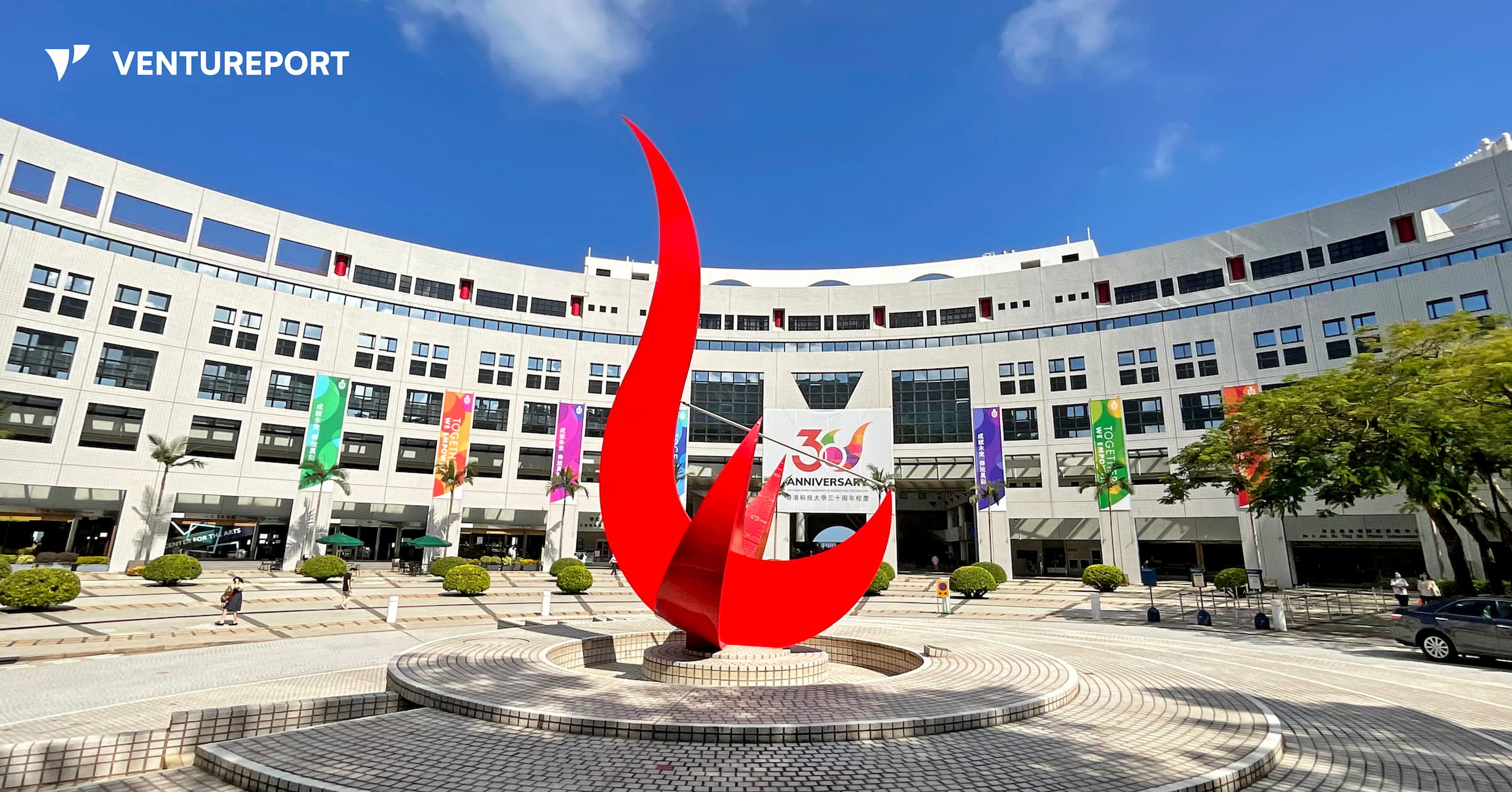
Entrance Piazza, Hong Kong University of Science and Technology. PHOTO: HKUST
The HKUST-Sino Million Dollar Entrepreneurship Competition 2026 will hold its finals on October 12, following a record 390 teams from 24 countries and regions taking part in this year's competition.
Jointly organised by the Hong Kong University of Science and Technology (HKUST) and Sino Group, the competition aims to give young entrepreneurs a platform to develop and present their ideas. Sino Group Deputy Chief Executive Officer Wong Wing-lung said the Group has partnered with HKUST for many years to support young talent and the development of innovation and technology in Hong Kong.
He said the competition gives young entrepreneurs a platform to showcase their creativity, exchange ideas and put their concepts into practice.
The international participation is reflected in the universities and regions represented this year. Participants include students from the University of Oxford in the UK, the University of Pennsylvania in the US and the National University of Singapore. Teams have also joined from Australia and South Africa.
After multiple rounds of assessment, 15 teams have advanced to the finals. Their projects cover health technology, generative AI, smart buildings, and green energy management. At the finals, the teams will present their solutions to a judging panel comprising venture capital investors, industry leaders and academic experts. They will compete for more than HK$1 million in prizes and awards.
The 2026 competition has also expanded the areas it recognises. Three new awards have been introduced this year: the Transformative AI Award, the NextGen Biotech Award and the Societal Influential Award. The competition will also continue to offer the Sustainability Impact Award. Together, the awards focus on areas ranging from emerging technologies to social and sustainability challenges.
The organisers are also adding new activities to help teams develop their ideas further. This year's programme includes pitching skills training, AI workshops, investor matching sessions and mentorship opportunities. The AI workshops will cover areas including generative AI and AI agents, while representatives from venture capital firms such as Gobi Partners and InnoAngel Fund have been invited to share insights on fundraising, product positioning and market expansion.
These activities are intended to help young entrepreneurs strengthen their business plans and presentation skills. They also give teams opportunities to explore technology commercialisation and potential market applications.
The competition will also launch the InnoBay 1M PLUS Program during the Grand Final. The programme will focus initially on Smart City Development and aims to connect HKUST start-ups and competition alumni with industry partners. It will also support potential proof-of-concept opportunities and help promising innovations move towards commercial adoption.
The Grand Final will also include an audience voting segment. Members of the public will be able to vote for the team they believe has the greatest potential and impact, with those who correctly vote for an eventual winning team entering a lucky draw.
For Wong, the competition is part of a broader effort to develop Hong Kong's innovation and technology talent. He noted that Hong Kong's first Five-Year Plan and latest Policy Address both highlight innovation, technology and talent development.
Prof. Tim Cheng Kwang-Ting, HKUST's Vice-President for Research and Development, said the competition has also served as a platform for aspiring entrepreneurs to connect with investors, understand market needs, test their ideas and gain practical entrepreneurial experience. He added that the competition has strengthened its training, mentorship and networking activities this year.
The Group believes that closer cooperation between industry, academia and research institutions can help turn innovative ideas into practical applications. Through the competition and its wider support programmes, young entrepreneurs are given opportunities to develop their ideas, connect with potential partners and explore how they can be taken from early concepts towards real-world applications.
Keep Reading
AutoFlight’s five-tonne Matrix bets on heavy payloads and regional range to prove the case for electric flight
Updated
March 17, 2026 1:02 AM

A multiroter flying through a blue sky. PHOTO: UNSPLASH
The nascent industry of electric vertical takeoff and landing (eVTOL) aircraft has long been defined by a specific set of limitations: small payloads, short distances and a primary focus on urban air taxis. AutoFlight, a Chinese aviation startup, recently moved to shift that narrative by unveiling "Matrix," a five-tonne aircraft that represents a significant leap in scale for electric aviation.
In a demonstration at the company’s flight test center, the Matrix completed a full transition flight—the technically demanding process of switching from vertical lift-off to forward wing-born flight and back to a vertical landing. While small-scale drones and four-seat prototypes have become increasingly common, this marks the first time an electric aircraft of this mass has successfully executed the maneuver.
The sheer scale of the Matrix places it in a different category than the "flying cars" currently being tested for hops over city traffic. With a maximum takeoff weight of 5,700 kilograms (roughly 12,500 pounds), the aircraft has the footprint of a traditional regional turboprop, boasting a 20-meter wingspan. Its size allows for configurations that the industry has previously struggled to accommodate, including a ten-seat business class cabin or a cargo hold capable of carrying 1,500 kilograms of freight.
This increased capacity is more than just a feat of engineering; it is a direct attempt to solve the financial hurdles that have plagued the sector, specifically addressing the skepticism industry analysts have often expressed regarding the economic viability of smaller eVTOLs. These critics frequently cite the high cost of operation relative to the low passenger count as a barrier to entry.
AutoFlight’s founder and CEO, Tian Yu, suggested the Matrix is a direct response to those concerns. “Matrix is not just a rising star in the aviation industry, but also an ambitious disruptor,” Yu stated. “It will eliminate the industry perception that eVTOL = short-haul, low payload and reshape the rules of eVTOL routes. Through economies of scale, it significantly reduces transportation costs per seat-kilometer and per ton-kilometer, thus revolutionizing costs and driving profitability.”
To achieve this, the aircraft utilizes a "lift and cruise" configuration. In simple terms, this means the plane uses one set of dedicated rotors to lift it off the ground like a helicopter, but once it reaches a certain speed, it uses a separate propeller to fly forward like a traditional airplane, allowing the wings to provide the lift. This design is paired with a distinctive "triplane" layout—three layers of wings—and a six-arm structure to keep the massive frame stable.
These features allow the Matrix to serve a variety of roles. For the "low-altitude economy" being promoted by Chinese regulators, the startup is offering a pure electric model with a 250-kilometer range for regional hops, alongside a hybrid-electric version capable of traveling 1,500 kilometers. The latter version, equipped with a forward-opening door to fit standard air freight containers, targets a logistics sector still heavily reliant on carbon-intensive trucking.
However, the road to commercial flight remains a steep one. Despite the successful flight demonstration, AutoFlight faces the same formidable headwinds as its competitors, such as a complex global regulatory landscape and the rigorous demands of airworthiness certification. While the Matrix validates the company's high-power propulsion, moving from a test-center demonstration to a commercial fleet will require years of safety data.
Nevertheless, the debut of the Matrix signals a maturation of the startup’s ambitions. Having previously developed smaller models for autonomous logistics and urban mobility, AutoFlight is now betting that the future of electric flight isn't just in avoiding gridlock, but in hauling the weight of regional commerce. Whether the infrastructure and regulators are ready to accommodate a five-tonne electric disruptor remains the industry's unanswered question.