
From generative AI to green energy, 15 finalist teams will take the stage after a record 390 teams entered this year's competition.
Updated
October 2, 2026 9:13 AM
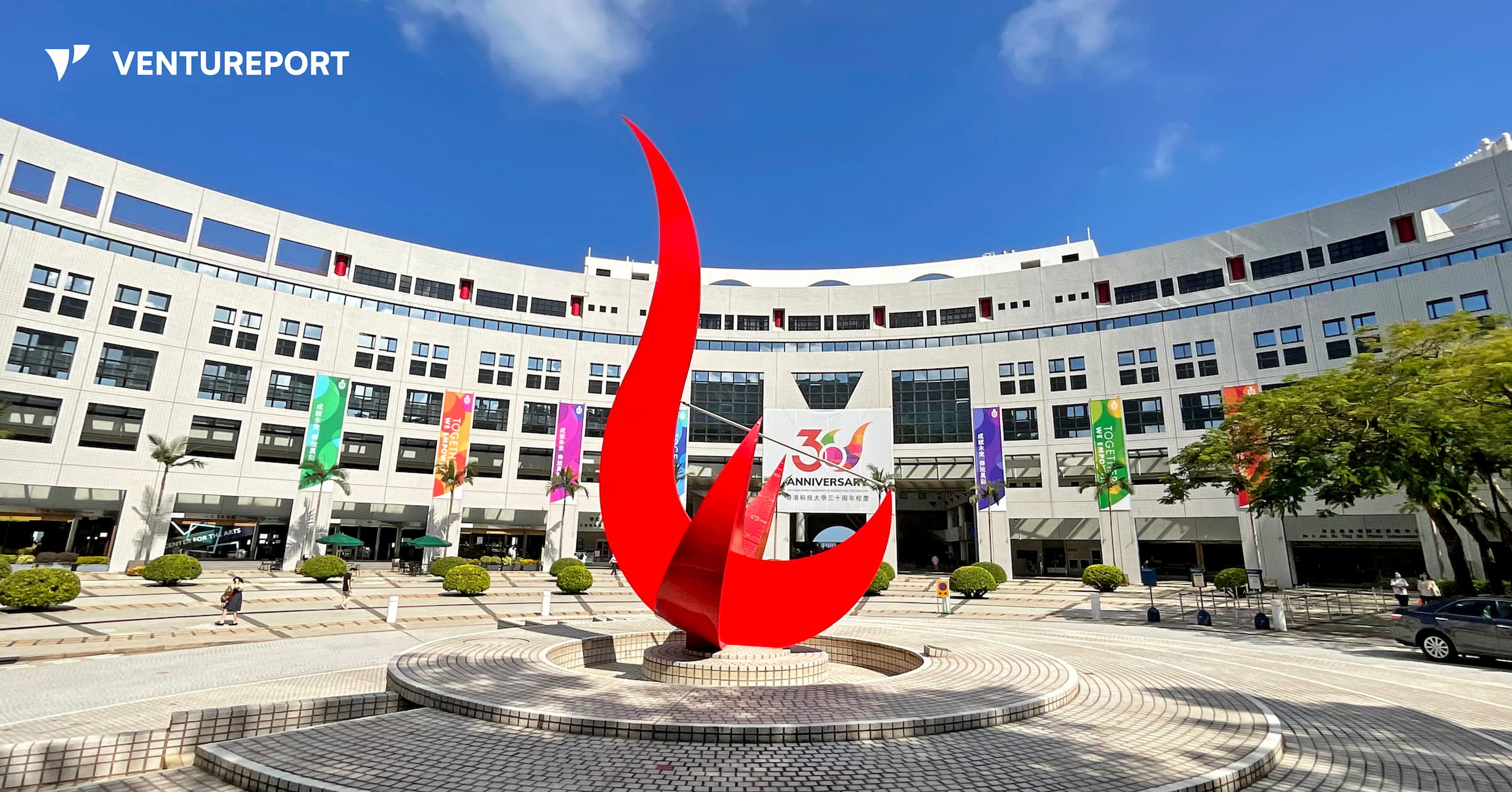
Entrance Piazza, Hong Kong University of Science and Technology. PHOTO: HKUST
The HKUST-Sino Million Dollar Entrepreneurship Competition 2026 will hold its finals on October 12, following a record 390 teams from 24 countries and regions taking part in this year's competition.
Jointly organised by the Hong Kong University of Science and Technology (HKUST) and Sino Group, the competition aims to give young entrepreneurs a platform to develop and present their ideas. Sino Group Deputy Chief Executive Officer Wong Wing-lung said the Group has partnered with HKUST for many years to support young talent and the development of innovation and technology in Hong Kong.
He said the competition gives young entrepreneurs a platform to showcase their creativity, exchange ideas and put their concepts into practice.
The international participation is reflected in the universities and regions represented this year. Participants include students from the University of Oxford in the UK, the University of Pennsylvania in the US and the National University of Singapore. Teams have also joined from Australia and South Africa.
After multiple rounds of assessment, 15 teams have advanced to the finals. Their projects cover health technology, generative AI, smart buildings, and green energy management. At the finals, the teams will present their solutions to a judging panel comprising venture capital investors, industry leaders and academic experts. They will compete for more than HK$1 million in prizes and awards.
The 2026 competition has also expanded the areas it recognises. Three new awards have been introduced this year: the Transformative AI Award, the NextGen Biotech Award and the Societal Influential Award. The competition will also continue to offer the Sustainability Impact Award. Together, the awards focus on areas ranging from emerging technologies to social and sustainability challenges.
The organisers are also adding new activities to help teams develop their ideas further. This year's programme includes pitching skills training, AI workshops, investor matching sessions and mentorship opportunities. The AI workshops will cover areas including generative AI and AI agents, while representatives from venture capital firms such as Gobi Partners and InnoAngel Fund have been invited to share insights on fundraising, product positioning and market expansion.
These activities are intended to help young entrepreneurs strengthen their business plans and presentation skills. They also give teams opportunities to explore technology commercialisation and potential market applications.
The competition will also launch the InnoBay 1M PLUS Program during the Grand Final. The programme will focus initially on Smart City Development and aims to connect HKUST start-ups and competition alumni with industry partners. It will also support potential proof-of-concept opportunities and help promising innovations move towards commercial adoption.
The Grand Final will also include an audience voting segment. Members of the public will be able to vote for the team they believe has the greatest potential and impact, with those who correctly vote for an eventual winning team entering a lucky draw.
For Wong, the competition is part of a broader effort to develop Hong Kong's innovation and technology talent. He noted that Hong Kong's first Five-Year Plan and latest Policy Address both highlight innovation, technology and talent development.
Prof. Tim Cheng Kwang-Ting, HKUST's Vice-President for Research and Development, said the competition has also served as a platform for aspiring entrepreneurs to connect with investors, understand market needs, test their ideas and gain practical entrepreneurial experience. He added that the competition has strengthened its training, mentorship and networking activities this year.
The Group believes that closer cooperation between industry, academia and research institutions can help turn innovative ideas into practical applications. Through the competition and its wider support programmes, young entrepreneurs are given opportunities to develop their ideas, connect with potential partners and explore how they can be taken from early concepts towards real-world applications.
Keep Reading
Structured AI interviews and human judgment combine to address the global talent shortage
Updated
April 1, 2026 8:56 AM

ManpowerGroup World Headquarters in Milwaukee. PHOTO: ADOBE STOCK
As hiring pressures mount across global markets, ManpowerGroup is turning to technology to strengthen how it connects people to work. The workforce solutions major has announced a global partnership with Hubert, a startup focused on AI-driven structured interviews. The aim is simple: make hiring faster and fairer, without removing the human touch.
ManpowerGroup has spent decades operating at the center of the global labor market. The company works with employers across industries to fill roles, manage workforce planning and build talent pipelines. With millions of placements each year, it has a clear view of how strained hiring has become. A large share of employers today report difficulty finding skilled talent. At the same time, candidates expect more transparency, quicker feedback and flexibility in how they engage with employers.
Hubert enters this picture as a specialist in structured digital interviewing. The startup has built tools that allow candidates to complete interviews online, at any time, while being assessed against consistent criteria. Instead of relying on informal screening calls or resume filters, its system focuses on standardized questions tied directly to job requirements. The idea is to bring more consistency to early-stage hiring.
The partnership brings these capabilities into ManpowerGroup’s global operations. AI-powered interviews will now support the first stage of screening, helping recruiters identify qualified candidates earlier in the process. This does not replace recruiters. Final decisions and contextual judgment remain with experienced hiring professionals. What changes is the speed and structure of the initial assessment.
For employers, this could mean earlier visibility into job-ready talent and less time spent on manual screening. For candidates, it offers more flexibility. A significant portion of interviews on Hubert’s platform are completed outside regular office hours, allowing applicants to engage when it suits them. That flexibility can make a difference in competitive labor markets where timing matters.
The collaboration is also positioned as a step toward reducing bias. By evaluating each candidate against the same transparent standards, the process becomes more consistent. While no system can remove bias entirely, structured assessments can reduce the variability that often comes with unstructured interviews.
At its core, the partnership addresses a gap many large organizations are facing. They need scale and speed, but they cannot afford to lose the human judgment that good hiring depends on. Manual processes are too slow. Fully automated systems can feel impersonal and risky. ManpowerGroup’s approach suggests a middle path, where technology handles repetition and structure and recruiters focus on potential and fit.
The move also reflects a broader shift in the workforce industry. AI is no longer being tested on the sidelines. It is being built into the foundation of hiring operations. For established players like ManpowerGroup, the challenge is not whether to adopt AI, but how to do so responsibly and at scale.
By working with Hubert, the company is signaling that the future of recruitment will likely blend structured digital tools with human expertise. In a market defined by talent shortages and rising expectations, that balance may prove critical.