
From generative AI to green energy, 15 finalist teams will take the stage after a record 390 teams entered this year's competition.
Updated
October 2, 2026 9:13 AM
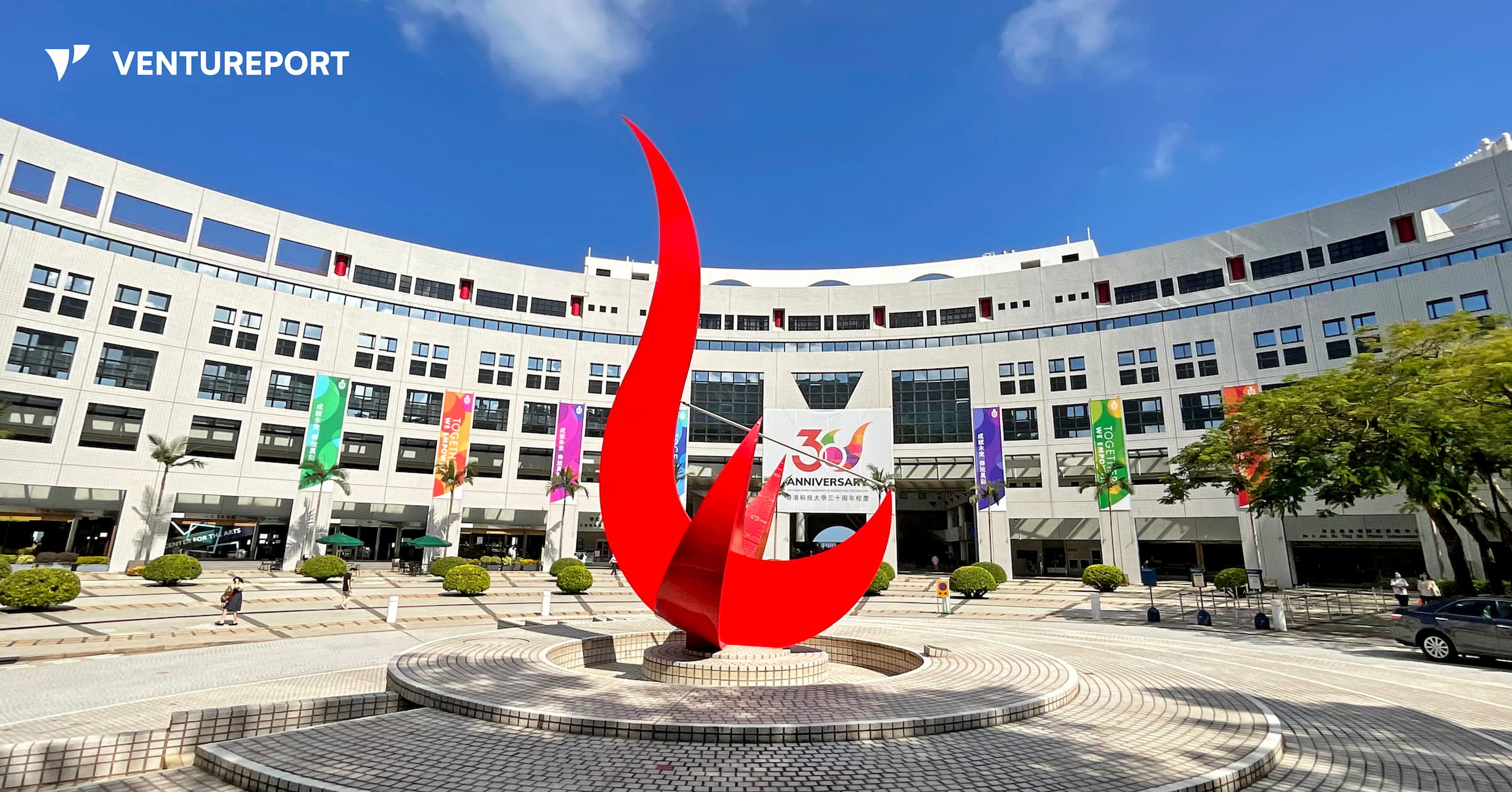
Entrance Piazza, Hong Kong University of Science and Technology. PHOTO: HKUST
The HKUST-Sino Million Dollar Entrepreneurship Competition 2026 will hold its finals on October 12, following a record 390 teams from 24 countries and regions taking part in this year's competition.
Jointly organised by the Hong Kong University of Science and Technology (HKUST) and Sino Group, the competition aims to give young entrepreneurs a platform to develop and present their ideas. Sino Group Deputy Chief Executive Officer Wong Wing-lung said the Group has partnered with HKUST for many years to support young talent and the development of innovation and technology in Hong Kong.
He said the competition gives young entrepreneurs a platform to showcase their creativity, exchange ideas and put their concepts into practice.
The international participation is reflected in the universities and regions represented this year. Participants include students from the University of Oxford in the UK, the University of Pennsylvania in the US and the National University of Singapore. Teams have also joined from Australia and South Africa.
After multiple rounds of assessment, 15 teams have advanced to the finals. Their projects cover health technology, generative AI, smart buildings, and green energy management. At the finals, the teams will present their solutions to a judging panel comprising venture capital investors, industry leaders and academic experts. They will compete for more than HK$1 million in prizes and awards.
The 2026 competition has also expanded the areas it recognises. Three new awards have been introduced this year: the Transformative AI Award, the NextGen Biotech Award and the Societal Influential Award. The competition will also continue to offer the Sustainability Impact Award. Together, the awards focus on areas ranging from emerging technologies to social and sustainability challenges.
The organisers are also adding new activities to help teams develop their ideas further. This year's programme includes pitching skills training, AI workshops, investor matching sessions and mentorship opportunities. The AI workshops will cover areas including generative AI and AI agents, while representatives from venture capital firms such as Gobi Partners and InnoAngel Fund have been invited to share insights on fundraising, product positioning and market expansion.
These activities are intended to help young entrepreneurs strengthen their business plans and presentation skills. They also give teams opportunities to explore technology commercialisation and potential market applications.
The competition will also launch the InnoBay 1M PLUS Program during the Grand Final. The programme will focus initially on Smart City Development and aims to connect HKUST start-ups and competition alumni with industry partners. It will also support potential proof-of-concept opportunities and help promising innovations move towards commercial adoption.
The Grand Final will also include an audience voting segment. Members of the public will be able to vote for the team they believe has the greatest potential and impact, with those who correctly vote for an eventual winning team entering a lucky draw.
For Wong, the competition is part of a broader effort to develop Hong Kong's innovation and technology talent. He noted that Hong Kong's first Five-Year Plan and latest Policy Address both highlight innovation, technology and talent development.
Prof. Tim Cheng Kwang-Ting, HKUST's Vice-President for Research and Development, said the competition has also served as a platform for aspiring entrepreneurs to connect with investors, understand market needs, test their ideas and gain practical entrepreneurial experience. He added that the competition has strengthened its training, mentorship and networking activities this year.
The Group believes that closer cooperation between industry, academia and research institutions can help turn innovative ideas into practical applications. Through the competition and its wider support programmes, young entrepreneurs are given opportunities to develop their ideas, connect with potential partners and explore how they can be taken from early concepts towards real-world applications.
Keep Reading
Backed by Menlo Ventures, BrainGrid tackles planning gaps as AI makes software building accessible to more founders.
Updated
April 20, 2026 1:40 PM

A phone screen with app icons. PHOTO: UNPSLASH
As artificial intelligence makes it easier to write code, a different problem is starting to surface. Building software is no longer limited by technical skill alone. Increasingly, the challenge lies in deciding what to build, how to structure it, and how to turn an idea into something that actually works.
That shift sits at the centre of BrainGrid, a startup that has raised $1 million in pre-seed funding led by Menlo Ventures, with participation from Next Tier Ventures and Brainstorm Ventures. The company is building what it describes as an AI-powered planning layer for people who want to create software but may not have a technical background.
The timing reflects a broader change in how products are being built. Tools like Claude Code and Cursor have made it possible to generate working code through simple prompts. For many first-time founders, this has lowered the barrier to entry. But writing code is only one part of the process. Turning that code into a reliable product requires structure, sequencing and clarity—areas where many projects begin to fall apart.
In traditional teams, this responsibility sits with product managers who define what needs to be built and in what order. Without that layer, even well-written code can lead to products that feel disjointed or incomplete. Features may not work together, integrations can break and the final product often does not match the original idea.
BrainGrid is designed to address that gap. Instead of focusing on generating code, it helps users map out the structure of a product before development begins. The aim is to give builders a clearer starting point so that the tools they use—whether human or AI—can produce more consistent results.
The company says more than 500 builders have already used it to create software products across areas like fitness, healthcare and productivity. These range from first-time founders experimenting with new ideas to experienced developers working independently. In many cases, the products are already live and generating revenue, suggesting that the demand is not just for experimentation but for building something that can scale.
For investors, the appeal lies in the evolving role of software development. As AI takes on more of the technical work, the value shifts toward defining the problem and structuring the solution. In that sense, planning becomes less of a background task and more of a core capability.
The US$1 million raise is relatively modest, but it points to a larger trend. As more people gain access to AI tools, the number of potential builders expands. What remains limited is the ability to organise ideas into products that work in the real world. If that shift continues, the next wave of software may not be defined by who can code, but by who can plan.