
From generative AI to green energy, 15 finalist teams will take the stage after a record 390 teams entered this year's competition.
Updated
October 2, 2026 9:13 AM
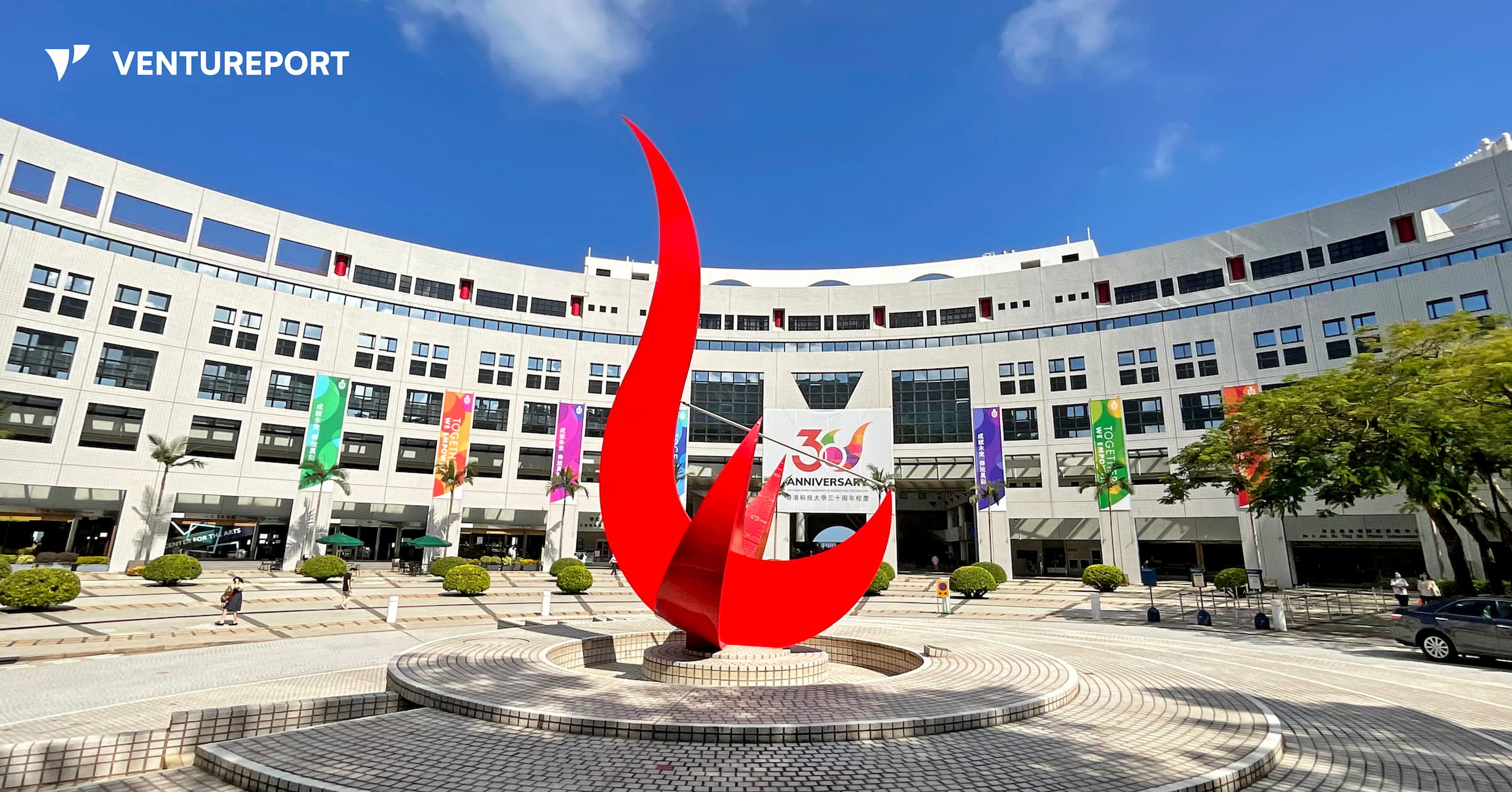
Entrance Piazza, Hong Kong University of Science and Technology. PHOTO: HKUST
The HKUST-Sino Million Dollar Entrepreneurship Competition 2026 will hold its finals on October 12, following a record 390 teams from 24 countries and regions taking part in this year's competition.
Jointly organised by the Hong Kong University of Science and Technology (HKUST) and Sino Group, the competition aims to give young entrepreneurs a platform to develop and present their ideas. Sino Group Deputy Chief Executive Officer Wong Wing-lung said the Group has partnered with HKUST for many years to support young talent and the development of innovation and technology in Hong Kong.
He said the competition gives young entrepreneurs a platform to showcase their creativity, exchange ideas and put their concepts into practice.
The international participation is reflected in the universities and regions represented this year. Participants include students from the University of Oxford in the UK, the University of Pennsylvania in the US and the National University of Singapore. Teams have also joined from Australia and South Africa.
After multiple rounds of assessment, 15 teams have advanced to the finals. Their projects cover health technology, generative AI, smart buildings, and green energy management. At the finals, the teams will present their solutions to a judging panel comprising venture capital investors, industry leaders and academic experts. They will compete for more than HK$1 million in prizes and awards.
The 2026 competition has also expanded the areas it recognises. Three new awards have been introduced this year: the Transformative AI Award, the NextGen Biotech Award and the Societal Influential Award. The competition will also continue to offer the Sustainability Impact Award. Together, the awards focus on areas ranging from emerging technologies to social and sustainability challenges.
The organisers are also adding new activities to help teams develop their ideas further. This year's programme includes pitching skills training, AI workshops, investor matching sessions and mentorship opportunities. The AI workshops will cover areas including generative AI and AI agents, while representatives from venture capital firms such as Gobi Partners and InnoAngel Fund have been invited to share insights on fundraising, product positioning and market expansion.
These activities are intended to help young entrepreneurs strengthen their business plans and presentation skills. They also give teams opportunities to explore technology commercialisation and potential market applications.
The competition will also launch the InnoBay 1M PLUS Program during the Grand Final. The programme will focus initially on Smart City Development and aims to connect HKUST start-ups and competition alumni with industry partners. It will also support potential proof-of-concept opportunities and help promising innovations move towards commercial adoption.
The Grand Final will also include an audience voting segment. Members of the public will be able to vote for the team they believe has the greatest potential and impact, with those who correctly vote for an eventual winning team entering a lucky draw.
For Wong, the competition is part of a broader effort to develop Hong Kong's innovation and technology talent. He noted that Hong Kong's first Five-Year Plan and latest Policy Address both highlight innovation, technology and talent development.
Prof. Tim Cheng Kwang-Ting, HKUST's Vice-President for Research and Development, said the competition has also served as a platform for aspiring entrepreneurs to connect with investors, understand market needs, test their ideas and gain practical entrepreneurial experience. He added that the competition has strengthened its training, mentorship and networking activities this year.
The Group believes that closer cooperation between industry, academia and research institutions can help turn innovative ideas into practical applications. Through the competition and its wider support programmes, young entrepreneurs are given opportunities to develop their ideas, connect with potential partners and explore how they can be taken from early concepts towards real-world applications.
Keep Reading
From AI diagnostics to exoskeletons, the event highlights how healthcare tech is moving into real-world use
Updated
May 1, 2026 2:25 PM

Tesla Bot Optimus, designed by Tesla. PHOTO: ADOBE STOCK
The China International Medical Equipment Fair 2026 will open in Shanghai from April 9 to 12 at the National Exhibition and Convention Center. It is one of the largest gatherings in the medical device industry. This year’s edition will cover more than 320,000 square metres. Nearly 5,000 companies and brands are expected to participate, representing over 20 countries and regions. Organisers also expect more than 200,000 professional visitors and buyers from around 150 markets.
A key focus this year is the growing use of artificial intelligence in healthcare. One of the headline technologies is an AI agent designed to carry out multiple diagnoses from a single scan. The exhibition will also feature diagnostic software that is already in clinical use. In addition, an integrated platform for AI training and inference will be showcased to improve computing capacity within healthcare institutions.
Robotics will also play a central role at the event. New systems across surgical procedures, rehabilitation and elderly care are expected to be presented. Together, these developments point to a steady move toward more precise and assisted forms of care. Many of these technologies are designed to support clinicians and patients, especially in tasks that require consistent accuracy or long-term physical assistance.
For the first time, the event will introduce a dedicated Future Tech Arena. It will focus on brain-computer interfaces, embodied intelligence and university-led innovation. The space will include AI-assisted MRI systems for Alzheimer’s diagnosis. It will also feature brain-computer interface technologies used for cognitive assessment and training, along with wearable robotic exoskeletons.
Alongside product showcases, the event will continue to act as a platform for international trade and collaboration. An International Zone will host exhibitors from countries such as the United States, Germany, Japan, South Korea, the United Kingdom, France, Singapore, Malaysia and Thailand. This provides a view of how different markets are approaching medical technology. It also reflects the global nature of innovation and deployment in this sector.
The programme will include a set of networking and exchange formats under its “We” initiative. These include discussion stages with representatives from consulates and industry organisations, as well as matchmaking sessions based on verified buyer demand. Guided tours will also be organised to help international visitors connect with relevant exhibitors. In parallel, organisers are working with hospital partners to provide medical support services for attendees during the event.
Across the four days, hundreds of forums are scheduled. These will bring together policymakers, researchers and industry leaders to discuss regulatory frameworks, market access and the future of healthcare innovation. Some of these sessions will be led by the Global Harmonization Working Party in collaboration with the Ministry of Health of Malaysia, with a focus on regulatory alignment and cross-border cooperation in medical devices.
As healthcare systems continue to adopt digital tools and advanced equipment, events like CMEF provide a clear view of how these technologies are being developed and applied. The scale of participation this year reflects continued activity across both innovation and international collaboration in the medical device sector.