
From generative AI to green energy, 15 finalist teams will take the stage after a record 390 teams entered this year's competition.
Updated
October 2, 2026 9:13 AM
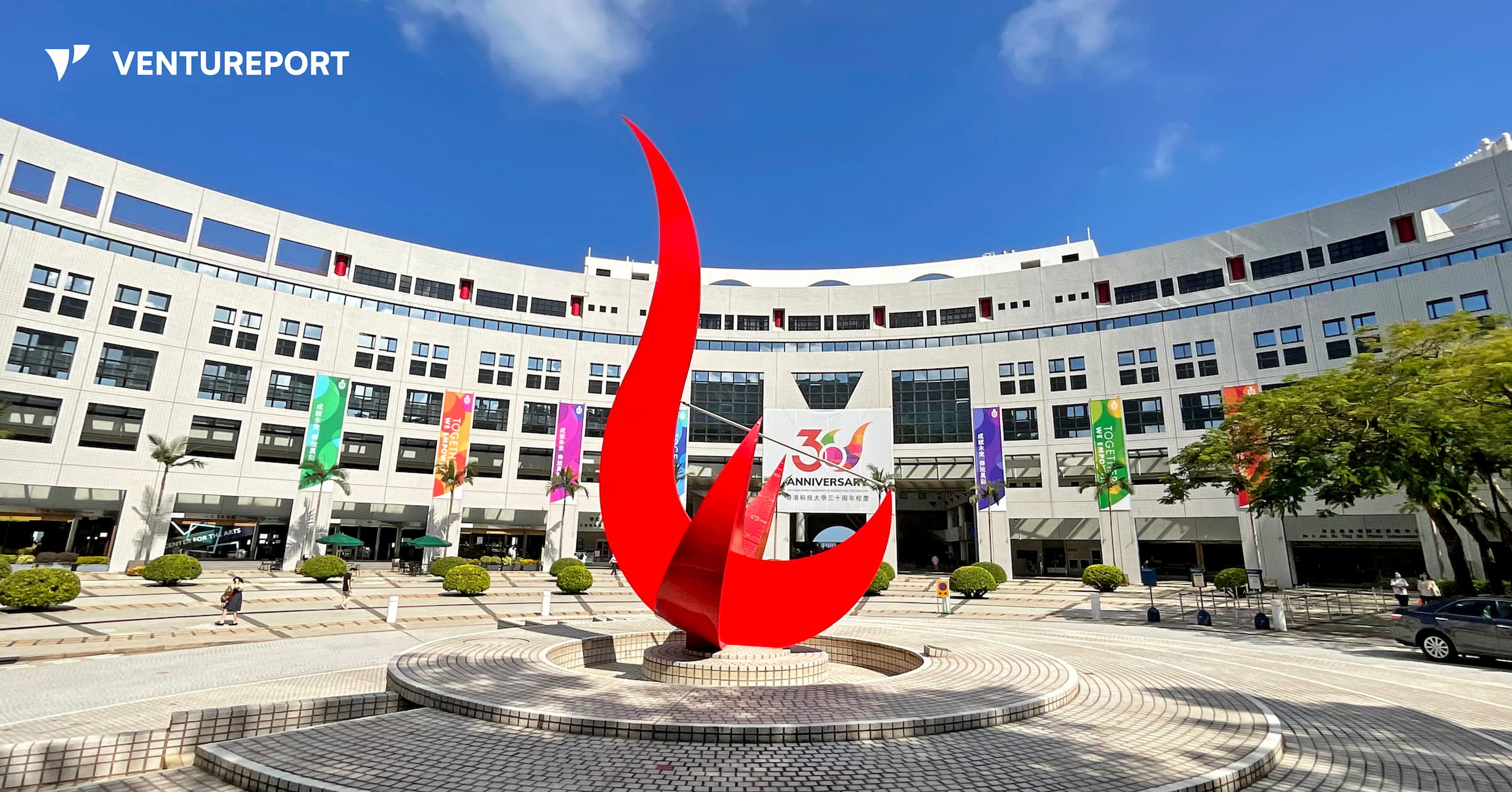
Entrance Piazza, Hong Kong University of Science and Technology. PHOTO: HKUST
The HKUST-Sino Million Dollar Entrepreneurship Competition 2026 will hold its finals on October 12, following a record 390 teams from 24 countries and regions taking part in this year's competition.
Jointly organised by the Hong Kong University of Science and Technology (HKUST) and Sino Group, the competition aims to give young entrepreneurs a platform to develop and present their ideas. Sino Group Deputy Chief Executive Officer Wong Wing-lung said the Group has partnered with HKUST for many years to support young talent and the development of innovation and technology in Hong Kong.
He said the competition gives young entrepreneurs a platform to showcase their creativity, exchange ideas and put their concepts into practice.
The international participation is reflected in the universities and regions represented this year. Participants include students from the University of Oxford in the UK, the University of Pennsylvania in the US and the National University of Singapore. Teams have also joined from Australia and South Africa.
After multiple rounds of assessment, 15 teams have advanced to the finals. Their projects cover health technology, generative AI, smart buildings, and green energy management. At the finals, the teams will present their solutions to a judging panel comprising venture capital investors, industry leaders and academic experts. They will compete for more than HK$1 million in prizes and awards.
The 2026 competition has also expanded the areas it recognises. Three new awards have been introduced this year: the Transformative AI Award, the NextGen Biotech Award and the Societal Influential Award. The competition will also continue to offer the Sustainability Impact Award. Together, the awards focus on areas ranging from emerging technologies to social and sustainability challenges.
The organisers are also adding new activities to help teams develop their ideas further. This year's programme includes pitching skills training, AI workshops, investor matching sessions and mentorship opportunities. The AI workshops will cover areas including generative AI and AI agents, while representatives from venture capital firms such as Gobi Partners and InnoAngel Fund have been invited to share insights on fundraising, product positioning and market expansion.
These activities are intended to help young entrepreneurs strengthen their business plans and presentation skills. They also give teams opportunities to explore technology commercialisation and potential market applications.
The competition will also launch the InnoBay 1M PLUS Program during the Grand Final. The programme will focus initially on Smart City Development and aims to connect HKUST start-ups and competition alumni with industry partners. It will also support potential proof-of-concept opportunities and help promising innovations move towards commercial adoption.
The Grand Final will also include an audience voting segment. Members of the public will be able to vote for the team they believe has the greatest potential and impact, with those who correctly vote for an eventual winning team entering a lucky draw.
For Wong, the competition is part of a broader effort to develop Hong Kong's innovation and technology talent. He noted that Hong Kong's first Five-Year Plan and latest Policy Address both highlight innovation, technology and talent development.
Prof. Tim Cheng Kwang-Ting, HKUST's Vice-President for Research and Development, said the competition has also served as a platform for aspiring entrepreneurs to connect with investors, understand market needs, test their ideas and gain practical entrepreneurial experience. He added that the competition has strengthened its training, mentorship and networking activities this year.
The Group believes that closer cooperation between industry, academia and research institutions can help turn innovative ideas into practical applications. Through the competition and its wider support programmes, young entrepreneurs are given opportunities to develop their ideas, connect with potential partners and explore how they can be taken from early concepts towards real-world applications.
Keep Reading
How ChinaMarket uses digital tools to make cross-border sourcing faster and more accessible for smaller businesses

A rack of colourful scarves. PHOTO: UNSPLASH
The 5th RCEP (Shandong) Import Commodities Expo opened this week at the Linyi International Expo Center, bringing together more than 5,300 buyers and over 400 exhibitors from 48 countries. Alongside the scale of the event, a quieter shift was visible in how trade itself is being organised.
ChinaMarket, the official platform of Linyi Mall, used the expo to show how sourcing is moving from manual coordination to software-led systems. On the first day, it hosted procurement matchmaking sessions and signed agreements with buyer groups from Argentina, South Korea and Ghana. But the focus was less on the deals themselves and more on the mechanism behind them.
The platform operates as a structured network of verified manufacturers, grouped by industrial clusters. Instead of buyers searching supplier by supplier, the system uses data and AI tools to match demand with production capacity. At the expo, this process was made visible through real-time data screens and guided sourcing sessions, where procurement teams connected directly with factories across categories such as building materials, textiles and electronics.
"Sourcing suppliers separately was time-consuming and inefficient. ChinaMarket accurately matches our needs and recommends reliable factories, saving us considerable effort," commented an Argentine buyer.
The underlying problem being addressed is not new. Cross-border sourcing is often slow, fragmented and dependent on intermediaries. What is changing is how that process is being compressed. By combining supplier verification, demand matching and communication into a single system, platforms like ChinaMarket aim to shorten sourcing cycles. They also reduce uncertainty in procurement decisions.
Financing is another layer where the model is evolving. Even when suppliers and buyers are matched efficiently, access to capital can still slow transactions down. Small and medium-sized firms often face constraints around payment terms and access to credit in international trade.
ChinaMarket’s “data + order financing” model links transaction data with financial services, allowing funding decisions to be tied more directly to verified orders rather than external collateral. In practice, this shifts part of the risk assessment from institutions to platform-level data.
The company is also extending this structure into agricultural supply chains. At the expo, it signed an agreement with a local government in Yinan County to build a digitally managed agricultural belt. The model combines sourcing at origin with platform distribution, with an emphasis on traceability for buyers across RCEP markets. This reflects a broader attempt to standardise supply visibility in sectors that are typically less digitised.
Geographically, the platform has been expanding into Southeast Asia. It has launched a digital marketplace in Malaysia and established operations in Indonesia, including support for government-linked procurement projects. These moves suggest a focus on embedding the platform within regional trade flows rather than operating as a standalone marketplace.
"We aim to be a 'super connector' between Chinese industrial belts and global markets", said Quan Chuanxiao, Chairman of Depth Digital Technology Group and ChinaMarket. "By digitizing the cross-border trade process, we solve trust and efficiency issues, making it simpler, faster, and more reliable for overseas buyers to source from China".
What emerges from the expo is less about a single platform and more about a shift in infrastructure. Trade is gradually moving toward systems where discovery, verification, negotiation and financing are handled within integrated digital layers. The question is not whether sourcing can be digitised, but how reliably these systems can scale across industries where trust and execution still depend on physical outcomes.