
From generative AI to green energy, 15 finalist teams will take the stage after a record 390 teams entered this year's competition.
Updated
October 2, 2026 9:13 AM
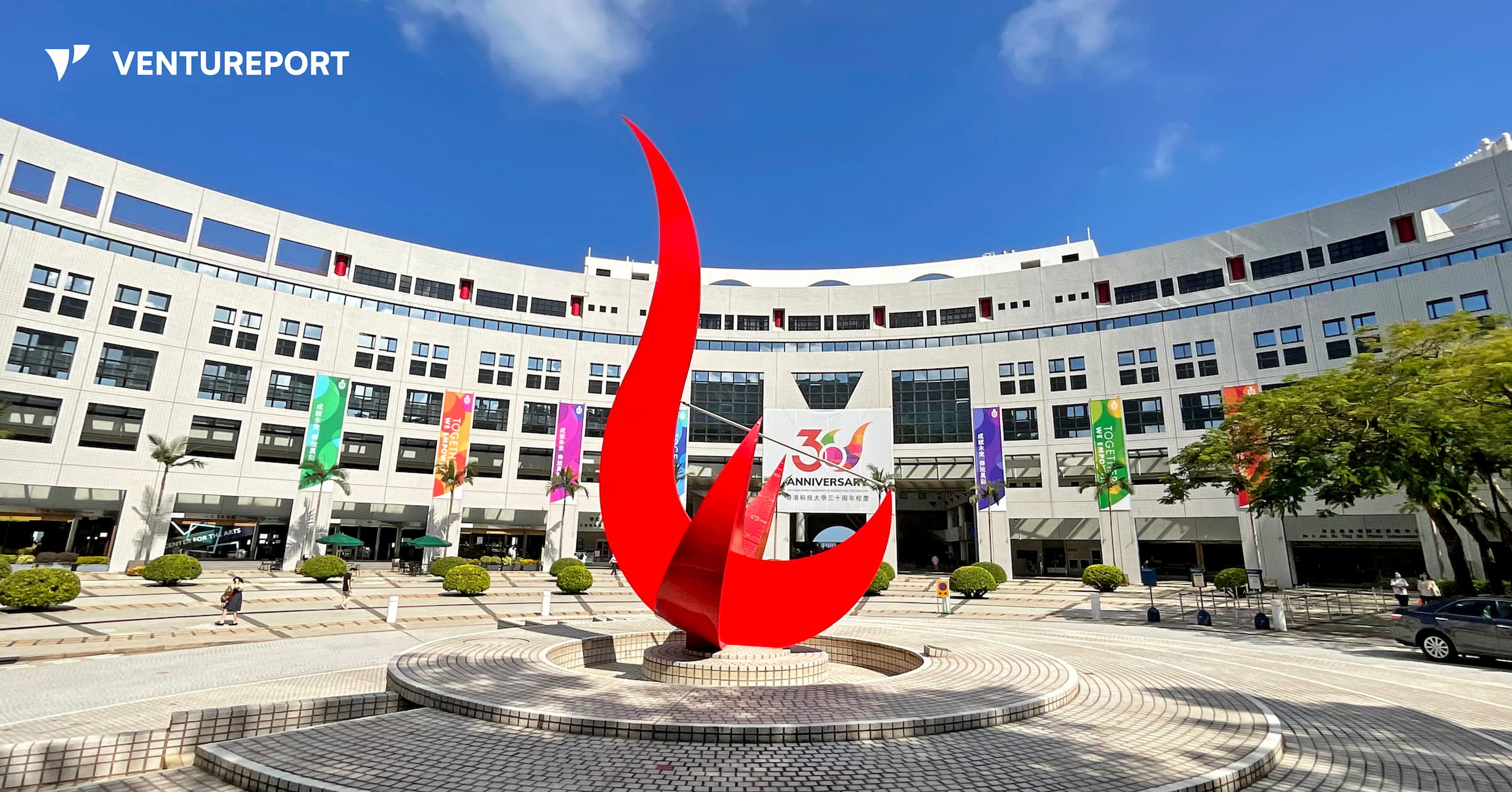
Entrance Piazza, Hong Kong University of Science and Technology. PHOTO: HKUST
The HKUST-Sino Million Dollar Entrepreneurship Competition 2026 will hold its finals on October 12, following a record 390 teams from 24 countries and regions taking part in this year's competition.
Jointly organised by the Hong Kong University of Science and Technology (HKUST) and Sino Group, the competition aims to give young entrepreneurs a platform to develop and present their ideas. Sino Group Deputy Chief Executive Officer Wong Wing-lung said the Group has partnered with HKUST for many years to support young talent and the development of innovation and technology in Hong Kong.
He said the competition gives young entrepreneurs a platform to showcase their creativity, exchange ideas and put their concepts into practice.
The international participation is reflected in the universities and regions represented this year. Participants include students from the University of Oxford in the UK, the University of Pennsylvania in the US and the National University of Singapore. Teams have also joined from Australia and South Africa.
After multiple rounds of assessment, 15 teams have advanced to the finals. Their projects cover health technology, generative AI, smart buildings, and green energy management. At the finals, the teams will present their solutions to a judging panel comprising venture capital investors, industry leaders and academic experts. They will compete for more than HK$1 million in prizes and awards.
The 2026 competition has also expanded the areas it recognises. Three new awards have been introduced this year: the Transformative AI Award, the NextGen Biotech Award and the Societal Influential Award. The competition will also continue to offer the Sustainability Impact Award. Together, the awards focus on areas ranging from emerging technologies to social and sustainability challenges.
The organisers are also adding new activities to help teams develop their ideas further. This year's programme includes pitching skills training, AI workshops, investor matching sessions and mentorship opportunities. The AI workshops will cover areas including generative AI and AI agents, while representatives from venture capital firms such as Gobi Partners and InnoAngel Fund have been invited to share insights on fundraising, product positioning and market expansion.
These activities are intended to help young entrepreneurs strengthen their business plans and presentation skills. They also give teams opportunities to explore technology commercialisation and potential market applications.
The competition will also launch the InnoBay 1M PLUS Program during the Grand Final. The programme will focus initially on Smart City Development and aims to connect HKUST start-ups and competition alumni with industry partners. It will also support potential proof-of-concept opportunities and help promising innovations move towards commercial adoption.
The Grand Final will also include an audience voting segment. Members of the public will be able to vote for the team they believe has the greatest potential and impact, with those who correctly vote for an eventual winning team entering a lucky draw.
For Wong, the competition is part of a broader effort to develop Hong Kong's innovation and technology talent. He noted that Hong Kong's first Five-Year Plan and latest Policy Address both highlight innovation, technology and talent development.
Prof. Tim Cheng Kwang-Ting, HKUST's Vice-President for Research and Development, said the competition has also served as a platform for aspiring entrepreneurs to connect with investors, understand market needs, test their ideas and gain practical entrepreneurial experience. He added that the competition has strengthened its training, mentorship and networking activities this year.
The Group believes that closer cooperation between industry, academia and research institutions can help turn innovative ideas into practical applications. Through the competition and its wider support programmes, young entrepreneurs are given opportunities to develop their ideas, connect with potential partners and explore how they can be taken from early concepts towards real-world applications.
Keep Reading
Circles is using AI to turn telecom support from a cost centre into a faster, more personalised growth engine
Updated
August 10, 2026 5:56 PM

A woman holding a phone while using a laptop. PHOTO: ADOBE STOCK
Circles, a Singapore startup that builds software for digital telecom operators, has launched an AI concierge as part of its partnership with OpenAI. The release marks a new step in the company’s effort to modernise how telecom providers serve and retain customers. The move reflects a wider shift in the telecom sector. Many operators still rely on older support systems that can be slow, fragmented and costly to run. AI is now being tested as a way to improve service while creating new revenue opportunities.
Circles said the concierge is built on OpenAI’s API platform and sits within what it calls an AI-native telecom stack. In practical terms, the system is designed to handle customer support, account changes and personalised offers through automated interactions.
One part of the platform is called CareX. According to the company, it can deal with billing issues, service requests and network-related problems. Circles said CareX currently resolves 85% of customer queries globally without human intervention and reaches a 95% resolution rate on end-to-end tasks. That matters because customer support remains one of the larger operating costs for telecom providers. Faster automated handling could lower pressure on service teams while reducing wait times for users.
The second part of the platform is Xplore IQ, which focuses on revenue growth. The tool is designed to predict what a customer may need, recommend a suitable plan or offer and complete upgrades or downgrades automatically. Circles said the early rollout has led to a 22% rise in average revenue per user for Circles.Life Singapore. It also said personalised offers helped reduce customer churn by 9%.
"AI should empower users - not force-fit into outdated journeys. OpenAI's role has been critical in enabling Circles to scale this vision globally. With the AI concierge, we are moving beyond providing simple answers to delivering real-world outcomes, along with balancing cost and latency to maximize value for operators and customers alike", said Awais Malik, Global Chief Growth Officer at Circles.
"Circles is demonstrating how advanced AI can modernize essential industries like telecommunications at scale. By combining frontier models with multi-agent systems, they are enabling telecom operators globally to deliver faster, smarter and more personalized customer experiences. This milestone is a strong example of how AI can deliver tangible value for businesses and customers they serve", Oliver Jay, Managing Director, International for OpenAI, added.
Together, the tools are intended to connect customer service, operations and sales into one system. Rather than treating support and monetisation as separate functions, the company is combining them into a single digital layer.
Circles said the partnership will continue over the next two years as both companies work toward a more autonomous telecom model. Whether that vision is achieved remains to be seen, but the direction is clear: telecom operators are increasingly treating AI as core infrastructure rather than an optional add-on.