
From generative AI to green energy, 15 finalist teams will take the stage after a record 390 teams entered this year's competition.
Updated
October 2, 2026 9:13 AM
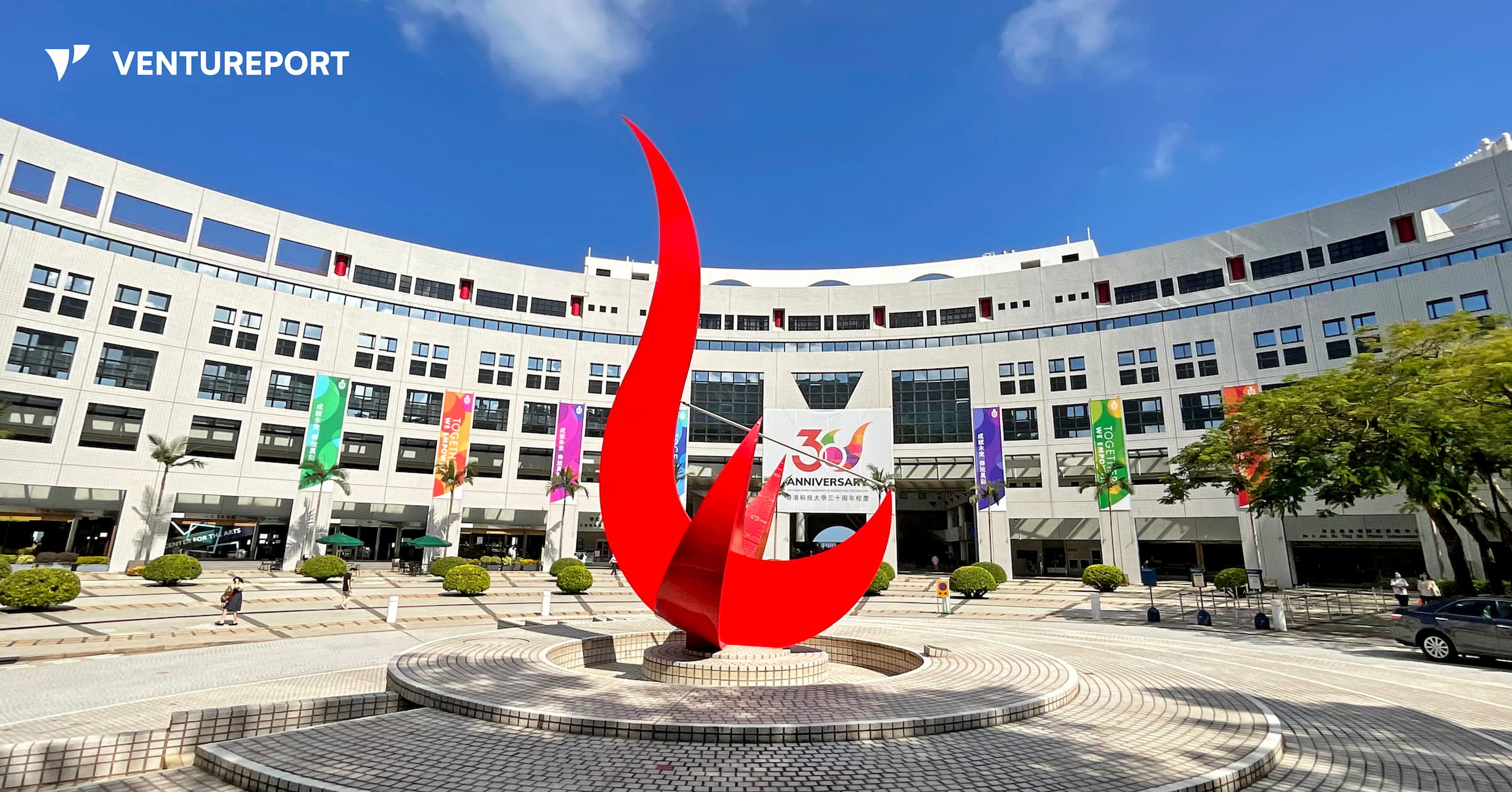
Entrance Piazza, Hong Kong University of Science and Technology. PHOTO: HKUST
The HKUST-Sino Million Dollar Entrepreneurship Competition 2026 will hold its finals on October 12, following a record 390 teams from 24 countries and regions taking part in this year's competition.
Jointly organised by the Hong Kong University of Science and Technology (HKUST) and Sino Group, the competition aims to give young entrepreneurs a platform to develop and present their ideas. Sino Group Deputy Chief Executive Officer Wong Wing-lung said the Group has partnered with HKUST for many years to support young talent and the development of innovation and technology in Hong Kong.
He said the competition gives young entrepreneurs a platform to showcase their creativity, exchange ideas and put their concepts into practice.
The international participation is reflected in the universities and regions represented this year. Participants include students from the University of Oxford in the UK, the University of Pennsylvania in the US and the National University of Singapore. Teams have also joined from Australia and South Africa.
After multiple rounds of assessment, 15 teams have advanced to the finals. Their projects cover health technology, generative AI, smart buildings, and green energy management. At the finals, the teams will present their solutions to a judging panel comprising venture capital investors, industry leaders and academic experts. They will compete for more than HK$1 million in prizes and awards.
The 2026 competition has also expanded the areas it recognises. Three new awards have been introduced this year: the Transformative AI Award, the NextGen Biotech Award and the Societal Influential Award. The competition will also continue to offer the Sustainability Impact Award. Together, the awards focus on areas ranging from emerging technologies to social and sustainability challenges.
The organisers are also adding new activities to help teams develop their ideas further. This year's programme includes pitching skills training, AI workshops, investor matching sessions and mentorship opportunities. The AI workshops will cover areas including generative AI and AI agents, while representatives from venture capital firms such as Gobi Partners and InnoAngel Fund have been invited to share insights on fundraising, product positioning and market expansion.
These activities are intended to help young entrepreneurs strengthen their business plans and presentation skills. They also give teams opportunities to explore technology commercialisation and potential market applications.
The competition will also launch the InnoBay 1M PLUS Program during the Grand Final. The programme will focus initially on Smart City Development and aims to connect HKUST start-ups and competition alumni with industry partners. It will also support potential proof-of-concept opportunities and help promising innovations move towards commercial adoption.
The Grand Final will also include an audience voting segment. Members of the public will be able to vote for the team they believe has the greatest potential and impact, with those who correctly vote for an eventual winning team entering a lucky draw.
For Wong, the competition is part of a broader effort to develop Hong Kong's innovation and technology talent. He noted that Hong Kong's first Five-Year Plan and latest Policy Address both highlight innovation, technology and talent development.
Prof. Tim Cheng Kwang-Ting, HKUST's Vice-President for Research and Development, said the competition has also served as a platform for aspiring entrepreneurs to connect with investors, understand market needs, test their ideas and gain practical entrepreneurial experience. He added that the competition has strengthened its training, mentorship and networking activities this year.
The Group believes that closer cooperation between industry, academia and research institutions can help turn innovative ideas into practical applications. Through the competition and its wider support programmes, young entrepreneurs are given opportunities to develop their ideas, connect with potential partners and explore how they can be taken from early concepts towards real-world applications.
Keep Reading
As workplace knowledge spreads across chats, AI firms are building systems that can structure, retrieve and preserve it over time.
Updated
August 10, 2026 5:56 PM

A messaging app on a phone. PHOTO: ADOBE STOCK
Votee AI, an enterprise AI company headquartered in Hong Kong, has partnered with its Toronto-based research lab Beever AI to launch Beever Atlas. The new platform is designed to turn workplace chats into searchable knowledge that AI systems can retrieve and understand.
The release focuses on a growing issue inside organisations. Much of today’s workplace knowledge now exists inside chat platforms such as Slack, Microsoft Teams, Discord and Telegram. Important discussions, project decisions and technical information often disappear into long message histories that are difficult to search later.
Beever AI developed the platform to organise those conversations into a structured system for AI assistants. The software connects with Telegram, Discord, Mattermost, Microsoft Teams and Slack, then converts conversations into linked records of people, projects, files and decisions.
The collaboration combines Votee AI’s enterprise infrastructure work with Beever AI’s research around AI memory systems. The companies are releasing two versions of the product. The open-source edition is aimed at individual developers, researchers and creators. The enterprise edition is designed for banks, government agencies and larger organisations with stricter security requirements.
The release also reflects a broader shift happening across the AI industry. Companies are increasingly looking at how AI systems store and retrieve long-term knowledge, rather than relying solely on large context windows or search-based retrieval.
Earlier this year, OpenAI founding member and former director of AI at Tesla Andrej Karpathy discussed the growing need for what he described as “LLM Knowledge Bases.” He argued that AI systems need structured and evolving memory rather than depending only on context windows and vector search.
Beever Atlas approaches that problem through workplace communication. Instead of focusing mainly on uploaded files, the system is designed around conversations that happen daily across team chat platforms. It can also process images, PDFs, voice notes and video files within the same searchable system.
The companies say the software is designed to work directly with AI assistants and coding tools such as Cursor, AWS Kiro and Qwen Code. Integrations for OpenClaw and Hermes Agent are expected later in 2026.
Pak-Sun Ting, Co-Founder and CEO of Votee AI said: "Hong Kong has always been known for property and finance. Beever Atlas is proof that world-class AI infrastructure can emerge from an HK-headquartered company and be shared openly with the world. Every growing organization faces the same silent liability: conversational knowledge loss. Beever Atlas turns this perishable resource into a compounding organizational asset."
A large part of the enterprise version focuses on privacy and access control. The system mirrors permissions from Slack and Microsoft Teams so users can only retrieve information they are already authorised to access. Permission updates are reflected automatically when access changes inside company systems.
The enterprise edition also includes audit logs, encryption controls and data retention settings for organisations handling sensitive internal data. Companies can run the software entirely inside their own infrastructure using Docker and connect it to their preferred AI models through LiteLLM.
The companies argue that organising information is more useful than simply storing chat archives. Jacky Chan Co-Founder and CTO of Votee AI said: "The key technical decision was to treat agent memory as a knowledge engineering problem, not a retrieval problem. Structure beats similarity — a typed graph of who works on what is more useful to an AI than vector search over a Slack archive."
The software also includes protections against prompt injection attacks and systems designed to reduce hallucinated responses. According to the companies, the AI is designed to return “I don't know” with citations when confidence is low instead of generating unsupported answers.
As workplace communication becomes increasingly fragmented across chat platforms, companies are beginning to treat internal conversations as information that AI systems can organise, retrieve and build on. Beever Atlas reflects a broader push to turn everyday workplace communication into long-term organisational memory.