
From generative AI to green energy, 15 finalist teams will take the stage after a record 390 teams entered this year's competition.
Updated
October 2, 2026 9:13 AM
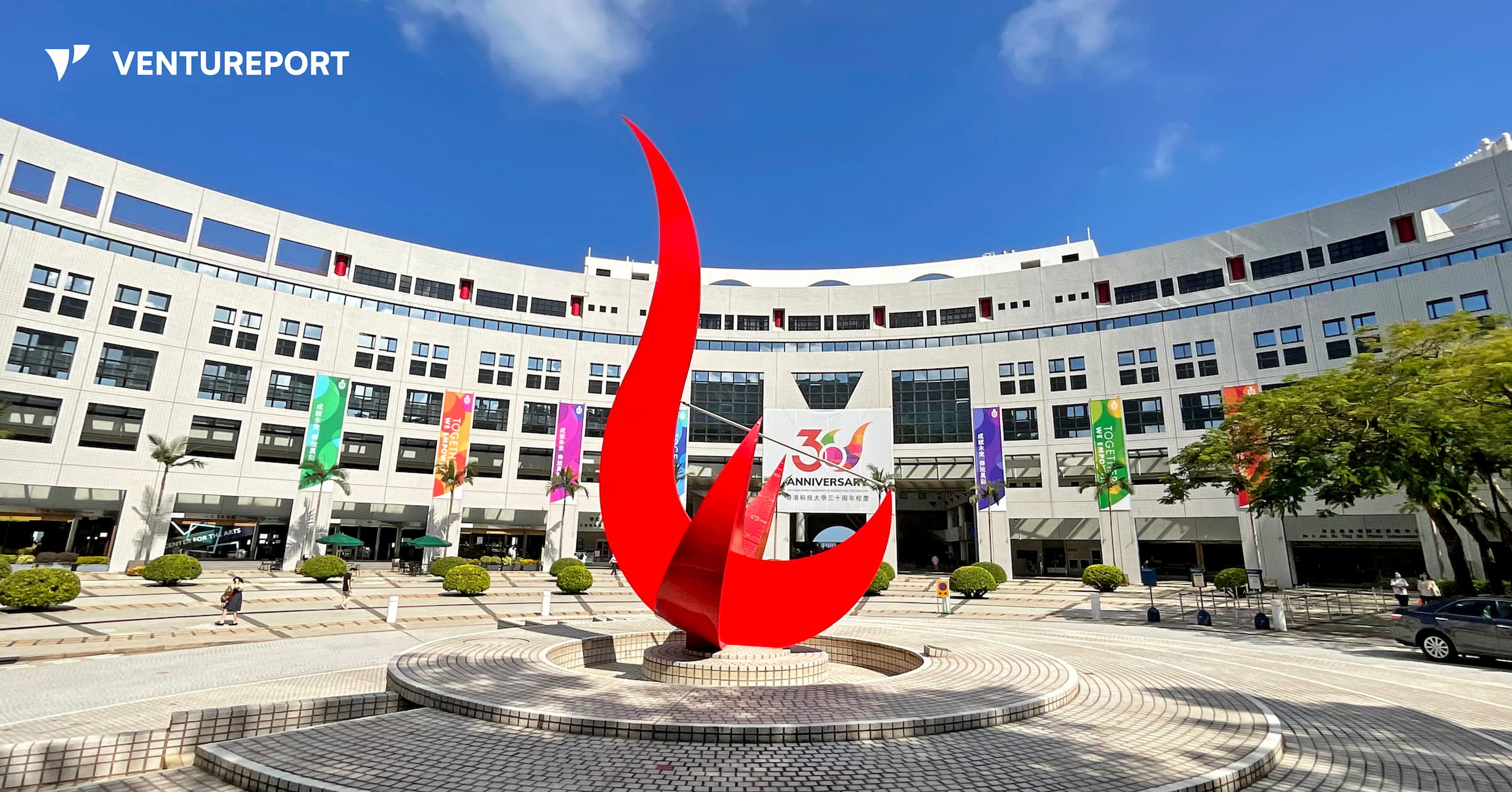
Entrance Piazza, Hong Kong University of Science and Technology. PHOTO: HKUST
The HKUST-Sino Million Dollar Entrepreneurship Competition 2026 will hold its finals on October 12, following a record 390 teams from 24 countries and regions taking part in this year's competition.
Jointly organised by the Hong Kong University of Science and Technology (HKUST) and Sino Group, the competition aims to give young entrepreneurs a platform to develop and present their ideas. Sino Group Deputy Chief Executive Officer Wong Wing-lung said the Group has partnered with HKUST for many years to support young talent and the development of innovation and technology in Hong Kong.
He said the competition gives young entrepreneurs a platform to showcase their creativity, exchange ideas and put their concepts into practice.
The international participation is reflected in the universities and regions represented this year. Participants include students from the University of Oxford in the UK, the University of Pennsylvania in the US and the National University of Singapore. Teams have also joined from Australia and South Africa.
After multiple rounds of assessment, 15 teams have advanced to the finals. Their projects cover health technology, generative AI, smart buildings, and green energy management. At the finals, the teams will present their solutions to a judging panel comprising venture capital investors, industry leaders and academic experts. They will compete for more than HK$1 million in prizes and awards.
The 2026 competition has also expanded the areas it recognises. Three new awards have been introduced this year: the Transformative AI Award, the NextGen Biotech Award and the Societal Influential Award. The competition will also continue to offer the Sustainability Impact Award. Together, the awards focus on areas ranging from emerging technologies to social and sustainability challenges.
The organisers are also adding new activities to help teams develop their ideas further. This year's programme includes pitching skills training, AI workshops, investor matching sessions and mentorship opportunities. The AI workshops will cover areas including generative AI and AI agents, while representatives from venture capital firms such as Gobi Partners and InnoAngel Fund have been invited to share insights on fundraising, product positioning and market expansion.
These activities are intended to help young entrepreneurs strengthen their business plans and presentation skills. They also give teams opportunities to explore technology commercialisation and potential market applications.
The competition will also launch the InnoBay 1M PLUS Program during the Grand Final. The programme will focus initially on Smart City Development and aims to connect HKUST start-ups and competition alumni with industry partners. It will also support potential proof-of-concept opportunities and help promising innovations move towards commercial adoption.
The Grand Final will also include an audience voting segment. Members of the public will be able to vote for the team they believe has the greatest potential and impact, with those who correctly vote for an eventual winning team entering a lucky draw.
For Wong, the competition is part of a broader effort to develop Hong Kong's innovation and technology talent. He noted that Hong Kong's first Five-Year Plan and latest Policy Address both highlight innovation, technology and talent development.
Prof. Tim Cheng Kwang-Ting, HKUST's Vice-President for Research and Development, said the competition has also served as a platform for aspiring entrepreneurs to connect with investors, understand market needs, test their ideas and gain practical entrepreneurial experience. He added that the competition has strengthened its training, mentorship and networking activities this year.
The Group believes that closer cooperation between industry, academia and research institutions can help turn innovative ideas into practical applications. Through the competition and its wider support programmes, young entrepreneurs are given opportunities to develop their ideas, connect with potential partners and explore how they can be taken from early concepts towards real-world applications.
Keep Reading
METiS TechBio’s blockbuster IPO signals rising investor interest in AI startups focused on how drugs are delivered inside the body
Updated
August 10, 2026 5:56 PM
HIV-1 virus particles, coloured red. PHOTO: UNSPLASH
Investors are beginning to place bigger bets on AI startups focused on drug delivery infrastructure rather than drug discovery alone. That shift was on display this week after METiS TechBio, a Hong Kong tech-bio startup focused on AI-powered drug delivery systems, debuted on the Hong Kong Stock Exchange.
The listing made METiS TechBio the world’s first publicly traded AI-powered drug delivery startup and the first AI-powered large-molecule biopharmaceutical startup listed in Hong Kong. The startup raised more than HKD 2.1 billion through its IPO, making it the largest healthcare listing in Hong Kong so far in 2026.
Investor demand was unusually strong. The Hong Kong public offering was oversubscribed by more than 6,900 times while the international tranche recorded 82 times oversubscription. More than 280 institutional investors participated in the international placing.
The strong demand reflects a wider shift in AI biotech. Over the past few years, much of the sector’s attention has focused on using AI to discover new drugs or molecules. METiS is taking a different approach. The startup focuses on how medicines are delivered inside the body after they are developed.
That challenge is becoming harder to ignore in biotech. Designing a therapy is only one part of the process. Delivering it precisely to specific organs, tissues or cells remains a major hurdle, especially for newer therapies involving RNA, proteins and large-molecule drugs.
METiS is trying to solve that problem through its proprietary NanoForge platform. The system uses AI to design and test nanodelivery systems that help medicines reach targeted areas inside the body more efficiently. The platform combines AI models, simulation systems and high-throughput screening tools to speed up formulation development and improve delivery precision.
The startup says it has already achieved targeted delivery across eight organs and tissue systems including the liver, lungs, heart, muscles and central nervous system.
One of its lead programs, MTS-004, became China’s first AI-enabled formulation drug to complete a Phase III clinical trial. The drug is being developed for pseudobulbar affect, a neurological condition that affects emotional expression. According to the startup, AI tools helped reduce preclinical formulation development time from up to two years to less than three months.
Investor interest in the IPO also came from some of the world’s largest asset managers and healthcare funds. BlackRock led the cornerstone investments with a USD 50 million subscription. Other participating investors included UBS Asset Management Singapore, Mirae Asset, ORIX Corporation, Deerfield, RTW, Hillhouse Capital and IDG Capital.
METiS is also building what it describes as a “platform collaboration + product partnership” business model. The startup currently works with more than 30 pharmaceutical and biotechnology partners globally, including large pharmaceutical companies and medical research institutions.
The company reported RMB 105 million in revenue in 2025, largely tied to upfront payments connected to its MTS-004 partnership agreements. It also said some platform collaboration contracts could reach milestone values of up to USD 109 million.
Chris Lai said: "The future of biomedicine will no longer be simply about 'taking medicine when one falls ill.' METiS TechBio's ambition is to harness AI to build nano-rockets that can navigate with precision through the inner space of the human body's 30 trillion cells, write the code of nucleic acids and proteins into cells, and reprogram diseased and aging cells into healthy cells. This was our founding aspiration, and it is the mission to which we will dedicate our lives. The IPO marks a new starting point for us to accelerate forward, and we will strive to live up to the support and trust we have received from all sectors."
The IPO also highlights how Hong Kong is increasingly positioning itself as a hub for next-generation biotech and AI healthcare startups. While investor excitement around AI drug discovery has cooled in parts of the market, startups focused on delivery systems and biotech infrastructure are beginning to attract stronger institutional backing.
For METiS, the challenge now will be turning that investor confidence into commercially viable therapies and long-term partnerships. But the listing suggests that AI-driven drug delivery is starting to emerge as a category investors are willing to treat as core biotech infrastructure rather than a niche research experiment.