
From generative AI to green energy, 15 finalist teams will take the stage after a record 390 teams entered this year's competition.
Updated
October 2, 2026 9:13 AM
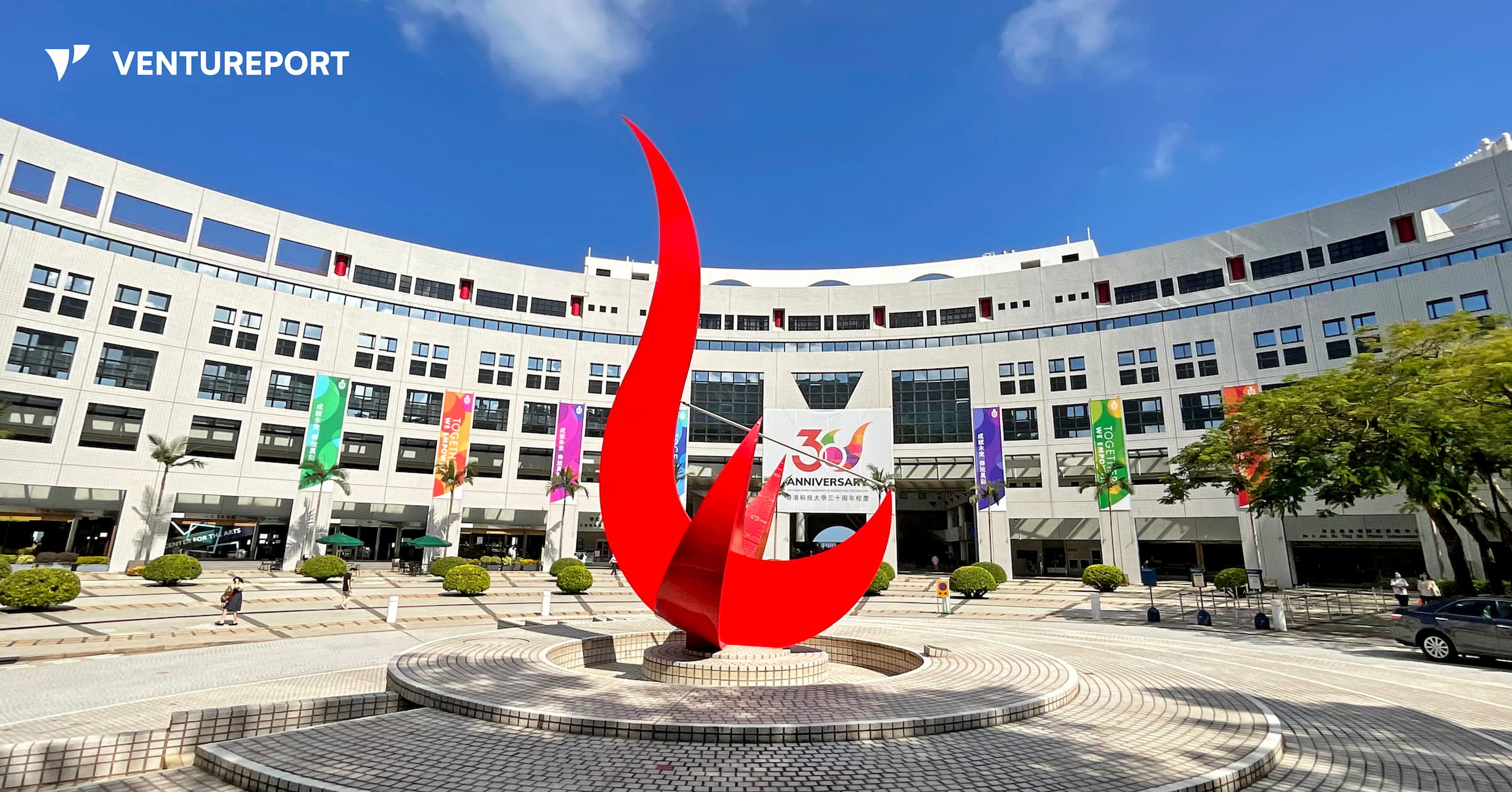
Entrance Piazza, Hong Kong University of Science and Technology. PHOTO: HKUST
The HKUST-Sino Million Dollar Entrepreneurship Competition 2026 will hold its finals on October 12, following a record 390 teams from 24 countries and regions taking part in this year's competition.
Jointly organised by the Hong Kong University of Science and Technology (HKUST) and Sino Group, the competition aims to give young entrepreneurs a platform to develop and present their ideas. Sino Group Deputy Chief Executive Officer Wong Wing-lung said the Group has partnered with HKUST for many years to support young talent and the development of innovation and technology in Hong Kong.
He said the competition gives young entrepreneurs a platform to showcase their creativity, exchange ideas and put their concepts into practice.
The international participation is reflected in the universities and regions represented this year. Participants include students from the University of Oxford in the UK, the University of Pennsylvania in the US and the National University of Singapore. Teams have also joined from Australia and South Africa.
After multiple rounds of assessment, 15 teams have advanced to the finals. Their projects cover health technology, generative AI, smart buildings, and green energy management. At the finals, the teams will present their solutions to a judging panel comprising venture capital investors, industry leaders and academic experts. They will compete for more than HK$1 million in prizes and awards.
The 2026 competition has also expanded the areas it recognises. Three new awards have been introduced this year: the Transformative AI Award, the NextGen Biotech Award and the Societal Influential Award. The competition will also continue to offer the Sustainability Impact Award. Together, the awards focus on areas ranging from emerging technologies to social and sustainability challenges.
The organisers are also adding new activities to help teams develop their ideas further. This year's programme includes pitching skills training, AI workshops, investor matching sessions and mentorship opportunities. The AI workshops will cover areas including generative AI and AI agents, while representatives from venture capital firms such as Gobi Partners and InnoAngel Fund have been invited to share insights on fundraising, product positioning and market expansion.
These activities are intended to help young entrepreneurs strengthen their business plans and presentation skills. They also give teams opportunities to explore technology commercialisation and potential market applications.
The competition will also launch the InnoBay 1M PLUS Program during the Grand Final. The programme will focus initially on Smart City Development and aims to connect HKUST start-ups and competition alumni with industry partners. It will also support potential proof-of-concept opportunities and help promising innovations move towards commercial adoption.
The Grand Final will also include an audience voting segment. Members of the public will be able to vote for the team they believe has the greatest potential and impact, with those who correctly vote for an eventual winning team entering a lucky draw.
For Wong, the competition is part of a broader effort to develop Hong Kong's innovation and technology talent. He noted that Hong Kong's first Five-Year Plan and latest Policy Address both highlight innovation, technology and talent development.
Prof. Tim Cheng Kwang-Ting, HKUST's Vice-President for Research and Development, said the competition has also served as a platform for aspiring entrepreneurs to connect with investors, understand market needs, test their ideas and gain practical entrepreneurial experience. He added that the competition has strengthened its training, mentorship and networking activities this year.
The Group believes that closer cooperation between industry, academia and research institutions can help turn innovative ideas into practical applications. Through the competition and its wider support programmes, young entrepreneurs are given opportunities to develop their ideas, connect with potential partners and explore how they can be taken from early concepts towards real-world applications.
Keep Reading
Can AI companions really help with our mental health?
Updated
January 8, 2026 6:35 PM

A laptop with the text "MENTAL HEALTH" displayed. PHOTO: PEXELS
As technology continues to weave itself into the fabric of our daily lives, it’s starting to play an unexpected role: supporting our mental health. AI companions—digital entities designed to hold natural, empathetic conversations—are emerging as a new frontier in emotional care. Unlike chatbots of the past, these AI companions leverage advanced algorithms and emotional intelligence to provide personalized support, making them more than just tools. They are companions in every sense of the word—always available, always listening, and always ready to offer comfort. But can AI companions truly help us feel better, or are they just another tech trend? Let’s dive into how these digital allies are reshaping mental health care and what their growing presence means for our emotional well-being.
Loneliness is often called an epidemic, with millions of people worldwide feeling isolated or disconnected. While human relationships are irreplaceable, AI companions offer a consistent and accessible alternative to combat feelings of loneliness.
These companions don’t just respond—they engage. They remember your preferences, ask follow-up questions, and adapt their conversations to your needs. Imagine having someone to talk to at any time of day, about anything on your mind, without fear of judgment. AI companions may not replace a human friend, but they can provide a sense of presence and connection that can be profoundly comforting.
In a world where reaching out to others can sometimes feel daunting, AI companions offer a simple solution: they’re always there. This consistency can help people feel less alone, fostering a sense of connection in an increasingly disconnected world.
We all experience moments of stress, sadness, or doubt, and having someone to turn to during those times can make all the difference. AI companions are designed with emotional intelligence, enabling them to recognize and respond to your feelings in real time.
Through sentiment analysis and adaptive learning, these companions can detect when you’re feeling low and tailor their responses to provide comfort. Whether it’s offering words of encouragement, suggesting self-care activities, or simply listening, they provide a safe space to process emotions.
Unlike traditional apps that focus on tracking habits or delivering generic advice, AI companions meet you where you are emotionally. This personalized approach can help users feel truly supported, even in their most challenging moments.
For many of us, expressing our thoughts and emotions openly can feel like a risk. Fear of judgment, misunderstanding, or even burdening others often holds us back. AI companions offer an alternative: a completely private, judgment-free space to share whatever is on your mind.
Talking things out—whether it’s frustrations from the day or deeper personal struggles—can be incredibly therapeutic. And with AI companions, there’s no need to worry about being misunderstood or dismissed. You can let your guard down, explore your feelings, and reflect on your experiences with total freedom.
This safe space for self-expression can be especially valuable for those who struggle to open up to others. It’s not about replacing human relationships but about having an outlet that’s always available and entirely focused on you.
Self-doubt is a common barrier to personal growth, and many of us battle negative self-talk daily. AI companions are programmed to combat this by offering positive reinforcement and encouragement.
For example, if you express doubt about your abilities, an AI companion might respond with affirmations like, “You’ve accomplished so much already—don’t forget how capable you are.” Over time, these small but meaningful interactions can help shift your mindset, replacing self-criticism with self-compassion.
This ability to mirror supportive, affirming conversations can build confidence and foster a more positive self-image. It’s a subtle but powerful way AI companions can contribute to emotional well-being.
AI companions are more than just a tech trend; they represent a new way of thinking about mental health care. By offering companionship, emotional support, safe spaces for self-expression, and tools for mindfulness, they empower users to take control of their well-being.
While they may not replace traditional methods of care, AI companions are making mental health support more accessible, immediate, and personalized. They’re a reminder that sometimes, the smallest interactions—an encouraging word, a moment of mindfulness, or a listening ear—can have the biggest impact.
As we embrace this new era of technology, one thing is clear: AI companions are not just about convenience. They’re about connection, support, and the potential to make emotional care a part of everyday life. And in a world that often feels disconnected, that’s something worth celebrating.