
From generative AI to green energy, 15 finalist teams will take the stage after a record 390 teams entered this year's competition.
Updated
October 2, 2026 9:13 AM
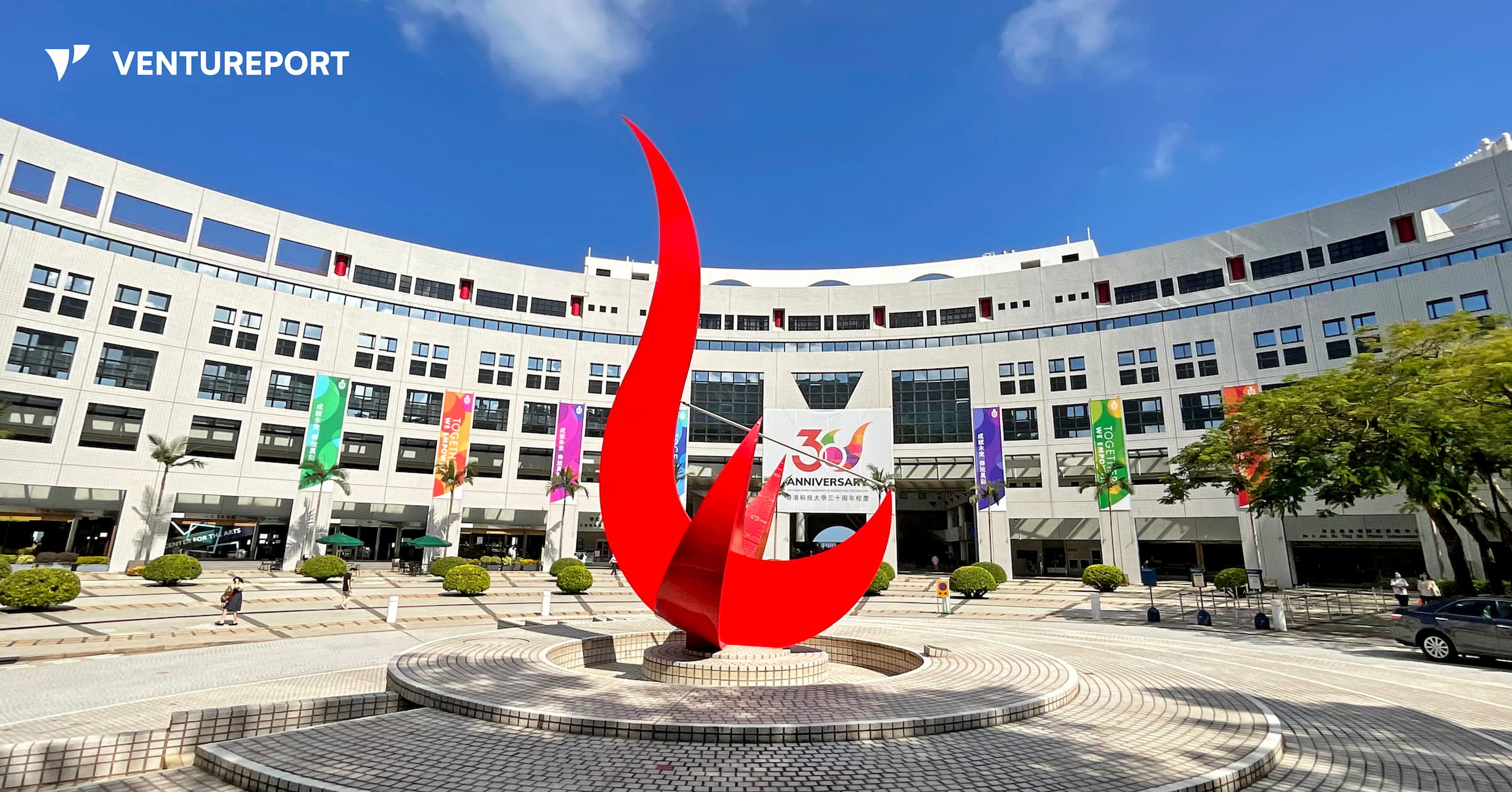
Entrance Piazza, Hong Kong University of Science and Technology. PHOTO: HKUST
The HKUST-Sino Million Dollar Entrepreneurship Competition 2026 will hold its finals on October 12, following a record 390 teams from 24 countries and regions taking part in this year's competition.
Jointly organised by the Hong Kong University of Science and Technology (HKUST) and Sino Group, the competition aims to give young entrepreneurs a platform to develop and present their ideas. Sino Group Deputy Chief Executive Officer Wong Wing-lung said the Group has partnered with HKUST for many years to support young talent and the development of innovation and technology in Hong Kong.
He said the competition gives young entrepreneurs a platform to showcase their creativity, exchange ideas and put their concepts into practice.
The international participation is reflected in the universities and regions represented this year. Participants include students from the University of Oxford in the UK, the University of Pennsylvania in the US and the National University of Singapore. Teams have also joined from Australia and South Africa.
After multiple rounds of assessment, 15 teams have advanced to the finals. Their projects cover health technology, generative AI, smart buildings, and green energy management. At the finals, the teams will present their solutions to a judging panel comprising venture capital investors, industry leaders and academic experts. They will compete for more than HK$1 million in prizes and awards.
The 2026 competition has also expanded the areas it recognises. Three new awards have been introduced this year: the Transformative AI Award, the NextGen Biotech Award and the Societal Influential Award. The competition will also continue to offer the Sustainability Impact Award. Together, the awards focus on areas ranging from emerging technologies to social and sustainability challenges.
The organisers are also adding new activities to help teams develop their ideas further. This year's programme includes pitching skills training, AI workshops, investor matching sessions and mentorship opportunities. The AI workshops will cover areas including generative AI and AI agents, while representatives from venture capital firms such as Gobi Partners and InnoAngel Fund have been invited to share insights on fundraising, product positioning and market expansion.
These activities are intended to help young entrepreneurs strengthen their business plans and presentation skills. They also give teams opportunities to explore technology commercialisation and potential market applications.
The competition will also launch the InnoBay 1M PLUS Program during the Grand Final. The programme will focus initially on Smart City Development and aims to connect HKUST start-ups and competition alumni with industry partners. It will also support potential proof-of-concept opportunities and help promising innovations move towards commercial adoption.
The Grand Final will also include an audience voting segment. Members of the public will be able to vote for the team they believe has the greatest potential and impact, with those who correctly vote for an eventual winning team entering a lucky draw.
For Wong, the competition is part of a broader effort to develop Hong Kong's innovation and technology talent. He noted that Hong Kong's first Five-Year Plan and latest Policy Address both highlight innovation, technology and talent development.
Prof. Tim Cheng Kwang-Ting, HKUST's Vice-President for Research and Development, said the competition has also served as a platform for aspiring entrepreneurs to connect with investors, understand market needs, test their ideas and gain practical entrepreneurial experience. He added that the competition has strengthened its training, mentorship and networking activities this year.
The Group believes that closer cooperation between industry, academia and research institutions can help turn innovative ideas into practical applications. Through the competition and its wider support programmes, young entrepreneurs are given opportunities to develop their ideas, connect with potential partners and explore how they can be taken from early concepts towards real-world applications.
Keep Reading
Tencent’s latest solution simplifies cross-border payments for Weixin users and merchants.
Updated
January 8, 2026 6:33 PM

Tencent's large penguin statue in front of a building. PHOTO: UNSPLASH
In a world where digital borders are fading faster than ever, Tencent is betting on familiarity. With the launch of TenPay Global Checkout, the company wants to make paying across countries feel as seamless as paying at home.
The new service, unveiled today, allows Weixin Mini Program merchants outside mainland China to accept a variety of local payment methods. That includes digital wallets, real-time payment networks and credit and debit cards, all through a single integration. The launch starts in Singapore and Macao SAR, where merchants can now take payments via PayNow, BOCPAY(MO), and major cards. Japan, Australia and New Zealand are next, with more regions to follow soon.
This rollout builds on the growing reach of Weixin Mini Programs, known internationally through WeChat. These small apps are built right into the platform, letting users' shop, book services and make payments without downloading separate apps. Today, there are over one million monthly active users in key overseas markets, with Mini Programs available across 92 countries and regions.
Yet, for many users abroad, paying within Mini Programs hasn’t always been simple. Foreign card restrictions, currency conversions and limited local options often made checkout a frustrating step. TenPay Global Checkout aims to change that.
“TenPay Global Checkout marks an important step in enhancing the local consumer experience. By enabling overseas Weixin Mini Program merchants to accept trusted and diversified local payment methods through one unified solution, users benefit from a more convenient and efficient payment experience. This helps merchants improve payment conversion rates, expand their user base and scale their businesses to serve a broader range of customers”, said Wenhui Yang, CEO of TenPay Global (Singapore).
What makes this move interesting isn’t just its technical simplicity—it’s the cultural bridge it builds. For users in Singapore or Japan, paying with PayNow or a local card inside Weixin feels less like an international transaction and more like an everyday purchase.
For merchants, it’s an invitation into a market that values convenience and trust. Payment familiarity, after all, often decides whether a user completes a purchase or abandons it at checkout.
The company remains focused on creating secure, connected and user-friendly payment experiences that help merchants grow and allow consumers to pay with confidence, wherever they are.
If successful, TenPay Global Checkout could quietly redefine how cross-border commerce feels—not like a transaction across regions, but a familiar tap, scan or click. In an increasingly global marketplace, that kind of familiarity might just be the next frontier in digital trust.