
Bambi Dang's startup aims to turn attendees' needs into useful connections
Updated
November 26, 2026 2:58 PM

Bambi Dang, CEO of FunFox AI, during a panel discussion. PHOTO: BAMBI DANG
An attendee list may show someone's name, company and job title, but it may not tell you what they are looking for or whether they would be relevant to you.
That leaves attendees figuring out who is relevant, searching through attendee profiles and sending meeting requests themselves.
FunFox AI is Bambi Dang's attempt to take some of that work off attendees' hands. The startup is an AI matchmaking agent for professional events and communities, designed to help people find relevant connections based on their professional goals.
The process begins when an event organiser creates a FunFox link for a particular event and shares it with attendees. Attendees can then speak with FunFox's voice AI agent or type to share who they are, what they are working on, what they hope to achieve and the kind of people they want to meet. Dang prefers the voice-based approach because a natural conversation allows users to share more context than they might through a traditional form or static profile.
FunFox uses this information to identify relevant people within the event or community. Rather than simply matching people based on their profiles, it looks at what each person is seeking and what they can offer in return, creating matches based on mutual relevance.
Dang's experience in the startup ecosystem helped shape the idea. She worked in sales and marketing at an early-stage startup in Helsinki and later built an education platform for students preparing to study abroad. Through building companies and communities, she says she repeatedly saw how much value could come from putting the right people together.
Event organisers and community managers are FunFox AI's paying customers. They pay an annual subscription based on the number of events they organise and the total number of attendees, while attendees can use the platform without an additional fee.
However, getting organisers on board is not always straightforward. Many already rely on established event-management platforms that handle registration, ticketing, agendas and speakers. Dang says some of these providers have multi-year agreements with organisers, making it harder for FunFox to introduce another tool into their existing workflows. The challenge at the moment is to show organisers why they need a dedicated matchmaking solution alongside the systems they already use.
The company is now moving beyond its initial pilot stage. Dang said the pilot events have been successful and FunFox is entering its first agreements with paying customers, including startup ecosystems. The team is also working with these customers to organise events together.
For now, her focus remains on developing the product and working closely with customers. She is open to exploring investor interest further when the time is right.
Keep Reading
Rethinking 3D modelling for a world that generates too much, too quickly.
Updated
January 8, 2026 6:32 PM
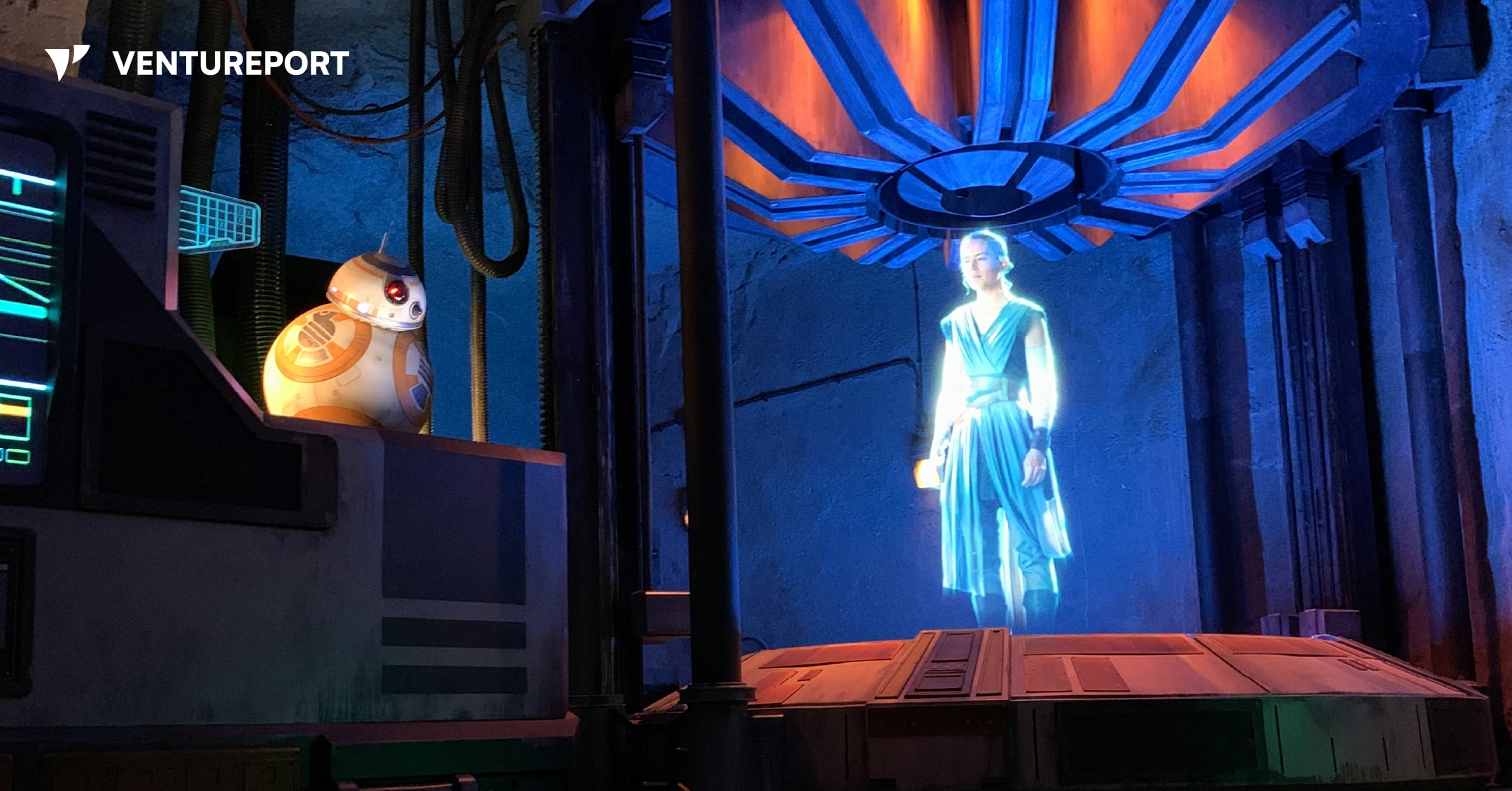
A hologram in the franchise Star Wars, in Walt Disney World Resort, Orlando. PHOTO: UNSPLASH
MicroCloud Hologram Inc. (NASDAQ: HOLO), a technology service provider recognized for its holography and imaging systems, is now expanding into a more advanced realm: a quantum-driven 3D intelligent model. The goal is to generate detailed 3D models and images with far less manual effort — a need that has only grown as industries flood the world with more visual data every year.
The concept is straightforward, even if the technology behind it isn’t. Traditional 3D modeling workflows are slow, fragmented and depend on large teams to clean datasets, train models, adjust parameters and fine-tune every output. HOLO is trying to close that gap by combining quantum computing with AI-powered 3D modeling, enabling the system to process massive datasets quickly and automatically produce high-precision 3D assets with much less human involvement.
To achieve this, the company developed a distributed architecture comprising of several specialized subsystems. One subsystem collects and cleans raw visual data from different sources. Another uses quantum deep learning to understand patterns in that data. A third converts the trained model into ready-to-use 3D assets based on user inputs. Additional modules manage visualization, secure data storage and system-wide protection — all supported by quantum-level encryption. Each subsystem runs in its own container and communicates through encrypted interfaces, allowing flexible upgrades and scaling without disrupting the entire system.
Why this matters: Industries ranging from gaming and film to manufacturing, simulation and digital twins are rapidly increasing their reliance on 3D content. The real bottleneck isn’t creativity — it’s time. Producing accurate, high-quality 3D assets still requires a huge amount of manual processing. HOLO’s approach attempts to lighten that workload by utilizing quantum tools to speed up data processing, model training, generation and scaling, while keeping user data secure.
According to the company, the system’s biggest advantages include its ability to handle massive datasets more efficiently, generate precise 3D models with fewer manual steps, and scale easily thanks to its modular, quantum-optimized design. Whether quantum computing will become a mainstream part of 3D production remains an open question. Still, the model shows how companies are beginning to rethink traditional 3D workflows as demand for high-quality digital content continues to surge.