
Bambi Dang's startup aims to turn attendees' needs into useful connections
Updated
November 26, 2026 2:58 PM

Bambi Dang, CEO of FunFox AI, during a panel discussion. PHOTO: BAMBI DANG
An attendee list may show someone's name, company and job title, but it may not tell you what they are looking for or whether they would be relevant to you.
That leaves attendees figuring out who is relevant, searching through attendee profiles and sending meeting requests themselves.
FunFox AI is Bambi Dang's attempt to take some of that work off attendees' hands. The startup is an AI matchmaking agent for professional events and communities, designed to help people find relevant connections based on their professional goals.
The process begins when an event organiser creates a FunFox link for a particular event and shares it with attendees. Attendees can then speak with FunFox's voice AI agent or type to share who they are, what they are working on, what they hope to achieve and the kind of people they want to meet. Dang prefers the voice-based approach because a natural conversation allows users to share more context than they might through a traditional form or static profile.
FunFox uses this information to identify relevant people within the event or community. Rather than simply matching people based on their profiles, it looks at what each person is seeking and what they can offer in return, creating matches based on mutual relevance.
Dang's experience in the startup ecosystem helped shape the idea. She worked in sales and marketing at an early-stage startup in Helsinki and later built an education platform for students preparing to study abroad. Through building companies and communities, she says she repeatedly saw how much value could come from putting the right people together.
Event organisers and community managers are FunFox AI's paying customers. They pay an annual subscription based on the number of events they organise and the total number of attendees, while attendees can use the platform without an additional fee.
However, getting organisers on board is not always straightforward. Many already rely on established event-management platforms that handle registration, ticketing, agendas and speakers. Dang says some of these providers have multi-year agreements with organisers, making it harder for FunFox to introduce another tool into their existing workflows. The challenge at the moment is to show organisers why they need a dedicated matchmaking solution alongside the systems they already use.
The company is now moving beyond its initial pilot stage. Dang said the pilot events have been successful and FunFox is entering its first agreements with paying customers, including startup ecosystems. The team is also working with these customers to organise events together.
For now, her focus remains on developing the product and working closely with customers. She is open to exploring investor interest further when the time is right.
Keep Reading
Examining the shift from fast answers to verified intelligence in enterprise AI.
Updated
January 8, 2026 6:33 PM
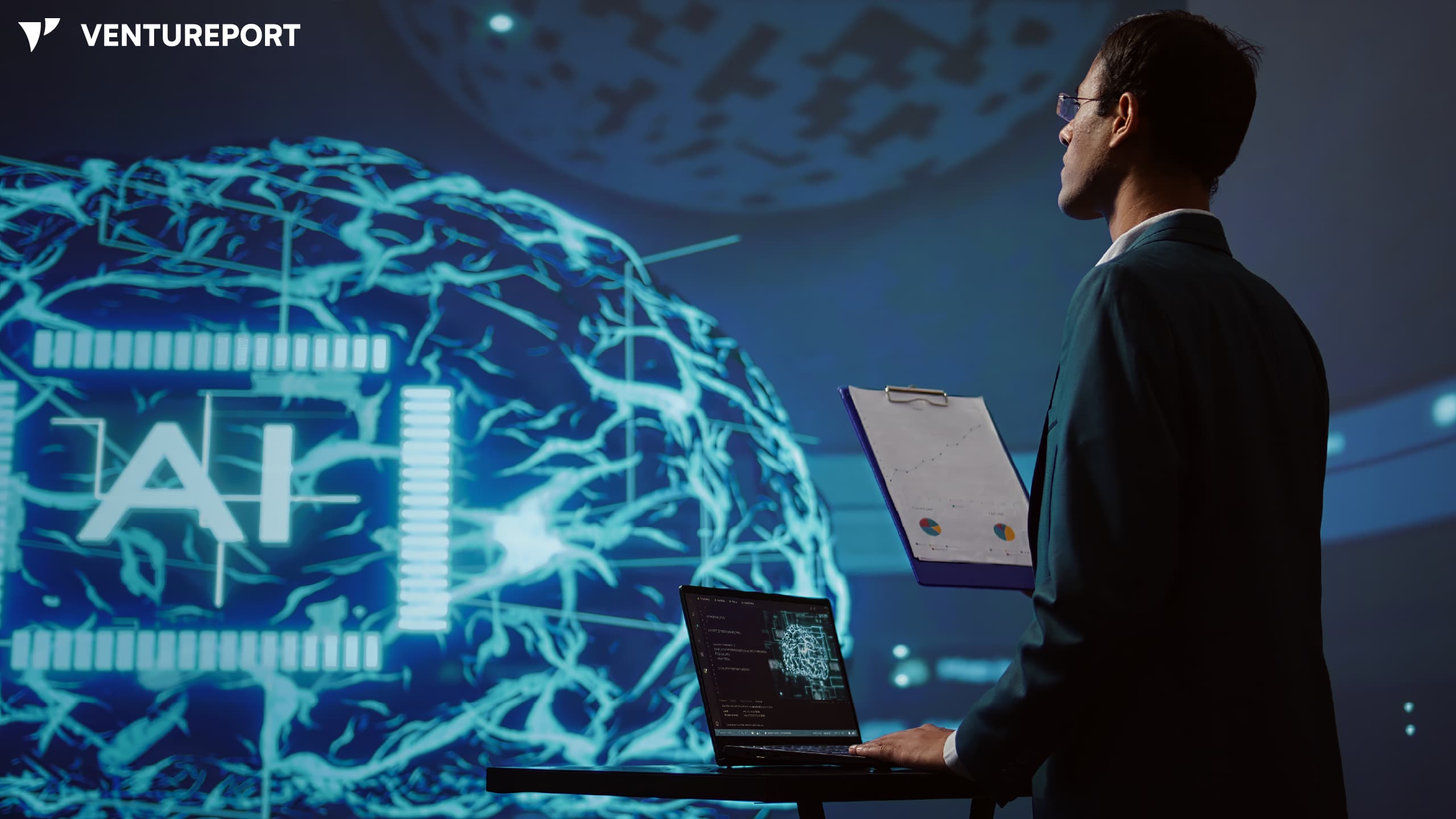
Startup employee reviewing business metrics on an AI-powered dashboard. PHOTO: FREEPIK
Neuron7.ai, a company that builds AI systems to help service teams resolve technical issues faster, has launched Neuro. It is a new kind of AI agent built for environments where accuracy matters more than speed. From manufacturing floors to hospital equipment rooms, Neuro is designed for situations where a wrong answer can halt operations.
What sets Neuro apart is its focus on reliability. Instead of relying solely on large language models that often produce confident but inaccurate responses, Neuro combines deterministic AI — which draws on verified, trusted data — with autonomous reasoning for more complex cases. This hybrid design helps the system provide context-aware resolutions without inventing answers or “hallucinating”, a common issue that has made many enterprises cautious about adopting agentic AI.
“Enterprise adoption of agentic AI has stalled despite massive vendor investment. Gartner predicts 40% of projects will be canceled by 2027 due to reliability concerns”, said Niken Patel, CEO and Co-Founder of Neuron7. “The root cause is hallucinations. In service operations, outcomes are binary. An issue is either resolved or it is not. Probabilistic AI that is right only 70% of the time fails 30% of your customers and that failure rate is unacceptable for mission-critical service”.
That concern shaped how Neuro was built. “We use deterministic guided fixes for known issues. No guessing, no hallucinations — and reserve autonomous AI reasoning for complex scenarios. What sets Neuro apart is knowing which mode to use. While competitors race to make agents more autonomous, we're focused on making service resolution more accurate and trusted”, Patel explained.
At the heart of Neuro is the Smart Resolution Hub, Neuron7’s central intelligence layer that consolidates service data, knowledge bases and troubleshooting workflows into one conversational experience. This means a technician can describe a problem — say, a diagnostic error in an MRI scanner — and Neuro can instantly generate a verified, step-by-step solution. If the problem hasn’t been encountered before, it can autonomously scan through thousands of internal and external data points to identify the most likely fix, all while maintaining traceability and compliance.
Neuro’s architecture also makes it practical for real-world use. It integrates seamlessly with enterprise systems such as Salesforce, Microsoft, ServiceNow and SAP, allowing companies to embed it within their existing support operations. Early users of Neuron7’s platform have reported measurable improvements — faster resolutions, higher customer satisfaction and reduced downtime — thanks to guided intelligence that scales expert-level problem solving across teams.
The timing of Neuro’s debut feels deliberate. As organizations look to move past the hype of generative AI, trust and accountability have become the new benchmarks. AI systems that can explain their reasoning and stay within verifiable boundaries are emerging as the next phase of enterprise adoption.
“The market has figured out how to build autonomous agents”, Patel said. “The unsolved problem is building accurate agents for contexts where errors have consequences. Neuro fills that gap”.
Neuron7 is building a system that knows its limits — one that reasons carefully, acts responsibly and earns trust where it matters most. In a space dominated by speculation, that discipline may well redefine what “intelligent” really means in enterprise AI.