
Why More Growth Companies Are Looking Beyond the Traditional IPO
Updated
August 10, 2026 5:56 PM
.jpg)
Enhanced Games at Resorts World Las Vegas. PHOTO: FACEBOOK@ENHANCEDGAMES
Enhanced Games reached the public markets in less than six months.
In an era where traditional IPOs can take more than a year to complete, the speed of the company’s merger with A Paradise Acquisition Corp. (NASDAQ: APAD) stands out, particularly given the significantly tighter regulatory scrutiny surrounding SPAC transactions since 2021.
The transaction highlights why some growth-stage companies are evaluating special-purpose acquisition companies (SPACs) as a viable alternative to the traditional IPO process.
Led by Dr. Aron D’Souza and backed by investors including Peter Thiel and Christian Angermayer, Enhanced Games announced its Business Combination Agreement with APAD in November 2025. The transaction closed in May 2026, bringing the company to the public markets materially faster than the timeline typically associated with a conventional IPO.
For decades, the traditional IPO has been considered the default route for private companies entering the public markets. But for many high-growth businesses today, the process has become increasingly slow, expensive, and difficult to execute efficiently.
A conventional IPO can take well over a year to prepare, involving extensive audits, regulatory reviews, underwriter coordination, investor roadshows, and careful timing against market conditions. During that period, companies remain exposed to volatility, shifting investor sentiment, and delayed access to capital. According to EY, many companies postponed planned IPOs amid market volatility and uncertainty surrounding U.S. tariff announcements, highlighting how sensitive IPO execution can be to broader market conditions.
For businesses operating in fast-moving industries, timing matters. Delayed access to liquidity can slow expansion, hiring, acquisitions, partnerships, and product development at critical stages of growth.
That is one reason why the merger between Enhanced Games and APAD is notable. The SPAC structure allowed Enhanced Games to negotiate valuation, governance terms, and financing arrangements early in the process, compressing many of the steps normally associated with a conventional IPO into a single transaction.
Enhanced Games operates across sports, media, performance science, and wellness, sectors that require significant upfront investment and rapid execution. Earlier access to public capital provided the company with liquidity, visibility, and strategic flexibility at an important stage of growth.
The public listing also gives the company tradable equity that can potentially support acquisitions, partnerships, athlete compensation structures, sponsorship arrangements, and future fundraising initiatives. These capabilities are particularly relevant in industries evolving as rapidly as sports entertainment, wellness, and human-performance science, where speed itself can become a competitive advantage.
The deal also highlights one of the SPAC market’s core advantages: the ability to combine capital raising and public-market entry within a single process.
Beyond speed, the SPAC structure offered Enhanced Games another major advantage: earlier visibility into valuation.
In a traditional IPO, pricing is largely determined near the end of the process through institutional book-building and investor demand during the roadshow phase. Even late-stage IPO candidates can face valuation cuts, downsized offerings, or postponed listings if market conditions weaken.
Recent IPO markets have repeatedly demonstrated this risk. Instacart went public in 2023 at an approximate US$9.9 billion valuation, which is dramatically below the US$39 billion private valuation it achieved during the 2021 market peak. Similarly, WeWork’s failed IPO attempt became one of the clearest examples of how rapidly investor sentiment can shift during the IPO process.
SPAC mergers operate differently.
Enhanced Games secured an implied enterprise valuation of approximately US$1.2 billion months before closing the transaction. While the merger still required SEC review and shareholder approval, the company gained significantly greater visibility into deal economics much earlier in the process.
That certainty is particularly valuable for growth companies whose valuations are tied more closely to long-term platform potential than near-term profitability.
Rather than relying entirely on shifting IPO market sentiment, the SPAC structure allowed Enhanced Games to negotiate around its broader growth strategy and future expansion plans from the outset.
The Enhanced Games transaction also reinforces why some growth-stage companies evaluate SPACs as an alternative to the traditional IPO process.
Traditional IPO investors often prefer businesses with long operating histories, stable earnings, and predictable growth profiles. Many expansion-stage companies simply do not fit that model yet, even if their long-term opportunities are substantial.
SPACs offer a different pathway.
Instead of waiting years to achieve the operational maturity typically expected in a conventional IPO, companies can access public-market capital earlier while still in growth mode.
For Enhanced Games, early access to the public markets provides more than capital. Public equity can support acquisitions, partnerships, athlete compensation structures, sponsorship arrangements, and future fundraising efforts. These capabilities are particularly important in sectors evolving as rapidly as sports entertainment, wellness, and human-performance science, where speed itself can become a competitive advantage.
The transaction also highlights how the SPAC market has evolved since the speculative boom of 2020 and 2021.
Today’s de-SPAC environment operates under significantly tighter regulatory scrutiny, including enhanced disclosure requirements, greater SEC oversight, and stricter treatment of projections and liability standards.
The Harvard Law School Forum on Corporate Governance noted that redemption rates spiked in 2022, in some cases approaching 100%, contributing to a significant slowdown of the SPAC activity.
In response to rising investor concerns and regulatory pressure, the U.S. Securities and Exchange Commission adopted enhanced SPAC disclosure and liability rules in 2024 designed to align de-SPAC transactions more closely with traditional IPO standards. Sponsors also faced greater pressure to demonstrate financing certainty, stronger disclosures, and more credible post-merger execution.
Enhanced Games completed its transaction within this more disciplined environment.
Its Form S-4 included audited financial statements, governance disclosures, transaction details, and extensive risk-factor analysis subject to SEC review. The company also supplemented SPAC trust proceeds with a separately arranged US$40 million PIPE financing commitment designed to strengthen liquidity and improve deal certainty.
That structure reflects a more institutional and disciplined SPAC market than the speculative wave seen several years ago.
The Enhanced Games transaction demonstrates that, despite tighter regulation and a far more selective market environment, SPACs can offer certain growth companies a practical alternative to the traditional IPO.
For businesses prioritising speed, capital access, and execution certainty, a well-structured de-SPAC transaction may provide a more efficient route to the public markets, particularly when supported by credible financing, disciplined structuring, and strong investor backing.
Keep Reading
At under US$1,000, Hypernova isn’t just eyewear—it’s Meta’s push to make AR feel ordinary.
Updated
January 8, 2026 6:34 PM
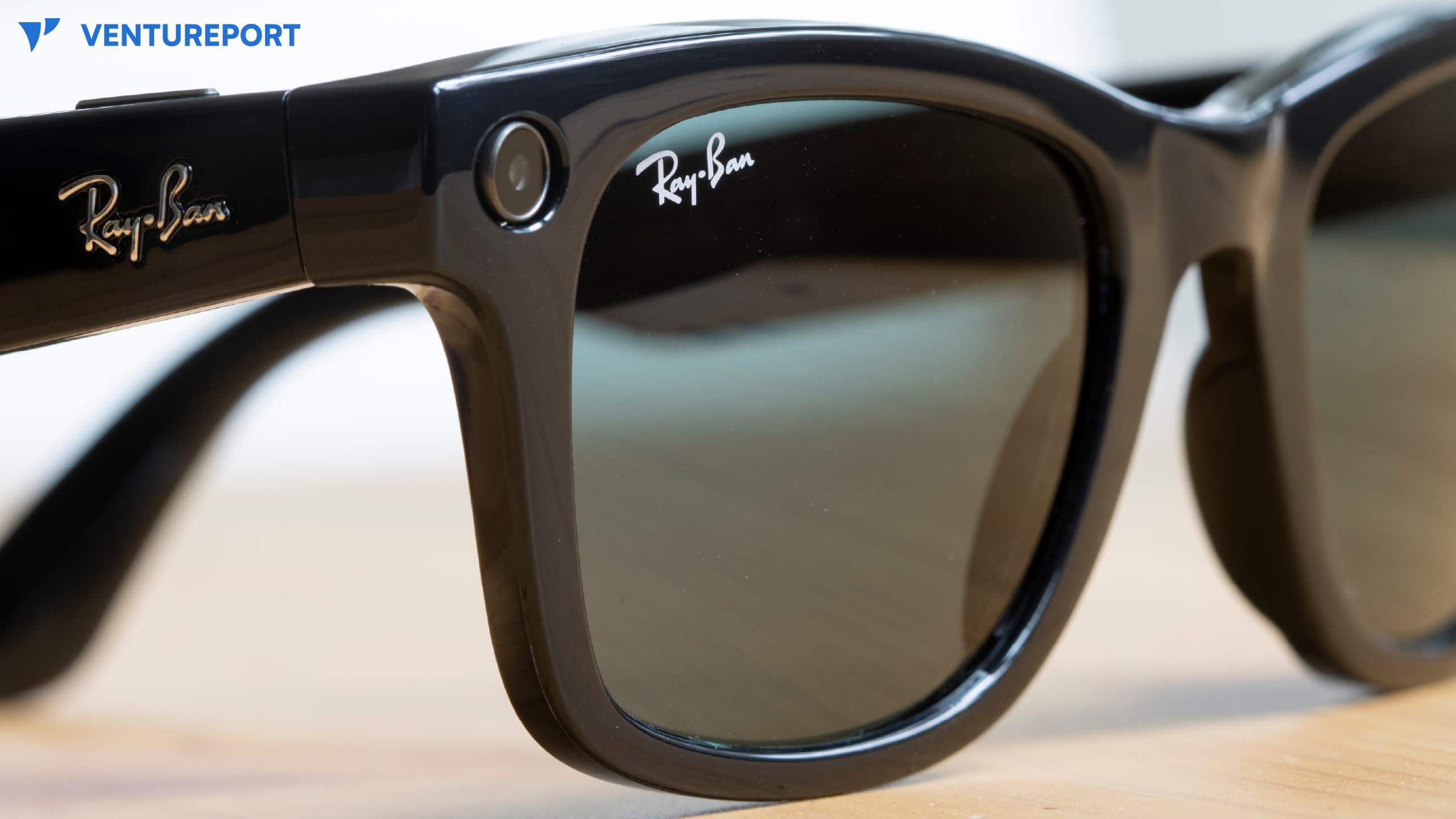
Closeup of the Ray-Ban logo and the built-in ultra-wide 12 MP camera on a pair of new Ray-Ban Meta Wayfarer smart glasses. PHOTO: ADOBE STOCK
Meta is preparing to launch its next big wearable: the Hypernova smart glasses. Unlike earlier experiments like the Ray-Ban Stories, these new glasses promise more advanced features at a price point under US$1,000. With a launch set for September 17 at Meta’s annual Connect conference, the Hypernova is already drawing attention for blending design, technology and accessibility.
In this article, let’s take a closer look at Hypernova’s design, features, pricing and the challenges Meta faces as it tries to bring smart glasses into everyday life.
Meta’s earlier Ray-Ban glasses offered cameras and audio but no display. Hypernova changes that: The glasses will ship with a built-in micro-display, giving wearers quick access to maps, messages, notifications and even Meta’s AI assistant. It’s a step toward everyday AR that feels useful and natural, not experimental.
Perhaps most importantly, the price makes them attainable. While early estimates placed the cost above US$1,000, Meta has committed to a launch price of around US$800. That’s still premium, but it moves AR smart glasses into reach for more consumers.
Hypernova weighs about 70 grams, roughly 20 grams heavier than the Ray-Ban Meta models. The added weight likely comes from added components like the new display and extra sensors.
To keep the glasses stylish, Meta continues its partnership with EssilorLuxottica, the company behind Ray-Ban and Prada eyewear. Thicker frames—especially Prada’s designs—help hide the hardware like chips, microphones and batteries without making the glasses look oversized.
The glasses stick close to the classic Ray-Ban silhouette but feature slightly bulkier arms. On the left side, a touch-sensitive bar lets users control functions with taps and swipes. For example, a two-finger tap can trigger a photo or start video recording.
Hypernova introduces something the earlier Ray-Ban glasses never had: a display built right into the lens. In the bottom-right corner of the right lens, a small micro-screen uses waveguide optics to project a digital overlay with about a 20° field of view. This means you can glance at turn-by-turn directions, check a notification or quickly consult Meta’s AI assistant without pulling out your phone. It’s discreet, practical and a major step up from the older models, which were limited to capturing photos and videos, handling calls and playing music via speakers.
Alongside the glasses comes the Ceres wristband, a companion device powered by electromyography (EMG). The band picks up the tiny electrical signals in your wrist and fingers, translating them into commands. A pinch might let you select something, a wrist flick could scroll a page, and a swipe could move between screens. The idea is to avoid clunky buttons or having to talk to your glasses in public. Meta has also been experimenting with handwriting recognition through the band, though it’s not clear if that feature will be ready in time for launch.
Meta doesn’t just want Hypernova to be useful—it wants it to be fun. Code found in leaked firmware revealed a small game called Hypertrail. It looks to borrow ideas from the 1981 arcade shooter Galaga, letting wearers play a simple, retro-inspired game right through their glasses. It’s not the main attraction, but it shows Meta is trying to make Hypernova feel more like a playful everyday gadget rather than just a piece of serious tech.
Hypernova runs on a customized version of Android and pairs with smartphones through the Meta View app. Out of the box, it should support the basics: calls, music and message notifications. Leaks suggest several apps will come preinstalled, including Camera, Gallery, Maps, WhatsApp, Messenger and Meta AI. A Qualcomm processor powers the whole setup, helping it run smoothly while keeping energy demands reasonable.
Meta is also trying to bring in outside developers. In August 2025, CNBC reported that the company invited third-party developers—especially in generative AI—to build experimental apps for Hypernova and the Ceres wristband. The Meta Connect 2025 agenda even highlights sessions on a new smart glasses SDK and toolkit. The push shows Meta’s interest in making Hypernova more than just a device; it wants a broader platform with apps that go beyond its own first-party software.
During development, Hypernova was rumored to cost as much as US$1,400. By pricing it around US$800, Meta signals that it wants adoption more than profit. The company is keeping production limited (around 150,000 units), showing it sees this as a market test rather than a mass rollout. Still, the sub-US$1,000 price tag makes advanced AR far more accessible than before.
Despite its promise, Hypernova may still face hurdles. The Ceres wristband can struggle if worn loosely, and some testers have reported issues based on which arm it’s worn on or even when wearing long sleeves. In short, getting EMG input right for everyone will be critical.
Privacy is another major concern. In past experiments, researchers hacked Ray-Ban Meta glasses to run facial recognition, instantly identifying strangers and pulling personal info. Meta has added guidelines, like a recording indicator light, but critics argue these measures are too easy to ignore. Moreover, data captured by smart glasses can feed into AI training, raising questions about consent and surveillance.
The Meta Hypernova smart glasses mark a turning point in wearable tech. They’re lighter and more stylish than bulky AR headsets, while offering real-world features like navigation, messaging and hands-free control. At under US$1,000, they aim to make AR glasses more than a luxury gadget—they’re a step toward everyday use.
Whether Hypernova succeeds will depend on how well it balances style, usability and privacy. But one thing is clear: Meta is betting that always-on, glanceable AR can move from science fiction to daily life.