
Why More Growth Companies Are Looking Beyond the Traditional IPO
Updated
August 10, 2026 5:56 PM
.jpg)
Enhanced Games at Resorts World Las Vegas. PHOTO: FACEBOOK@ENHANCEDGAMES
Enhanced Games reached the public markets in less than six months.
In an era where traditional IPOs can take more than a year to complete, the speed of the company’s merger with A Paradise Acquisition Corp. (NASDAQ: APAD) stands out, particularly given the significantly tighter regulatory scrutiny surrounding SPAC transactions since 2021.
The transaction highlights why some growth-stage companies are evaluating special-purpose acquisition companies (SPACs) as a viable alternative to the traditional IPO process.
Led by Dr. Aron D’Souza and backed by investors including Peter Thiel and Christian Angermayer, Enhanced Games announced its Business Combination Agreement with APAD in November 2025. The transaction closed in May 2026, bringing the company to the public markets materially faster than the timeline typically associated with a conventional IPO.
For decades, the traditional IPO has been considered the default route for private companies entering the public markets. But for many high-growth businesses today, the process has become increasingly slow, expensive, and difficult to execute efficiently.
A conventional IPO can take well over a year to prepare, involving extensive audits, regulatory reviews, underwriter coordination, investor roadshows, and careful timing against market conditions. During that period, companies remain exposed to volatility, shifting investor sentiment, and delayed access to capital. According to EY, many companies postponed planned IPOs amid market volatility and uncertainty surrounding U.S. tariff announcements, highlighting how sensitive IPO execution can be to broader market conditions.
For businesses operating in fast-moving industries, timing matters. Delayed access to liquidity can slow expansion, hiring, acquisitions, partnerships, and product development at critical stages of growth.
That is one reason why the merger between Enhanced Games and APAD is notable. The SPAC structure allowed Enhanced Games to negotiate valuation, governance terms, and financing arrangements early in the process, compressing many of the steps normally associated with a conventional IPO into a single transaction.
Enhanced Games operates across sports, media, performance science, and wellness, sectors that require significant upfront investment and rapid execution. Earlier access to public capital provided the company with liquidity, visibility, and strategic flexibility at an important stage of growth.
The public listing also gives the company tradable equity that can potentially support acquisitions, partnerships, athlete compensation structures, sponsorship arrangements, and future fundraising initiatives. These capabilities are particularly relevant in industries evolving as rapidly as sports entertainment, wellness, and human-performance science, where speed itself can become a competitive advantage.
The deal also highlights one of the SPAC market’s core advantages: the ability to combine capital raising and public-market entry within a single process.
Beyond speed, the SPAC structure offered Enhanced Games another major advantage: earlier visibility into valuation.
In a traditional IPO, pricing is largely determined near the end of the process through institutional book-building and investor demand during the roadshow phase. Even late-stage IPO candidates can face valuation cuts, downsized offerings, or postponed listings if market conditions weaken.
Recent IPO markets have repeatedly demonstrated this risk. Instacart went public in 2023 at an approximate US$9.9 billion valuation, which is dramatically below the US$39 billion private valuation it achieved during the 2021 market peak. Similarly, WeWork’s failed IPO attempt became one of the clearest examples of how rapidly investor sentiment can shift during the IPO process.
SPAC mergers operate differently.
Enhanced Games secured an implied enterprise valuation of approximately US$1.2 billion months before closing the transaction. While the merger still required SEC review and shareholder approval, the company gained significantly greater visibility into deal economics much earlier in the process.
That certainty is particularly valuable for growth companies whose valuations are tied more closely to long-term platform potential than near-term profitability.
Rather than relying entirely on shifting IPO market sentiment, the SPAC structure allowed Enhanced Games to negotiate around its broader growth strategy and future expansion plans from the outset.
The Enhanced Games transaction also reinforces why some growth-stage companies evaluate SPACs as an alternative to the traditional IPO process.
Traditional IPO investors often prefer businesses with long operating histories, stable earnings, and predictable growth profiles. Many expansion-stage companies simply do not fit that model yet, even if their long-term opportunities are substantial.
SPACs offer a different pathway.
Instead of waiting years to achieve the operational maturity typically expected in a conventional IPO, companies can access public-market capital earlier while still in growth mode.
For Enhanced Games, early access to the public markets provides more than capital. Public equity can support acquisitions, partnerships, athlete compensation structures, sponsorship arrangements, and future fundraising efforts. These capabilities are particularly important in sectors evolving as rapidly as sports entertainment, wellness, and human-performance science, where speed itself can become a competitive advantage.
The transaction also highlights how the SPAC market has evolved since the speculative boom of 2020 and 2021.
Today’s de-SPAC environment operates under significantly tighter regulatory scrutiny, including enhanced disclosure requirements, greater SEC oversight, and stricter treatment of projections and liability standards.
The Harvard Law School Forum on Corporate Governance noted that redemption rates spiked in 2022, in some cases approaching 100%, contributing to a significant slowdown of the SPAC activity.
In response to rising investor concerns and regulatory pressure, the U.S. Securities and Exchange Commission adopted enhanced SPAC disclosure and liability rules in 2024 designed to align de-SPAC transactions more closely with traditional IPO standards. Sponsors also faced greater pressure to demonstrate financing certainty, stronger disclosures, and more credible post-merger execution.
Enhanced Games completed its transaction within this more disciplined environment.
Its Form S-4 included audited financial statements, governance disclosures, transaction details, and extensive risk-factor analysis subject to SEC review. The company also supplemented SPAC trust proceeds with a separately arranged US$40 million PIPE financing commitment designed to strengthen liquidity and improve deal certainty.
That structure reflects a more institutional and disciplined SPAC market than the speculative wave seen several years ago.
The Enhanced Games transaction demonstrates that, despite tighter regulation and a far more selective market environment, SPACs can offer certain growth companies a practical alternative to the traditional IPO.
For businesses prioritising speed, capital access, and execution certainty, a well-structured de-SPAC transaction may provide a more efficient route to the public markets, particularly when supported by credible financing, disciplined structuring, and strong investor backing.
Keep Reading
Cyberport Venture Capital Forum (CVCF) 2025 Returns Under the Theme "The Innovation–Venture Nexus: Igniting Transformative Success"
Updated
January 8, 2026 6:34 PM
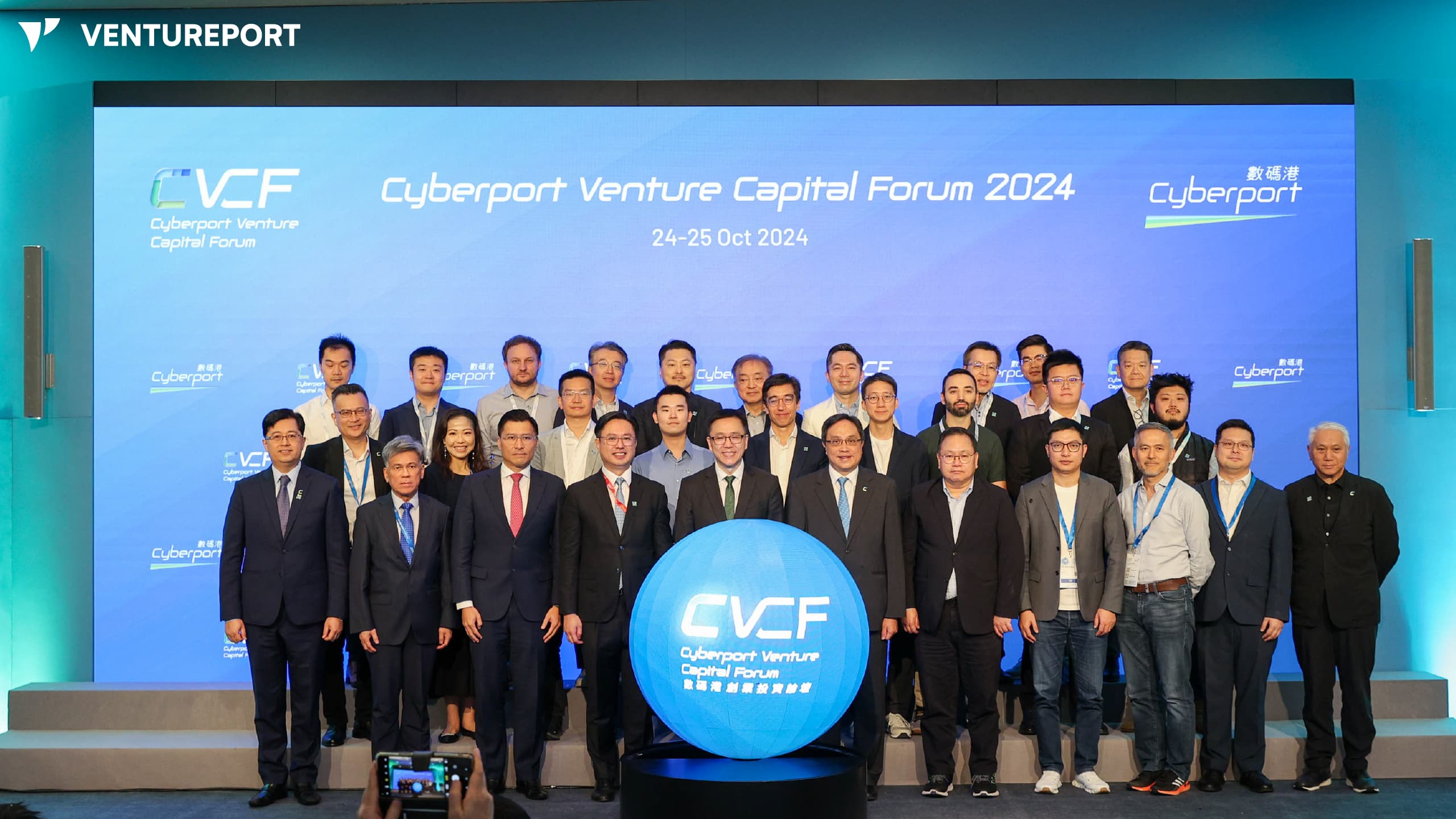
As the venture capital world recalibrates amid global uncertainty, Cyberport Venture Capital Forum (CVCF) 2025 returns on November 6-7 under the theme “The Innovation–Venture Nexus: Igniting Transformative Success”. PHOTO: CYBERPORT
The two-day forum will once again bring together global and local leaders to explore how technology, capital and collaboration intersect to drive the next wave of growth. Entrepreneurs, investors and innovators will exchange insights on artificial intelligence, digital assets and Web 3.0—technologies that are reshaping industries and redefining both risk and opportunity.
As industries face challenges from geopolitical shifts, regulatory changes and market volatility, CVCF will serve as a platform to address a defining question: How can innovation remain bold and visionary in an ever-evolving funding landscape? Through keynotes, panel discussions and interactive sessions, the forum will spotlight the transformative potential of technologies like artificial intelligence (AI), Web 3.0 and digital assets while offering practical strategies to turn disruption into market advantage.
With investor matching, power pitches, start-up clinics and workshops, CVCF 2025 offers a front-row seat to emerging markets across Asia, the Middle East, the United States and Europe, connecting forward-thinking investors with visionary entrepreneurs. It is not just a conference—it’s a bridge between ideas and investment designed to ignite breakthroughs and foster growth in the global innovation ecosystem. It provides a unique platform for startups and investors to navigate the complexities of today’s economy while seizing new opportunities for collaboration and growth.
To preview the conversations ahead, three speakers share perspectives on trends shaping the future of innovation, investment and entrepreneurship, setting the stage for the discussions that will unfold at CVCF 2025.

Co-founder and CEO, AIFT
Session: Riding the Middle East Momentum — Capitalizing Unique Innovation and Investment Strengths
As the Middle East accelerates its shift from oil dependence toward digital diversification, the region is becoming a focal point for blockchain and AI investment. In his upcoming session, Alvin Kwock will explore the region’s innovation potential — and here, he shares some of his views on the opportunities shaping that transformation.
Alvin Kwock, co-founder and CEO of AIFT, oversees operations across three verticals: AI and cybersecurity (Vulcan and Cymetrics), blockchain (OneInfinity and OneSavie) and pet and B2C (OneDegree). With local operations spanning Asia and the Middle East, AIFT is expanding rapidly.
When asked about the Middle East’s rapid rise as a global innovation hub, Kwock said that the region is shifting from a petroleum-dependent economy to one increasingly diversified through technology and innovation, with markets advancing blockchain and AI technologies. AIFT is prioritizing expansion in the UAE and Saudi Arabia, where AI investment and regulatory openness create immense potential. Hong Kong’s expertise in financial risk management acts as a “confidence anchor” for international markets, allowing AIFT to deliver compliant solutions tailored for emerging markets while developing Sharia-compliant, regulation-aligned technologies.
“Hong Kong’s storied expertise in financial risk management acts as a ‘confidence anchor’ for international markets.”
He also noted that the region’s accelerating digital adoption opens unique opportunities for AI, insurtech and fintech. The UAE and Bahrain’ embrace of virtual assets, combined with Hong Kong’s proven frameworks, provide a foundation for localized solutions. By integrating risk oversight and regulatory best practices, AIFT supports stable market growth and delivers specialized insurance to enhance resilience in emerging markets.
On managing geopolitical risk, Kwock explained that AIFT mitigates exposure through local partnerships, regulatory alignment and cultural understanding. By hiring Arab employees and ensuring operations align with Islamic values, AIFT strengthens Hong Kong–Middle East collaboration. This approach, he said, offers a blueprint for startups: prioritize local engagement and flexibility to balance risk and growth.
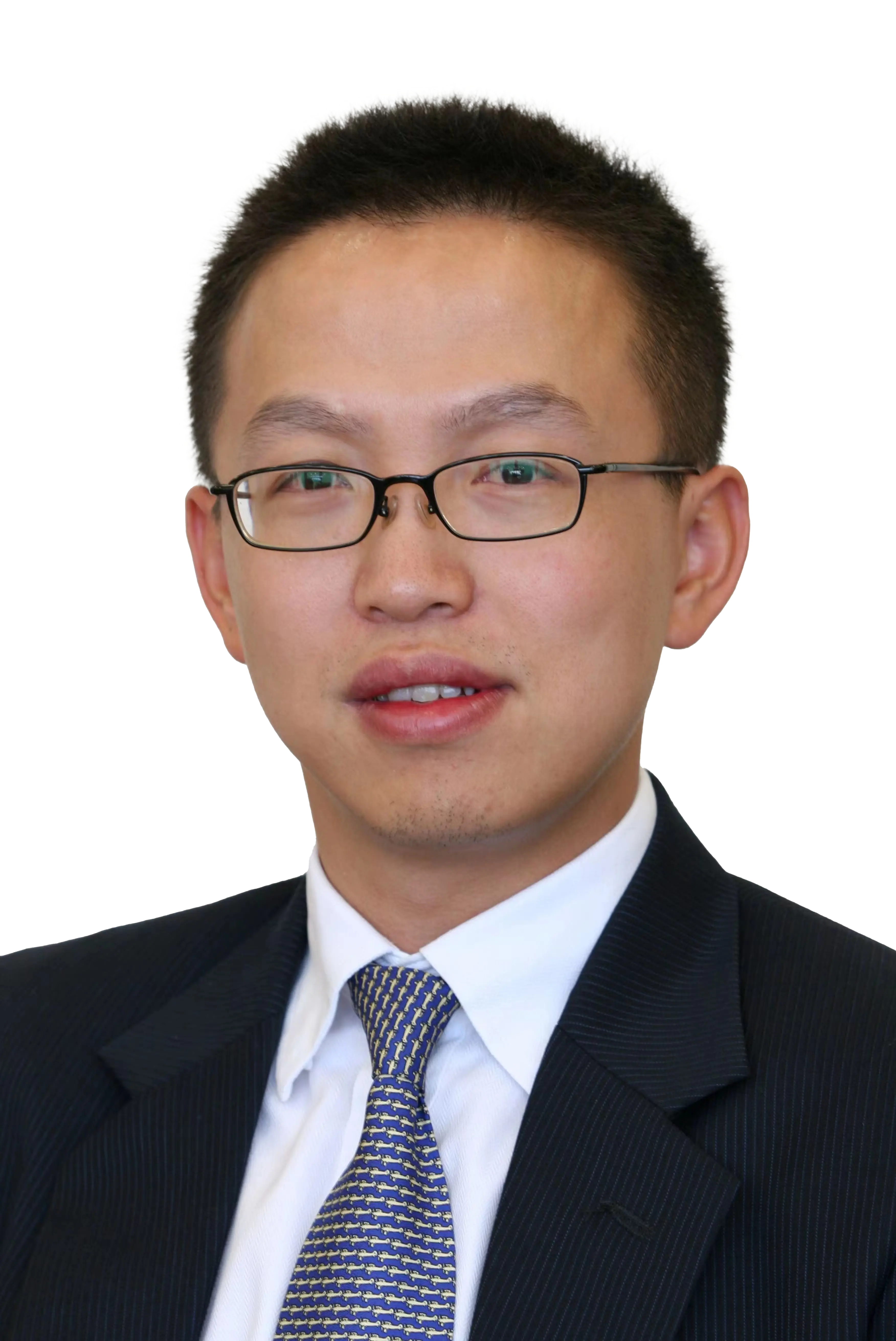
Founder, Hash Global Advisory Company Ltd.
Session: From Hype to Holdings — Where Smart Money Goes in Digital Assets 2025–2027
With institutional frameworks for Web 3.0 maturing, investors are increasingly focused on sustainable value creation. In his session, Kang Shen will discuss how smart capital is moving beyond speculation toward real-world utility—themes echoed in his reflections shared ahead of the forum.
Kang Shen, founder of Hash Global Advisory, applies value-investing principles to the Web 3.0 sector. A graduate of Fudan University and the University of Chicago Booth School of Business and a Chartered Financial Analyst (CFA), Shen has more than 20 years of financial industry experience with roles at the Industrial Bank of Japan, PIMCO and Bosera Asset Management.
On the tokenization of real-world assets, Shen observed that the RWA sector remains in its early phase of regulatory and infrastructure development. Over the next two years, as compliance systems mature, scalable projects with tangible value will emerge. For now, his approach remains cautious, focusing on fundamentals rather than inflated market narratives.
He also shared his optimism for three areas with the most potential upside: Web 3.0 Culture and Entertainment—including projects like Meet48 and Offgrid; Web 3.0 E-Commerce and Payments—with ventures such as WSPN, RD Technologies and Bitgoods; and On-Chain Data and Data Assets—such as Chainbase and Data Dance Chain. These, he noted, represent meaningful real-world applications of Web 3.0 technologies.
“Web 3.0 is currently undergoing a process of value realignment.”
Shen emphasized that Hash Global has always been committed to applying value-investing principles to the field of digital asset management. As early as 2019, the firm proposed using a monetary equation framework to evaluate ecosystem tokens and recently defined a new class—“Value-Functional Tokens”. He believes Web 3.0 is now undergoing a process of value realignment, where genuine utility will determine long-term worth.

Founder and CEO, Zhejiang Linctex Digital Technology Co., Ltd. (Style3D)
Session: Strategic Exits — IPO Paths for Expanding Rapid-Growth Companies
The fashion and textile industry is undergoing rapid digital transformation. Against this backdrop, Eric Liu will join CVCF 2025 to discuss strategic growth and expansion paths for fast-scaling companies.
Eric Liu, founder and CEO of Zhejiang Linctex Digital Technology Co., Ltd. (Style3D), holds dual master’s degrees in applied computing and molecular biology from VUB University in Belgium and a PhD in Electronic Information Engineering from Zhejiang University. A serial entrepreneur in the textile industry, Liu founded Style3D to drive digital transformation through AI and 3D technology.
He explained that Style3D’s fusion of AI and 3D technology builds a full-chain digital ecosystem. AI-driven design tools powered by large language models shorten design cycles from weeks to hours, while 3D simulation reduces prototyping costs by 30 percent. The company’s self-developed simulation engine supports virtual fashion shows and sustainability initiatives by optimizing fabric usage.
“Style3D’s fusion of AI and 3D technology builds a full-chain digital ecosystem.”
On the company’s origins, Liu said that traditional fashion R&D cycles are slow and costly. By integrating AI for pattern generation and 3D for design-to-production links, Style3D overcomes these barriers. With over 200 core patents and an extensive database of 2.3 million fabric properties and 1.2 million garment templates, the company leads digital fashion innovation.
Looking ahead, Liu noted that Style3D reinvests 40 percent of annual revenue into R&D, develops AI-driven trend prediction tools and expands innovation hubs in Paris and Milan. By leading the standardization of “3D Digital Fashion Infrastructure”, Style3D is setting the industry benchmark for the next era of intelligent manufacturing.
As global innovators prepare to gather at CVCF 2025, the forum promises to ignite ideas, discoveries and partnerships that will shape the future of technology and investment. From cutting-edge insights to practical strategies, the conversations starting here are just the beginning of a journey to redefine what’s possible in the global innovation ecosystem.
.jpg)