
A new approach examines how individual cells respond to drugs, aiming to identify risks earlier in development.
Updated
August 10, 2026 5:56 PM

Close up of a capsule blister pack. PHOTO: UNSPLASH
DeepCyte, a startup in the drug development space, is focusing on a long-standing problem: why drugs that appear safe in early testing still fail in clinical trials or are withdrawn later due to toxicity. DeepCyte has launched with US$1.5 million in seed funding to build tools that detect and explain the harmful effects of drugs at much earlier stages.
The startup’s approach focuses on how individual cells respond to a drug. Instead of analysing cells in bulk, it studies them one by one. This helps capture differences in how cells react, which are often missed in traditional testing methods.
Drug toxicity remains one of the main reasons for failure in drug development. Methods such as animal testing and bulk cell analysis do not always reflect how human cells behave. This gap has pushed the industry to look for more reliable and human-relevant ways to test drug safety.
DeepCyte combines cell-level data with artificial intelligence. Its platform, MetaCore, studies what is happening inside individual cells by capturing detailed molecular information. This data is used to build large datasets that can train AI models.
Additionally, the company has developed an AI system called DeeImmuno. It is designed to predict whether a drug could be toxic and identify the biological reasons behind it. In internal testing on 100 drugs, the system identified different types of toxicity and their underlying mechanisms with a reported accuracy of 94 percent.
The focus on explaining why a drug is toxic, not just whether it is, reflects a broader shift in the industry. Regulators such as the U.S. Food and Drug Administration and the European Medicines Agency have been encouraging methods that rely more on human cell data and clearer biological evidence. The seed funding will be used to develop and scale these tools. The company aims to help drug developers make earlier decisions, which could reduce costly failures in later stages. Whether tools like this become widely used will depend on how they perform in real-world settings. For now, DeepCyte’s approach highlights a growing effort to make drug testing more precise by focusing on how drugs affect cells at the most detailed level.
Keep Reading
The collaboration between Oversonic Robotics and STMicroelectronics highlights how robotics is beginning to fill gaps traditional automation cannot.
Updated
January 23, 2026 10:41 AM
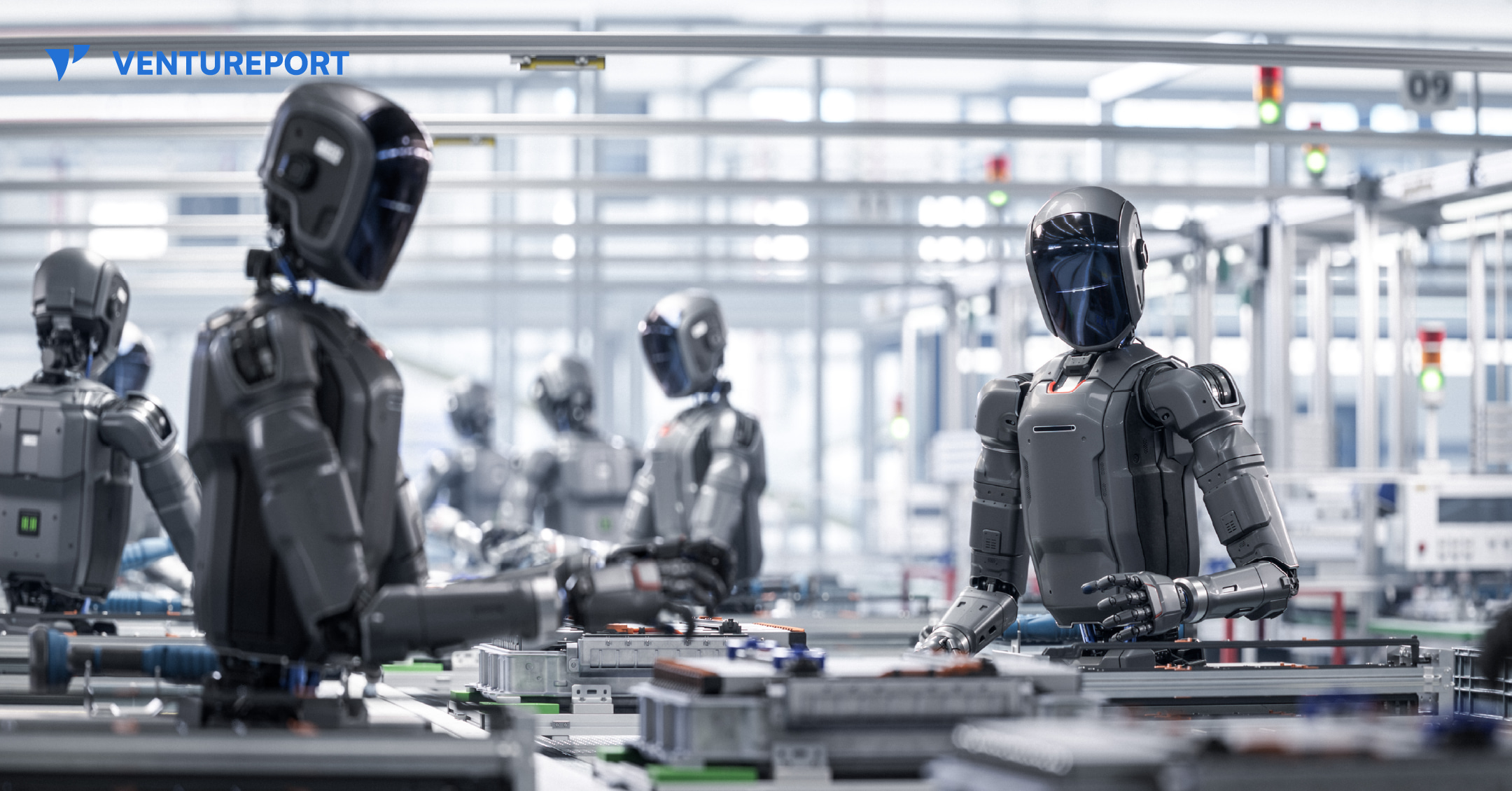
3D render of humanoid robots working in a factory assembly line. PHOTO: ADOBE STOCK
Oversonic Robotics, an Italian company known for building cognitive humanoid robots, has signed an agreement with STMicroelectronics, one of the world’s largest semiconductor manufacturers, to deploy humanoid robots inside semiconductor plants.
According to the companies, this is the first time cognitive humanoid robots will be used operationally inside semiconductor manufacturing facilities. And the first deployment has already taken place at ST’s advanced packaging and test plant in Malta.
At the center of the collaboration is RoBee, Oversonic’s humanoid robot. RoBee is designed to carry out support tasks within industrial environments, particularly where flexibility and interaction with human workers are required. In ST’s factories, the robots will assist with complex manufacturing and logistics flows linked to new semiconductor products. They are intended to work alongside existing automation systems, not replace them.
RoBee is notable for its ability to operate in environments shared with people. It is currently the only humanoid robot certified for use in both industrial and healthcare settings and is already in operation within several Italian companies. The robot is also being used in experimental hospital programs. That background helped position RoBee for deployment in tightly controlled manufacturing environments such as semiconductor plants.
Fabio Puglia, President of Oversonic Robotics, described the agreement as a milestone for deploying humanoid robots in complex industrial settings: “The partnership with STMicroelectronics is a great source of pride for us because it embodies the vision of cognitive robotics that Oversonic has brought to the industrial and healthcare markets. Being the first to introduce cognitive humanoid robots in a sophisticated production context such as semiconductors means measuring ourselves against the highest standards in terms of reliability, safety and operational continuity. This agreement represents a fundamental milestone for Oversonic and, more generally, for the industrial challenges these new machines are called to face in innovative and highly complex environments, alongside people and supporting their quality of work”.
From STMicroelectronics’ side, the use of humanoid robots is framed as part of a broader effort to manage growing manufacturing complexity. he company said RoBee will support complex tasks and help manage the intricate production flows required by newer semiconductor products. It is also expected to contribute to improved product quality and shorter manufacturing cycle times. The robots are designed to integrate with existing automation and software systems, helping improve safety and operational continuity.
In semiconductor manufacturing, precision and reliability leave little room for experimentation. Therefore, introducing humanoid robots into this environment signals a practical shift. It shows how robotics is starting to fill gaps that traditional automation has struggled to address.