
Join us at CVCF 2026 to explore how startups can scale and win in the age of AI.
Updated
October 28, 2026 6:18 PM

CVCF 2026 takes place on 4–5 November at Cyberport, Hong Kong. IMAGE: CYBERPORT
AI can help you build a startup, but it won’t automatically make you stand out. When everyone has access to similar tools, you need to give customers a reason to choose you and investors a reason to back you. So, how do you turn innovation into a competitive edge?
That question sits at the heart of Cyberport Venture & Capital Forum (CVCF) 2026, taking place on 4–5 November under the theme “Scaling in a Changing World: Winning the Next Competitive Cycle” and the message “Scale Up & Win.”
The two-day forum will feature more than 80 speakers discussing venture investment, AI-driven growth, emerging technologies and expansion into new markets. Day 1 will explore global investment trends and the next wave of innovation. Day 2 will feature CVCF 2026’s spotlight event, the Agentic Economy Summit, examining how agentic AI and digital assets could reshape business and finance. The wider programme will also include investor matching, founder pitches, 100+ Innovator Showcase, startup workshops and clinics.
With founders and investors navigating a fast-changing technology landscape, CVCF 2026 will explore what it takes to stay competitive, scale into new markets and turn emerging opportunities into business growth. Here’s a look at the key programmes lined up for this year’s forum.
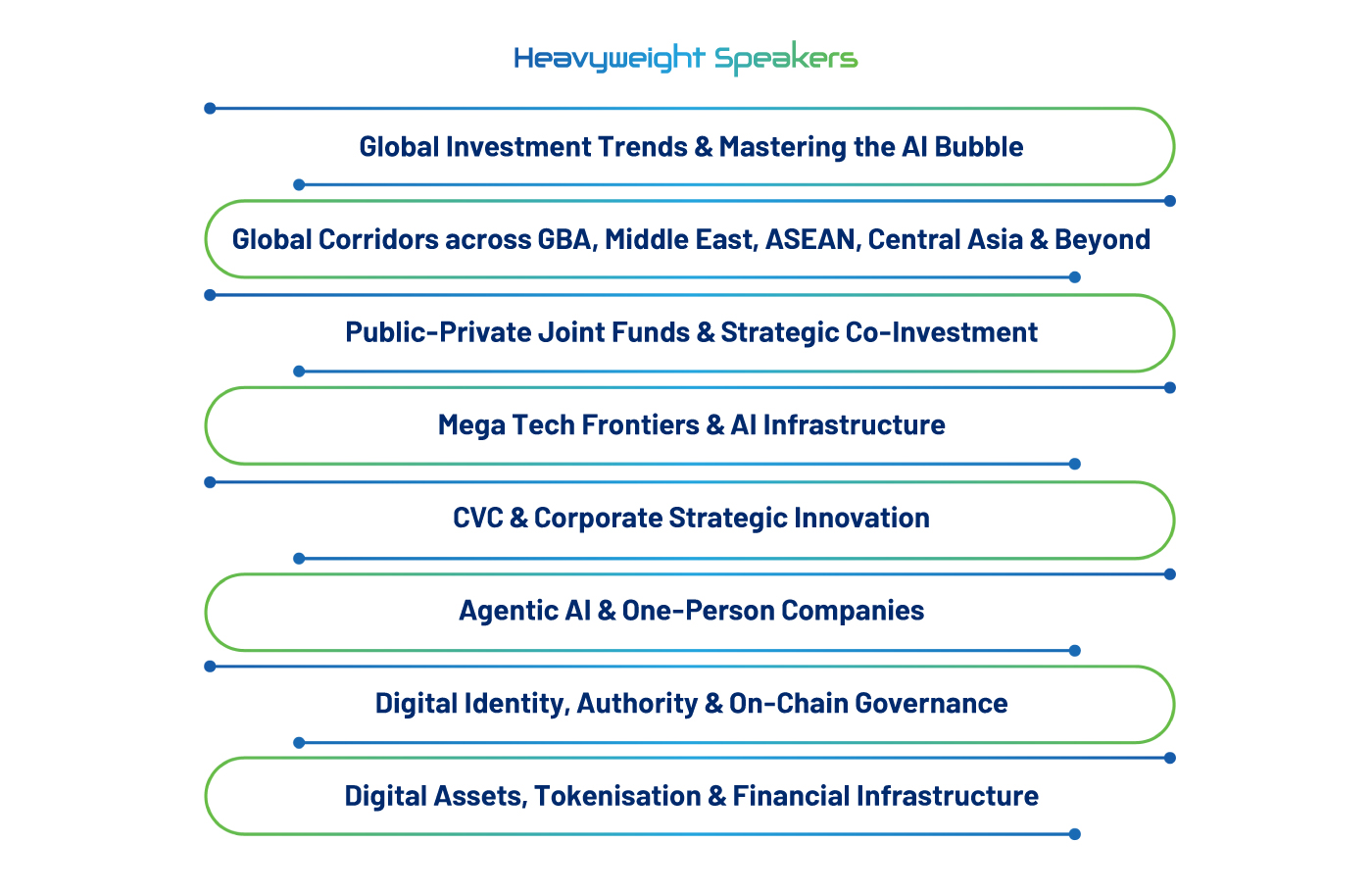
CVCF 2026 will explore investment trends, global expansion, AI and digital assets. IMAGE: CYBERPORT
Keynotes and Panels: Finding the Next Big Opportunity
Taara founder and CEO Mahesh Krishnaswamy will deliver the keynote The Innovation Playbook: Capitalizing on Moonshots and Faster Cycles in the Age of AI. The wider Day 1 programme will cover global investment trends, expansion into new markets, agentic AI and one-person companies.
For startups navigating the AI market, the panel Mastering the AI Bubble: Capital Rerouting and How Global Champions Stand Out will bring together panellists from Quona Capital, Alumni Ventures, FOV Ventures and Capital6 to discuss how investors assess startups and distinguish commercial potential from market hype. Other sessions will explore emerging technologies beyond AI software, including embodied AI, advanced computing and commercial aerospace.
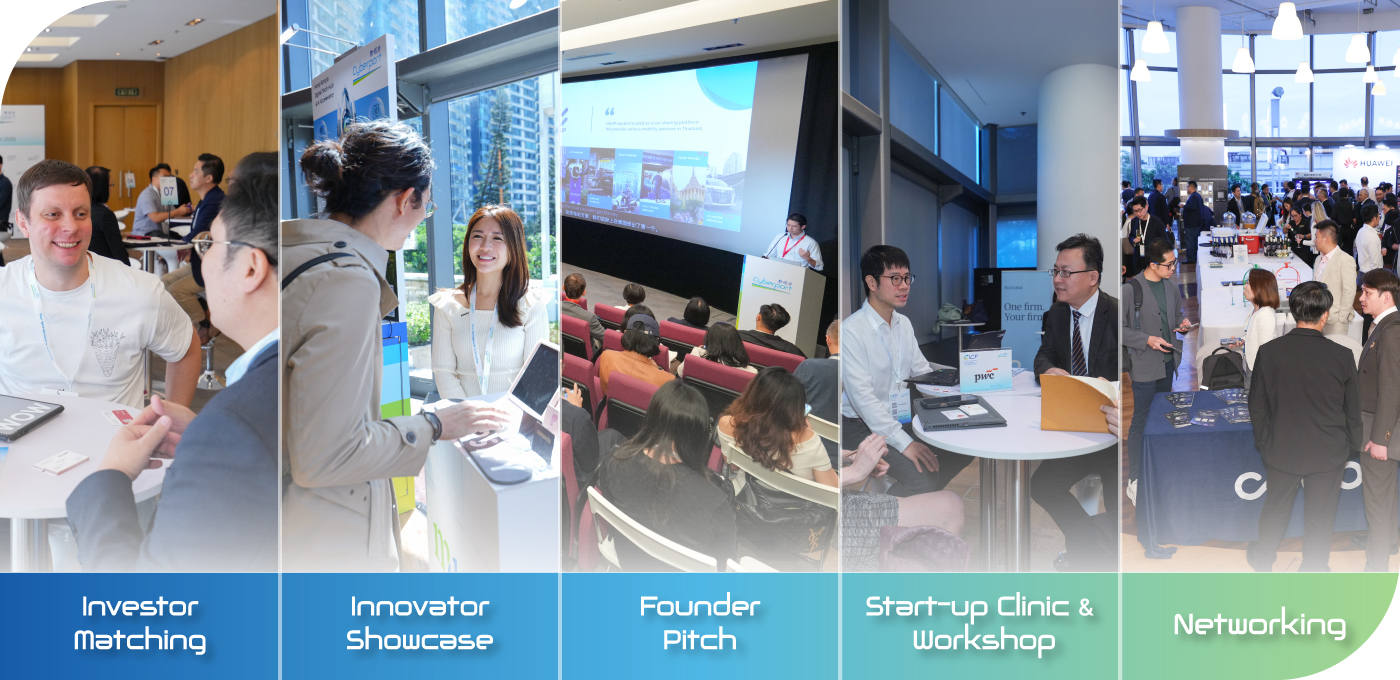
Investor Matching and Networking: Connecting with Capital
Away from the conference sessions, MatchEasy will help founders and investors arrange one-to-one meetings, either onsite or online. Confirmed participants will receive access to the platform to explore potential matches and schedule meetings.
Investors can also discover local and international startups through the Founder Pitch programme, where entrepreneurs present their projects and ventures. Meanwhile, the Innovator Showcase offers a separate opportunity to explore emerging technology solutions through a virtual platform and selected on-site exhibits.
For founders seeking more tailored guidance, the Startup Clinics will offer one-to-one discussions with industry experts and experienced entrepreneurs on business challenges, fundraising and growth. Advance registration is required.
Hands-On Workshops: Strengthening Your Investment Pitch
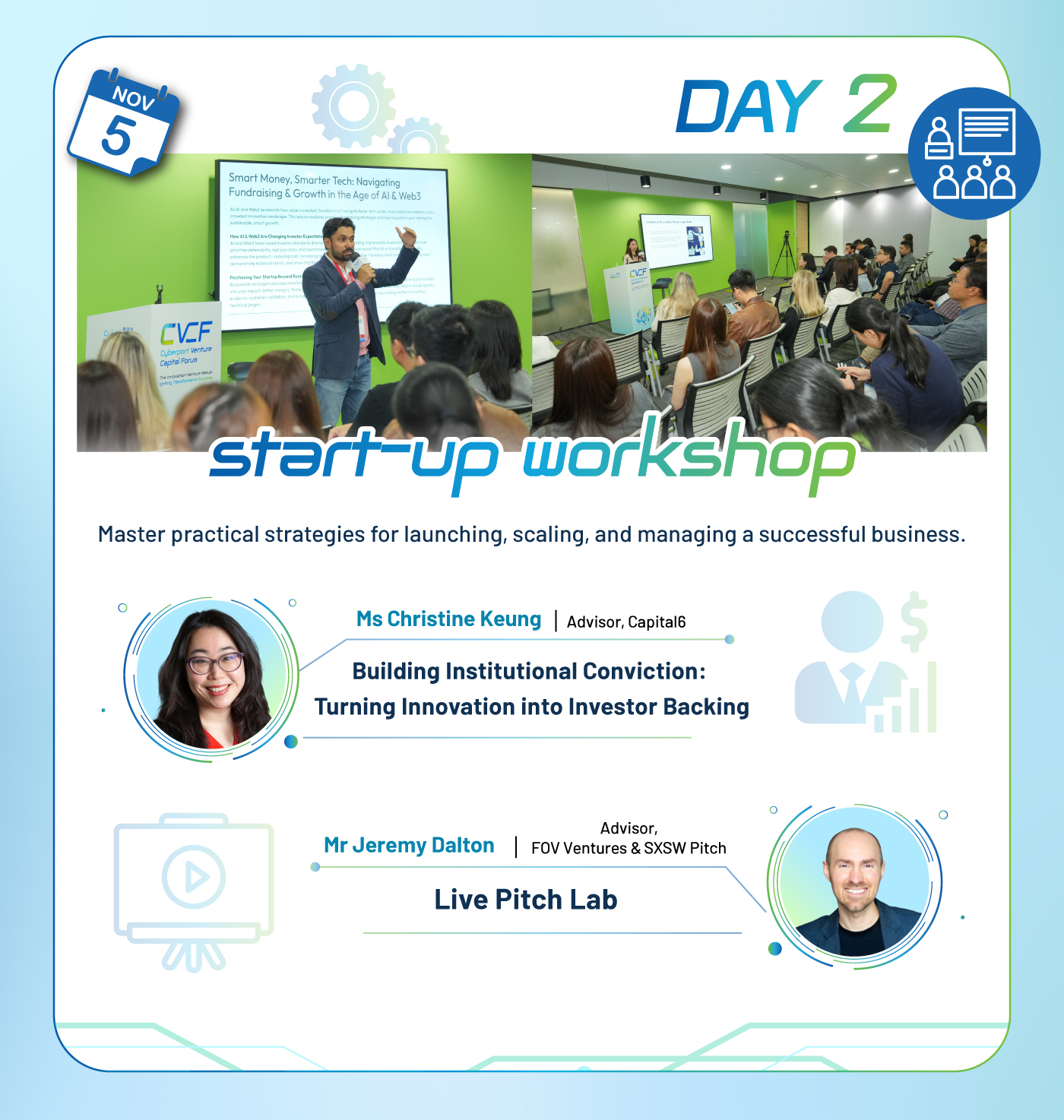
Turning an innovative idea into a business that investors can back takes more than a strong pitch. CVCF 2026 will host practical workshops to help founders strengthen their fundraising strategies and make a stronger case to investors.
Led by Capital6 advisor Christine Keung, one workshop will explore how founders can align technical innovation with business goals, communicate their product’s value and prepare for fundraising. Another, led by Jeremy Dalton, advisor at FOV Ventures and SXSW Pitch, will help founders understand how investors assess startups, with opportunities to pitch live and receive direct feedback.

CVCF 2026’s spotlight event, the Agentic Economy Summit, will take place on 5 November under the theme “Intelligent Frontiers, Tokenised Horizons: Where Agentic AI Reshapes Business and Digital Assets Redefine How Value Moves.”
The summit will bring together technology and finance leaders to explore how agentic AI and digital assets could change the way businesses operate. Wolf Ruzicka, chief commercial officer at Unlimit, a global payments company, will discuss building and scaling agentic AI applications. Dr Feng Xiao, chairman and CEO of HashKey Group, will examine how digital identity, tokenised assets and money connect on-chain.
The discussions will also look at agent-led commerce, including how AI agents could help customers choose products and make purchases, and the payment systems needed to support these transactions. Other topics include Hong Kong dollar stablecoins and their potential role in payments and settlement, as well as the rise of one-person companies. The summit will also explore how founders can use AI agents to run their businesses with smaller teams, find customers and generate recurring revenue.
From AI-driven growth and cross-border investment to agentic AI and digital assets, CVCF 2026 brings together the people and ideas shaping the next phase of business. Whether you're preparing to raise capital, exploring new markets or assessing emerging technologies, the forum offers an opportunity to gain fresh perspectives and connect with investors, founders and industry leaders.
Exclusive for Ventureport readers: Use the promotional code cvcf26vp to access a Full Access Pass for HK$300, subject to confirmation of the offer by the organiser.
Date: 4–5 November 2026
Function Rooms, Level 3, Core E, Cyberport 3, Hong Kong
Keep Reading
An interview with Tengin founder Madhu on turning coconuts into a business built around farmers, villages and communities.
Updated
August 10, 2026 5:56 PM

Workers of Tengin. PHOTO: TENGIN
In Southern India, coconuts are part of daily life. They are used in food, rituals, farming and home remedies. For Tengin, a social startup whose name means “coconut” in Kannada—a South Indian language—the crop also offers a way to build a rural business with deeper local impact.
Founded by Madhu Kargunda in 2017, Tengin works with farmers, artisans and women’s collectives in Karnataka to make products from almost every part of the coconut. Its range includes virgin coconut oil, desiccated coconut powder, shell-based handicrafts, candles, home décor items and other coconut-based goods.
The larger idea is simple. Farmers should play a bigger role in the value created from the crops they grow. Tengin is trying to help rural communities move beyond supplying raw produce and take part in processing, branding, packaging and sales.
Madhu grew up in an agricultural family. Over the years, he saw many young people move away from farming to look for stable jobs in cities. To him, the problem was not farming itself. The bigger issue was that farmers often missed out on the value created after crops left the farm.
A coconut might be grown in a village, but much of the income comes later through processing, branding and retail. That gap stayed with him, eventually leading him to leave his eight-year career in IT and return to agriculture full-time.
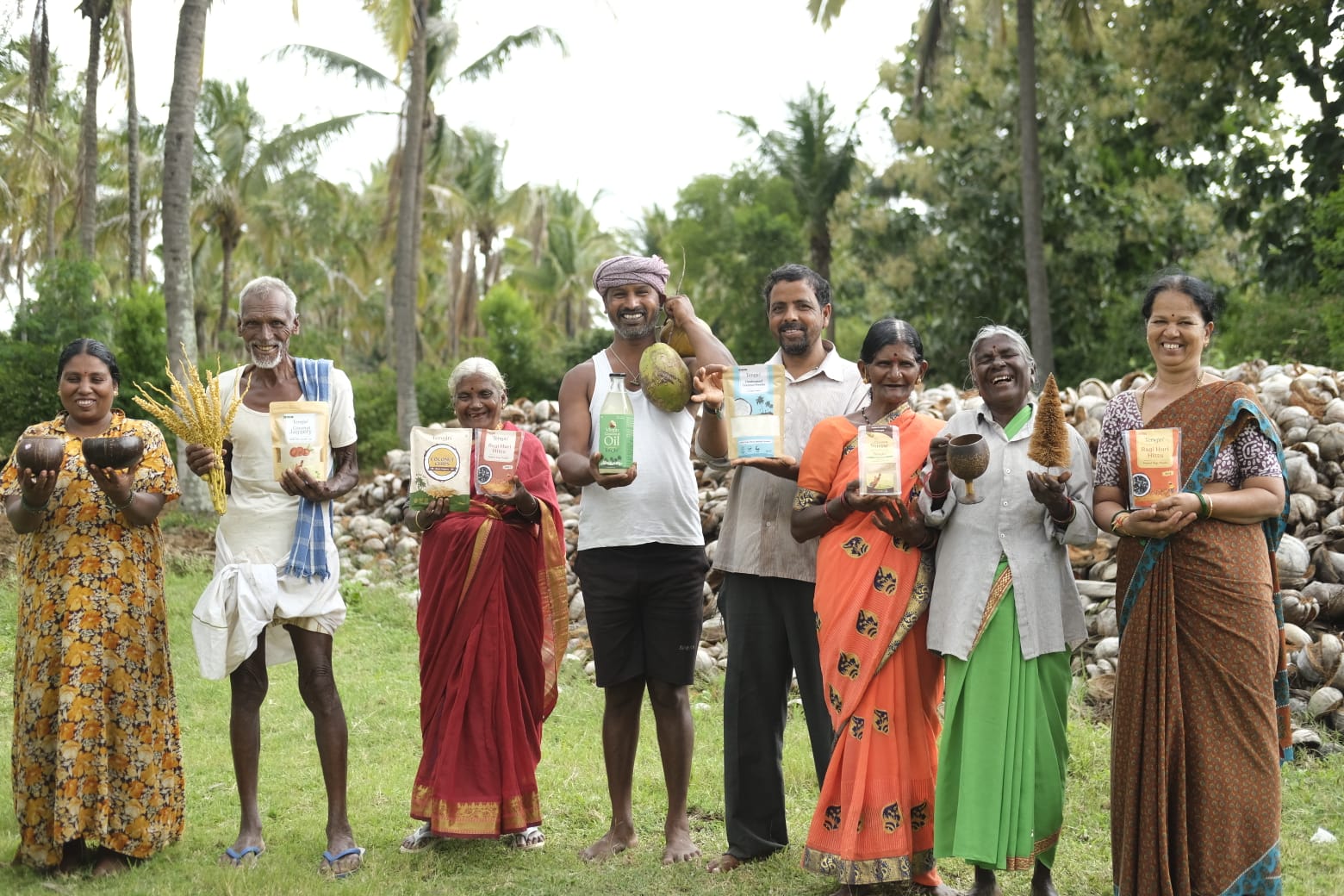
Started with just making virgin coconut oil, Tengin has grown into a wider coconut products business. The startup is now working with around 15 to 20 farmers and artisan groups across Karnataka. It is also building production capacity for larger retail and B2B partnerships.
Today, Tengin generates annual revenue of roughly ₹50-60 lakh, or around US$52,000 to US$62,000. It has also started testing international demand, including a recent export of around 200 kilograms of desiccated coconut powder to Texas.
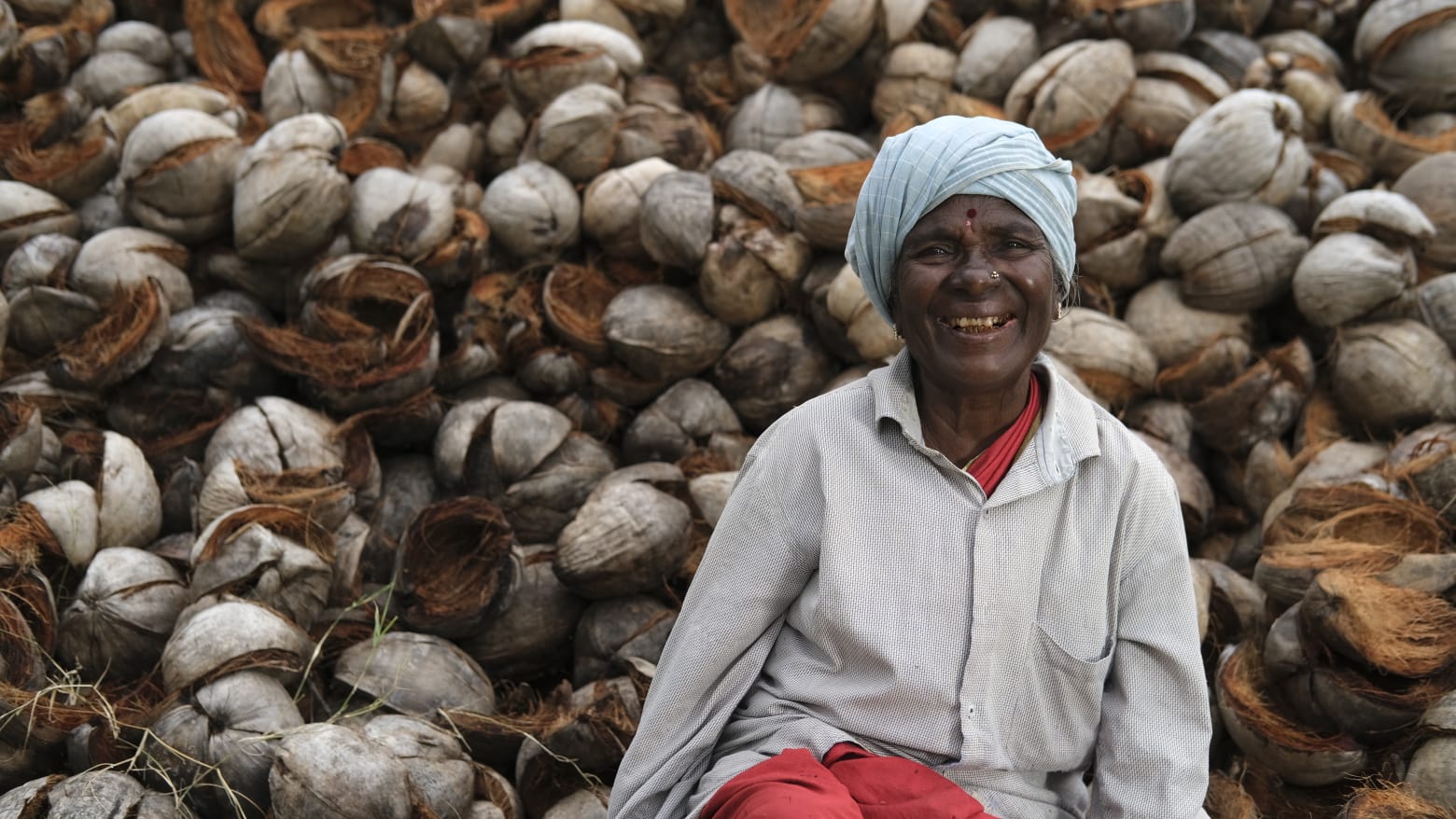
As Tengin expanded, the team began looking more closely at parts of the coconut that were usually treated as waste or low-value byproducts, such as coconut shells and coir. At first, Tengin treated them that way too.
“When we started, we used to burn some of the shells”, Madhu said. “Later, we realized it was an economic opportunity”.
That changed the company’s product strategy. Local artisans working with Tengin now are turning coconut shells into bowls, incense holders, candles, coffee mugs, mobile stands and handcrafted décor items.
This gives Tengin a place in the circular economy, where waste materials are reused instead of thrown away. For Madhu, though, sustainability has to do more than reduce waste. It should also create income in the community.
“We wanted to minimize waste and maximize wealth locally”, he said.
Tengin does not depend only on one central factory. Instead, it works with smaller village-level production groups that connect to a larger business network. This helps farmers stay close to their land while also taking part in processing and manufacturing. It also creates local jobs, which can reduce the pressure to migrate to cities.
Yet, the model is not always easy. In the early days, Tengin had to convince some farmers to move from chemical farming to natural farming. Moreover, the weather has also become harder to predict. Irregular rainfall and changing harvest cycles can affect coconut prices and production consistency.
Still, Madhu sees the village-based model as central to Tengin’s identity. For him, villages are living systems built on shared work, local knowledge and interdependence.
“The definition of a village is inclusiveness”, he said.
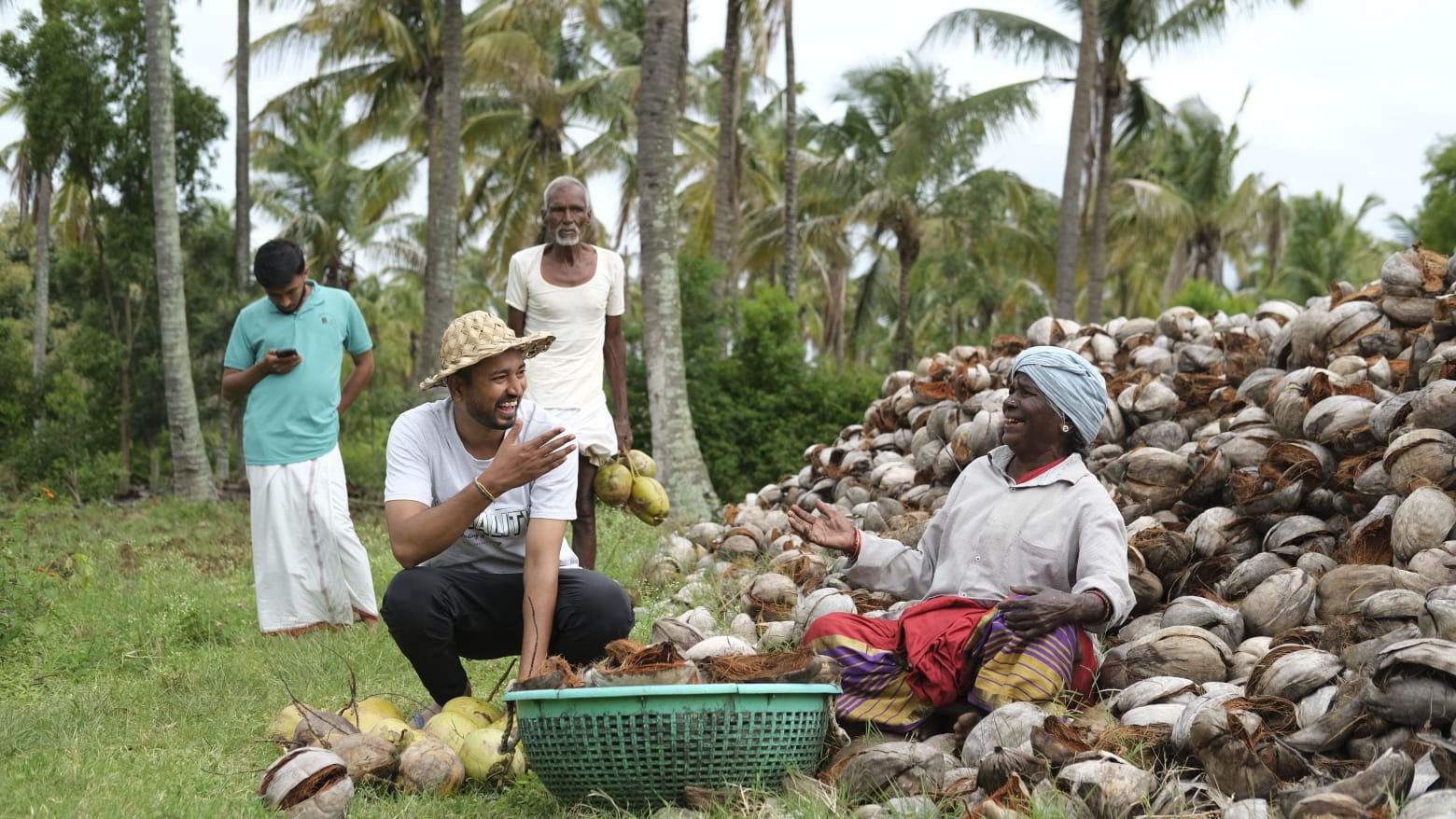
That belief also shaped Tengin’s “coco tourism” initiative. Through the program, visitors meet farmers, learn about farming practices and see how coconut products are made.
During one visit by MBA students from Indiana State University, an unexpected spell of rain gave the group a closer look at village life. Farmers gathered and began singing traditional folk songs to express gratitude to nature. For the students, it became a lesson in culture as much as business.
Madhu sees these moments as part of what rural entrepreneurship can protect.
“If villages become empty, we lose language, traditions and local knowledge too”, he said.
Tengin’s model is not difficult to copy on paper. Madhu is open about that.
“Anyone can do it”, he said, “but what matters is how you work with people”.
For him, the harder part is building long-term trust with farming communities. Tengin works through relationships more than rigid contracts. This encourages farmers and local groups to participate in the system in a more collaborative way.
That trust has become one of the startup’s strongest assets. It shapes how Tengin works with producers and how it presents its products to customers.
For Madhu, it is not enough to call a product sustainable. Customers should be able to understand where it came from, who made it and how their purchase supports the people behind it.
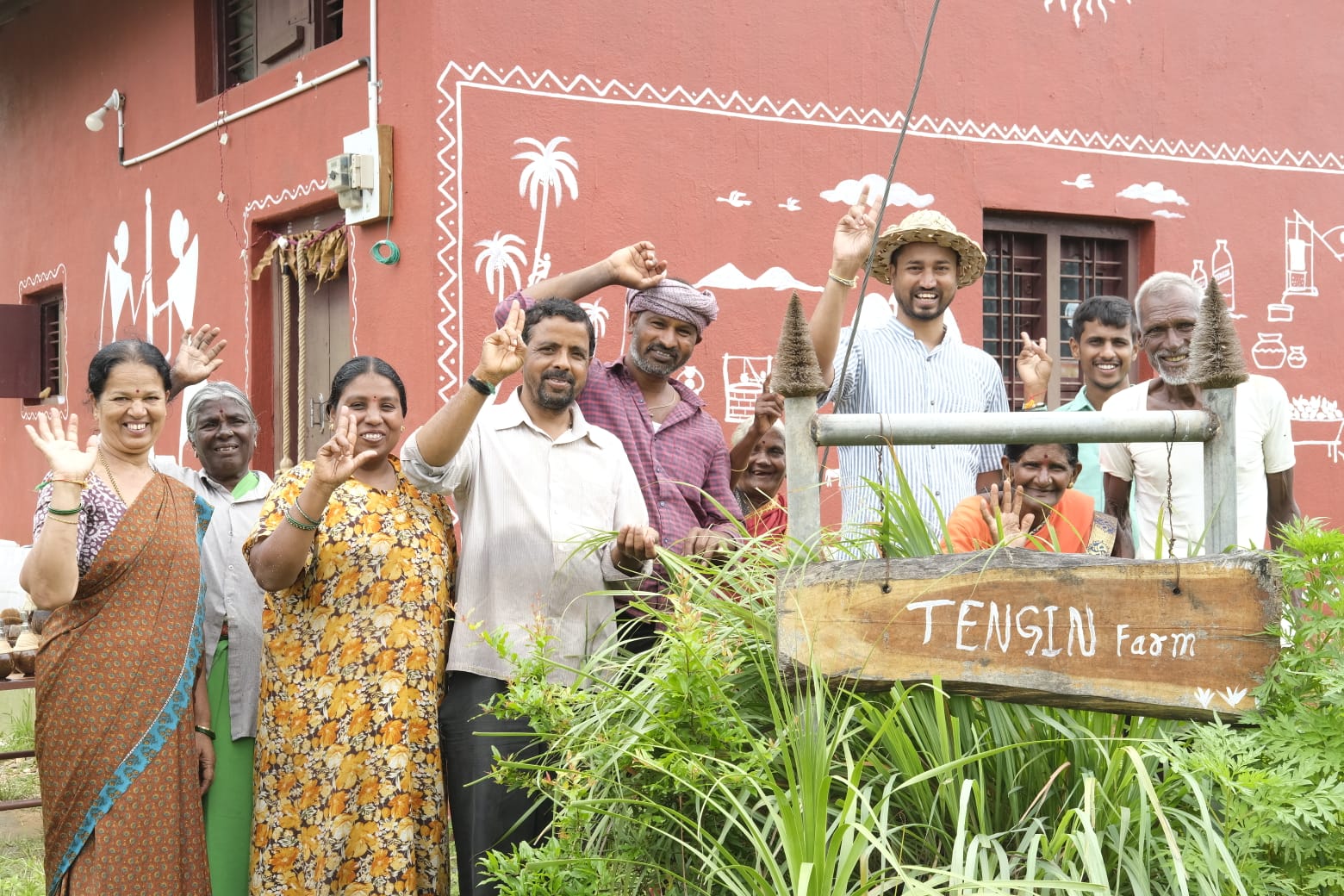
That matters even more in a market where terms like “eco-friendly” and “organic” have become buzzwords. Madhu knows that these words can feel empty when brands do not show what they actually mean.
“Anyone can use these words today,” he said. “What matters is whether consumers can actually see what you are doing”.
This is why Tengin focuses on transparency and storytelling. The startup wants customers to see the full journey of each coconut product, from the farm to the finished item. It also wants them to understand whose livelihood is connected to that journey.
Madhu also believes small brands cannot depend on products alone. Products can be copied, but a clear story, a trusted community and a visible impact are harder to replicate.
“Don’t try to sell only the product,” he said. “When you try to sell the product, you are being sold once”.
Each Tengin product includes details about the people behind it and how profits are shared. In that way, the company connects its coconut products to the farmers, artisans and village systems that make them possible.
For Madhu, entrepreneurship starts with the problem. Founders, he believes, should understand the problem deeply before thinking about scale and revenue.
“An entrepreneur is someone trying to solve an existing problem”, he said. “Sometimes it may be a small problem, sometimes a niche one. It could be in technology, energy, farming or any other sector—but first understand what problem you are trying to solve”.
Farming has also taught him patience. He gives the example of coffee.
“When you plant coffee, you know it may take five years before you see results”, he said, “but you still [have to] water it every day”.
He sees entrepreneurship the same way. Building systems, communities and trust takes time. Growth may be slow at first, but daily work matters.
Adaptability is another lesson he returns to often. Farming conditions change constantly, and so do markets. In both cases, people have to keep learning, unlearning and adjusting.
“Entrepreneurship is about constantly learning new things because the world is changing all the time”, he said. “You need to stay relevant, understand what connects with [your customers] and adapt accordingly”.
Looking ahead, Tengin plans to grow its farmer network, strengthen production capacity and expand its export business. Madhu is also looking to collaborate with more platforms, storytellers and communities that can help amplify the voices behind the products.
The startup is also involved in rural community initiatives, including support for government schools and menstrual health awareness programs.
For Madhu, giving back is part of how he defines success. With more resources, he would invest further in farmer education, village-level production systems and community development.
By building a business around coconuts, Tengin is also making a larger case for rural entrepreneurship. Its work shows that a modern consumer brand can grow without losing its connection to the farmers, traditions and village ecosystems that make that growth possible. For Madhu, that is the real measure of progress: creating value that stays rooted in the community.