
Join us at CVCF 2026 to explore how startups can scale and win in the age of AI.
Updated
October 29, 2026 11:39 PM

CVCF 2026 takes place on 4–5 November at Cyberport, Hong Kong. IMAGE: CYBERPORT
AI can help you build a startup, but it won’t automatically make you stand out. When everyone has access to similar tools, you need to give customers a reason to choose you and investors a reason to back you. So, how do you turn innovation into a competitive edge?
That question sits at the heart of Cyberport Venture & Capital Forum (CVCF) 2026, taking place on 4–5 November under the theme “Scaling in a Changing World: Winning the Next Competitive Cycle” and the message “Scale Up & Win.”
The two-day forum will feature more than 80 speakers discussing venture investment, AI-driven growth, emerging technologies and expansion into new markets. Day 1 will explore global investment trends and the next wave of innovation. Day 2 will feature CVCF 2026’s spotlight event, the Agentic Economy Summit, examining how agentic AI and digital assets could reshape business and finance. The wider programme will also include investor matching, founder pitches, 100+ Innovator Showcase, startup workshops and clinics.
With founders and investors navigating a fast-changing technology landscape, CVCF 2026 will explore what it takes to stay competitive, scale into new markets and turn emerging opportunities into business growth. Here’s a look at the key programmes lined up for this year’s forum.
Keynotes and Panels: Finding the Next Big Opportunity
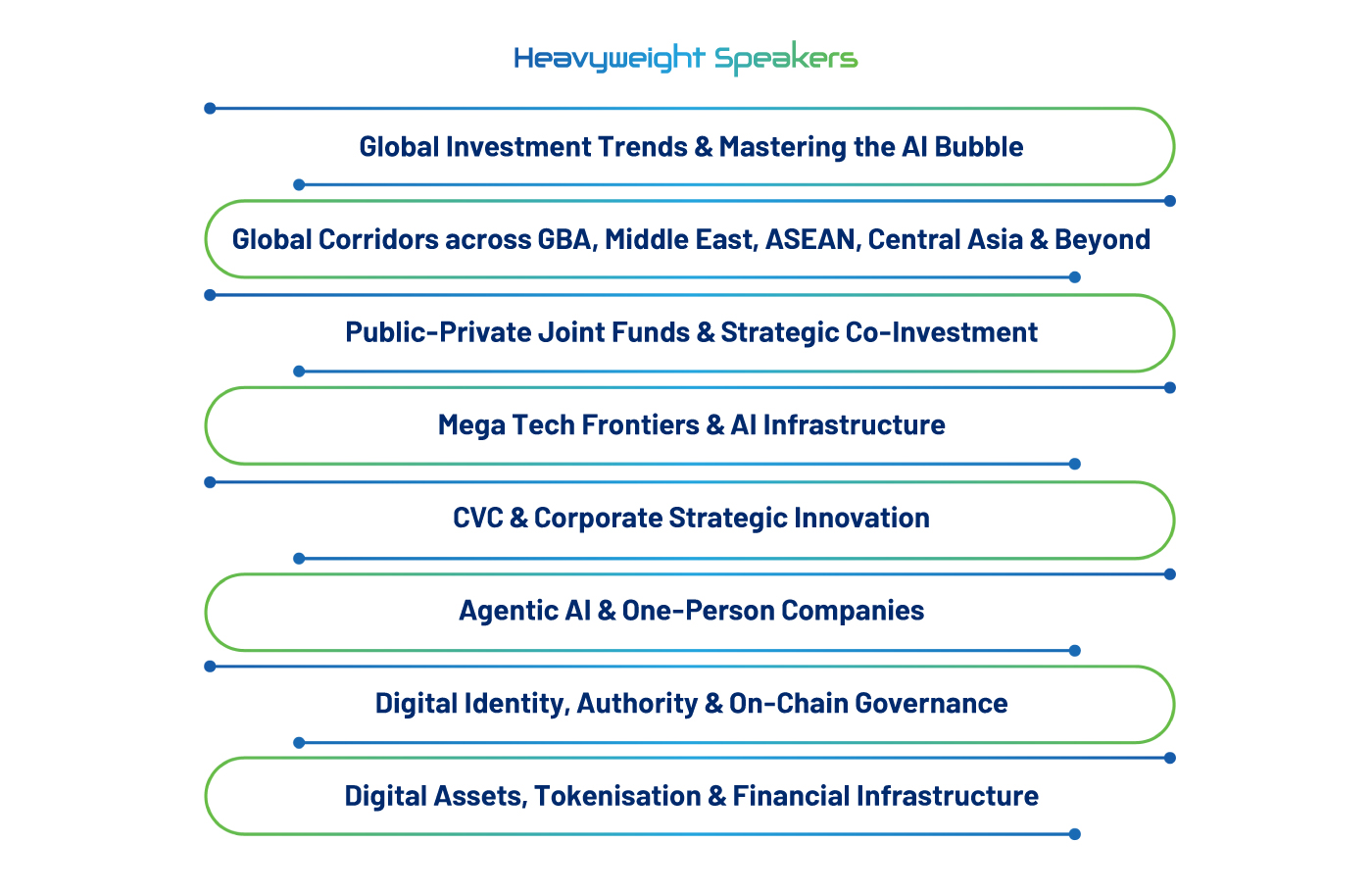
Taara founder and CEO Mahesh Krishnaswamy will deliver the keynote The Innovation Playbook: Capitalizing on Moonshots and Faster Cycles in the Age of AI. The wider Day 1 programme will cover global investment trends, expansion into new markets, agentic AI and one-person companies.
For startups navigating the AI market, the panel Mastering the AI Bubble: Capital Rerouting and How Global Champions Stand Out will bring together panellists from Quona Capital, Alumni Ventures, FOV Ventures and Capital6 to discuss how investors assess startups and distinguish commercial potential from market hype. Other sessions will explore emerging technologies beyond AI software, including embodied AI, advanced computing and commercial aerospace.
Investor Matching and Networking: Connecting with Capital
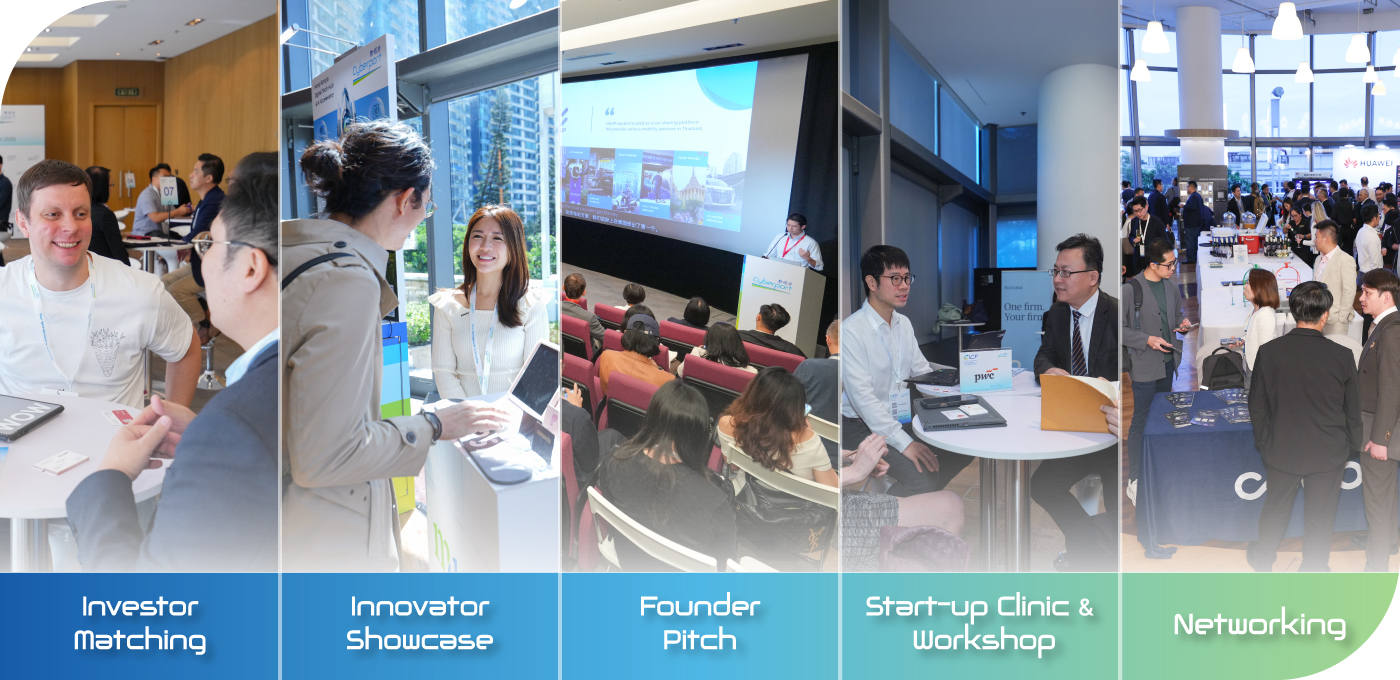
Away from the conference sessions, MatchEasy will help founders and investors arrange one-to-one meetings, either onsite or online. Confirmed participants will receive access to the platform to explore potential matches and schedule meetings.
Investors can also discover local and international startups through the Founder Pitch programme, where entrepreneurs present their projects and ventures. Meanwhile, the Innovator Showcase offers a separate opportunity to explore emerging technology solutions through a virtual platform and selected on-site exhibits.
For founders seeking more tailored guidance, the Startup Clinics will offer one-to-one discussions with industry experts and experienced entrepreneurs on business challenges, fundraising and growth. Advance registration is required.
Hands-On Workshops: Strengthening Your Investment Pitch
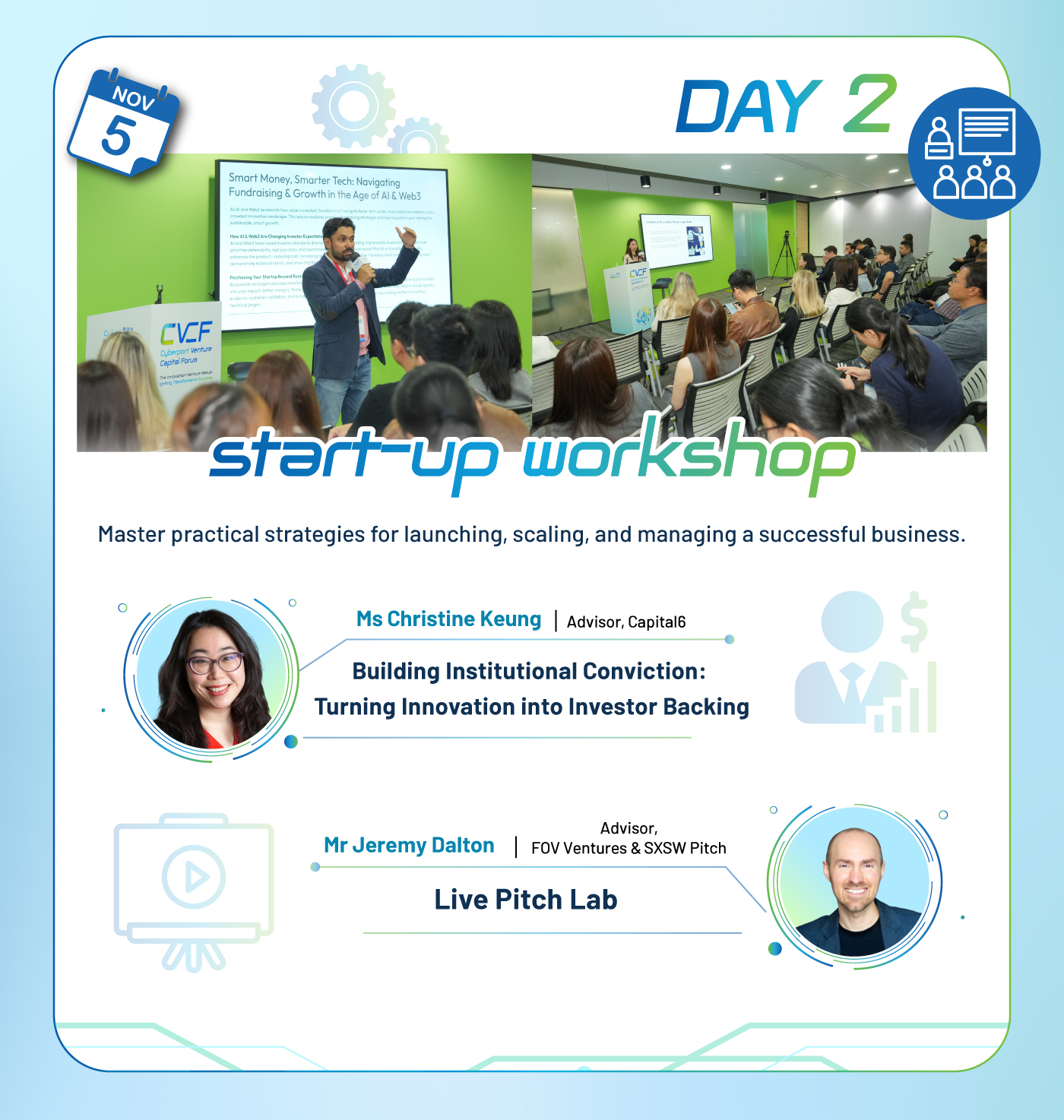
Turning an innovative idea into a business that investors can back takes more than a strong pitch. CVCF 2026 will host practical workshops to help founders strengthen their fundraising strategies and make a stronger case to investors.
Led by Capital6 advisor Christine Keung, one workshop will explore how founders can align technical innovation with business goals, communicate their product’s value and prepare for fundraising. Another, led by Jeremy Dalton, advisor at FOV Ventures and SXSW Pitch, will help founders understand how investors assess startups, with opportunities to pitch live and receive direct feedback.

CVCF 2026’s spotlight event, the Agentic Economy Summit, will take place on 5 November under the theme “Intelligent Frontiers, Tokenised Horizons: Where Agentic AI Reshapes Business and Digital Assets Redefine How Value Moves.”
The summit will bring together technology and finance leaders to explore how agentic AI and digital assets could change the way businesses operate. Wolf Ruzicka, chief commercial officer at Unlimit, a global payments company, will discuss building and scaling agentic AI applications. Dr Feng Xiao, chairman and CEO of HashKey Group, will examine how digital identity, tokenised assets and money connect on-chain.
The discussions will also look at agent-led commerce, including how AI agents could help customers choose products and make purchases, and the payment systems needed to support these transactions. Other topics include Hong Kong dollar stablecoins and their potential role in payments and settlement, as well as the rise of one-person companies. The summit will also explore how founders can use AI agents to run their businesses with smaller teams, find customers and generate recurring revenue.
From AI-driven growth and cross-border investment to agentic AI and digital assets, CVCF 2026 brings together the people and ideas shaping the next phase of business. Whether you're preparing to raise capital, exploring new markets or assessing emerging technologies, the forum offers an opportunity to gain fresh perspectives and connect with investors, founders and industry leaders.
Exclusive for Ventureport readers: Use the promotional code cvcf26vp to access a Full Access Pass for HK$300, subject to confirmation of the offer by the organiser.
Date: 4–5 November 2026
Function Rooms, Level 3, Core E, Cyberport 3, Hong Kong
Keep Reading
Sensing technology is facilitating the transition of drone delivery services from trial phases to regular daily operations.
Updated
January 23, 2026 10:41 AM

A quadcopter drone with package attached. PHOTO: FREEPIK
A new partnership between Hesai Technology, a LiDAR solutions company and Keeta Drone, an urban delivery platform under Meituan, offers a glimpse into how drone delivery is moving from experimentation to real-world scale.
Under the collaboration, Hesai will supply solid-state LiDAR sensors for Keeta’s next-generation delivery drones. The goal is to make everyday drone deliveries more reliable as they move from trials to routine operations. Keeta Drone operates in a challenging space—low-altitude urban airspace. Its drones deliver food, medicine and emergency supplies across cities such as Beijing, Shanghai, Hong Kong and Dubai. With more than 740,000 deliveries completed across 65 routes, the company has discontinued testing the concept. It is scaling it. For that scale to work, drones must be able to navigate crowded environments filled with buildings, trees, power lines and unpredictable conditions. This is where Hesai’s technology comes in.
Hesai’s solid-state LiDAR is integrated into Keeta's latest long-range delivery drones. LiDAR stands for Light Detection and Ranging. In simple terms, it is a sensing technology that helps machines understand their surroundings by sending out laser pulses and measuring how they bounce back. Unlike GPS, LiDAR does not rely solely on satellites to determine position. Instead, it gives drones a direct sense of their surroundings, helping them spot small but critical obstacles like wires or tree branches.
In a recent demonstration, Keeta Drone completed a nighttime flight using LiDAR-based navigation alone without relying on cameras or satellite positioning. This shows how the technology can support stable operations even when visibility is poor or GPS signals are limited.
The LiDAR system used in these drones is Hesai’s second-generation solid-state model known as FTX. Compared with earlier versions, the sensor offers higher resolution while being smaller and lighter—important considerations for airborne systems where weight and space are limited. The updated design also reduces integration complexity, making it easier to incorporate into commercial drone platforms. Large-scale production of the sensor is expected to begin in 2026.
From Hesai’s perspective, delivery drones are one of several forms robots are expected to take in the coming decades. Industry forecasts suggest robots will increasingly appear in many roles from industrial systems to service applications, with drones becoming a familiar part of urban infrastructure rather than a novelty.
For Keeta Drone, this improves safety and reliability. And for the broader industry, it signals that drone logistics is entering a more mature phase—one defined less by experimentation and more by dependable execution. Taken together, the partnership highlights a practical evolution in drone delivery.
As cities grow more complex, the question is no longer whether drones can fly but whether they can do so reliably, safely and at scale. At its core, this partnership is not about drones or sensors as products. It is about what it takes to make a complex system work quietly in real cities. As drone delivery moves out of pilot zones and into everyday use, reliability matters more than novelty.