
Discus Fish of Cobo and Samuel Tse of Animoca Brands discuss how AI agents, digital identity and blockchain could change the way money moves.
Updated
November 2, 2026 12:03 PM
The Agentic Economy Summit at CVCF 2026 explores how AI agents and digital assets could shape the future of business and finance. IMAGE: CYBERPORT
For an AI agent to manage money on someone’s behalf, it needs more than the ability to follow instructions. It must be able to establish whom it represents, access funds and transact within agreed limits.
These are among the questions informing the discussion of AI and digital assets at Cyberport Venture Capital Forum (CVCF) 2026. Ahead of the forum, Discus Fish, CEO and Co-founder of Cobo, and Samuel Tse, Head of Investment and Corporate Finance at Animoca Brands, shared their views on how this convergence could develop—and where they see opportunities for businesses.

Discus Fish points to a longstanding challenge: blockchain can be difficult for everyday users to navigate, but AI agents may find it easier to interact with these networks.
“Blockchains have always been hard for ordinary people to use. AI agents may be better users: the chain is fully transparent and every record is traceable, which suits agents well.”
His outlook comes with a qualification. Both the agents and the networks they would use still need to develop.
“Agents aren’t capable enough yet, and chains are still adapting. But once agents truly run on-chain, the number of users and what’s possible will grow by an order of magnitude.”
Discus Fish says blockchain could reshape how financial assets are issued, traded and settled over the next five years. He also notes that institutional adoption has progressed faster than Cobo initially expected, with individual users no longer leading the shift. “Since 2017, we have believed blockchain will become part of the financial infrastructure of the future. We expected individual users to lead, but institutions moved faster.”
For Fish, the next stage involves a broader range of assets and financial clients.
“What gets redefined next is how assets are issued, traded, and settled. As traditional assets like US equities come on-chain, a much wider range of financial clients will follow.”

Samuel Tse, Head of Investment and Corporate Finance at Animoca Brands, focuses on investment opportunities across digital assets and agentic AI. He sees digital identity as essential to allowing AI agents to act on behalf of people while keeping transactions within the permissions they set.
He believes users should set clear rules for what an AI agent can do, allowing it to complete transactions without requiring approval for each one.
“Once agents can prove who they represent, hold digital assets, and move value under clear rules, the economy stops being click-by-click. You set the policy once—who, how much, for what—and the agent transacts inside it.”
He describes applications ranging from everyday payments and transfers to subscriptions, swaps and earning returns on idle funds. “That’s agentic transactions: payments, transfers, subscriptions, swaps, even chasing a better rate on idle cash. Identity is the trust layer. Assets and credentials are the spending authority—always accountable to the human who granted permission.”
In Tse’s account, the human remains the source of that authority. The agent acts within the permissions granted to it.
To illustrate how AI agents, digital identity and digital assets might work together, Tse offers a hypothetical Hong Kong parent's weekday.
“A Hong Kong parent’s weekday: top up the child’s Octopus, book a weekend football slot, translate a school notice for the helper, check weather before pickup, restock milk at the member price, and keep leftover budget earning until tomorrow.”
At present, he says, completing these tasks requires navigating services that often operate separately.
“Today that means many apps that don't talk to each other, and rails that struggle with micro payments.”
His proposed alternative brings the tasks together under instructions established by the user.
“With an agent, they set the rules once and let it decide what to do. Identity unlocks trust and member prices without oversharing. Digital assets fit the money—per-use fees, hard limits, yield until spend.”
For Tse, this combination could create opportunities across payments, merchants, identity providers and digital-asset platforms. He compares the potential scale of agentic commerce to an earlier change in how consumers accessed services.
“The iPhone in 2007 rewired how people buy and use services for 20 years. We are just at the beginning of a similar paradigm shift, with outcomes we can barely imagine.”
Discus Fish and Samuel Tse offer two perspectives on the emerging agentic economy, from the blockchain infrastructure enabling transactions to the digital identity and permissions that allow AI agents to act on people's behalf. At CVCF 2026, these ideas will become part of a wider conversation with the leaders building and investing in this evolving space.
Be part of the conversation. Join industry leaders, founders and investors at CVCF 2026 on 4–5 November and explore the technologies and opportunities shaping the next phase of business.
Exclusive for Ventureport readers: Use code cvcf26vp to access a Full Access Pass for HK$300, subject to confirmation by the organiser.
Keep Reading
How startups can use nostalgia marketing to build trust, spark loyalty and stand out with storytelling, vintage design and emotional connections.
Updated
January 8, 2026 6:35 PM
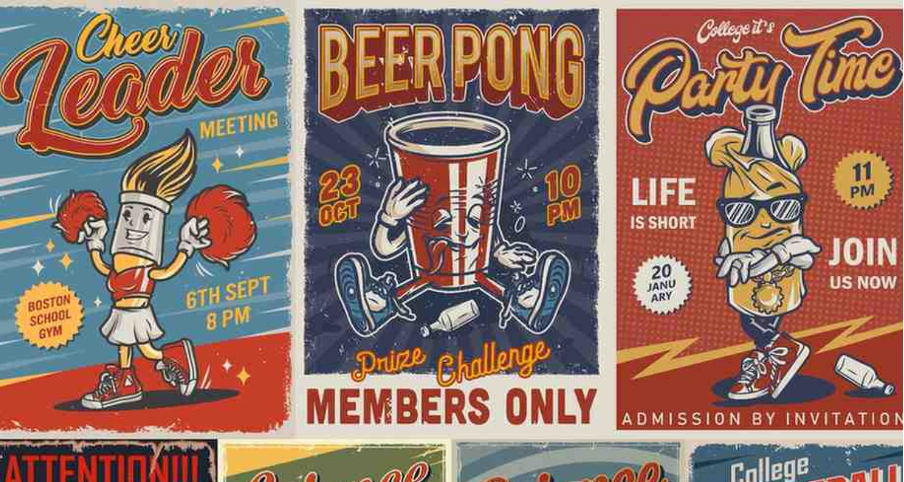
Vintage beer pong posters showcasing colorful, diverse designs from different eras in one collection. PHOTO: FREEPIK
Turning the subtle power of nostalgia into meaningful marketing.
Think of nostalgia as a time machine for brands—it doesn’t just take people back; it brings their emotions forward. And emotions sell. For those who are unfamiliar, nostalgia marketing is a strategy where brands use elements from the past—like familiar sights, sounds, or stories—to evoke warm memories and emotional connections with their audience.
This emotional pull isn’t just anecdotal—research shows its real impact: according to The Team and Forbes via The Drum, 80% of millennials and Gen Z are drawn to brands tapping into nostalgia, while 92% of consumers say nostalgic ads feel more relatable. And for startups competing in noisy markets, this is a goldmine.
In this article, we’ll explore why nostalgia marketing can be a game-changing strategy for your company.
Out of all the popular marketing methods—like influencer partnerships or attention-grabbing ad campaigns—nostalgia is unique because its impact starts intrinsically, in the brain. By triggering the release of dopamine, a reward-system neurotransmitter, Nostalgia evokes feelings of warmth, happiness and comfort. Consequently, people don’t just remember a moment—they relive it. Take, for instance, your favorite cereal brand bringing back childhood cartoon characters or using retro fonts and colors. You might choose it over a healthier breakfast option simply because it reminds you of the mornings you enjoyed as a kid. Similarly, speaking of stirring fond memories, Coca-Cola has mastered this effect, using classic holiday ads, vintage packaging, and iconic imagery. Those associations make people see Coke as more than a drink—it’s a familiar feeling they’re willing to pay extra for.
New marketing campaigns can spark curiosity but often trigger skepticism—especially when audiences lack prior connection to the brand. Nostalgia marketing breaks down this barrier by tapping into familiarity, using retro jingles, vintage fonts, pastel colors, or familiar packaging that immediately resonate. This recognition builds an emotional connection and trust with the brand. More importantly, it fosters social connectedness by making consumers feel part of a larger community—giving that reassuring “others remember this too” feeling. As a result, this sense of belonging reduces loneliness, strengthens warmth and trust, and encourages word-of-mouth sharing, naturally amplifying the campaign’s reach and impact.
While luxury brands can afford massive campaigns, startups and small businesses can tap into nostalgia as a cost-effective storytelling tool. In a world where marketing often chases the “next big thing”—from AI to futuristic tech—nostalgia offers the opposite: a chance to revisit the past. More importantly, nostalgia allows brands to stand out in a crowded, fast-scrolling feed by delivering something comfortingly familiar with a fresh twist. Think of Polaroid: in an age where smartphones boast crystal-clear cameras, it wins hearts with pastel hues, a vintage lens, and the tactile charm of instant prints—selling not just images, but a moment that feels straight out of the past.
The same principle worked brilliantly for Tiffany & Co., whose 185-year-old brand refresh featured Jay-Z and Beyoncé in a Breakfast at Tiffany’s-inspired campaign, blending timeless charm with contemporary star power and racking up millions of views. In essence, when done right, nostalgia doesn’t just market a product—it invites people to relive a story they already love.
Nostalgia resonates across generations speaking to diverse audiences. For Millennials, it’s a chance to relive the cultural touchpoints of their youth, while Gen Z approaches it with curiosity, eager to explore eras they never experienced firsthand. This crossover creates a unique marketing sweet spot: one group is driven by memory, the other by discovery. Pokémon proves this power by keeping lifelong fans engaged through retro trading cards while introducing younger audiences to its history. Similarly, Nike used nostalgia to bridge two different generations by reissuing retro classics, keeping both longtime fans and new sneakerheads excited. By appealing to both memory and curiosity, brands can create lasting connections that keep different generations engaged at once.
Nostalgia can be your startup’s non-cliché marketing mantra. Imagine a small bookstore that offers handwritten recommendation cards designed like vintage library checkout slips. This simple touch invites customers to slow down and rediscover the joy of reading. Or picture a local coffee shop serving drinks in mugs inspired by classic diner ware, evoking comforting memories of simpler times. Overall, the lesson is clear: combining nostalgic design with stories that connect people to shared moments creates emotional warmth and trust. Thoughtful nostalgia turns everyday products into meaningful experiences—building loyal communities eager to return.