
The CE approval opens Europe for Cornerstone Robotics as the company expands its global surgical robotics business
Updated
May 29, 2026 4:20 AM

A tray of surgical tools. PHOTO: UNSPLASH
As surgical robotics companies expand beyond domestic markets, regulatory approvals are becoming a critical part of global growth. Companies are no longer competing only on hardware and clinical performance. They are also competing on their ability to enter tightly regulated healthcare systems and build long-term hospital partnerships.
Hong Kong-based Cornerstone Robotics is now moving further into that phase of expansion after its Sentire Endoscopic Surgical System received CE Mark certification under the European Union’s Medical Device Regulation framework.
The approval allows the company to commercialize the system across European markets for minimally invasive procedures in general surgery, gynecology, thoracic surgery and urology. For surgical robotics companies, regulatory approvals often represent more than product validation. They also determine market access, hospital adoption opportunities and long-term commercial scale.
Cornerstone Robotics has already been building clinical operations in the UK ahead of the approval. Since 2025, the company has worked with Portsmouth Hospitals University NHS Trust on clinical investigations involving the Sentire Surgical System. According to the company, the system has been used across procedures involving urology, gynecology and gastrointestinal surgery. The company says the clinical investigation helped generate real-world data to support physician training, research and future adoption efforts.
Alongside the regulatory approval, Cornerstone Robotics is also expanding its local operations in Europe. The company established a UK subsidiary in 2025 and has been developing training, clinical support and after-sales service capabilities for hospitals using the system.
That operational buildout reflects a larger challenge inside surgical robotics. Hospitals adopting robotic systems often require ongoing clinical training, technical support and workflow integration alongside the hardware itself.
Cornerstone Robotics says its strategy centers around vertically integrated development across engineering, software, imaging and robotics systems. The company argues that this structure gives it greater control over product development, supply chain management and long-term operational stability.
Professor Samuel Au, Founder and CEO of Cornerstone Robotics, said: "Receiving CE Certification marks a major milestone in Cornerstone Robotics' evolution from a technology innovator to a global clinical solutions provider. From our first clinical investigation in Portsmouth, UK, to achieving European regulatory approval, each step of the journey reflects our commitment to proprietary innovation, product excellence, and clinical value. Looking ahead, we will continue expanding into key global markets and partnering with leading medical institutions to bring high-quality surgical robotic solutions to more physicians and patients worldwide."
The CE approval also comes several months after the company completed an oversubscribed financing round of approximately US$200 million in November 2025.
The funding and regulatory expansion together signal how surgical robotics companies are increasingly entering a more commercially focused stage of growth. Beyond research and development, companies are now investing more heavily in regulatory approvals, hospital partnerships, physician training and international operational infrastructure as competition expands across global healthcare markets.
Keep Reading
Bindwell is testing a simple idea: use AI to design smarter, more targeted pesticides built for today’s farming challenges.
Updated
January 8, 2026 6:33 PM
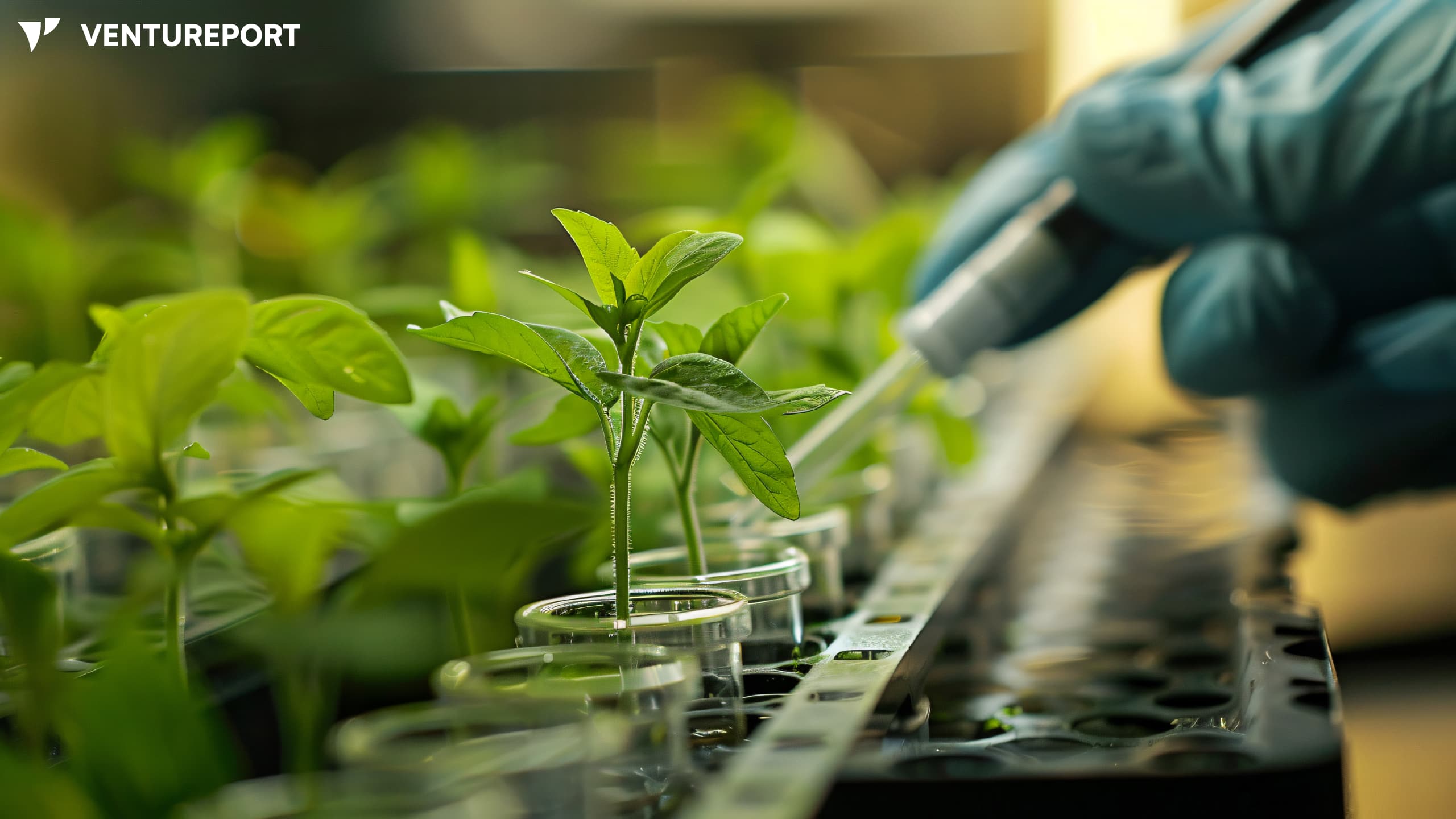
Researcher tending seedlings in a laboratory environment. PHOTO: FREEPIK
Bindwell, a San Francisco–based ag-tech startup using AI to design new pesticide molecules, has raised US$6 million in seed funding, co-led by General Catalyst and A Capital, with participation from SV Angel and Y Combinator founder Paul Graham. The round will help the company expand its lab in San Carlos, hire more technical talent and advance its first pesticide candidates toward validation.
Even as pesticide use has doubled over the last 30 years, farmers still lose up to 40% of global crops to pests and disease. The core issue is resistance: pests are adapting faster than the industry can update its tools. As a result, farmers often rely on larger amounts of the same outdated chemicals, even as they deliver diminishing returns.
Meanwhile, innovation in the agrochemical sector has slowed, leaving the industry struggling to keep up with rapidly evolving pests. This is the gap Bindwell is targeting. Instead of updating old chemicals, the company uses AI to find completely new compounds designed for today’s pests and farming conditions.
This vision is made even more striking by the people leading it. Bindwell was founded by 18-year-old Tyler Rose and 19-year-old Navvye Anand, who met at the Wolfram Summer Research Program in 2023. Both had deep ties to agriculture — Rose in China and Anand in India — witnessing up close how pest outbreaks and chemical dependence burdened farmers.
Filling the gap in today’s pesticide pipeline, Bindwell created an AI system that can design and evaluate new molecules long before they hit the lab. It starts with Foldwell, the company’s protein-structure model, which helps map the shapes of pest proteins so scientists know where a molecule should bind. Then comes PLAPT, which can scan through every known synthesized compound in just a few hours to see which ones might actually work. For biopesticides, they use APPT, a model tuned to spot protein-to-protein interactions and shown to outperform existing tools on industry benchmarks.
Bindwell isn’t selling AI tools. Instead, the company develops the molecules itself and licenses them to major agrochemical players. Owning the full discovery process lets the team bake in safety, selectivity and environmental considerations from day one. It also allows Bindwell to plug directly into the pipelines that produce commercial pesticides — just with a fundamentally different engine powering the science.
At present, the team is now testing its first AI-generated candidates in its San Carlos lab and is in early talks with established pesticide manufacturers about potential licensing deals. For Rose and Anand, the long-term vision is simple: create pest control that works without repeating the mistakes of the last half-century. As they put it, the goal is not to escalate chemical use but to design molecules that are more precise, less harmful and resilient against resistance from the start.