
The IT services firm strengthens its collaboration with Google Cloud to help enterprises move AI from pilot projects to production systems
Updated
March 17, 2026 1:02 AM
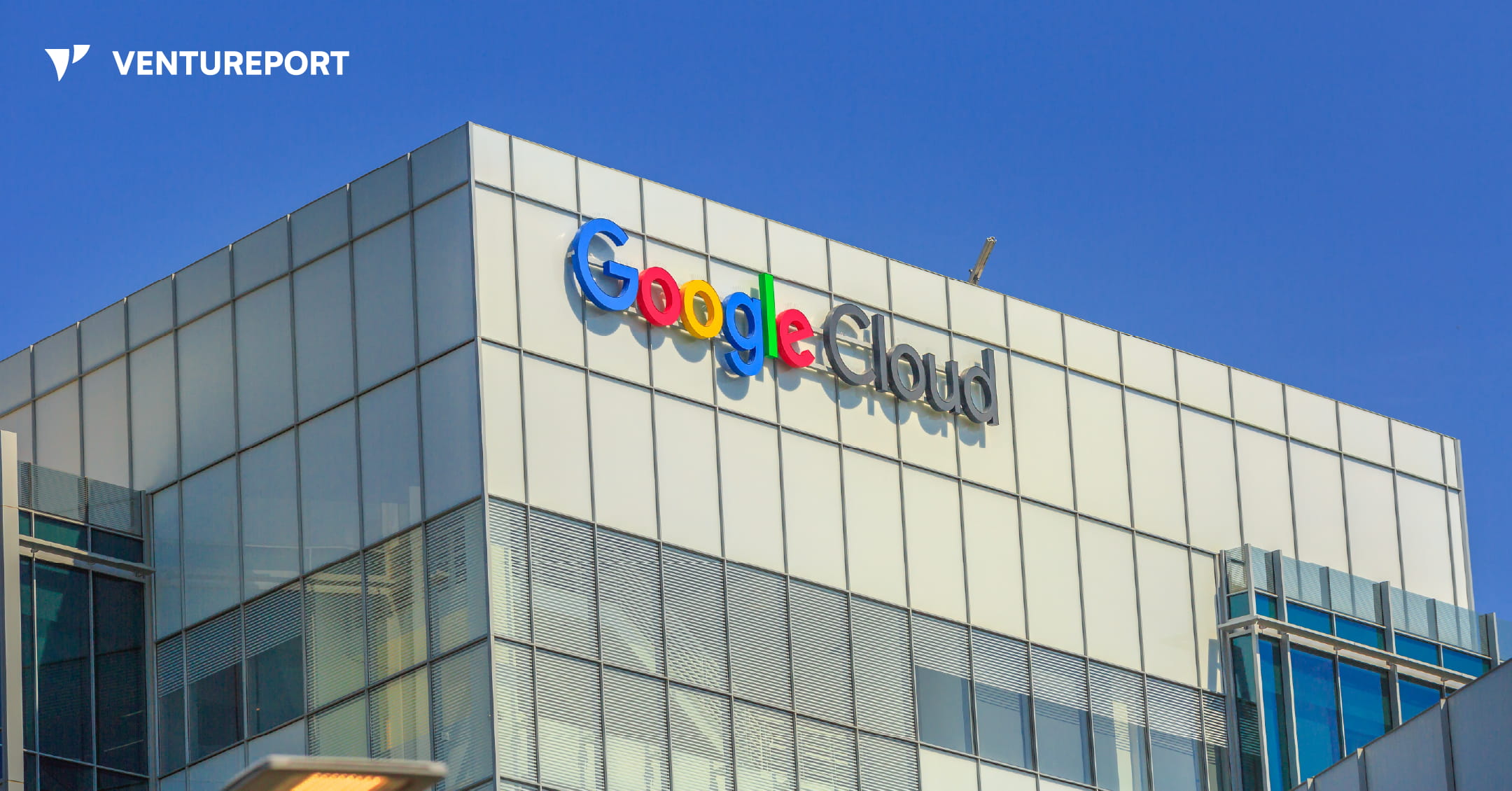
Google Cloud building. PHOTO: ADOBE STOCK
Enterprise interest in AI has moved quickly from experimentation to execution. Many organizations have tested generative tools, but turning those tools into systems that can run inside daily operations remains a separate challenge. Cognizant, an IT services firm, is expanding its partnership with Google Cloud to help enterprises move from AI pilots to fully deployed, production-ready systems.
Cognizant and Google Cloud are deepening their collaboration around Google’s Gemini Enterprise and Google Workspace. Cognizant is deploying these tools across its own workforce first, using them to support internal productivity and collaboration. The idea is simple: test and refine the systems internally, then package similar capabilities for clients.
The focus of the partnership is what Cognizant calls “agentic AI.” In practical terms, this refers to AI systems that can plan, act and complete tasks with limited human input. Instead of generating isolated outputs, these systems are designed to fit into business workflows and carry out structured tasks.
To make that workable at scale, Cognizant is building delivery infrastructure around the technology. The company is setting up a dedicated Gemini Enterprise Center of Excellence and formalizing an Agent Development Lifecycle. This framework covers the full process, from early design and blueprinting to validation and production rollout. The aim is to give enterprises a clearer path from the AI concept to a deployed system.
Cognizant also plans to introduce a bundled productivity offering that combines Gemini Enterprise with Google Workspace. The targeted use cases are operational rather than experimental. These include collaborative content creation, supplier communications and other workflow-heavy processes that can be standardized and automated.
Beyond productivity tools, Cognizant is integrating Gemini into its broader service platforms. Through Cognizant Ignition, enabled by Gemini, the company supports early-stage discovery and prototyping while helping clients strengthen their data foundations. Its Agent Foundry platform provides pre-configured and no-code capabilities for specific use cases such as AI-powered contact centers and intelligent order management. These tools are designed to reduce the amount of custom development required for each deployment.
Scaling is another element of the strategy. Cognizant, a multi-year Google Cloud Data Partner of the Year award winner, says it will rely on a global network of Gemini-trained specialists to deliver these systems. The company is also expanding work tied to Google Distributed Cloud and showcasing capabilities through its Google Experience Zones and Gen AI Studios.
For Google Cloud, the partnership reinforces its enterprise AI ecosystem. Cloud providers can offer models and infrastructure, but enterprise adoption often depends on service partners that can integrate tools into existing systems and manage ongoing operations. By aligning closely with Cognizant, Google strengthens its ability to move Gemini from platform capability to production deployment.
The announcement does not introduce a new AI model. Instead, it reflects a shift in emphasis. The core question is no longer whether AI tools exist, but how they are implemented, governed and scaled across large organizations. Cognizant’s expanded role suggests that execution frameworks, internal deployment and structured delivery models are becoming central to how enterprises approach AI.
In that sense, the partnership is less about new technology and more about operational maturity. It highlights how AI is moving from isolated pilots to managed systems embedded in business processes — a transition that will likely define the next phase of enterprise adoption.
Keep Reading
Why More Growth Companies Are Looking Beyond the Traditional IPO
Updated
August 10, 2026 5:56 PM
.jpg)
Enhanced Games at Resorts World Las Vegas. PHOTO: FACEBOOK@ENHANCEDGAMES
Enhanced Games reached the public markets in less than six months.
In an era where traditional IPOs can take more than a year to complete, the speed of the company’s merger with A Paradise Acquisition Corp. (NASDAQ: APAD) stands out, particularly given the significantly tighter regulatory scrutiny surrounding SPAC transactions since 2021.
The transaction highlights why some growth-stage companies are evaluating special-purpose acquisition companies (SPACs) as a viable alternative to the traditional IPO process.
Led by Dr. Aron D’Souza and backed by investors including Peter Thiel and Christian Angermayer, Enhanced Games announced its Business Combination Agreement with APAD in November 2025. The transaction closed in May 2026, bringing the company to the public markets materially faster than the timeline typically associated with a conventional IPO.
For decades, the traditional IPO has been considered the default route for private companies entering the public markets. But for many high-growth businesses today, the process has become increasingly slow, expensive, and difficult to execute efficiently.
A conventional IPO can take well over a year to prepare, involving extensive audits, regulatory reviews, underwriter coordination, investor roadshows, and careful timing against market conditions. During that period, companies remain exposed to volatility, shifting investor sentiment, and delayed access to capital. According to EY, many companies postponed planned IPOs amid market volatility and uncertainty surrounding U.S. tariff announcements, highlighting how sensitive IPO execution can be to broader market conditions.
For businesses operating in fast-moving industries, timing matters. Delayed access to liquidity can slow expansion, hiring, acquisitions, partnerships, and product development at critical stages of growth.
That is one reason why the merger between Enhanced Games and APAD is notable. The SPAC structure allowed Enhanced Games to negotiate valuation, governance terms, and financing arrangements early in the process, compressing many of the steps normally associated with a conventional IPO into a single transaction.
Enhanced Games operates across sports, media, performance science, and wellness, sectors that require significant upfront investment and rapid execution. Earlier access to public capital provided the company with liquidity, visibility, and strategic flexibility at an important stage of growth.
The public listing also gives the company tradable equity that can potentially support acquisitions, partnerships, athlete compensation structures, sponsorship arrangements, and future fundraising initiatives. These capabilities are particularly relevant in industries evolving as rapidly as sports entertainment, wellness, and human-performance science, where speed itself can become a competitive advantage.
The deal also highlights one of the SPAC market’s core advantages: the ability to combine capital raising and public-market entry within a single process.
Beyond speed, the SPAC structure offered Enhanced Games another major advantage: earlier visibility into valuation.
In a traditional IPO, pricing is largely determined near the end of the process through institutional book-building and investor demand during the roadshow phase. Even late-stage IPO candidates can face valuation cuts, downsized offerings, or postponed listings if market conditions weaken.
Recent IPO markets have repeatedly demonstrated this risk. Instacart went public in 2023 at an approximate US$9.9 billion valuation, which is dramatically below the US$39 billion private valuation it achieved during the 2021 market peak. Similarly, WeWork’s failed IPO attempt became one of the clearest examples of how rapidly investor sentiment can shift during the IPO process.
SPAC mergers operate differently.
Enhanced Games secured an implied enterprise valuation of approximately US$1.2 billion months before closing the transaction. While the merger still required SEC review and shareholder approval, the company gained significantly greater visibility into deal economics much earlier in the process.
That certainty is particularly valuable for growth companies whose valuations are tied more closely to long-term platform potential than near-term profitability.
Rather than relying entirely on shifting IPO market sentiment, the SPAC structure allowed Enhanced Games to negotiate around its broader growth strategy and future expansion plans from the outset.
The Enhanced Games transaction also reinforces why some growth-stage companies evaluate SPACs as an alternative to the traditional IPO process.
Traditional IPO investors often prefer businesses with long operating histories, stable earnings, and predictable growth profiles. Many expansion-stage companies simply do not fit that model yet, even if their long-term opportunities are substantial.
SPACs offer a different pathway.
Instead of waiting years to achieve the operational maturity typically expected in a conventional IPO, companies can access public-market capital earlier while still in growth mode.
For Enhanced Games, early access to the public markets provides more than capital. Public equity can support acquisitions, partnerships, athlete compensation structures, sponsorship arrangements, and future fundraising efforts. These capabilities are particularly important in sectors evolving as rapidly as sports entertainment, wellness, and human-performance science, where speed itself can become a competitive advantage.
The transaction also highlights how the SPAC market has evolved since the speculative boom of 2020 and 2021.
Today’s de-SPAC environment operates under significantly tighter regulatory scrutiny, including enhanced disclosure requirements, greater SEC oversight, and stricter treatment of projections and liability standards.
The Harvard Law School Forum on Corporate Governance noted that redemption rates spiked in 2022, in some cases approaching 100%, contributing to a significant slowdown of the SPAC activity.
In response to rising investor concerns and regulatory pressure, the U.S. Securities and Exchange Commission adopted enhanced SPAC disclosure and liability rules in 2024 designed to align de-SPAC transactions more closely with traditional IPO standards. Sponsors also faced greater pressure to demonstrate financing certainty, stronger disclosures, and more credible post-merger execution.
Enhanced Games completed its transaction within this more disciplined environment.
Its Form S-4 included audited financial statements, governance disclosures, transaction details, and extensive risk-factor analysis subject to SEC review. The company also supplemented SPAC trust proceeds with a separately arranged US$40 million PIPE financing commitment designed to strengthen liquidity and improve deal certainty.
That structure reflects a more institutional and disciplined SPAC market than the speculative wave seen several years ago.
The Enhanced Games transaction demonstrates that, despite tighter regulation and a far more selective market environment, SPACs can offer certain growth companies a practical alternative to the traditional IPO.
For businesses prioritising speed, capital access, and execution certainty, a well-structured de-SPAC transaction may provide a more efficient route to the public markets, particularly when supported by credible financing, disciplined structuring, and strong investor backing.