
With operations across 50 countries, MagicLab is pairing new robot systems with a platform strategy aimed at wider commercial adoption
Updated
August 10, 2026 5:56 PM
.jpg)
A standing yellow robotic arm. PHOTO: UNSPLASH
MagicLab Robotics is a Chinese startup that describes itself as an embodied AI company. At an event in Silicon Valley this week, it outlined its global ambitions and introduced new products designed for real-world use. The company said its international business now spans more than 50 countries and regions, with overseas markets accounting for 60% of total sales in 2025. That gives some indication of how quickly Chinese robotics firms are expanding beyond their home market.
At the centre of the announcement was MagicLab’s latest product line-up. It included Magic-Mix, described as a foundational world model for robots, the H01 dexterous robotic hand and its humanoid robot, MagicBot X1. In practical terms, the company is trying to build robots that can better understand their surroundings and perform physical tasks with greater precision. That is the core idea behind embodied AI, where intelligence is combined with movement and interaction in the real world rather than limited to software alone.
MagicLab says it develops both hardware and software internally. Its product range includes humanoid robots and four-legged machines, with systems designed for factories, commercial services and home use. The company also outlined where it sees demand emerging. It listed sectors such as healthcare, manufacturing, logistics, security, public safety, education and household assistance.
That wide spread of target markets reflects a broader challenge in robotics. Building capable machines is only one part of the equation. The harder task is finding enough practical uses where customers are willing to pay for them.
MagicLab also used the summit to set out a long-term commercial goal. It projected a path toward US$14 billion in annual revenue by 2036 through wider adoption of embodied AI systems. It also announced what it calls the “Co-Create 1000 Initiative”, a plan to work with external developers and partner companies.
As part of that effort, the startup said it plans to invest US$1 billion over the next five years to build a developer ecosystem that would allow third parties to create new applications for its robots. The strategy mirrors what happened in smartphones and cloud software, where ecosystems often mattered as much as the original hardware. If robotics follows a similar path, companies that attract developers could gain an advantage over those selling machines alone.
For now, MagicLab’s announcement is less about immediate breakthroughs and more about positioning. The company is presenting itself not simply as a robot maker, but as a platform business seeking a role in the next phase of intelligent machines.
Keep Reading
Mainland giants accelerate expansion as local players face unprecedented competition.
Updated
January 8, 2026 6:34 PM
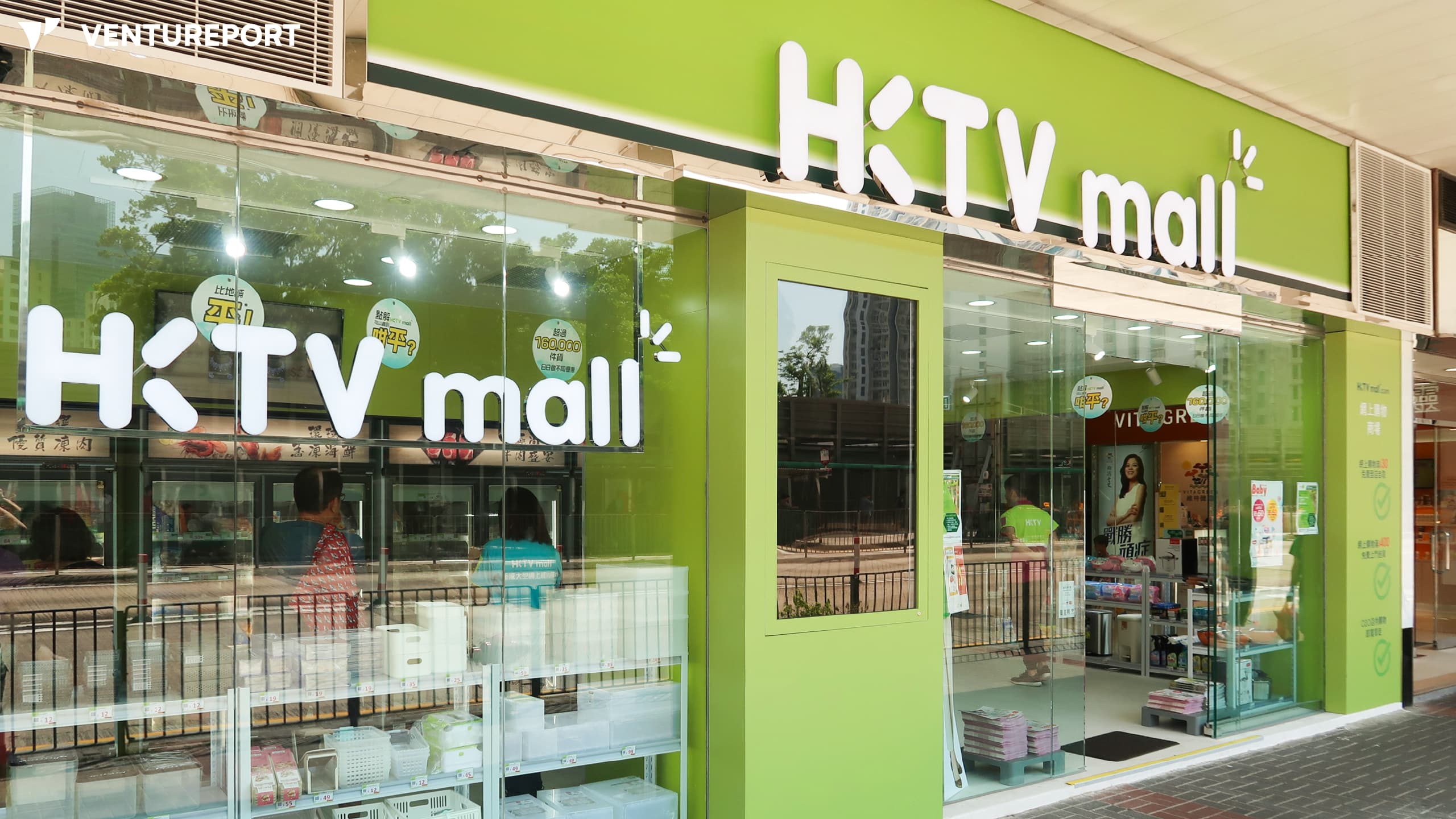
HKTV Mall in Amoy Plaza. PHOTO: WIKIPEDIA USER -WPCPEY
Hong Kong is entering a new phase of competition as mainland platforms accelerate their expansion into the city, turning it into a frontline testing ground for Chinese companies preparing to push into global markets. With retail, logistics and food-delivery businesses all reshaped in the past year, Hong Kong has become the closest international environment where mainland firms can experiment with pricing, supply chains and customer behaviour under a familiar regulatory and cultural framework.
The shift became especially clear this week. At HKTVmall’s Vision Day on November 11, 2025, CEO Ricky Wong warned that Hong Kong’s traditional retail model is facing its toughest moment yet. He said the biggest threat is not mainland competitors like Taobao, JD.com or Pinduoduo entering Hong Kong, but the city’s longstanding dependence on physical shopping. If local retailers do not evolve, he said, they risk becoming “very easy to die of thirst in the desert”. Wong even welcomed the rise of mainland e-commerce giants, arguing that the more players enter the city, the faster consumers will shift online — a transition HKTVmall relies on for growth.
Yet his optimism is layered over a challenging reality. HKTVmall’s own numbers reflect pressure from competition and changing consumer habits. The company reported average daily GMV of HK$22.2 million during the latest shopping festival season — up 2.8% month-on-month but still down 4.3% compared year-on-year — showing that even established online platforms are struggling to maintain momentum as mainland entrants squeeze prices and widen product selection.
The city’s food-delivery market illustrates the shift even more sharply. Deliveroo, once the fastest-growing platform in Hong Kong and at one point holding more than half of the market, officially shut down in April this year after a long decline. Its trajectory mirrored the sector’s upheaval: the company surged during the pandemic but lost ground after restrictions eased, first overtaken by Foodpanda and then pressured heavily by Meituan-backed Keeta, which entered Hong Kong in 2023 and quickly seized about 30% of citywide orders.
Deliveroo’s exit and the handover of parts of its business to Foodpanda did little to stabilise the market. Keeta’s rapid expansion instead pushed Foodpanda onto the defensive, leaving two major players competing in a market shaped by mainland-style pricing and operations. Hong Kong’s delivery sector, once dominated by global firms, is increasingly defined by Chinese platforms optimizing speed and efficiency at a scale few competitors can match.
These changes are unfolding as Chinese companies shift their focus toward new global markets.
With China reducing its reliance on the US and EU and exports steadily moving toward ASEAN, Hong Kong has become a strategic launchpad. The city’s proximity, language familiarity and regulatory structure make it the nearest international setting where Chinese firms can test overseas strategies before expanding into Southeast Asia, the Middle East or Latin America. The result is a competitive intensity that local companies have rarely experienced. Retailers face price pressure they can’t match, local platforms are losing ground to mainland giants and global players are struggling to stay in the game.
Consumers benefit from lower prices, faster delivery and wider choice — but for Hong Kong businesses, the landscape has turned unforgiving. Mainland companies are not treating Hong Kong as a final destination but as the first stop in a broader global push. That positioning is reshaping the city’s entire consumer economy. As more mainland firms look outward, Hong Kong’s role as a testing ground will only deepen and the first players to feel the impact will be those operating closest to the consumer.