
Huawei is betting that the future of AI infrastructure will depend as much on energy systems as on computing power
Updated
August 10, 2026 5:56 PM

Blue light painting with a lightbulb. PHOTO: UNSPLASH
As AI companies build larger models and deploy more AI agents, the industry is running into a new constraint: electricity. The challenge is no longer just about computing power. It is increasingly about how to supply, manage and sustain the energy needed to run AI infrastructure at scale.
That was the central argument behind Huawei’s latest AI data center strategy unveiled at its Global AIDC Industry Summit in Dongguan.
The company introduced what it calls a grid-interactive AIDC strategy, focused on redesigning AI data centers around power supply, cooling systems and energy management. AIDC refers to AI data centers built specifically for large-scale AI computing workloads.
The announcement reflects a broader shift happening across the industry. As AI systems grow larger, data centers are consuming more electricity and generating more heat than traditional computing infrastructure was designed to handle. Companies are now being forced to rethink not just chips and servers, but the physical systems supporting them.
Huawei argues that future AI infrastructure will need closer coordination between computing systems and energy grids. The company says traditional data center designs are struggling to keep up with fluctuating AI workloads, rising power density and the growing use of renewable energy sources.
Hou Jinlong, Director of the Board of Huawei and President of Huawei Digital Power, said: "The booming AI industry, widely adopted large models, and numerous AI agents are creating huge energy demands, set to boost the global AIDC capacity. Electricity is essential for computing; energy is the foundation for AI long-term development. Computing and electricity will deeply synergize and empower each other, progressively building an integrated framework that brings together new power systems and AI infrastructure."
A large part of Huawei’s strategy focuses on power architecture. AI workloads can create sudden spikes in electricity demand, especially in high-density computing environments. To manage that, Huawei says it plans to develop new power systems that combine grid-friendly UPS infrastructure with energy storage technologies.
Cooling is becoming another major pressure point. AI servers generate significantly more heat than traditional enterprise systems and Huawei says liquid cooling is now becoming essential for large-scale AI deployments. The company introduced a liquid cooling system designed to improve long-term thermal management inside high-density AI environments.
Huawei is also pushing modular construction methods to reduce deployment times for AI data centers. Instead of building infrastructure entirely onsite, parts of the system can be prefabricated and tested in factories before installation.
Bob He, Vice President of Huawei Digital Power, said: "The global AI industry is booming, and the token demand surges. As such, the AIDC industry is entering the Token era."
As part of that shift, Huawei introduced a proposed measurement system called the TokEnergy Index. The company says the metric is designed to measure the relationship between energy consumption and AI computing output, rather than relying only on traditional data center efficiency metrics such as PUE.
The broader message behind the strategy is that AI infrastructure is becoming an energy engineering problem as much as a computing problem. As global demand for AI continues to rise, companies across the sector are beginning to realise that the future of AI may depend not only on better models, but also on whether power grids and data centers can keep up with them.
Keep Reading
When farm challenges grow, smart tools need to grow with them.
Updated
January 8, 2026 6:32 PM
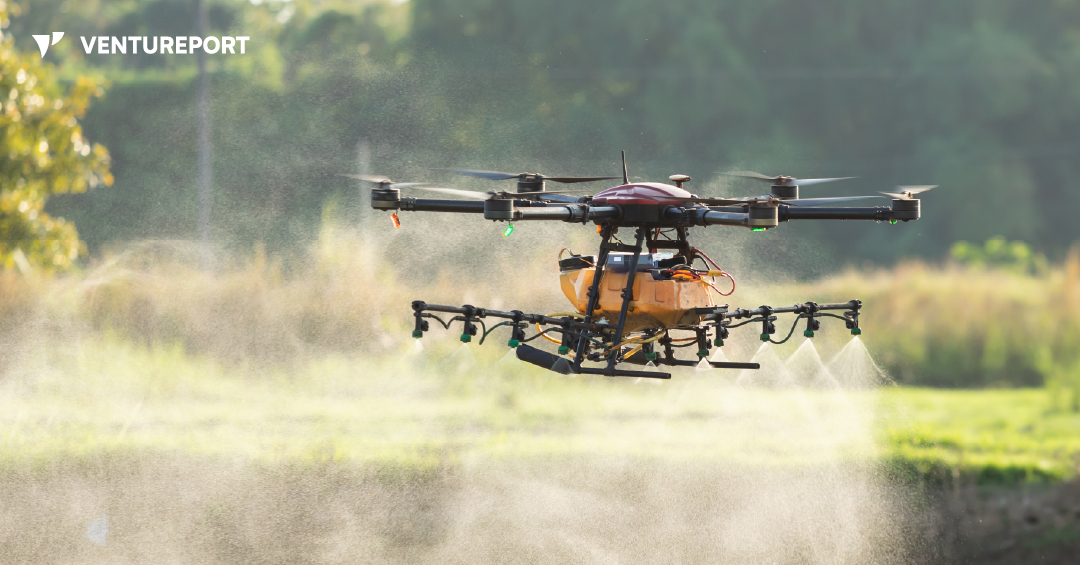
A drone spraying water over an agricultural field. PHOTO: FREEPIK
Farms today are under pressure. Fields are getting bigger, workers are harder to find and many jobs still rely on long hours of manual labor. XAG’s new P150 Max agricultural drone is designed for exactly this reality. Instead of replacing farmers, it takes over the heavy, repetitive fieldwork that slows them down, making farm operations more efficient and more precise.
The P150 Max is built around one simple idea: a single machine that can handle multiple farming tasks. Most farm drones focus only on spraying or mapping, but this one is fully modular. With a quick switch of attachments, it can spray crops, spread seeds or fertilizer, map fields or transport supplies. This flexibility helps farmers keep up with changing tasks throughout the day without needing different machines, improving both productivity and cost-efficiency.
A key challenge in agriculture is that fields are rarely smooth or predictable. Tractors can get stuck, smaller drones can’t carry much and some areas—like orchards or hilly plots—are simply hard to reach. The P150 Max fills that gap with an 80-kilogram payload and fast flight speed, letting it cover more ground per trip. Fewer takeoffs mean less downtime and more work completed before weather or daylight cuts operations short.
When it’s time to spray, the drone uses a smart spraying system that allows farmers to adjust droplet size based on the crop’s needs. This matters because precise spraying reduces waste and improves targeting. With an output of up to 46 liters per minute, the drone can serve both large open fields and dense orchards where consistent coverage is traditionally difficult.
The spreading system applies the same logic. Instead of dropping seeds or fertilizer unevenly, the vertical mechanism spreads material smoothly and resists wind drift. This ensures uniform application across irregular or hard-to-reach land—an ongoing challenge for modern farms aiming for higher yield and better resource use.
Another everyday issue for farmers is understanding and surveying the land before working on it. The P150 Max helps here with a built-in mapping tool that covers up to 20 hectares per flight and instantly converts the images into detailed maps. With AI detecting obstacles like trees or irrigation lines, the drone can plan safe and efficient autonomous routes, reducing manual planning time.
Beyond spraying and spreading, the drone can transport tools, produce and farm supplies using a sling attachment. This is particularly helpful after heavy rain, when vehicles cannot easily move across muddy or flooded fields.
Under all these functions is XAG’s upgraded flight control system, which provides centimeter-level accuracy even when network signals are weak. Integrated sensors—including 4D radar and a wide-angle camera—help the drone recognize hazards such as poles and wires. Farmers can manage all operations through the XAG One app or a handheld controller, both of which automatically generate the best route based on field shape and terrain.
Since long field days require long operating hours, the fast-charging battery system can recharge in about seven minutes using a dedicated kit. This supports continuous drone use throughout the day with minimal interruptions.
After years of testing, the XAG P150 Max is essentially an effort to make practical, scalable farm automation more accessible. By combining spraying, spreading, mapping and transport into one heavy-duty platform, it offers a way to ease labor shortages while keeping operations efficient and sustainable. Instead of focusing on one task, the drone aims to take over the time-consuming physical work so farmers can focus on decisions, planning and crop management.