
Huawei is betting that the future of AI infrastructure will depend as much on energy systems as on computing power
Updated
August 10, 2026 5:56 PM

Blue light painting with a lightbulb. PHOTO: UNSPLASH
As AI companies build larger models and deploy more AI agents, the industry is running into a new constraint: electricity. The challenge is no longer just about computing power. It is increasingly about how to supply, manage and sustain the energy needed to run AI infrastructure at scale.
That was the central argument behind Huawei’s latest AI data center strategy unveiled at its Global AIDC Industry Summit in Dongguan.
The company introduced what it calls a grid-interactive AIDC strategy, focused on redesigning AI data centers around power supply, cooling systems and energy management. AIDC refers to AI data centers built specifically for large-scale AI computing workloads.
The announcement reflects a broader shift happening across the industry. As AI systems grow larger, data centers are consuming more electricity and generating more heat than traditional computing infrastructure was designed to handle. Companies are now being forced to rethink not just chips and servers, but the physical systems supporting them.
Huawei argues that future AI infrastructure will need closer coordination between computing systems and energy grids. The company says traditional data center designs are struggling to keep up with fluctuating AI workloads, rising power density and the growing use of renewable energy sources.
Hou Jinlong, Director of the Board of Huawei and President of Huawei Digital Power, said: "The booming AI industry, widely adopted large models, and numerous AI agents are creating huge energy demands, set to boost the global AIDC capacity. Electricity is essential for computing; energy is the foundation for AI long-term development. Computing and electricity will deeply synergize and empower each other, progressively building an integrated framework that brings together new power systems and AI infrastructure."
A large part of Huawei’s strategy focuses on power architecture. AI workloads can create sudden spikes in electricity demand, especially in high-density computing environments. To manage that, Huawei says it plans to develop new power systems that combine grid-friendly UPS infrastructure with energy storage technologies.
Cooling is becoming another major pressure point. AI servers generate significantly more heat than traditional enterprise systems and Huawei says liquid cooling is now becoming essential for large-scale AI deployments. The company introduced a liquid cooling system designed to improve long-term thermal management inside high-density AI environments.
Huawei is also pushing modular construction methods to reduce deployment times for AI data centers. Instead of building infrastructure entirely onsite, parts of the system can be prefabricated and tested in factories before installation.
Bob He, Vice President of Huawei Digital Power, said: "The global AI industry is booming, and the token demand surges. As such, the AIDC industry is entering the Token era."
As part of that shift, Huawei introduced a proposed measurement system called the TokEnergy Index. The company says the metric is designed to measure the relationship between energy consumption and AI computing output, rather than relying only on traditional data center efficiency metrics such as PUE.
The broader message behind the strategy is that AI infrastructure is becoming an energy engineering problem as much as a computing problem. As global demand for AI continues to rise, companies across the sector are beginning to realise that the future of AI may depend not only on better models, but also on whether power grids and data centers can keep up with them.
Keep Reading
An interview with Tengin founder Madhu on turning coconuts into a business built around farmers, villages and communities.
Updated
August 10, 2026 5:56 PM

Workers of Tengin. PHOTO: TENGIN
In Southern India, coconuts are part of daily life. They are used in food, rituals, farming and home remedies. For Tengin, a social startup whose name means “coconut” in Kannada—a South Indian language—the crop also offers a way to build a rural business with deeper local impact.
Founded by Madhu Kargunda in 2017, Tengin works with farmers, artisans and women’s collectives in Karnataka to make products from almost every part of the coconut. Its range includes virgin coconut oil, desiccated coconut powder, shell-based handicrafts, candles, home décor items and other coconut-based goods.
The larger idea is simple. Farmers should play a bigger role in the value created from the crops they grow. Tengin is trying to help rural communities move beyond supplying raw produce and take part in processing, branding, packaging and sales.
Madhu grew up in an agricultural family. Over the years, he saw many young people move away from farming to look for stable jobs in cities. To him, the problem was not farming itself. The bigger issue was that farmers often missed out on the value created after crops left the farm.
A coconut might be grown in a village, but much of the income comes later through processing, branding and retail. That gap stayed with him, eventually leading him to leave his eight-year career in IT and return to agriculture full-time.
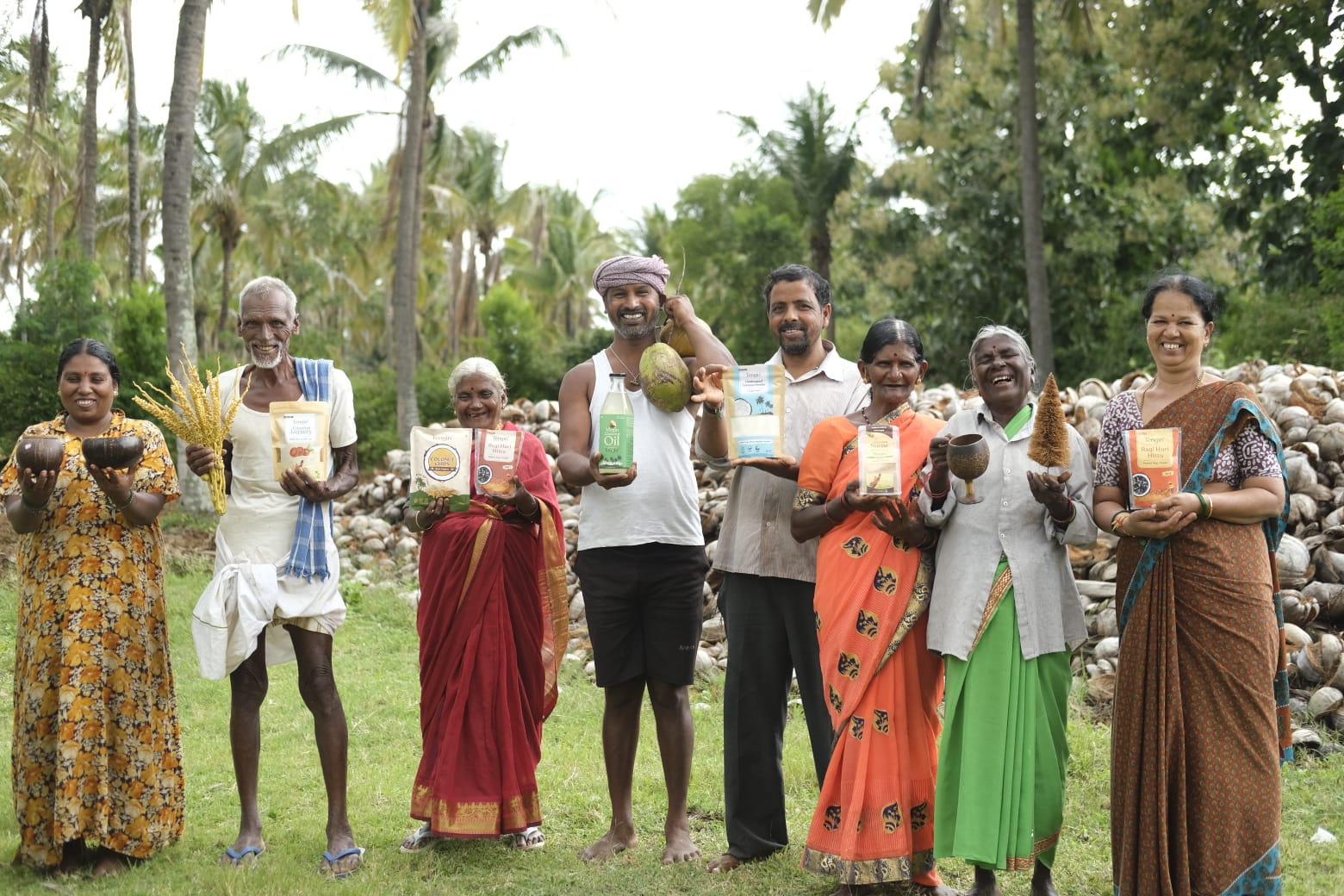
Started with just making virgin coconut oil, Tengin has grown into a wider coconut products business. The startup is now working with around 15 to 20 farmers and artisan groups across Karnataka. It is also building production capacity for larger retail and B2B partnerships.
Today, Tengin generates annual revenue of roughly ₹50-60 lakh, or around US$52,000 to US$62,000. It has also started testing international demand, including a recent export of around 200 kilograms of desiccated coconut powder to Texas.
As Tengin expanded, the team began looking more closely at parts of the coconut that were usually treated as waste or low-value byproducts, such as coconut shells and coir. At first, Tengin treated them that way too.
“When we started, we used to burn some of the shells”, Madhu said. “Later, we realized it was an economic opportunity”.
That changed the company’s product strategy. Local artisans working with Tengin now are turning coconut shells into bowls, incense holders, candles, coffee mugs, mobile stands and handcrafted décor items.
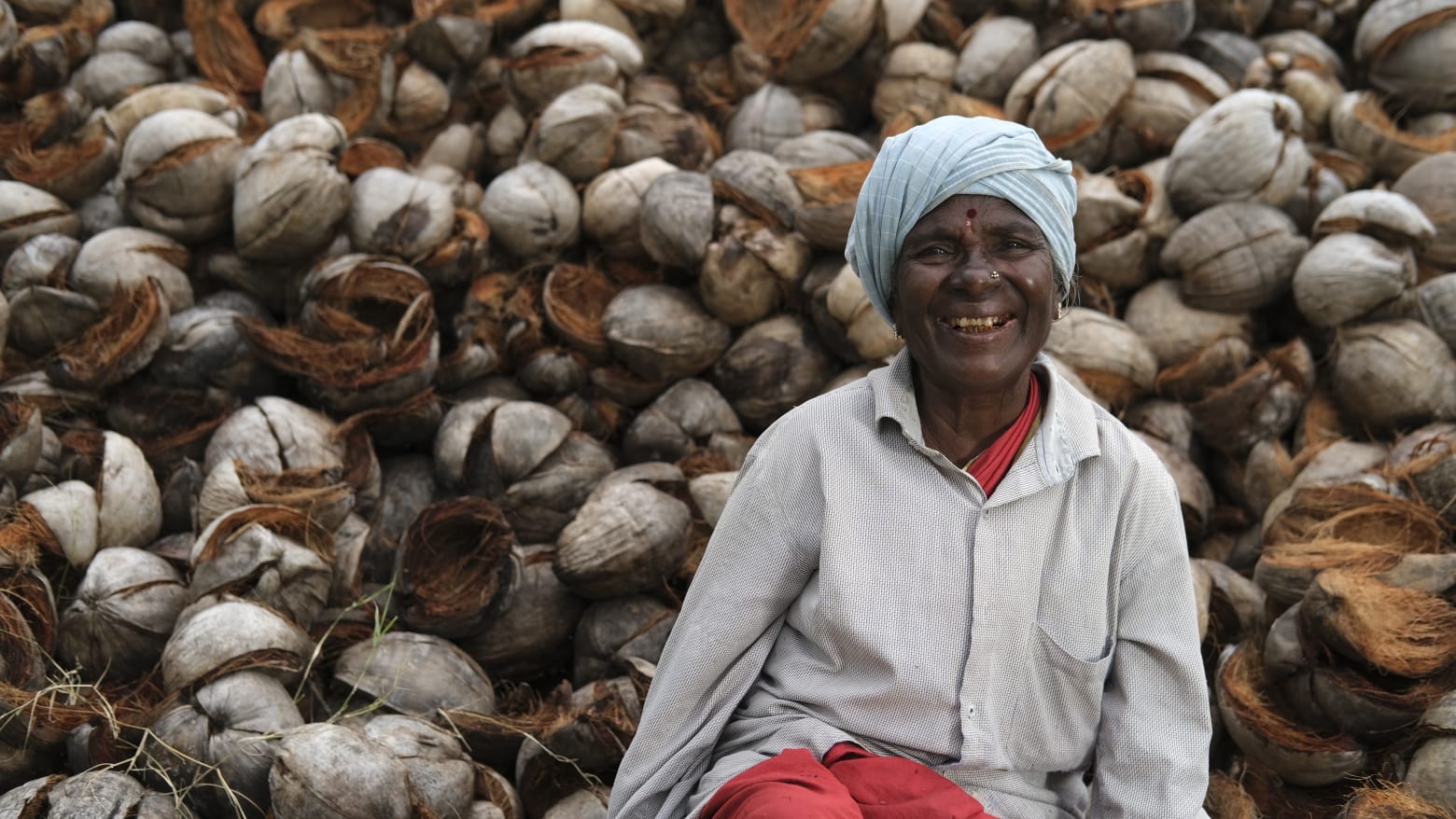
This gives Tengin a place in the circular economy, where waste materials are reused instead of thrown away. For Madhu, though, sustainability has to do more than reduce waste. It should also create income in the community.
“We wanted to minimize waste and maximize wealth locally”, he said.
Tengin does not depend only on one central factory. Instead, it works with smaller village-level production groups that connect to a larger business network. This helps farmers stay close to their land while also taking part in processing and manufacturing. It also creates local jobs, which can reduce the pressure to migrate to cities.
Yet, the model is not always easy. In the early days, Tengin had to convince some farmers to move from chemical farming to natural farming. Moreover, the weather has also become harder to predict. Irregular rainfall and changing harvest cycles can affect coconut prices and production consistency.
Still, Madhu sees the village-based model as central to Tengin’s identity. For him, villages are living systems built on shared work, local knowledge and interdependence.
“The definition of a village is inclusiveness”, he said.
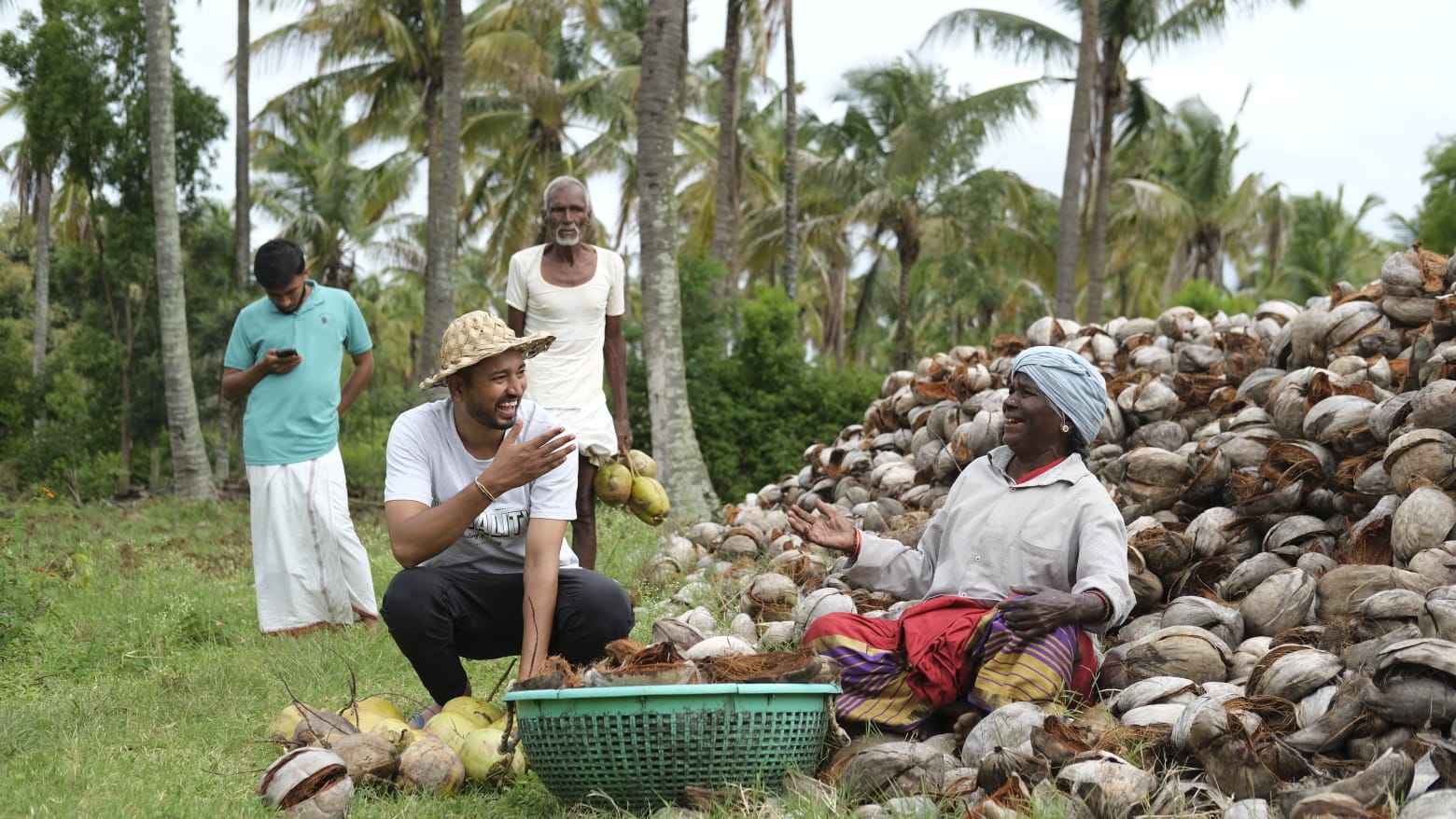
That belief also shaped Tengin’s “coco tourism” initiative. Through the program, visitors meet farmers, learn about farming practices and see how coconut products are made.
During one visit by MBA students from Indiana State University, an unexpected spell of rain gave the group a closer look at village life. Farmers gathered and began singing traditional folk songs to express gratitude to nature. For the students, it became a lesson in culture as much as business.
Madhu sees these moments as part of what rural entrepreneurship can protect.
“If villages become empty, we lose language, traditions and local knowledge too”, he said.
Tengin’s model is not difficult to copy on paper. Madhu is open about that.
“Anyone can do it”, he said, “but what matters is how you work with people”.
For him, the harder part is building long-term trust with farming communities. Tengin works through relationships more than rigid contracts. This encourages farmers and local groups to participate in the system in a more collaborative way.
That trust has become one of the startup’s strongest assets. It shapes how Tengin works with producers and how it presents its products to customers.
For Madhu, it is not enough to call a product sustainable. Customers should be able to understand where it came from, who made it and how their purchase supports the people behind it.
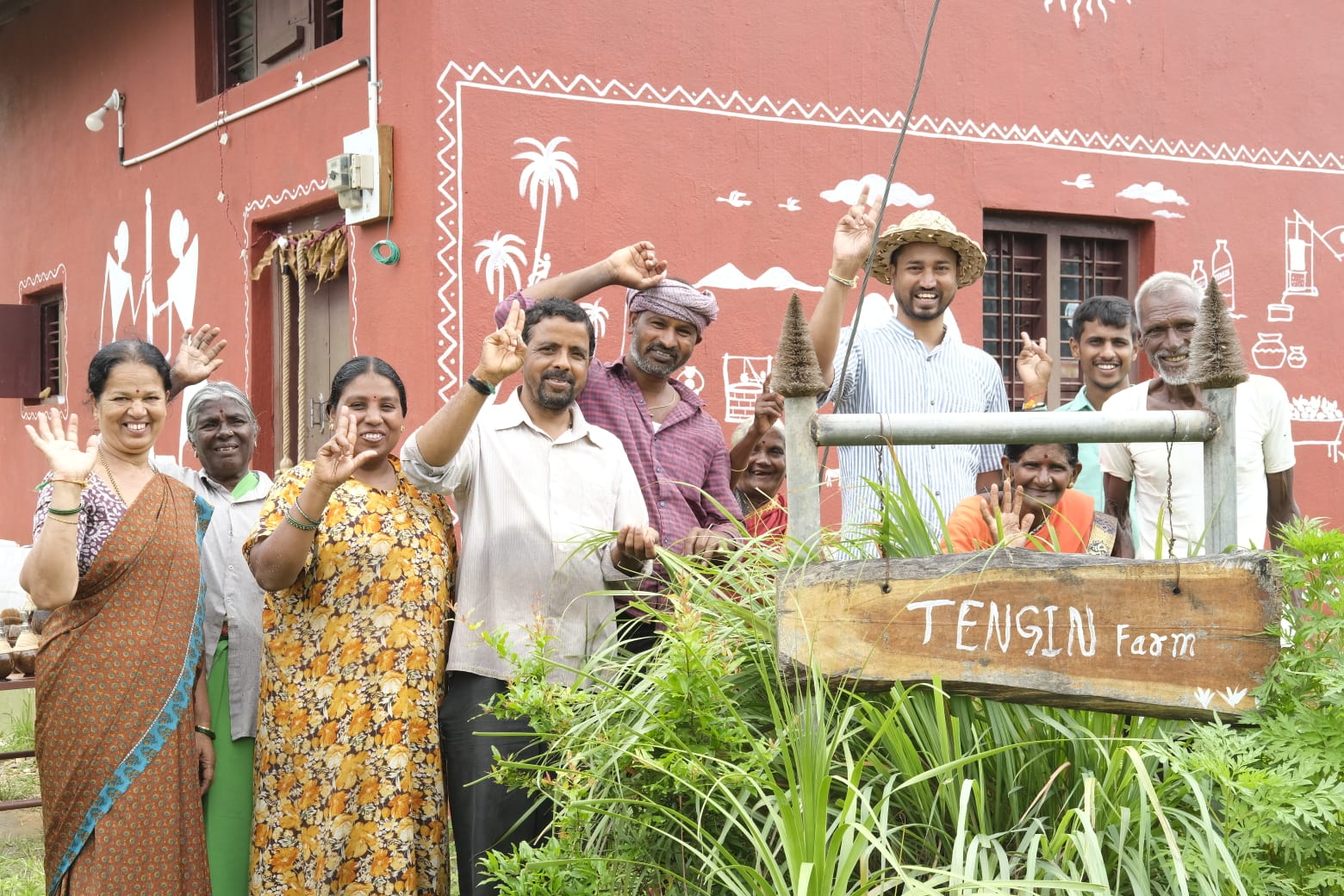
That matters even more in a market where terms like “eco-friendly” and “organic” have become buzzwords. Madhu knows that these words can feel empty when brands do not show what they actually mean.
“Anyone can use these words today,” he said. “What matters is whether consumers can actually see what you are doing”.
This is why Tengin focuses on transparency and storytelling. The startup wants customers to see the full journey of each coconut product, from the farm to the finished item. It also wants them to understand whose livelihood is connected to that journey.
Madhu also believes small brands cannot depend on products alone. Products can be copied, but a clear story, a trusted community and a visible impact are harder to replicate.
“Don’t try to sell only the product,” he said. “When you try to sell the product, you are being sold once”.
Each Tengin product includes details about the people behind it and how profits are shared. In that way, the company connects its coconut products to the farmers, artisans and village systems that make them possible.
For Madhu, entrepreneurship starts with the problem. Founders, he believes, should understand the problem deeply before thinking about scale and revenue.
“An entrepreneur is someone trying to solve an existing problem”, he said. “Sometimes it may be a small problem, sometimes a niche one. It could be in technology, energy, farming or any other sector—but first understand what problem you are trying to solve”.
Farming has also taught him patience. He gives the example of coffee.
“When you plant coffee, you know it may take five years before you see results”, he said, “but you still [have to] water it every day”.
He sees entrepreneurship the same way. Building systems, communities and trust takes time. Growth may be slow at first, but daily work matters.
Adaptability is another lesson he returns to often. Farming conditions change constantly, and so do markets. In both cases, people have to keep learning, unlearning and adjusting.
“Entrepreneurship is about constantly learning new things because the world is changing all the time”, he said. “You need to stay relevant, understand what connects with [your customers] and adapt accordingly”.
Looking ahead, Tengin plans to grow its farmer network, strengthen production capacity and expand its export business. Madhu is also looking to collaborate with more platforms, storytellers and communities that can help amplify the voices behind the products.
The startup is also involved in rural community initiatives, including support for government schools and menstrual health awareness programs.
For Madhu, giving back is part of how he defines success. With more resources, he would invest further in farmer education, village-level production systems and community development.
By building a business around coconuts, Tengin is also making a larger case for rural entrepreneurship. Its work shows that a modern consumer brand can grow without losing its connection to the farmers, traditions and village ecosystems that make that growth possible. For Madhu, that is the real measure of progress: creating value that stays rooted in the community.